





 Governance in Honduras shifted sharply to the extreme right within months of National Party’s Nasry Asfura taking office on January 27, succeeding the Libre party’s progressive Xiomara Castro. In November 30 elections, the National Party was trailing a poor third before Trump threatened to end all aid to Honduras unless Asfura won. Even then, Asfura had only a wafer-thin plurality, which might well have disappeared had the electoral council not broken its mandate by halting the count before all the votes had been tallied.
Compounding this blatant interference, Trump announced just two days before the election that he was pardoning former Honduran president and National Party stalwart, Juan Orlando Hernández, who had been extradited to the US and was serving a 45-year sentence for narcotrafficking. Corporate media treated Trump’s pardon as just a typically blatant political maneuver. Yet they have since largely ignored what appears to be a much bigger element of the same plot.
The emerging regional offensive
The wider conspiracy has been revealed in a trove of leaked audio recordings, now dubbed “Hondurasgate.” The 37 recordings appear to show that Hernández – still in the US – is preparing a return to Honduran politics and, in league with Republican party officials, is actively producing propaganda directed against progressive governments across Latin America.
Claims by Hondurasgate investigators that the recordings have been independently verified now appear to be at least partially substantiated by a separate investigation commissioned by Drop Site News. BBC Mundo recently interviewed Hernández and asked for his response to the controversy, but received no response.
Shocking as the revelations are, Hondurasgate is symptomatic of a much more ambitious project to exploit Honduras and impose the “Donroe Doctrine” across the region. Whether or not the recordings are all genuine, the wider project is very much alive.
Power consolidation through lawfare and repression
Since taking office, Asfura wasted no time consolidating control over Honduran institutions. The elections left the Libre party with fewer than one-third of the seats in the National Congress, reverting to the historic pattern in Honduras in which the National and the Liberal parties – both neoliberal and subservient to Washington – swap power. This has enabled Asfura to move quickly against his enemies.
Marlon Ochoa, Libre’s representative on the electoral council and the first official to call out the electoral fraud, was impeached by Congress on fabricated charges, received death threats, and fled the country.
The sitting attorney general, also from Libre, was dismissed. The Supreme Court president was forced to resign, while other leading congressional members were impeached. Many of those kicked out of their jobs also had their US visas revoked.
“It is a political lawfare operation in which Honduran institutions are acting against the country’s own legal framework to eliminate political opponents,” wrote Diario RED. Carmen Haydeé López, Libre’s press officer, describes the moves as “state capture” by the ruling National Party.
Worse may follow: “If we have to kill people so we can have peace of mind, we’ll do it,” Hernández says in the Hondurasgate audios. Further, “If we have to resort to repression to control the country, we’ll do it.”
Far-right operative Roger Stone – a Trump associate said to have orchestrated Hernández’s pardon – even called for the US to kidnap Xiomara Castro and her husband, former president “Mel” Zelaya, “like they did with Maduro.”
Return to the narcostate
These developments signal Honduras’s return to the corrupt and criminal neoliberal order that prevailed after the 2009 military coup and lasted until Xiomara Castro’s presidency in January 2022.
For most of this earlier period, Juan Orlando Hernández dominated politics, transforming Honduras into a “narcostate”. Over the years, he facilitated the trafficking to the US of at least 400 tons of cocaine, accepted huge bribes (including $1 million from Sinaloa cartel leader Joaquín “El Chapo” Guzmán), and ran a regime marked by extreme violence.
The leaked recordings show Hernández expects a reconfigured judiciary to clear him of outstanding charges in Honduras. This would pave the way for his return and even to make a run for president again in 2029.
Rolling back social gains and imposing austerity
In the meantime, Asfura has moved rapidly to dismantle the Libre government’s modest achievements. Castro had begun to invest heavily in a public health service that fell apart during the Covid pandemic. Asfura halted construction of three hospitals her administration had partially completed. He also withdrew a popular subsidy for electricity bills benefiting 600,000 low-income families.
In the last few weeks, Honduras has witnessed widespread protests against the weakening of workers’ rights, a march organized by 30 campesino movements against legislation that strengthens the hands of big landowners, and student demonstrations over cuts in university budgets.
Another worrying hint of a return to the narcostate has been a sharp increase in homicides, extortions, kidnappings, and femicides. Violence peaked on May 21, with 24 violent deaths in two incidents: 19 peasant farmers murdered in a land conflict and five people killed in a gang assault on a police vehicle.
Cuts in public spending and attacks on the rights of the 60% of Hondurans living in poverty constitute Asfura’s austerity program. But Asfura’s and Hernández’s aims are for a much wider transformation of the country.
One of Castro’s reforms was to declare illegal the private model cities or “ZEDEs,” which Hernández and his predecessor initiated in the face of community protests. Asfura has reversed her decisions, thus neutralizing huge pending lawsuits filed against Honduras by the libertarian investors in two ZEDEs, Próspera and Morazán. US investor and billionaire Trump advisor Peter Thiel is a key figure behind Próspera. The congress is now exploring how to promote more of these libertarian “states within a state” that ride roughshod over the rights of local communities.
Militarization and reassertion of US hegemony
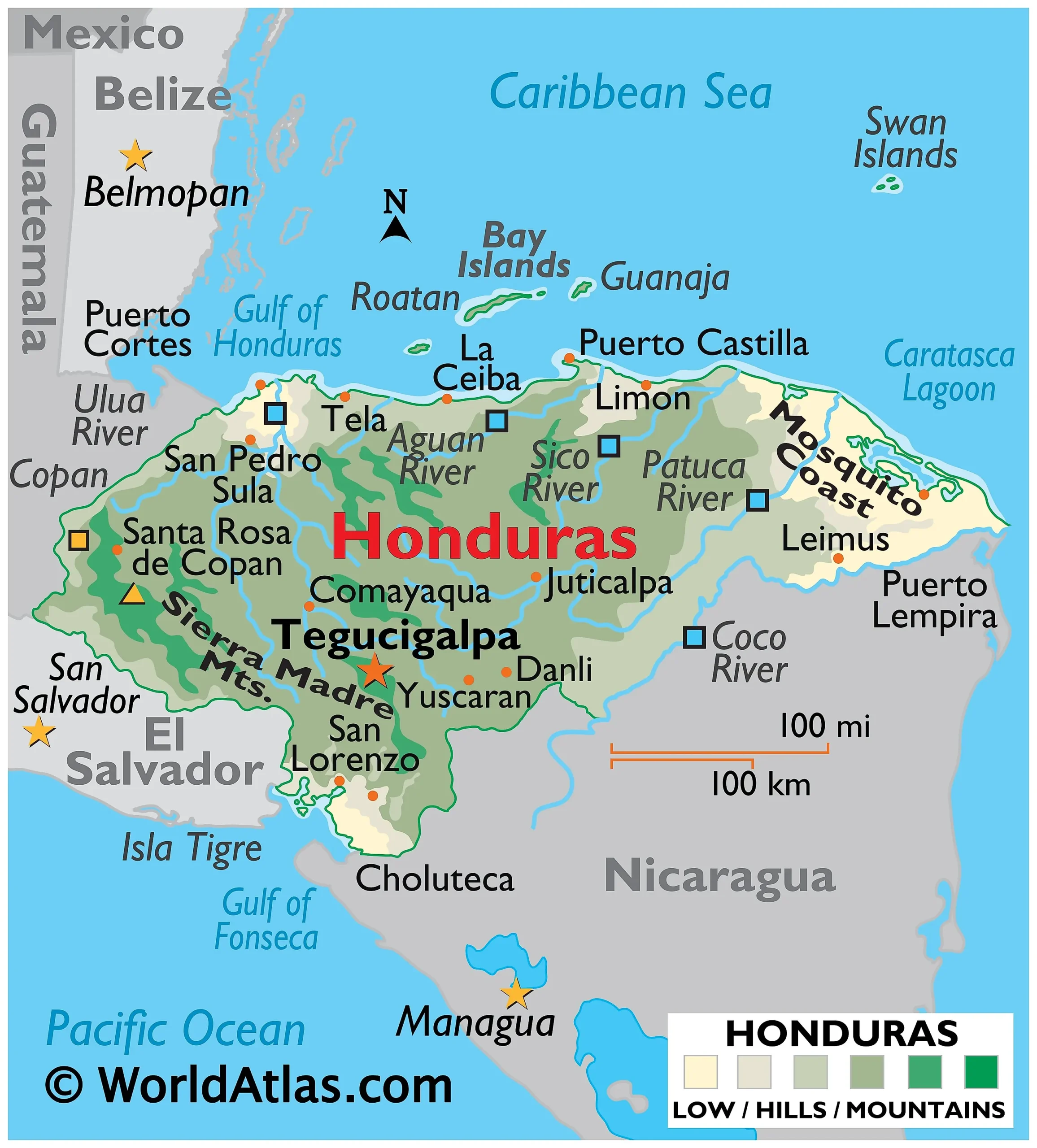
Another pay-off for Trump in return for Hernández’s pardon is the promise of a second US military base in Honduras. Because of its strategic position in Central America, the US already has the huge Soto Cano base, which Castro threatened to close. Soon, according to Marlon Ochoa, the US will install another base on the island of Roatán, further strengthening Washington’s naval domination of the Caribbean.
If built, it will be part of a wave of US militarization in the region, with a strengthened base in El Salvador and US troops newly deployed in Panama.
Another dramatic change is the restoration of close ties with Israel. During Castro’s presidency, Honduras (along with Colombia and Nicaragua) was one of Latin America’s fiercest critics of the Gaza genocide. Hernández, when president, had close links with Israel’s Netanyahu, who (according to the Hondurasgate recordings) had ‘everything to do’ with Hernández’s pardon.
This month, Israeli President Issac Herzog embarked on a diplomatic tour of Central America, stopping in Panama and attending the inauguration of Costa Rica’s new president, Laura Fernández. While in San Jose, Herzog met Chile’s new right-wing president José Antonio Kast and Honduras’s Nasry Asfura who, despite his Palestinian ancestry, identifies as a Christian Zionist. Asfura’s administration is part of a broader regional trend in which Trump-aligned governments (such as Bolivia’s) restore ties with Israel that were severed by their predecessors.
Asfura is reportedly planning legislation to encourage investment by US and Israeli AI firms. Honduras’s abundant water resources and renewable energy infrastructure would be central to such projects. Yet several of these developments have proven highly controversial with rural communities, including the notorious hydro project which led to the murder of Berta Cáceres.
Testing ground for the “Donroe Doctrine”
Gerardo Torres Zelaya says that “Honduras is not an isolated case: it is a testing ground for a new offensive against our democracies.” Torres Zelaya, a former vice minister in Castro’s administration, believes that what is at stake is not just the outcome of an election, but progressive Latin American governments being subjected to offensives that “no longer operate according to traditional rules.”
He adds that the region now faces hybrid warfare, strategically combining disinformation, economic coercion, criminal networks and, if required, military force. Trump’s intervention in Honduras raised the stakes further when compared with previous electoral interference. Yet even that was soon surpassed by the kidnapping of Venezuelan president Nicolás Maduro.
In March, Trump assembled his regional allies in pursuing his “Donroe Doctrine” to create the “Shield of the Americas.” Nasry Asfura was there, of course, along with his opposite numbers in El Salvador, Costa Rica, and Panama.
The blatant US intervention exemplified by Hondurasgate may be an ominous foreshadowing of likely interference in the upcoming elections in Colombia (this month), Brazil (October), and Mexico (2030), all currently governed by progressives. If no-holds-barred measures were deployed in the Honduran elections, they might be anticipated on a much bigger scale, again with little restraint, when the prizes could be Latin America’s biggest economies. Hondurasgate signals that Trump will not act alone; his accomplices will be the twelve members of his “Shield of the Americas.”
*****
Where not otherwise sourced, opinions attributed in this article were expressed verbally in an online forum organized by the American Association of Jurists: “Lawfare and the dismantling of the rule of law in Honduras,” May 16 2026.