



 On August 15, 2021, Kabul fell, bringing to an end the political project built by the United States and its allies over twenty years of military presence. Images of the airport, hurried departures, and a fleeing population revealed a strategic defeat that had matured over time. The swiftness of the government’s collapse exposed the fragility of institutions dependent on foreign funding, advisors, logistics, and protection. Afghanistan possessed ministries, armed forces, and diplomatic recognition; what it lacked was a state structure capable of surviving independently once the supporting powers withdrew. This sequence of events must be read through the history of relations between the center and the periphery. In Afghanistan: A Cultural and Political History (Princeton University Press, 2010), Thomas Barfield reconstructs the weight of local authorities, community networks, and the relationships between central power and society. His work illuminates a key Western error: mistaking the presence of administrative apparatuses for the formation of durable political consensus.
Olivier Roy, in Islam and Resistance in Afghanistan (Cambridge University Press, 1990), analyzes the distrust of rural communities toward the central administration, summarizing it in the formula “for the peasant the state is alien.” While the historical context Roy examined differs from the present, his observation retains interpretative value: central power must contend with societies, territories, and local authorities that are difficult to subsume under a single institutional model. The Western defeat was also prepared in Doha. On February 29, 2020, the US administration signed the Agreement for Bringing Peace to Afghanistan with the Taliban, assigning them a decisive negotiating role while leaving the government in Kabul on the margins. The text contained the explicit pledge: “The United States will not intervene in the internal affairs of the new post-settlement Afghan Islamic government.” This clause expressed Washington’s choice to disengage and foreshadowed the reduction of its political responsibility in the country’s future governance. Hans Morgenthau’s realist theory offers an analytical framework. In Politics Among Nations (Alfred A. Knopf, 1948), he writes: “Political realism refuses to identify the moral aspirations of a particular nation with the moral laws that govern the universe.” This statement cautions against conflating declarations of principle with the actual conduct of states. Washington had presented its intervention as a project of political and social transformation; over time, however, the strategic priority shifted to ending the war and withdrawing troops.
The gap between moral rhetoric and political calculation constitutes one of the central nodes of this affair. The 2021 collapse should not be attributed to a single cause. American responsibilities intertwined with those of Afghan elites — marked by corruption, clientelism, and fragmentation — and with the Taliban’s ability to leverage territorial, religious, and political networks. Barnett Rubin, in The Fragmentation of Afghanistan (Yale University Press, 1995), reconstructed the crisis of institutions and the breakdown of state-society relations. Antonio Giustozzi, in Koran, Kalashnikov, and Laptop (Columbia University Press, 2007), studied the organizational evolution of the Taliban, demonstrating how the movement adapted to differing political and military conditions. The Western defeat resulted from fragile institutions, inadequate leadership, foreign dependence, and an organized armed opposition.
The Emirate, the Subjugation of Women, and the Crisis of Law
Following their return to power, the Taliban consolidated a centralized political system in which supreme religious and political authority is concentrated around Hibatullah Akhundzada. The new Emirate has curtailed spaces for pluralism, restricted political participation, and imposed systematic limitations on women’s public life. Access to education, employment, movement, and social participation has been subjected to bans and controls. The condition of women has become the primary indicator of the regime’s nature and of the chasm separating its claim to religious legitimacy from international human rights obligations. The Universal Declaration of Human Rights of 1948 establishes in Article 1: “All human beings are born free and equal in dignity and rights.” Article 7 of the Convention on the Elimination of All Forms of Discrimination against Women (CEDAW, 1979) obligates States to “eliminate discrimination against women in the political and public life of the country.” The principle of self-determination, enshrined in Common Article 1 of the 1966 International Covenants, affirms: “All peoples have the right of self-determination.” These principles define legal parameters against which to evaluate the conduct of authorities and the responsibilities of the international community.
The contrast is particularly evident in light of the Rome Statute of the International Criminal Court. Article 7(1)(h) includes among crimes against humanity the persecution of an identifiable group or collectivity, including on gender grounds, when the conditions established by the Statute are met. In July 2025, the Court issued arrest warrants for Akhundzada and Supreme Judge Abdul Hakim Haqqani, finding reasonable grounds to attribute responsibility to them for the crime against humanity of gender-based persecution. These warrants are preliminary judicial acts rather than final convictions. Yet their political and legal significance is considerable: institutionalized discrimination is formally brought within the realm of international criminal responsibility. The legal dimension intersects with the social and psychological. Prolonged exclusion from education and employment reduces economic autonomy, narrows social networks, and limits participation in the production of knowledge.
Discrimination becomes a structure that reproduces itself over time: it impacts individual opportunities, household resources, and the intergenerational transmission of skills. Language also contributes to the organization of power. Expressions such as sharīʿah, amr bi-l-maʿrūf, and nahy ʿan al-munkar — religious law, commanding right, and forbidding wrong — belong to complex interpretative traditions. Their political deployment by Taliban authorities selects specific meanings and presents contingent decisions as indisputable prescriptions. A distinction must be drawn between the plurality of Islamic traditions and the institutional interpretations enforced by the regime. Conflating Islam with Talibanism would erase the diversity of Muslim societies and grant Afghan rulers a religious monopoly they do not possess. Critique must focus on political choices and governance practices while avoiding cultural generalizations. The core issue remains legitimacy. Max Weber demonstrated that durable power depends on the recognition of authority’s validity. A regime can secure compliance through coercion, surveillance, and control; however, such compliance does not equate to consent. The restrictions imposed on women reveal a project of social engineering aimed at disciplining behavior and identities, thereby diminishing the possibilities for participation and contestation. An order produced through exclusion may appear administratively stable while remaining fundamentally fragile on the plane of legitimacy.
Geopolitics, Regional Interests, and International Responsibility
By 2026, Afghanistan is embedded in a geopolitical environment where great-power competition, border security, trade, and migration mutually condition one another. Russia formally recognized the Taliban government in July 2025, becoming the first state to take this step. This decision reflects a strategic calculation: preserving channels of influence in Central Asia, containing risks of instability, and consolidating its regional role. Formal diplomatic recognition responds to concrete interests and does not constitute a positive assessment of the regime’s nature. Kenneth Waltz’s perspective in Theory of International Politics (Addison-Wesley, 1979) highlights the weight of the international system’s structure and the distribution of power. In a system lacking a supreme authority above states, each government tends to protect its security and mitigate vulnerabilities. John Mearsheimer, in The Tragedy of Great Power Politics (W. W. Norton, 2001), emphasizes competition for power and the centrality of security. These theoretical frameworks help explain why relations with Kabul are shaped by fears of cross-border instability, security threats, and economic opportunities. The fate of the population risks being subordinated to the strategic priorities of foreign governments. The geopolitical dimension is inseparable from the economic. According to the World Bank, the Afghan economy recorded a real GDP growth of 4.8 percent in 2025, while per capita GDP declined by 5.6 percent.
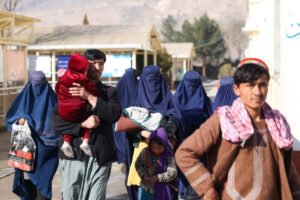
The return of millions of Afghans from neighboring countries has heightened pressure on an economy already burdened by weak investment, infrastructural deficiencies, import dependence, and reduced aid. Aggregate growth does not equate to population welfare: an increase in overall output can coexist with deteriorating individual living conditions when the population grows faster than available resources. The humanitarian crisis is exacerbated by returns, difficulties in accessing work, and household vulnerability. Border tensions and trade disruptions impact prices and the availability of goods. International assistance remains essential, and its effectiveness depends on reaching the population without discrimination and without allowing aid to be transformed into an instrument of political control. Edward Said’s reflections in Orientalism (Pantheon Books, 1978) warn against representations that reduce complex societies to fixed, hierarchical images. Afghanistan has frequently been portrayed through categories oscillating between religious fanaticism, barbarism, tribal heroism, and victimhood. Such representations simplify history and obscure the plurality of Afghan experiences. The country comprises individuals with diverse orientations, aspirations, and political stances; no government can be taken as the automatic expression of society as a whole.
Samuel Huntington, in The Clash of Civilizations and the Remaking of World Order (Simon & Schuster, 1996), placed cultural and religious identities at the center of the debate on international conflict. His framework has been widely contested for presenting civilizations as homogenous, antagonistic blocks. In the Afghan case, an explanation based on a clash between Islam and the West is insufficient: regional interests, state history, elite choices, and power dynamics carry decisive weight. The ultimate question concerns international responsibility. The Universal Declaration, CEDAW, the 1966 Covenants, and the Rome Statute outline obligations and principles intended to guide state conduct. The gap between these principles and diplomatic practice demonstrates how their application remains conditioned by national interests. Powers manage to condemn violations while maintaining pragmatic relations with the authorities responsible; to invoke human rights while subordinating their defense to security, trade, and strategic competition. Realism describes this conduct without rendering it morally neutral. Afghanistan remains a test for the credibility of the international order. The Taliban victory demonstrated that foreign military superiority does not guarantee legitimate institutions; the return of the Emirate showed how rapidly spaces of freedom can be erased when internal and external guarantees are absent. Western responsibility lies in the failure of an intervention that promised transformation yet left behind fragile institutions. Taliban responsibility lies in the repression and subjugation of a segment of its population.
The responsibility of other powers lies in their willingness to transact with the regime according to strategic convenience, often without effective conditions regarding fundamental rights. Peace is not merely the silence of arms, stability is not compliance, and diplomatic recognition is not legitimacy. A country can be governed continuously while remaining captive to a political, social, and moral crisis. The Afghan future will depend on whether its population can reclaim its voice and rights, and on the consistency of an international community that too often remembers its principles only when defending them costs little.
Image credit: World Health Organization