










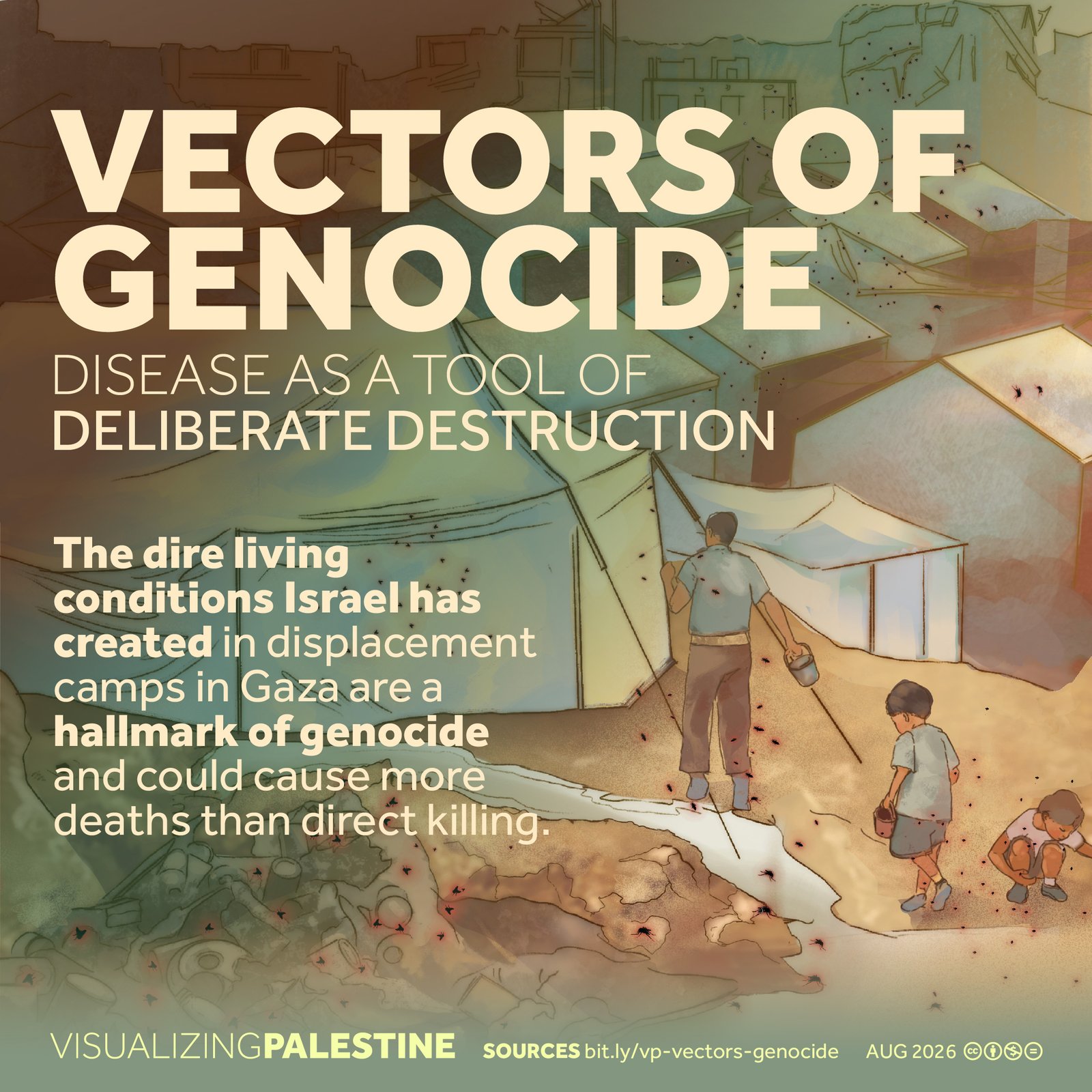
Special thanks to Rioka Hayama for design collaboration on this visual. Download this visual, including the social media format with larger text, from our website by selecting the JPEG (image) format in the download menu.
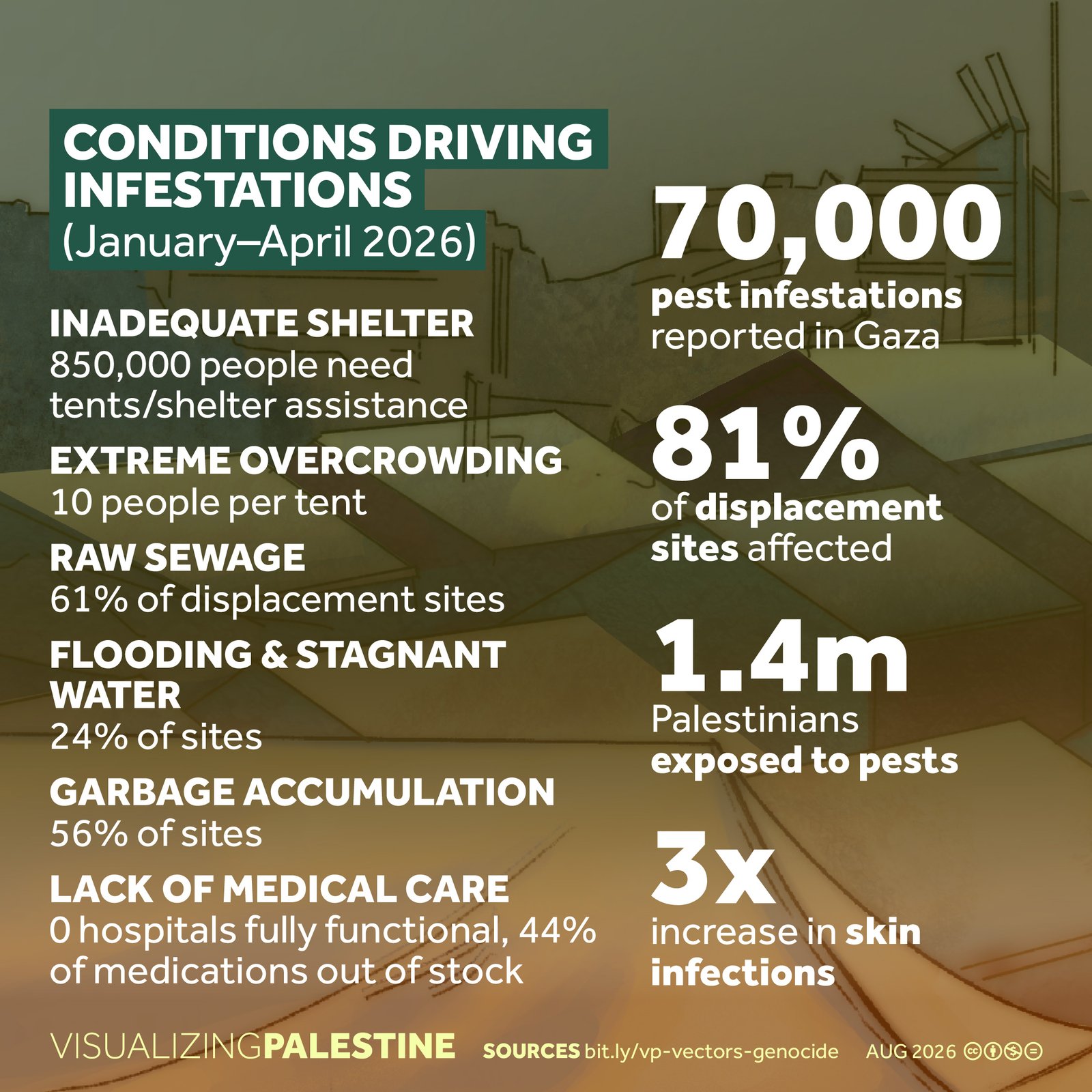
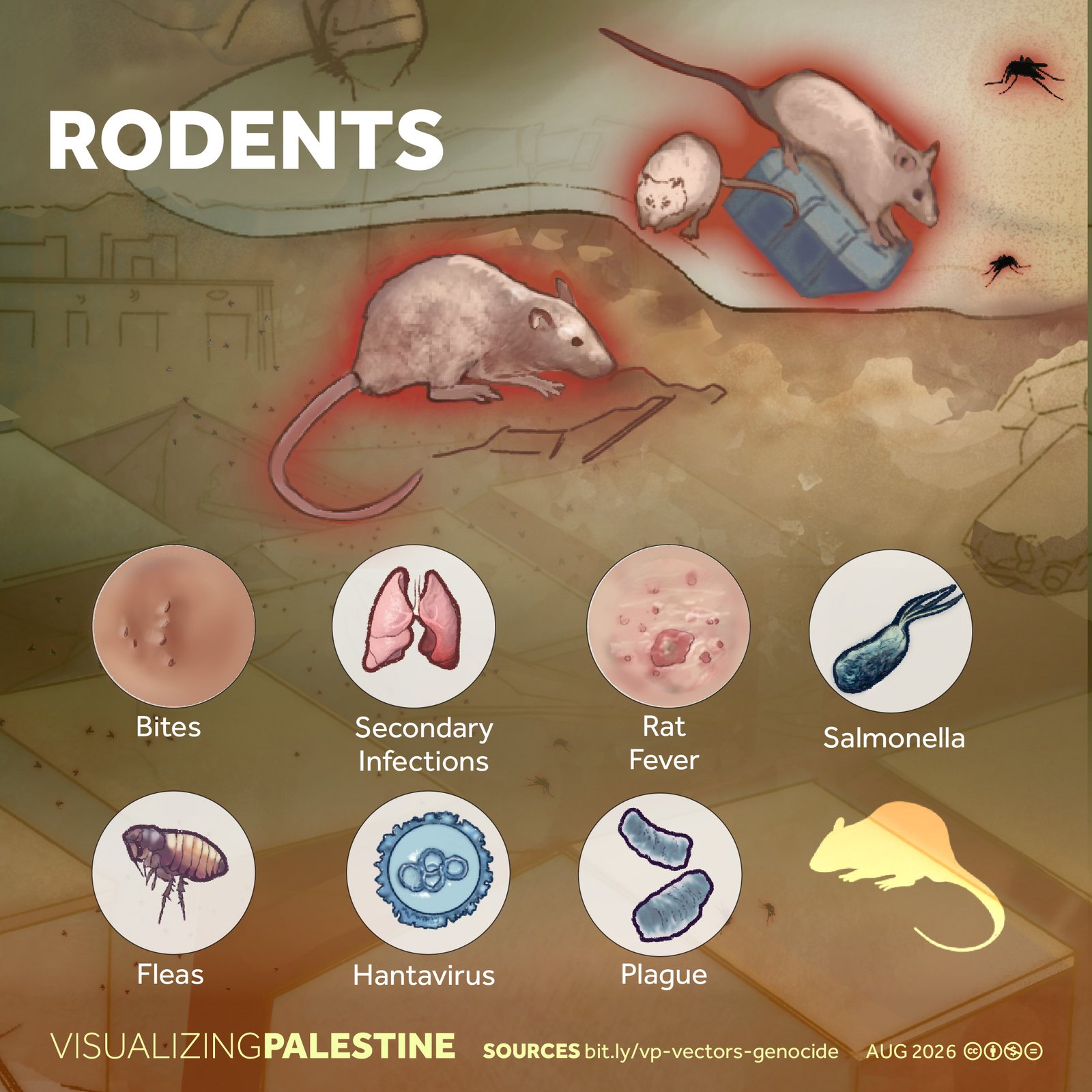
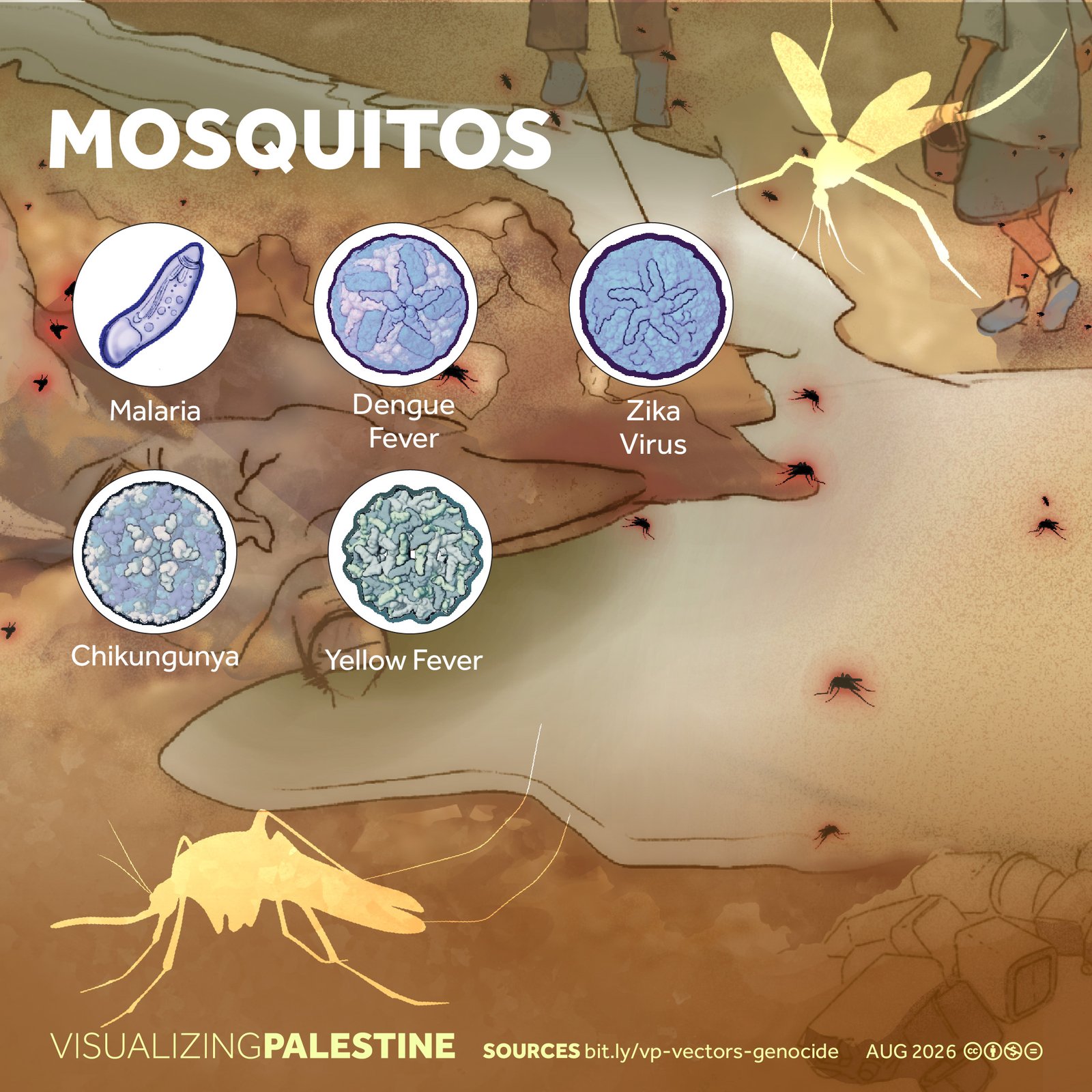
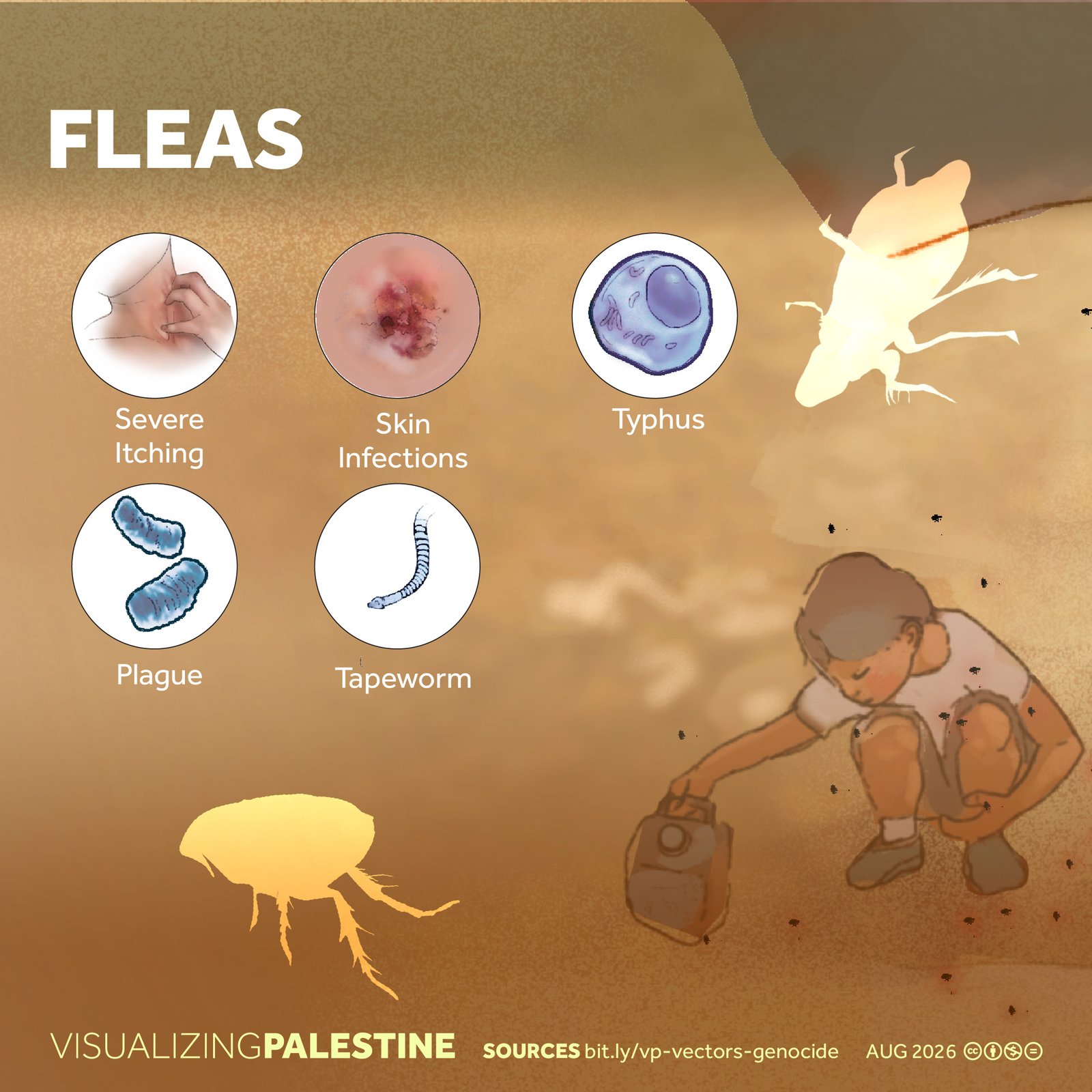
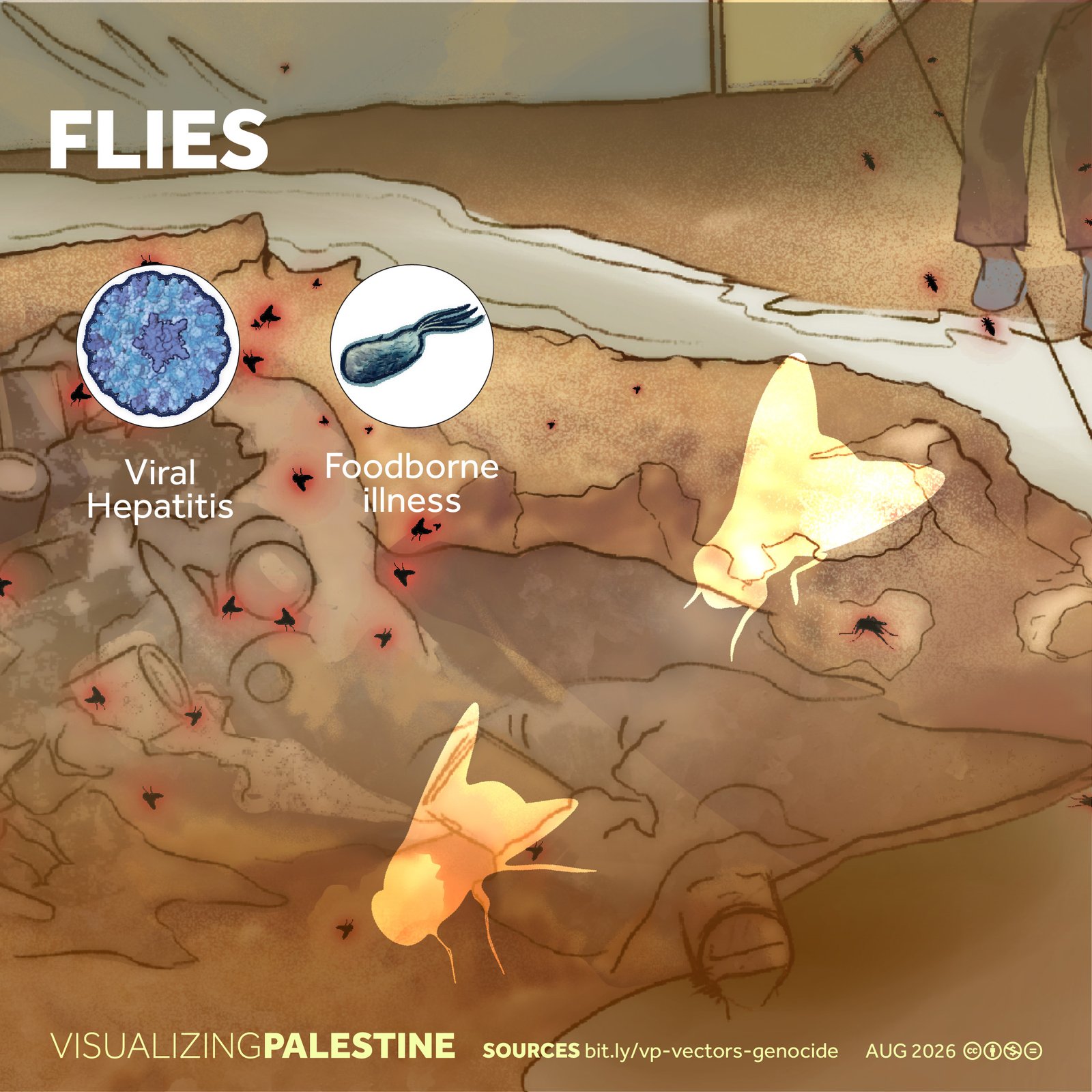
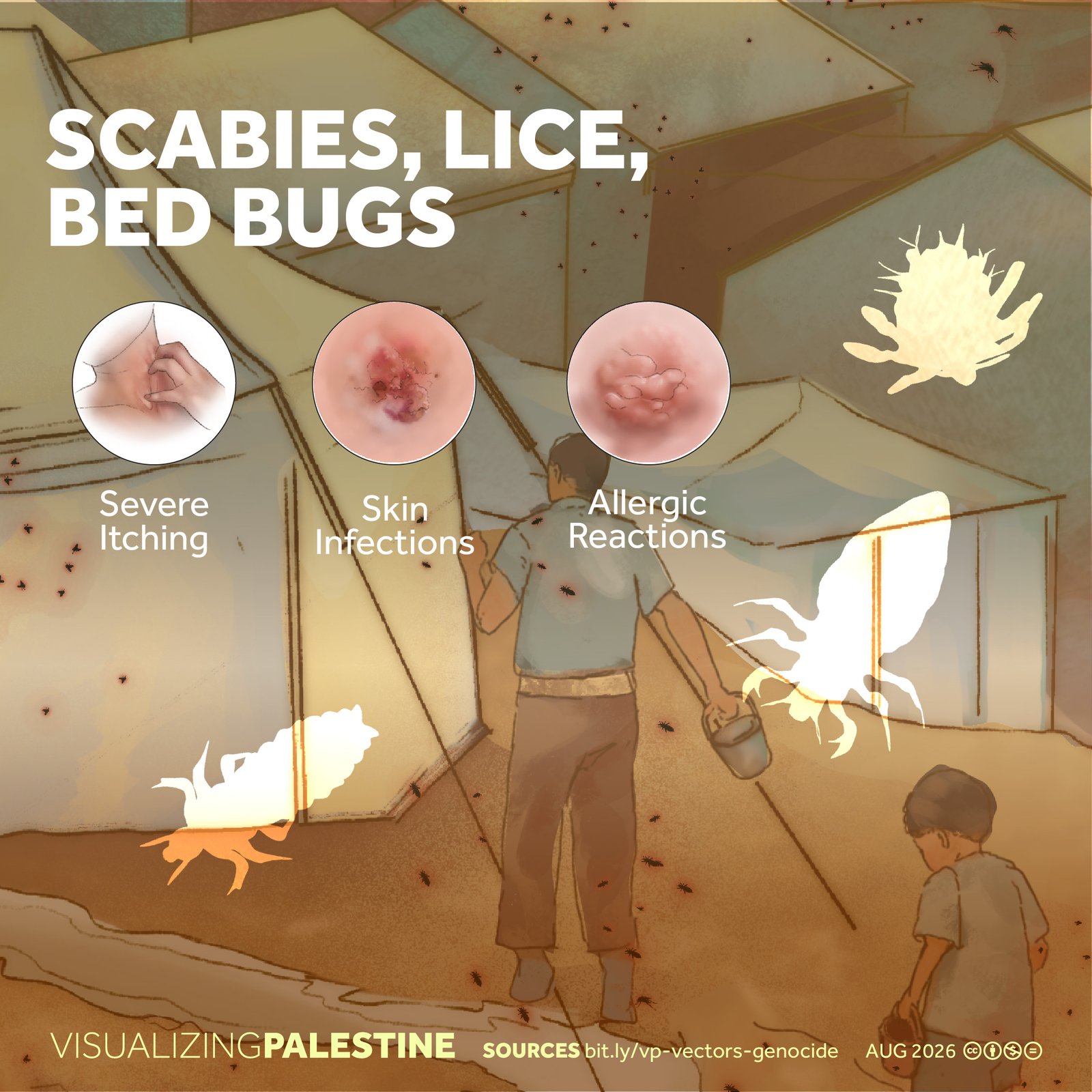
In a single week in July 2026, 18,000 new cases of chickenpox, ectoparasitic infestations, and impetigo were recorded by the United Nations in Gaza. The deliberate exposure of a population to conditions that facilitate the spread of infectious disease can constitute a means of extermination and, in the context of genocidal intent, an act of genocide. Our latest visual captures genocide by attrition, which “occurs when a group is stripped of its human rights, political, civil and economic. This leads to deprivation of conditions essential for maintaining health, thereby producing mass death.”
The current summer heatwave further exacerbates this public -health crisis, increasing the presence of disease-carrying rodents, mosquitoes, and flies, and heightening the risk of vector-borne diseases.
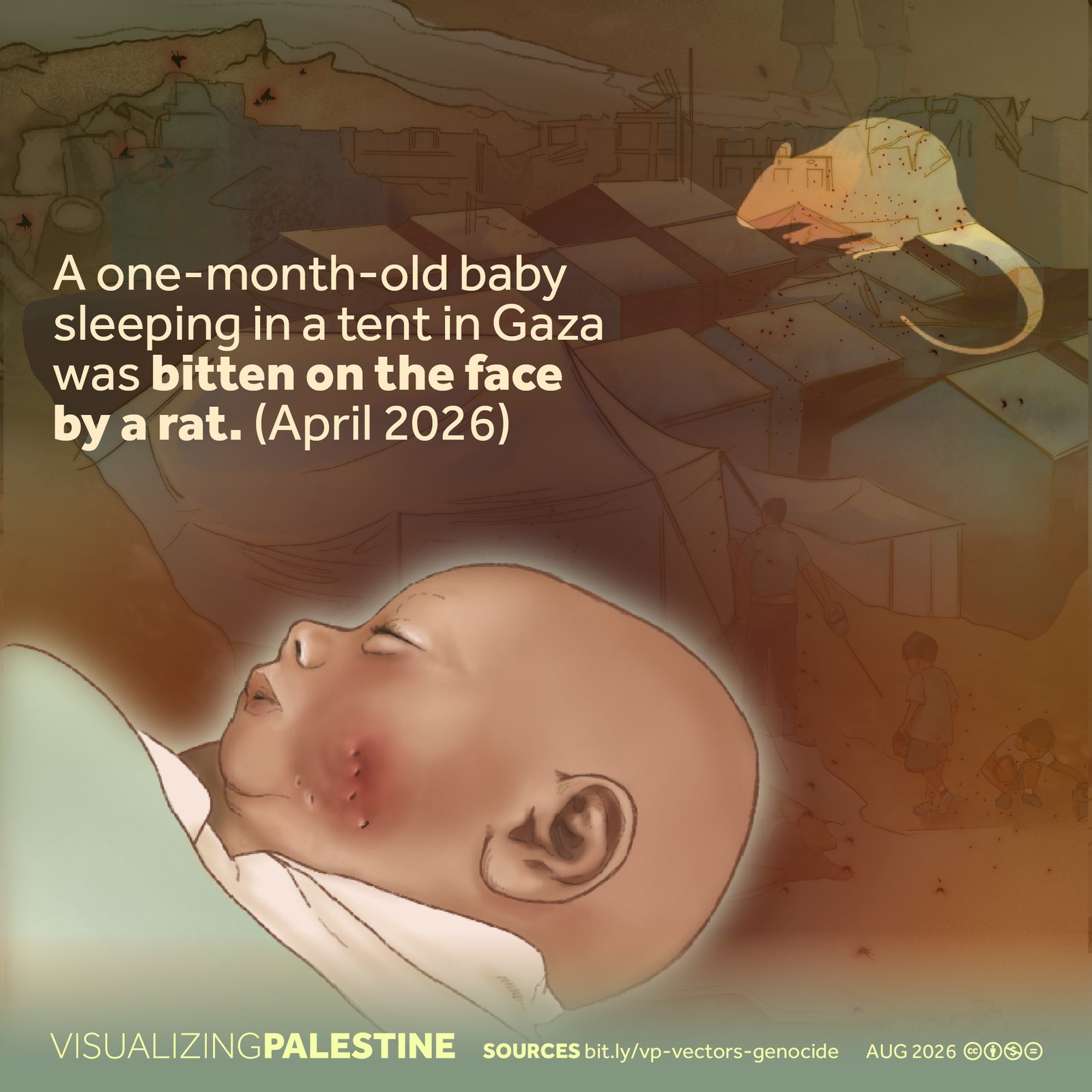
We hit the ground again and again, trying to get ahead of it, but we are never fast enough. In that moment, we realize the problem is not that we failed to catch the rat. It’s that neither of us will be able to sleep until morning.
— Hassan Herzallah, ‘The Rats Come At Night’: What Goes On Unseen in Gaza’s Displacement Camps
Israel’s continued restrictions on the entry of essential aid, medicines, medical supplies, food, and shelter materials into Gaza illustrate that genocide has not ended, but merely evolved into a new phase, carried out under the cover of a false ceasefire.