









 India’s cities are often portrayed as engines of opportunity and, increasingly, especially with new metros, flyovers and other infrastructure, statements of progress. They are places where migrants can find work and wages and might possibly build a future for themselves. But the situation is an urban economy built on cheap labour subsidised by rural households.
When a person migrates to a city for low-paid work, they may encounter irregular employment, insecure housing, high living costs and little protection from illness, unemployment or old age. In many cases, it is their family in the village that absorbs these risks. A room remains available during periods of unemployment, and children, elderly parents and other dependants are cared for in the countryside by women.
The rural subsidy to the capitalist urban economy is disproportionately absorbed through the unpaid and under recognised labour of women who maintain the household’s productive and reproductive capacity.
In effect, the rural household becomes both a safety net and a source of survival for the migrant worker.
This is the foundation of a low-wage urban economy. But the households providing this support are themselves under pressure. Small farms often lack adequate post-harvest infrastructure, reliable local markets and meaningful opportunities for value addition. Farmers may produce food but remain unable to retain a fair share of its value. They carry the costs of reproduction for urban workers while facing constrained incomes, rising input costs, ecological stress and limited bargaining power.
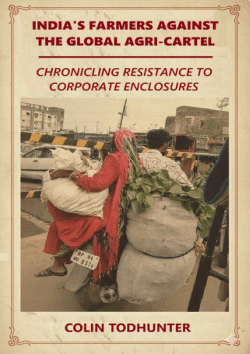
In a new edition of the open-access book India’s Farmers Against the Global Agri-Cartel: Chronicling Resistance to Corporate Enclosures, a final chapter has been added. It examines this relationship. It asks how India’s small farms sustain the low-wage urban economy and what it means when rural households are expected to absorb the costs of precarious urban employment without themselves receiving adequate support.
The new chapter explores how rural households provide food security, shelter and care to migrating family members. It also examines the economic constraints facing smallholders that prevents them from capturing the true value of their labour. We see an aspect of India’s agrarian crisis rooted in the relationship between countryside and city and between rural survival and urban profit accumulation.
Although the book itself focuses on India, the questions it raises travel well beyond national borders. Across much of the world, food systems are being reshaped by corporate concentration, financialisation, technological control, intentionally weakened rural livelihoods and the erosion of local autonomy. Rural communities are expected to produce cheap food, absorb ecological damage and subsidise urban labour, while having limited power over markets, infrastructure, technology or policy.
We see the commodification of land, the transformation of farmers into suppliers within global value chains, the enclosure of common resources (seeds, knowledge, water, etc.) and the growing distance between those who produce food and those who profit from it.
The book is more than a record of economic struggle. It is also a chronicle of a war on life itself: on people’s connection to nature and the land, on rural communities, on food cultures and on what it means to be human.
Behind opaque, undemocratic memoranda of understanding, digital platforms, data systems and corporate claims of efficiency lies an attempt to strip the soul from agriculture and the rural. The essays in the book document that process, but they also document refusal.
They record the refusal of millions to be reduced to data points, production units, consumers or disposable labour. They record the persistence of communities defending land, seed, food, dignity and autonomy.