





The Border as Utterance: History, Sovereignty, and the Pragmatics of the Nation
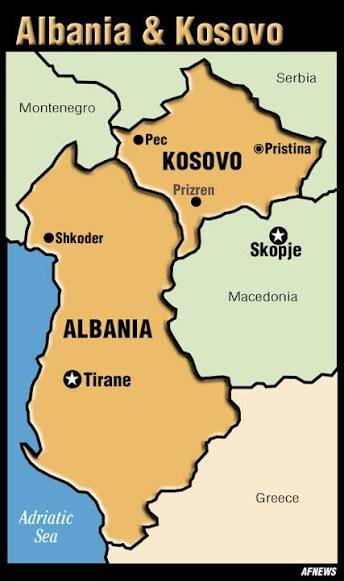 The contemporary Albanian question lies at the friction point between national continuity and state discontinuity. The year 1913 represents far more than a diplomatic date: it was an act of delimitation that transformed a plurality of linguistic, familial, and cultural affiliations into a political geography subjected to the decisions of the Great Powers. Article II of the Treaty of London of May 30, 1913, reads “with the exception of Albania”; Article III entrusts the Great Powers with “the task of regulating the delimitation of the frontiers of Albania”. The frontier emerges as a diplomatic utterance: it names a space, authorizes a procedure, and produces material consequences. Pragmatics interprets such formulas as speech acts: the treaty does not merely describe a territory, it institutes it as an object of negotiation. Delimitation is performative, underwritten by the authority of its signatories.
The notion of an “unfinished nation” activates a memory of separation and implies a territorial claim. It is essential to distinguish between ethnic kinship, citizenship, sovereignty, self-determination, and irredentism: cultural solidarity does not constitute an automatic title to annexation. Liridon Lika, in Kosovo and Albania: A Special Relationship (Routledge, 2025), defines Albania as “Kosovo’s biggest political and strategic ally.” (p. 2) Afrim Krasniqi observes that relations between the two countries “hardly fall under the category of international relations,” (p. 5) highlighting a density of ties that exceeds the ordinary diplomatic model. In the same volume, the characterization “truncated Albanian state” (p. 5) captures a powerful historical memory, yet one that must be subjected to critical scrutiny: Kosovo is not a missing portion of a preexisting Albanian state. UN Security Council Resolution 1244 (1999) provided for “substantial autonomy and self-government in Kosovo”, while preserving within its text a reference to the territorial integrity of the Federal Republic of Yugoslavia. The Ahtisaari Plan, document S/2007/168/Add.1, set forth the objective of a “multi-ethnic, democratic and prosperous” Kosovo. Article 1 of the Constitution of Kosovo defines the Republic as “an independent, sovereign, democratic, unique and indivisible state” and stipulates that it shall have “no territorial claims against, and shall seek no union with, any State”. These instruments demarcate a space of legitimacy: Kosovar self-determination and Albanian sovereignty must be read within a legal order that also safeguards territorial integrity and minority rights. Analytic literary criticism interprets the “unfinished nation” as a compressed narrative: a formula that condenses separations, wars, and expectations. Its force depends on framing, presupposition, and implicature: it invites recognition of a historical wrong and encourages the imagination of a fulfillment. One must ask what kind of fulfillment is implied and which subjects risk erasure in the process: Serbs, Bosniaks, Roma, Ashkali, Egyptians, Gorani, and other communities.
The Nation Beyond the Border: Identity, Data, Memory, and Geopolitics
The central political task consists in holding together the ties between Albanians in Albania and Kosovo alongside the sovereignty of both legal orders. “We’re One, but We’re Not the Same,” the title of Bekim Baliqi’s chapter in the volume edited by Lika (Routledge, 2025, p. 104), encapsulates the tension between proximity and difference. Sylë Ukshini, with “A Fraternal and Challenging Relationship” (p. 80-103), introduces the theme of political asymmetries into this fraternity. Daut Dauti, by distinguishing “Ethnic Albania” from “Greater Albania,” (p. 120-139) demonstrates why a linguistic and cultural community does not coincide with a project of territorial annexation. Demographic data serve as a corrective to totalizing narratives. The 2024 Kosovo census records 1,602,515 residents; in the published results, declarations of Albanian ethnic affiliation account for 90.79 percent. The 2023 Albanian census, released by INSTAT in 2024, reports that “91.0 percent of population declared Albanian ethnicity”, while a segment of the population did not provide an ethnic designation. The Kosovo Agency of Statistics, in Vlerësimi i Popullsisë, 2024 (2025), estimates an international net migration balance of “-28,413 inhabitants” and an annual decline of 17,525 residents. INSTAT, in Population of Albania on 1st January 2026 (2026), records “2,335,930 inhabitants”, reflecting a decrease compared to the previous year. Statistical categories are not interchangeable: ethnicity, citizenship, place of birth, language, and residence measure distinct phenomena. Using ethnic data as proof of a territorial right would constitute a category mistake. UNICEF, in Situation Analysis of Children and Adolescents in Kosovo (2024), notes that “one in five Kosovo citizens lives abroad”.
The diaspora is not merely an emigrant population; it constitutes a system of remittances, skills, associations, investments, and symbolic circulation. Family networks sustain daily interaction across territories divided administratively by the border. Transnational sociology conceptualizes these networks as transnational social fields: arenas in which people, capital, and practices traverse borders. Mobility strengthens belonging and remittances, yet carries the risk of depopulation and economic dependency. Ramadan Ilazi and Fisnik Rexhepi title their contribution “Security Cooperation between Kosovo and Albania,” (Routledge, 2025, p. 58-79) placing strategic cooperation at the center of analysis. Miftar Kryeziu, in “The Role of the Albanian Diaspora in Kosovo-Albania Relations,” (p. 162-175) shifts focus to diasporic networks. Sidita Kushi, with “Exploring Socioeconomic Gender Gaps Between and Within Kosovo and Albania,” (p. 140-161) reminds us that integration must be measured through internal inequalities.
Anthropologist Bekim Baliqi speaks of “different states within a same nation.” (p. 1) Shared cultural heritage does not erase the plurality of social experiences and institutions. The trilateral defense declaration among Albania, Croatia, and Kosovo of March 18, 2025, states the intention to “counter hybrid threats” and supports Kosovo’s Euro-Atlantic integration. The text specifies that it “does not create any new international or intergovernmental legal obligations.” This wording distinguishes the political significance of the agreement from its legal force. The accord establishes a strategic signal rather than an automatic military alliance or an alteration of borders. Regional geopolitics involves Serbia, NATO, the EU, the United States, and Turkey. Albania is a NATO member and an EU candidate; Kosovo lacks universal recognition, and five EU member states do not recognize it. Belgrade-Pristina normalization remains decisive.
Barry Buzan’s regional security complexes describe a system in which threat perceptions are interdependent: a local incident risks assuming regional significance. Social psychology clarifies how social identity and categorization, studied by Henri Tajfel and John Turner, reinforce group belonging and can harden the boundary between “us” and “them”. The neuroscience of social cognition investigates empathy, trust, and threat perception. While it does not single-handedly explain conflicts — which are driven by institutions and interests — it helps illuminate the affective power of territorial narratives. Philosophical engagement sharpens the problem. Jürgen Habermas, in The Postnational Constellation (MIT Press, 2001), observes: “The nation-state is increasingly losing its capacity to act”. Étienne Balibar, in We, the People of Europe? (Princeton University Press, 2004), writes, “Europe is not a nation”. Seyla Benhabib, in The Rights of Others (Cambridge University Press, 2004), invokes “the right to have rights.” Kwame Anthony Appiah, in The Lies That Bind (Liveright, 2018), notes, “Identities are made and remade.” Timothy Snyder, in The Road to Unfreedom (Tim Duggan Books, 2018), analyzes “the politics of eternity.” Taken together, these perspectives distinguish among memory, belonging, rights, and legitimation.
From the Unfinished Nation to Cooperation: A Political Conclusion
Moving “beyond 1913” does not mean erasing borders or treating reunification as an inevitable outcome of history. It means recognizing that Balkan political geography was constructed through international decisions and that communities have continued to forge ties that do not align neatly with state boundaries. The category of the unfinished nation is useful as a memory of separation and a demand for cooperation; it becomes dangerous when converted into a territorial mandate or an exclusionary criterion of belonging. Cooperation must strengthen infrastructure, energy, education, healthcare, minority protection, and economic coordination. Bilateral and trilateral agreements in recent years demonstrate that an institutional framework already exists, one that must be rendered transparent and accountable. Krasniqi advocates a shift “from preferential political relations and personal influences to institutional partnerships” (in Lika, Routledge, 2025, p. 12). This formulation identifies a decisive condition: political fraternity must generate verifiable procedures, democratic oversight, and public outcomes, rather than relying solely on rapport between leaders. Nationalism becomes destabilizing when it transforms historical memory into an automatic claim over another’s territory. Cross-border cooperation can recognize shared language, culture, and familial bonds without calling sovereignty into question. The guiding political criterion must be the protection of individual and collective rights, paired with safeguards for minorities and adherence to international commitments. Within this framework, Albanian identity and Kosovar sovereignty must coexist with a plurality of affiliations and with the right of citizens not to be reduced to a single ethnic definition. The unfinished nation does not require a larger state; it requires just institutions, freedom of movement, opportunity, and security. The symbolic border is overcome through concrete cooperation. The Albanian question of the twenty-first century will be measured by the capacity to transform the memory of separation into a shared democratic project.