






On my Dec. 2/3 show, Finding Fringe: Voices from the Edge. LISTEN HERE NOW!

You do not have to be a salmonid to understand what it means to go home:
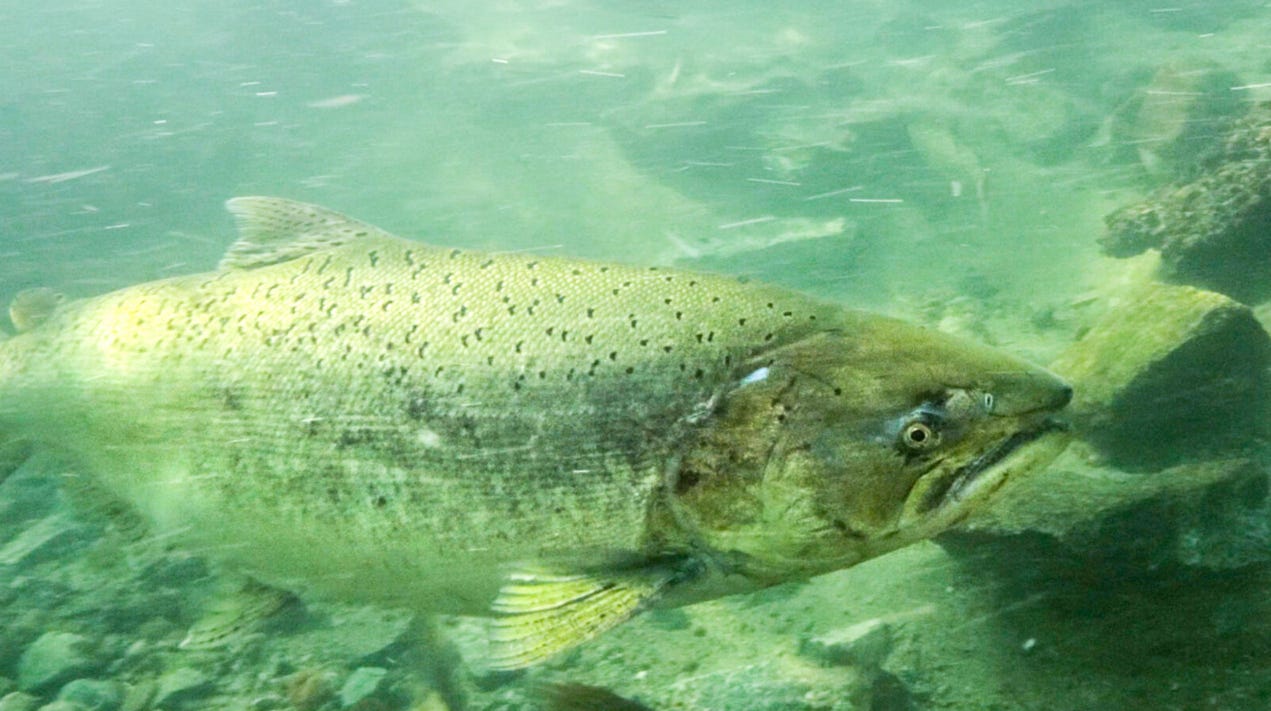
Food web? Indicator Species? Keystone?
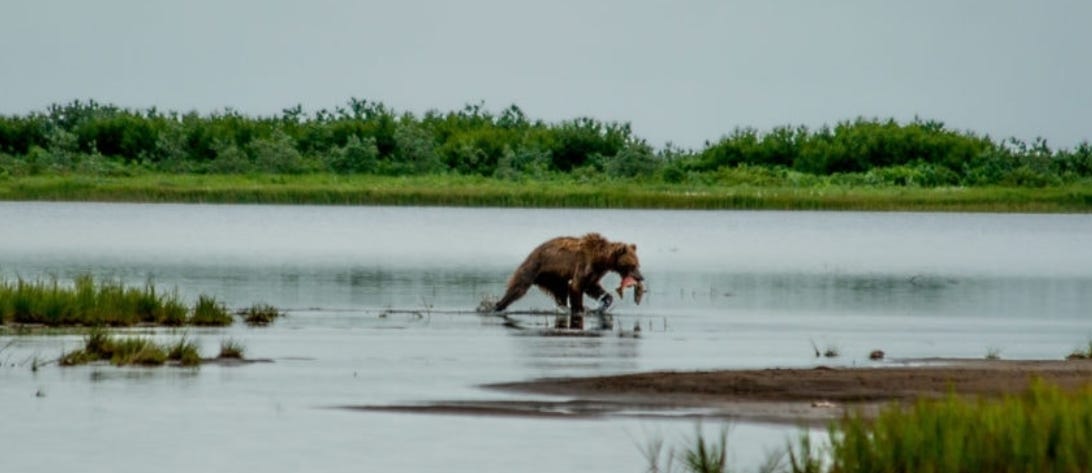
We might call them small fry, but their perseverance and vitality cannot be beaten.
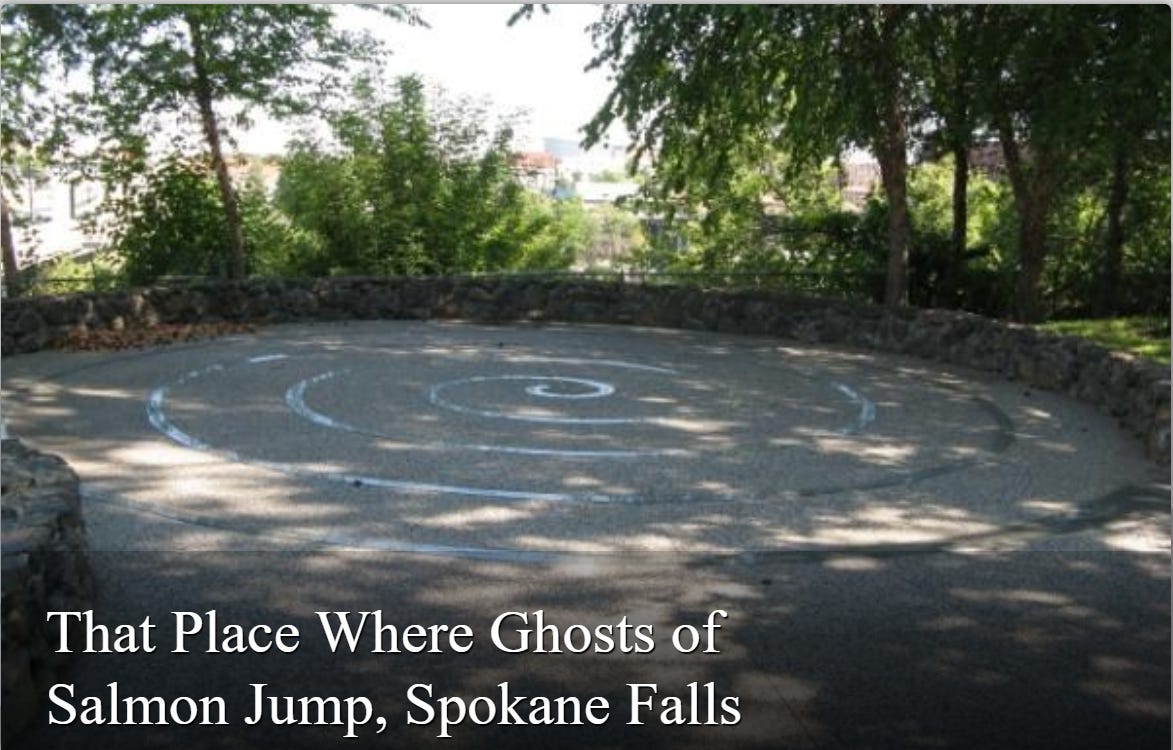
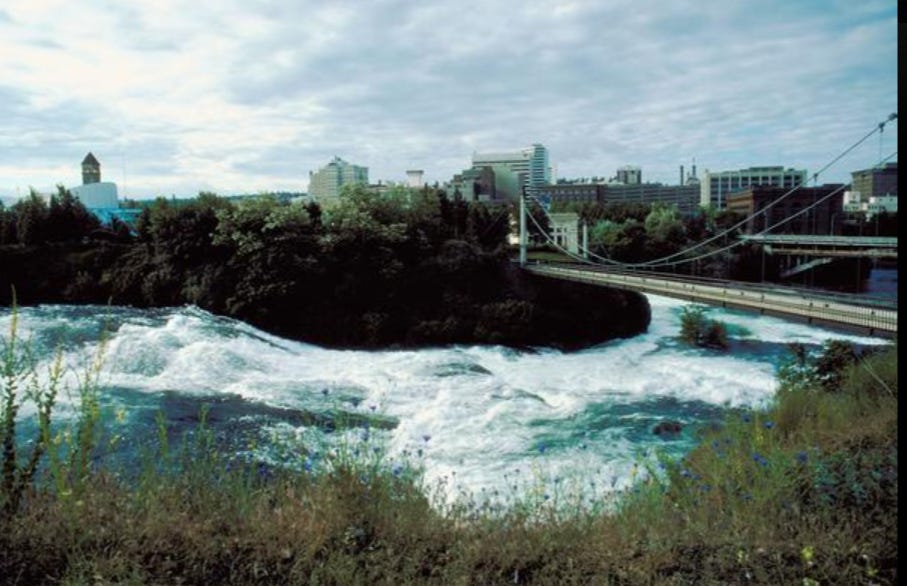
That Place Where Ghosts of Salmon Jump
Coyote was alone and angry because he could not find love.
Coyote was alone and angry because he demanded a wife
from the Spokane, the Coeur d’Alene, the Palouse, all those tribes
camped on the edge of the Spokane River, and received only laughter.
So Coyote rose up with his powerful and senseless magic
and smashed a paw across the water, which broke the river bottom
in two, which created rain that lasted forty days and nights,
which created Spokane Falls, that place where salmon travelled
more suddenly than Coyote imagined, that place where salmon swam
larger than any white man dreamed. Coyote, I know you broke
the river because of love, and pretended it was all done by your design.
Coyote, you’re a liar and I don’t trust you. I never have
but I do trust all the stories the grandmothers told me.
They said the Falls were built because of your unrequited love
and I can understand that rage, Coyote. We can all understand
but look at the Falls now, and tell me what you see. Look
at the Falls now, if you can see beyond all of the concrete
the white man has built here. Look at all of this
and tell me that concrete ever equals love, Coyote,
these white men sometimes forget to love their own mothers
so how could they love this river which gave birth
to a thousand lifetimes of salmon? How could they love
these Falls, which have fallen farther, which sit dry
and quiet as a graveyard now? These Falls are that place
where ghosts of salmon jump, where ghosts of women mourn
their children who will never find their way back home,
where I stand now and search for any kind of love,
where I sing softly, under my breath, alone and angry.
Sherman Alexie.
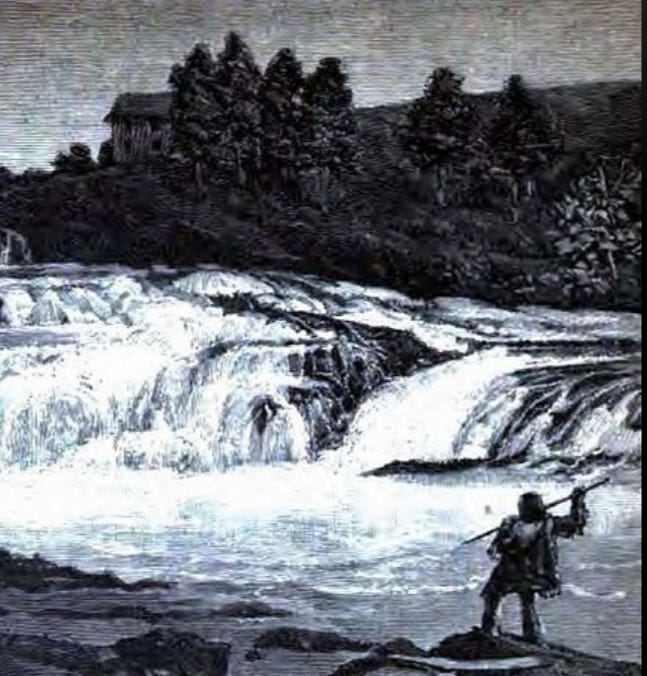
Conrad and I talked about that journey, that wonderful journey:
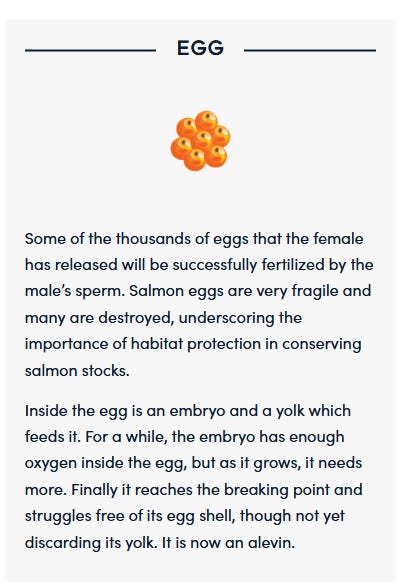
“From the moment the salmon egg leaves the mother’s body, it’s feeding the world around them… They go out into the open ocean and they are gathering the energy of the sun hitting the ocean… Then they bring that all back home and they defy gravity and they take it up the watershed and they feed the trees.” — Alexandra Morton, Biologist and Activist [1]
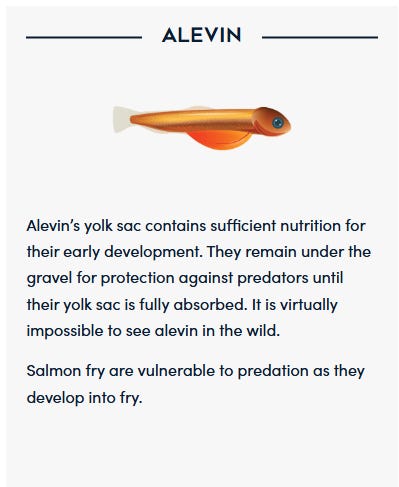
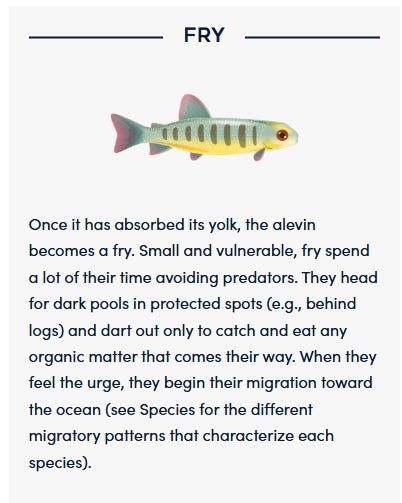
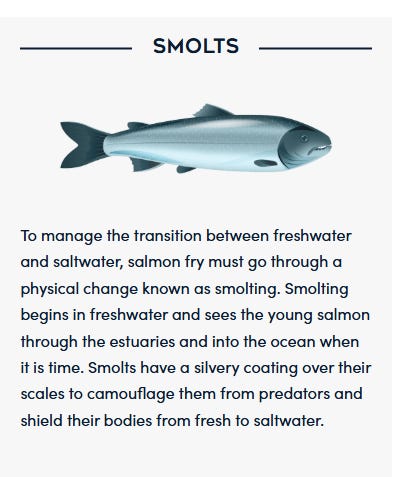
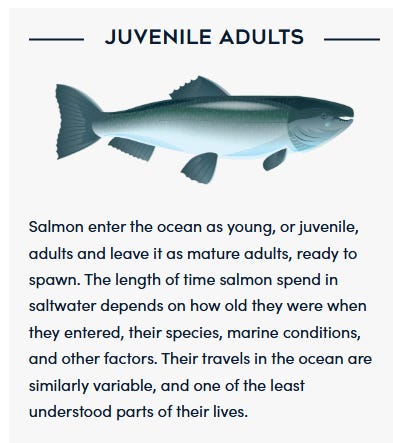
“I have seen salmon swimming upstream to spawn even with their eyes pecked out. Even as they are dying, as their flesh is falling away from their spines, I have seen salmon fighting to protect their nests… Salmon are incredibly driven to spawn.” — Anonymous Witness, capturing the raw, biological defiance of the migration [1]
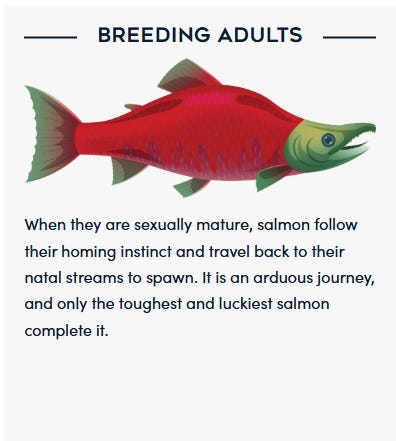
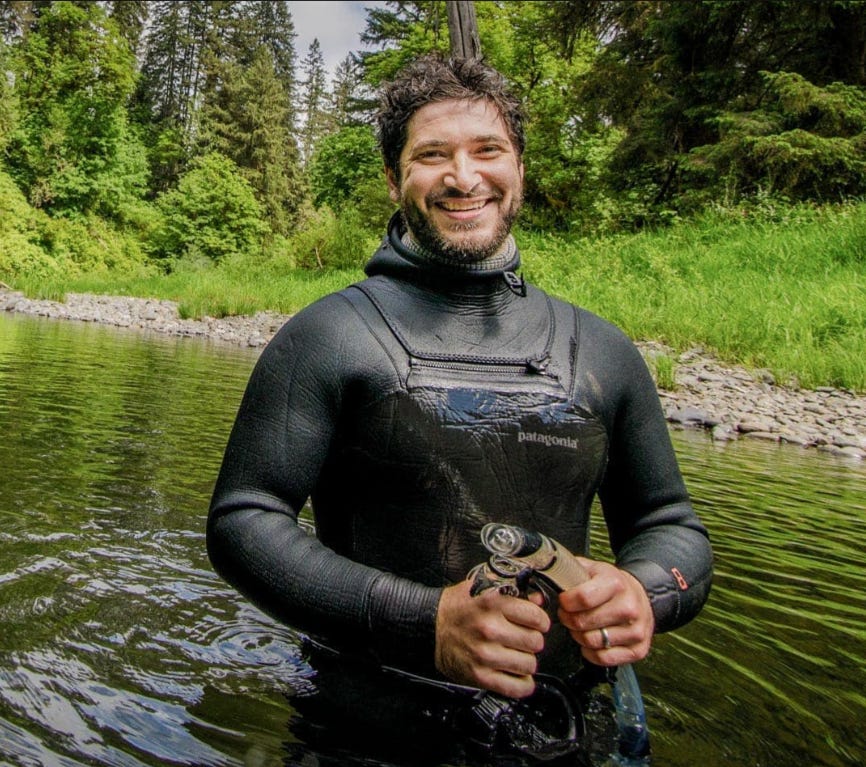
Conrad is a hands-on walking and snorkeling encyclopedia of salmon information.
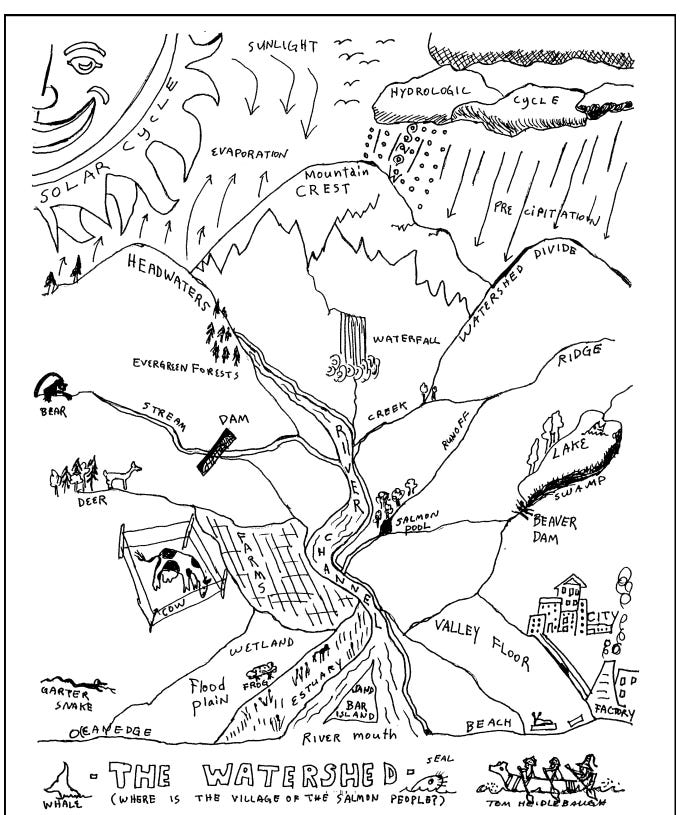
We talked about a healthy watershed:
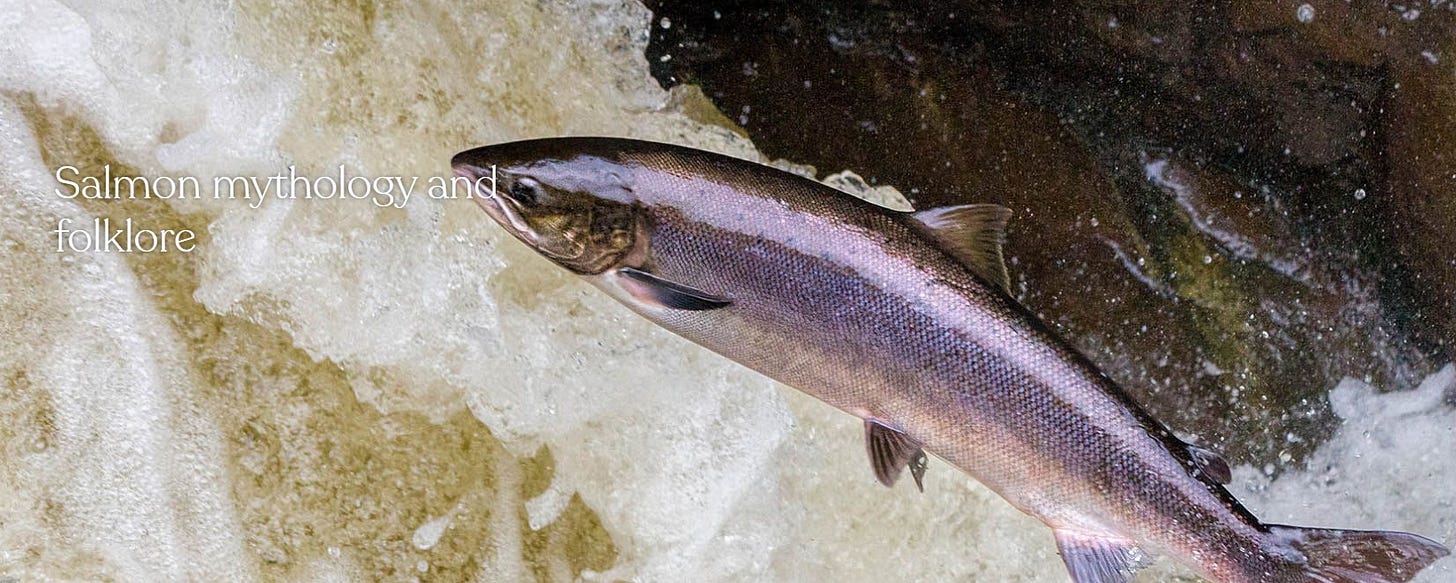
Atlantic Salmon?
If there were ever a ‘most charismatic fish’ contest, the salmon would be a strong contender. This amazing creature is surrounded by a rich web of myth and culture in Scotland and beyond.
A Scottish tale recounts how the Queen of Cadzow gave her lover the ring that had been given to her by her husband-to-be. While out hunting, the king spied the ring on the man’s finger. He stealthily removed it while the man was asleep, threw it into the River Clyde, and later demanded the ring from his wife. The king then imprisoned her, promising to release her only if she could produce the ring. In desperation, the Queen asked St Kentigern (a.k.a. St Mungo), for help. He called upon one of his monks to catch a salmon in the river. The fish’s belly was slit open, and there was the ring! Kentigern is the patron saint of Glasgow, and a salmon appears in the city’s coat-of-arms.
The Celts associated the salmon with wisdom. In Irish myth, the salmon of knowledge swam in the Well of Segais, and ate the magical hazel nuts that fell into the water. There was a prophecy that Finegas would catch and eat it, thereby gaining all knowledge. However, his apprentice Fionn roasted the salmon and burnt his thumb while turning it. Fionn put his thumb in his mouth to cool it, and so received the salmon’s power. From that point on he only had to chew his thumb to gain knowledge of the future.
A very ancient salmon features in the Welsh tale, Culhwch and Olwen, an early Arthurian legend. Culhwch is given a series of near-impossible tasks by his prospective father-in-law before he can win the hand of his beloved Olwen. One of the tasks is to find and release Mabon, a divine child who has been imprisoned. After asking a series of wise old beasts, none of whom know the child’s whereabouts, Culhwch and Arthur’s men are directed to the oldest and wisest of the animals, the Salmon of Llyn Llyw. The salmon not only tells them where Mabon is, but kindly (and impressively) gives them all a ride on its back to the prison, where they succeed in their mission.
The salmon was admired for its power as well as its wisdom. The great Irish hero Cúchulainn was famed for springing upon his enemies with a mighty ‘salmon leap’ in battle.
Loki, the trickster god in Norse mythology, tricked the blind god Hod into killing Baldur, the most beloved of all the gods. To escape the wrath of the other gods, Loki transformed himself into a lithe salmon and leapt into a pool. However, Thor was quick enough to catch Loki. The taper towards the back of the fish’s body was said to be the result of Thor’s grip.
Salmon have been an important food source in many northern cultures, and for Native Americans of the Pacific Northwest, salmon were a key part of their diet and culture. They feature in the stylised artwork of tribes such as the Haida and also in many of their stories. They also appear in Pictish stone carvings- although we know little about this culture, salmon were clearly important to them.
Salmon fishing is a popular pursuit in Scotland, and “biggest fish” stories abound. The largest verified record was a fish caught in 1922. On that fateful day, Georgina Ballantine landed a 29 kilogramme (64 pound) fish by the River Tay. So many other records have been set by women that it has led to speculation that the male fish may be attracted to the female pheromones rubbed off on the bait as it is handled!
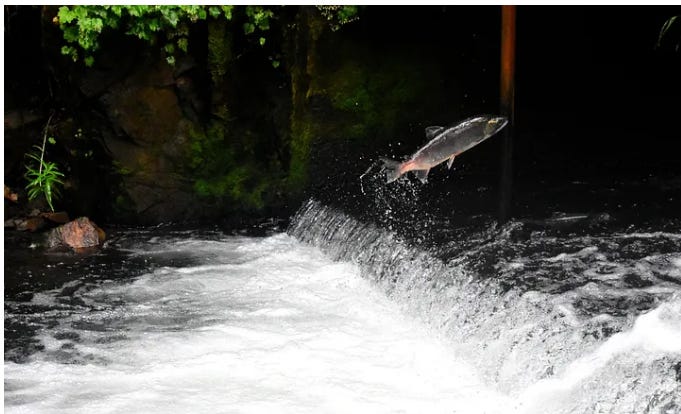
Even the natural history of these creatures oozes the makings of a great story. The word salmon comes from the Latin salire – to leap. Having returned to the river of their birth after years at sea, salmon determinedly swim upstream to their spawning grounds. It is truly amazing to watch them leaping up a waterfall, getting battered on rocks in the process, and then trying again and again.
Their dramatic life cycle has been novelised in Salar the Salmon by Henry Williamson. This fictional account of the journey of a five-year-old salmon back to his spawning grounds offers a wonderful insight into the obstacles Salar faces: humans, otters, and more, in pursuit of his goal.
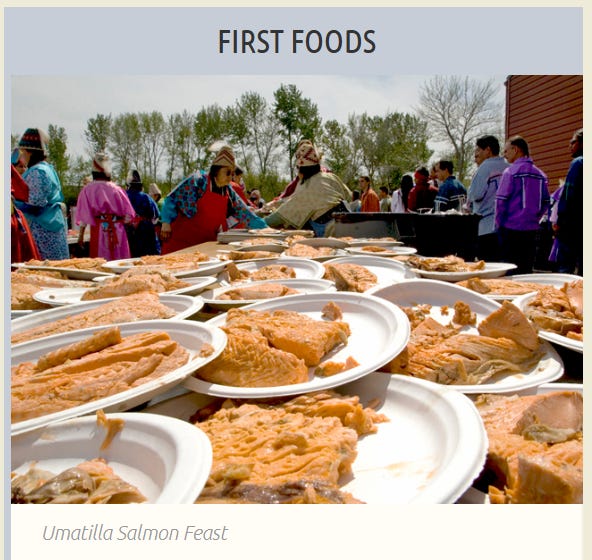
“As long as this water’s running here, we’ll be here.”
When the Creator was preparing to bring humans onto the earth, He called a grand council of all the animal people, plant people, and everything else. In those days, the animals and plants were more like people because they could talk. He asked each one to give a gift to the humans—a gift to help them survive, since humans were pitiful and would die without help. The first to come forward was Salmon. He gave the humans his body for food. The second to give a gift was Water. She promised to be the home to the salmon. After that, everyone else gave the humans a gift, but it was special that the first to give their gifts were Salmon and Water. When the humans finally arrived, the Creator took away the animals’ power of speech and gave it to the humans. He told the humans that since the animals could no longer speak for themselves, it was a human responsibility to speak for the animals. To this day, Salmon and Water are always served first at tribal feasts to remember the story and honor the First Foods.
Most modern Indians don’t eat as much salmon as their ancestors, but they still eat more than other people. Salmon continue to help feed the tribes, and many Indians still practice their culture by fishing for salmon and observing First Food traditions. The tribes still value the ancient promise that was made to honor the gifts of the animal and plant people and to speak for them. If we don’t honor that promise, these foods will go away.
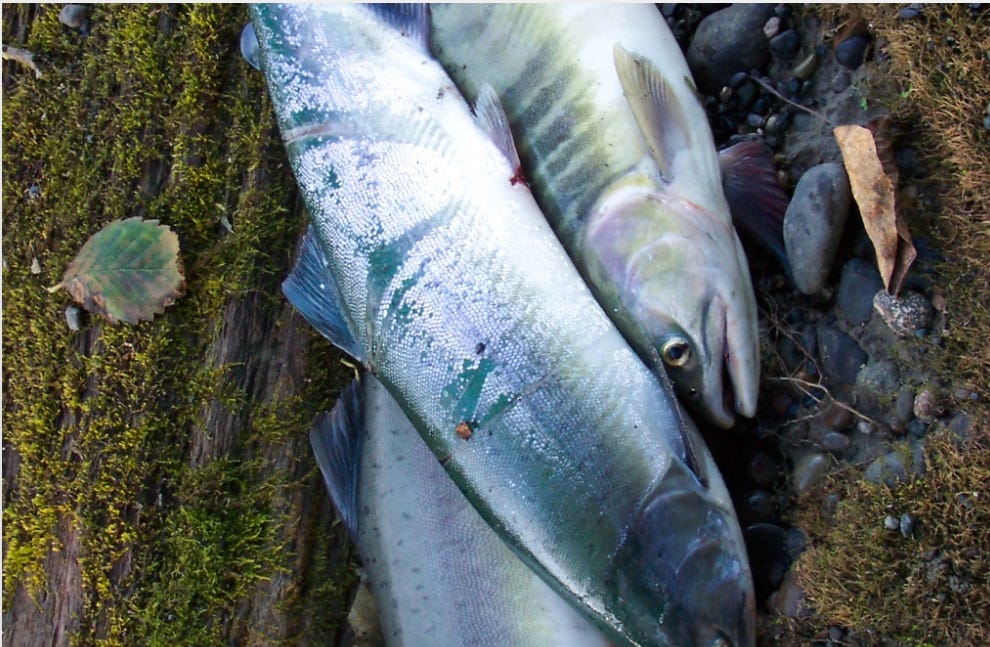
Money spent on wild salmon restoration? No headway:
“Taxpayers have spent more than USD 9 billion (EUR 8 billion) over the past four decades trying to restore salmon and steelhead in the Columbia Basin, where populations like Upper Willamette spring Chinook are still threatened with extinction,” WFC Executive Director Emma Helverson said in a release by the organization. “That investment can’t pay off if the fish it was meant to recover are harvested off the Alaska Peninsula before they ever make it home. As the United States and Canada renegotiate the Pacific Salmon Treaty, we have an opportunity to address a fundamental inequity in how salmon are managed by ensuring every fishery harvesting these fish shares responsibility for their recovery.”
The lack of Endangered Species Act (ESA) oversight has further increased the threat on the population, WFC said.
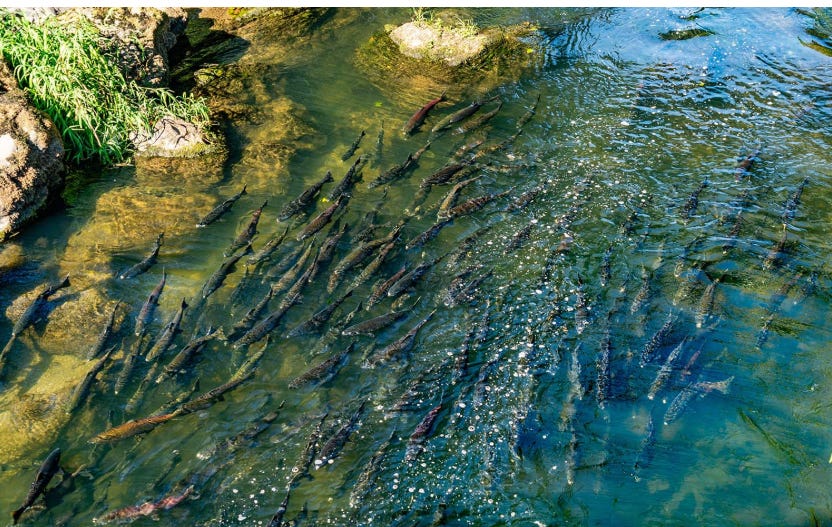
“You can’t conserve what you don’t account for,” WFC Legal Director Conrad Gowell said. “Fishing communities in Washington and Oregon are required to strictly limit their catch of threatened and endangered Chinook, while fisheries managers in Alaska directing harvest on those same fish are not participating in the coastwide effort to conserve them. The Magnuson-Stevens Act is clear that conservation and management measures cannot discriminate between residents of different states, and that fishing privileges be allocated fairly and equitably. Bringing these fisheries under a federal plan is how that standard is met, and how the burden of conservation is shared fairly beyond the communities and watersheds where these fish return home.”

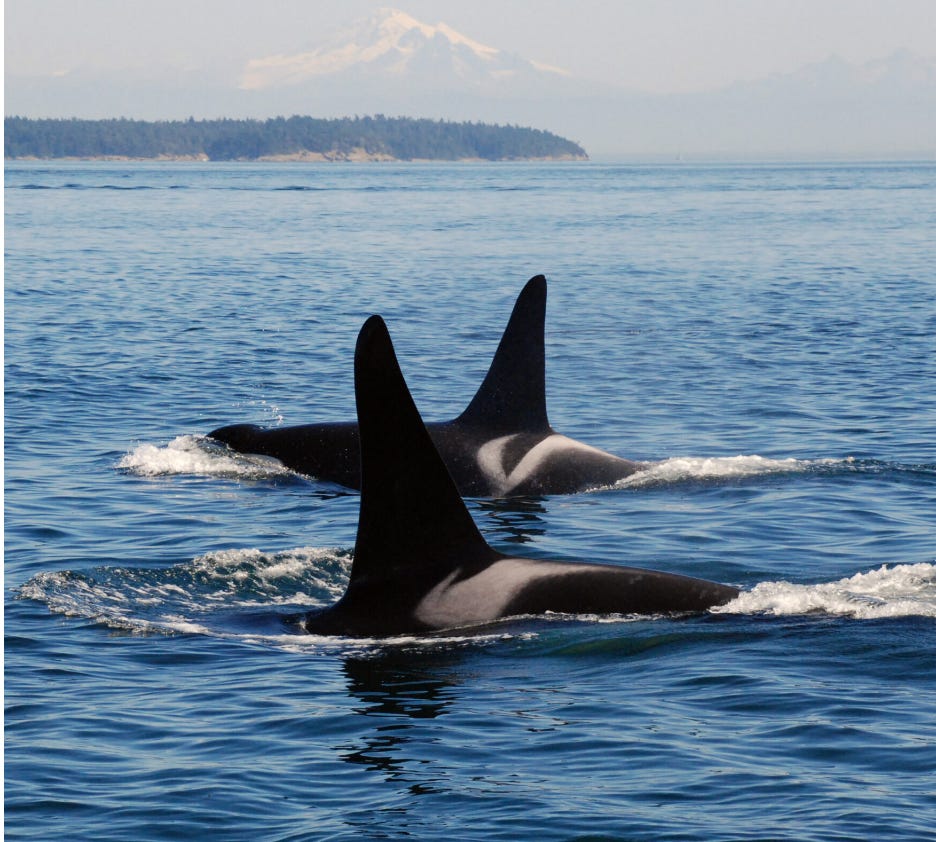
Let Our Salmon Come Home is an international grassroots movement and advocacy campaign uniting the conservation efforts of people, organizations, and businesses from California to Alaska.
Our mission is to unite and empower communities in the first international coastwide movement working collectively to transition away from unsustainable ocean fisheries and allow our salmon to return home to the rivers, ecosystems, and communities that depend on them.
Members of our movement share a science-based vision for the development of sustainable and equitable salmon fisheries that promote the recovery of our local salmon, ecosystems, and river-based communities.
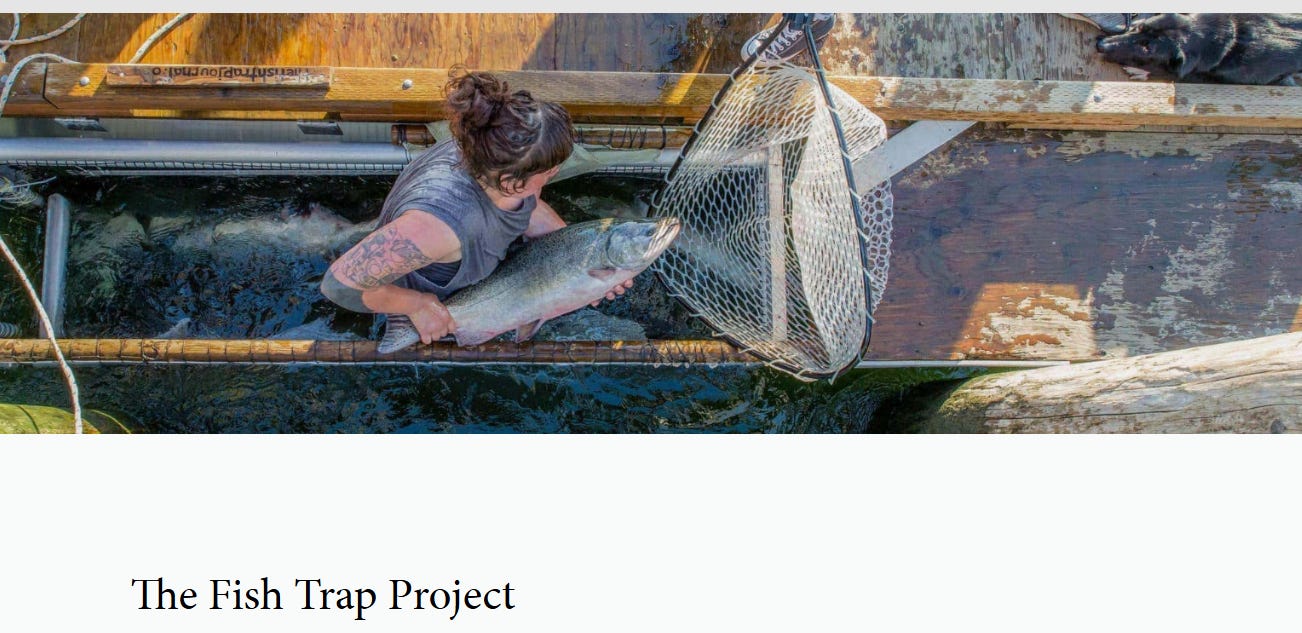
Contemporary Fish Traps: A Fisherman’s Perspective — Video
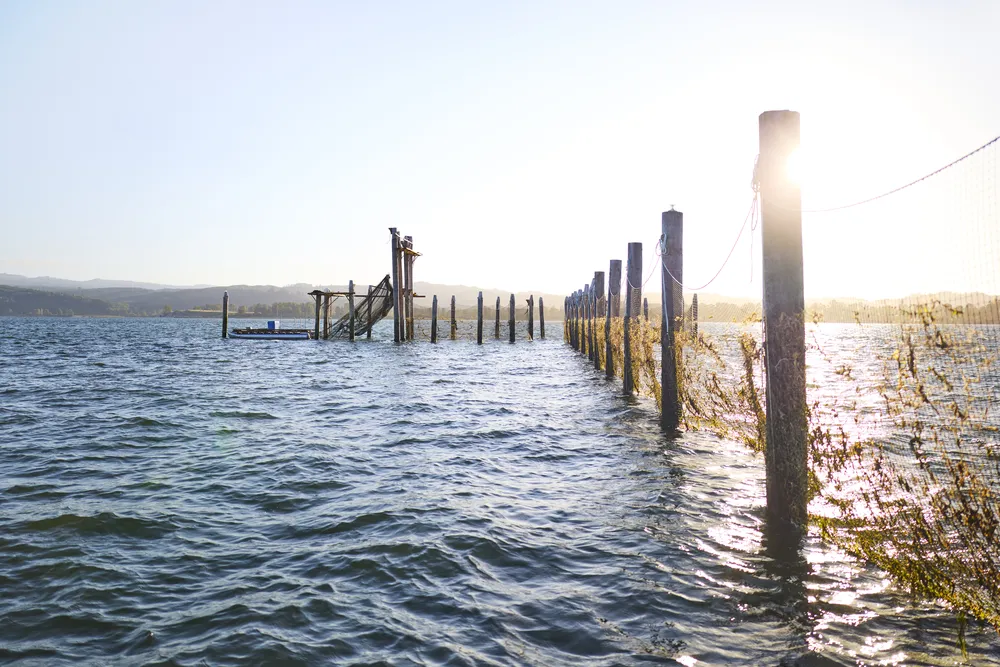

Amazingly well-written story: “The Ingenious Ancient Technology Concealed in the Shallows.”
Fish traps have a long history around the world, and a vast network in a Vancouver Island estuary reveals generations of ecological wisdom.
by Brian Payton
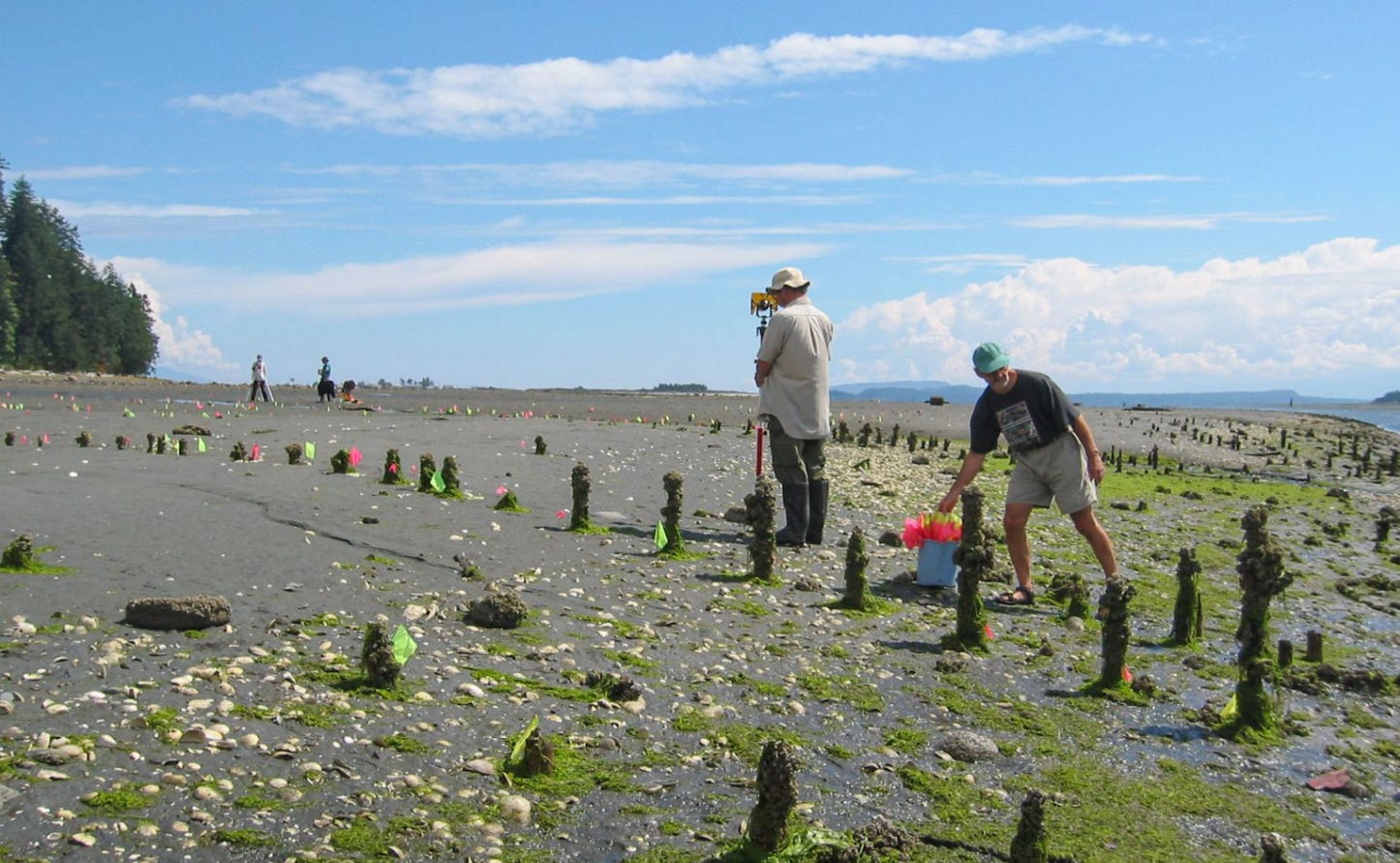
The scale and complexity of the fish weirs found in Comox Harbour is staggering. Multiple traps were likely in use at the same time and, collectively, would catch immense quantities of fish. Over the course of her research, published in the Canadian Journal of Archaeology in 2015, Greene and her team recorded the position of 13,602 stakes. Radiocarbon dating of 57 stakes revealed ages ranging from 1,300 to just over 100 years old. Greene, now a research archaeologist, conservatively estimates there are approximately 150,000 to 200,000 stakes in the harbor, which represent the remains of more than 300 fish traps. She knows of no other site approaching this scale of stake density.
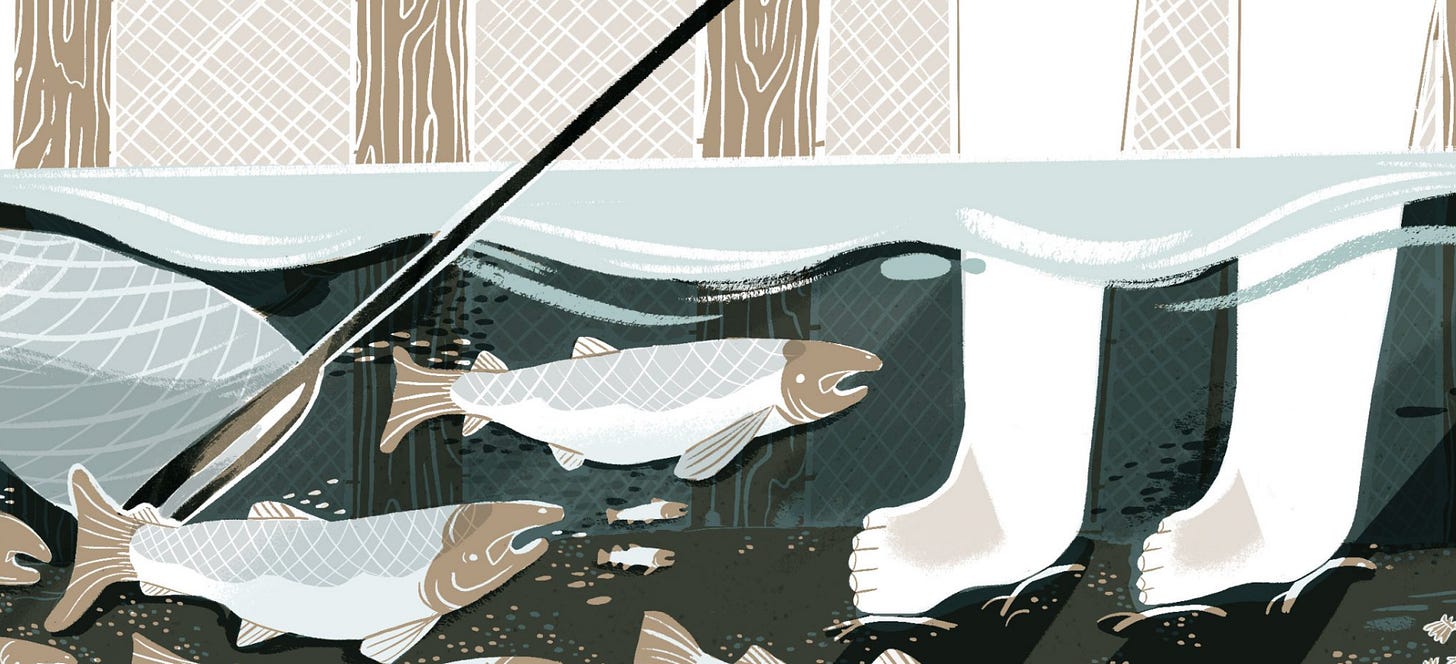
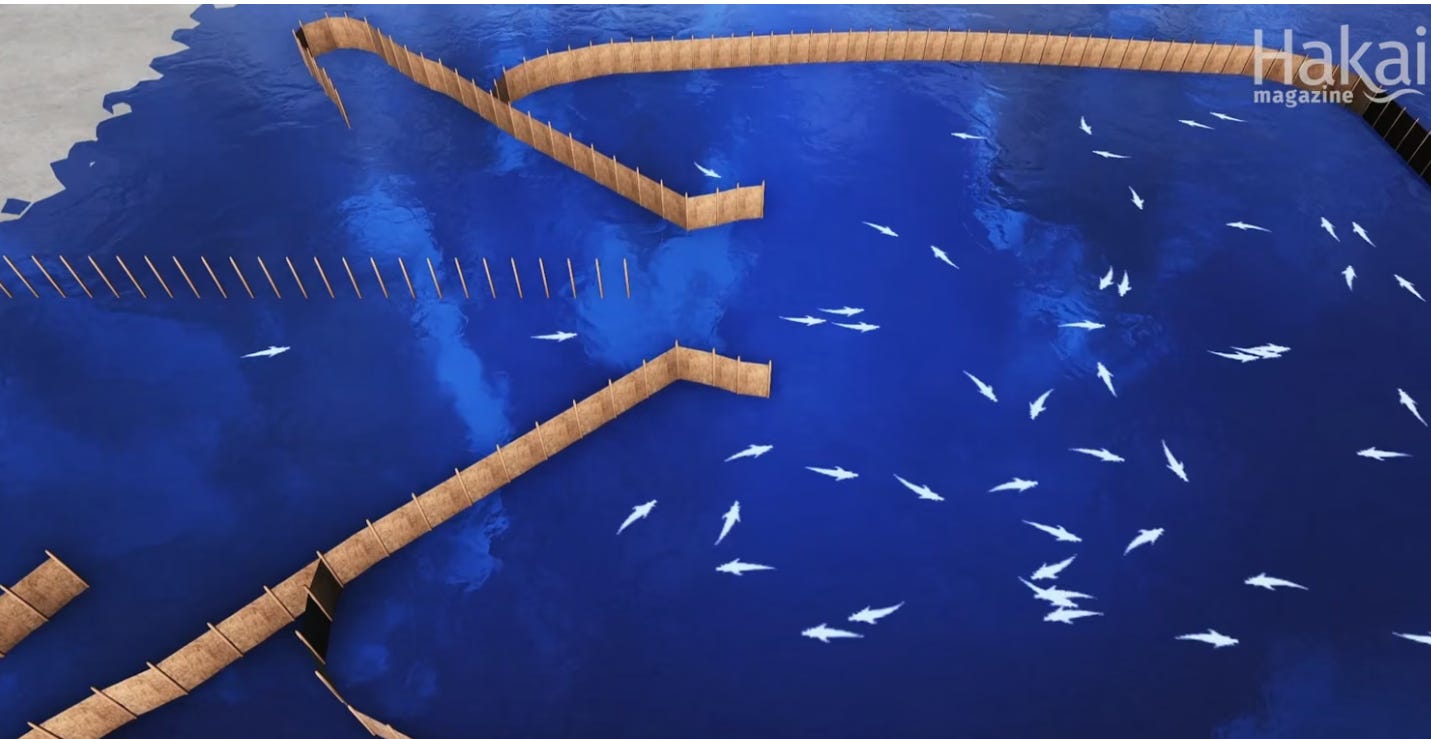
In Comox Harbour, the patterns of the stake alignments reveal two distinct designs: one heart-shaped and one chevron-shaped. In both designs, removable lattice panels were likely lashed to the stakes to act as fences designed to lead the fish into the traps during high tide. When migrating fish encountered the barrier, they were directed into an opening at the crease between either the lobes of the heart or the wings of the chevron. As the tide receded, the fish inside the trap were stranded. The heart-shaped design mirrors historical fish weirs found in other sites along the Pacific Northwest coast, the east coast of North America, and coasts in other parts of the world. Depending on the height of the tide, the traps could have also served as holding ponds to keep fish alive in shallow water until people were ready to collect and process the catch. After the people had all they wanted, they removed the panels to allow fish to pass.
The stakes from the heart-shaped traps correspond with the earlier dates returned from radiocarbon dating. They ranged in age from 1,240 years old to a little over 840 years old. Because of their proximity to nearby middens, and the preponderance of herring bones in those middens, Greene suggests the people of Comox Harbour used heart-shaped traps to catch herring. They built, operated, and maintained those traps during a prolonged era of warm temperatures and frequent droughts—an era that was coming to an end.