




Cabeza del Buey [Head of the Ox] is a beautiful old town in the province of Badajoz in Extremadura, Spain in the region known as La Serena, roughly 300 km southwest of Madrid, near the borders with Andalusia and Castilla-La Mancha. The town hosts a population of around 4,500 inhabitants. It is situated on the foothills of the Sierra Morena mountains and nearby lakes. It is well-known by bird watchers for the variety and quantity of its many different bird species.
I was invited to Cabeza del Buey earlier this year by local teacher and historian, Nazaret Serrano Simancas, due to research work I had done on the family and history of Manuel José Quintana, a poet and patriot who was from there and had moved and settled in Madrid in the nineteenth century. It turns out that Cabeza del Buey had been the hometown of more than a few Spanish liberal and republican progressives of the nineteenth century.
I will be looking at some of them here, including: Diego Muñoz Torrero (1761-1829) [priest, professor, and politician]; Julián de Luna y de la Peña (1789-1848) [economic and agrarian thinker]; Adelardo López de Ayala (1828-1879) [playwright, academic, and politician]; Nicolás Pérez Jiménez (1854–1926) [Doctor of medicine, hydrologist and military physician, poet, fabulist and historian]; and Antonio Otero Seco (1905-1970) [writer, poet, journalist and literary critic].
Cabeza del Buey sits near the boundary of three regions (Extremadura, Andalusia, Castilla-La Mancha) – a position that gave it commercial relevance going back to Roman times.
Its regional importance in the medieval period was tied to its incorporation into the Castilian-Leonese kingdoms around the 1520s, after which the wider Serena district saw its population decline due to being near old Christian-Muslim frontier zones.
Many of those listed here had connections with the University of Salamanca (Universidad de Salamanca) a public research university. It was founded in 1218 by King Alfonso IX, and it is the oldest university in the Hispanic world. Muñoz-Torrero was a student and later rector there; Nicolás Pérez Jiménez took his medical doctorate there. Salamanca in the later 18th century was one of the main points of contact with Enlightenment and early liberal political theory in Spain.
The Spanish Revolution of 1820 was an important moment in Spanish history, influenced by liberal ideals and military dissent:
Following the French invasion and the War of Independence, a liberal constitution was drafted in Cadiz in 1812. This constitution aimed to establish a limited monarchy and a centralized administration, inspired by revolutionary France. However, King Ferdinand VII, upon his return in 1814, abolished the constitution and ruled as an absolute monarch. In 1820, a military revolt, or pronunciamiento, led by Major Rafael de Riego, forced Ferdinand VII to reinstate the constitution. This period, known as the Liberal Triennium, saw the reestablishment of liberal legislation. The revolution ultimately failed due to a conservative backlash and internal divisions among liberals, leading to the intervention of French troops and the collapse of the liberal system. This revolution also coincided with and influenced independence movements in Spanish America.
Diego Muñoz-Torrero (1761–1829) was a chief architect of the 1812 Cádiz Constitution:
a landmark liberal document in Spanish history. It emerged during the Peninsular War, when Spain was resisting French occupation. The Cortes, or parliament, met in Cadiz and, dominated by liberals, drafted a constitution that established a limited monarchy, a unicameral parliament, and a centralized administration. It championed liberal individualism, advocating for property rights and the abolition of the Inquisition. This constitution became a foundational text for liberalism in Latin America.
During Ferdinand VII’s reactionary “Década Ominosa” (1823–1833), liberals were scattered into internal exile in provincial towns away from Madrid – and Cabeza del Buey received at least two: Julián de Luna and the poet-politician Manuel José Quintana, at the same time.
It was called ‘ominous’ due to Ferdinand VII’s sustained purge of liberals: many were executed, imprisoned, and a large number were driven into exile, or internal exile, such as de Luna and Quintana. Universities and the press were placed under tight censorship with clerical/absolutist oversight, while reversing the liberal reforms of the Cortes de Cádiz period. Furthermore, secret police and denunciation networks were used to root out liberal sympathizers, creating a climate of fear that lasted the whole decade.
Cabeza del Buey has many cultural and political connections with Spanish history from the middle of the nineteenth century and into the middle of the twentieth century as we shall see with Manuel José Quintana (1772-1857) being crowned as the representative poet of Spain (1855) and Antonio Otero Seco’s (1905–1970) connections with the Spanish Civil War, being the last person to interview Federico García Lorca in July 1936 days before Lorca’s execution. Some of the cultural and political figures are as follows:
Diego Muñoz Torrero (1761-1829)

Diego Muñoz Torrero (1761-1829)
.jpg)
Diego Muñoz Torrero was a Spanish priest, professor, and politician who played a prominent role in the drafting of the Spanish Constitution of 1812. As a deputy to the Cortes of Cádiz, he was the main architect of the end of the Spanish Inquisition and one of the greatest defenders of freedom of the press.

House of Don Diego Muñoz Torrero, on Convento Street, unnumbered, Cabeza del Buey.(Photo: Nazaret Serrano Simancas, 2026)
Manuel José Quintana (1772-1857)

Manuel José Quintana (1772-1857)

Manuel José Quintana was born in Madrid. After completing his studies at Salamanca “he was called to the bar. In 1801 Quintana produced a tragedy, El Duque de Viseo, founded on M. G. Lewis’s Castle Spectre; his Pelayo (1805), written on a patriotic theme, was more successful. The first volume of his Vidas de Españoles célebres, containing lives of Spanish patriots, stirred the public imagination and secured Quintana the post of secretary to the Cortes during the French invasion. His proclamations and odes fanned the national enthusiasm into flame. But he was ill rewarded for his services, for on the return of Ferdinand VII he was imprisoned at Pamplona from 1814 to 1820.”

House where Manuel José Quintana resided, owned by his stepmother, Inés Pizarroso, 3 Manuel José Quintana Street, Cabeza del Buey. (Photo: Nazaret Serrano Simancas, 2026)
Quintana attracted the attention of both Karl Marx and Friedrich Engels. Marx maintained an interest in all the aspects of the revolutionary movement in Europe and paid much attention to the revolutionary events in the summer of 1854 in Spain. Marx mentions Quintana twice in his writings:
“It is true that the Central Junta included a few men — headed by Don Lorenzo Calvo de Rosas, the delegate of Saragossa — who, while adopting the reform views of Jovellanos, spurred on at the same time to revolutionary action. But their numbers were too few and their names too unknown to allow them to push the slow State-coach of the Junta out of the beaten track of Spanish ceremonial. This power, so clumsily composed, so nervelessly constituted, with such outlived reminiscences at its head, was called upon to accomplish a revolution and to beat Napoleon. If its proclamations were as vigorous as its deeds were weak, it was due to Don Manuel Quintana, a Spanish poet, whom the Junta had the taste to appoint as their secretary and to intrust with the writing of their manifestos.”
However, “the Central Junta was unable regularly to provide for the army, because the poor poet Quintana’s manifestoes would not do in this instance, and to add coercion to their decrees they must have recurred to the same revolutionary measures which they had condemned in the provinces.”
Engels, on the other hand, was interested in Quintana’s progressive and humanist views and translated Quintana’s poem ‘On the Invention of Printing’ (where Quintana praises Gutenberg for bringing reason and truth through the printing press) into German. Here is an excerpt in English:
“On the Invention of Printing
[…]But Nature in the end bestirs herself,
To give another token: the icy Rhine
Sees Gutenberg come forth: “O vain endeavours!
What does it help you, that you can inspire
Your thoughts with life by writing,
If thought dies, petrified, dumb in the dire
Darkness of lethargy and long forgetting?
Say, can a single vessel be enough
E’er to contain the billowing sea that rages?
Much less can Man’s gifts of the Spirit be
Unfolded in a single volume’s pages!
What lacks? The art of flight? But when bold Nature
Created in one image countless beings,
Now, after hers, there comes my own Invention!
That, echoing a thousandfold, Truth might
Embrace the world with powerful proclamation,
Soaring aloft with Clarity’s sheer flight!”
Quintana was finally “given a small post in the civil service, became tutor to Queen Isabella II, and was nominated senator. Though publicly crowned as the representative poet of Spain (1855), he seems to have lived in poverty. Quintana died at the age of 84. His poems, thirty-four in number, are inspired by philanthropy and patriotism”
Quintana died on 11th of March 1857 and was buried in the Cementerio Patriarcal in Madrid. However, in 1922, his remains were transferred to the Cementerio de la Almudena, Madrid.
Julián de Luna y de la Peña (1789-1848)

Julián de Luna y de la Peña (1789-1848)
Julián de Luna y de la Peña was born in 1789 in Zarza Capilla, although as a young child he went to live in Cabeza del Buey, where he would end his days. He held Spain’s early Chairs of Political Economy and Agriculture, wrote an unpublished-until-recently Tratado de Economía Política. Julián de Luna contributed to the debate on the rise of pauperism in the early stages of the liberal revolution. His work shows a profound influence of the thought of Malthus and Álvaro Flórez Estrada. Likewise, Julián de Luna wrote a Treatise on Happiness, which he never published, but which constitutes a significant contribution within the framework of 19th-century Spanish Utopian Socialism. He was also in the town at the same time as the exiled poet-politician Manuel José Quintana, who was banished there during Ferdinand VII’s reactionary “Década Ominosa” (1823–33).

This house is believed to be former 5 Yegros Street, Cabeza del Buey where Julián de Luna was born and lived. (Photo: Nazaret Serrano Simancas, 2026)
Adelardo López de Ayala (1828–1879)

Adelardo López de Ayala (1828–1879)
.jpg)
Adelardo López de Ayala was born in Guadalcanal, Seville. His link to the area is political — he was elected deputy for Castuera, the judicial district that includes Cabeza del Buey, in 1858. Born into a wealthy family, he went to Seville to study for his baccalaureate and law degree, but he did not finish his studies and devoted himself to the theatre. In Seville, he wrote his first important work, the historical drama Un hombre de estados (A Statesman ). In 1851, he wrote his first zarzuela, Guerra a muerte (War to the Death ), with which he began his dedication to this genre. He also contributed to the press, particularly the satirical publication El padre Cobos.
In 1857, he represented Mérida as a liberal deputy, and the following year he was elected for Castuera, residing in the town of Cabeza del Buey. Between 1857 and 1861, he wrote The Glass Roof and The Percentage. These works brought him great success and placed him on par with established writers of the time. He was exiled to Portugal for opposing the regime of Isabella II, and a year later he drafted the Manifesto of Cádiz, which helped to dethrone her. He died in Madrid and is buried in the San Justo Cemetery in Madrid.

House where Adelardo López de Ayala resided, owned by his niece, Doña Matilde Díez-Madroñero López de Ayala – sister of Don Jorge, 7th Marquess of La Vega. Located at 61 Calle de la Cruz, Cabeza del Buey. (Photo: Nazaret Serrano Simancas, 2026)
Nicolás Pérez Jiménez (1854–1926)

Nicolás Pérez Jiménez (1854–1926)
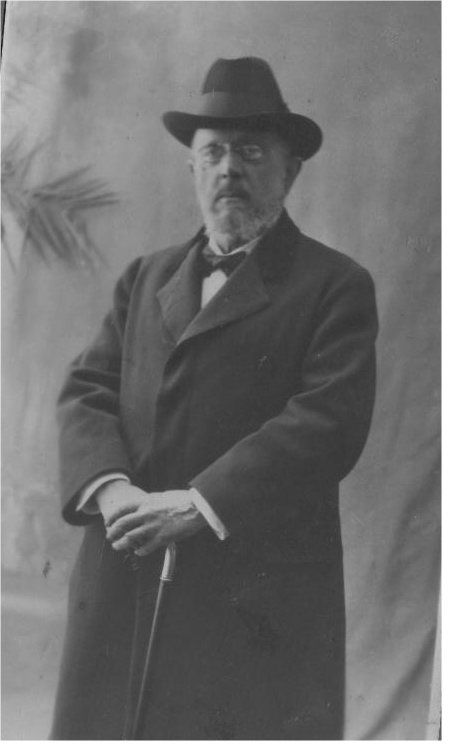
Nicolás Pérez Jiménez was born in Cabeza del Buey in 1854. He was a Doctor of Medicine (Salamanca), military physician, hydrologist, poet, fabulist and historian. He wrote a key biography of Muñoz-Torrero that’s still cited as a primary source today. He was a member of the Royal Academy of History, the Spanish Society of Medical Hydrology, the Academy of Histology of Madrid, the Royal Society of Natural History of Madrid, and the Academy of Medical Sciences of Badajoz.

Residence of Don Nicolás Pérez Jiménez, at the current No. 18 Muñoz Torrero Street, Cabeza del Buey. (Photo: Nazaret Serrano Simancas, 2026)
Antonio Otero Seco (1905-1970)

Antonio Otero Seco (1905-1970)
Antonio Otero Seco was a Spanish writer, poet, journalist and literary critic. He espoused republican ideology and collaborated in publications such as Nuevo Diario, Correo Extremeño, La Libertad, Diario de Madrid, Heraldo de Madrid, Mundo Gráfico, Estampa, La Voz, El Sol, La Verdad, Política, Misión, Mundo Obrero, Frente Rojo, Levante and CNT.
According to Nazaret Serrano Simancas, Otero Seco “became one of the main reporters in Madrid during the War. He gathered numerous stories from people in the streets, presenting emotional portraits of the individual suffering of ordinary families in the middle of the War. He paid attention to particular events as well as the lives of the ‘popular heroes’ of the Republic, mainly young and revolutionary men and women defending the Government.”
Outside Spain he worked with Le Monde, and Les Temps Modernes. After the Civil War, he was imprisoned and sentenced to death; his sentence was commuted and he was released in 1941. In 1947 he went into exile to France, first Paris and later worked at the University of Rennes.

The house where Nicolás Pérez Jiménez was born and where Antonio Otero Seco lived, at 6 Hospital Street, Cabeza del Buey. (Photo: Nazaret Serrano Simancas, 2026)
Liberal / Republican Traditions
Cabeza del Buey has an unusually strong tradition of liberal/republican intellectuals native to one small rural town in Extremadura across roughly 150 years, from the framer of Spain’s first liberal constitution through to a Civil War-era exiled journalist. It is a town that is aware of its past and the names of some of its streets reflect this long history. Events have been organised in Cabeza del Buey to celebrate its intellectual traditions, and it is hoped to increase such activities in the future. Already there are plans for an event in March next year which will be the 170th anniversary of the death of Manuel José Quintana.