








No doubt, like many others who attend to world affairs, I do so these days with a mixture of horror, disbelief, frustration, anger, trepidation, disgust, and despair. The thin bands of my hopeful pessimism are stretched to the limit.
The Problem
Perhaps most of all, even knowing what we do about the depths of depravity and callous self-interest of Western elites and their contempt for the planet and for those they exploit and murder in the pursuit of profit, I still have trouble believing that they do not see or, if they do, care about the self-destructive, suicidal effects of their folly. A folly that is at the same time without limit and unfathomable.
Surely there is more to it than the fact that late-stage Western capitalist states get the quality of leadership that the system requires, which at the extreme is exemplified by the current US administration. The euphoria of pathological self-delusion and megalomania of its ruling classes – the product of a combination of crass intellectual mediocrity suffused with extreme wealth and power – is simply what is needed to get the dirty work done.
But, apart from the effectiveness of the manufacture of consent, what else might explain the compliance of affected societies to the repeated imposition of such feckless stooges to positions of national leadership?
The Civilizational State
What might that something be?
My just-completed trip to China set me to thinking about the notion of the civilizational state and whether the qualities that define it might provide at least part of the explanation. Qualities that enable ancient civilizations to endure for thousands of years despite sometimes deep ethnic and other cleavages that threaten to tear them apart. Qualities that are largely absent in the West.
In many ways, China is the epitome of the civilizational state and a model of what it can achieve.
However, while China is the most striking contemporary example, it is not alone. States like Russia and Iran also rely on timeless civilizational norms and values that transcend election cycles and short-term profit maximization. Bound by deep historical consciousness, these societies possess a cultural core that helps them to withstand external pressures and internal fractures in ways the modern, transactional Western nation-state cannot.
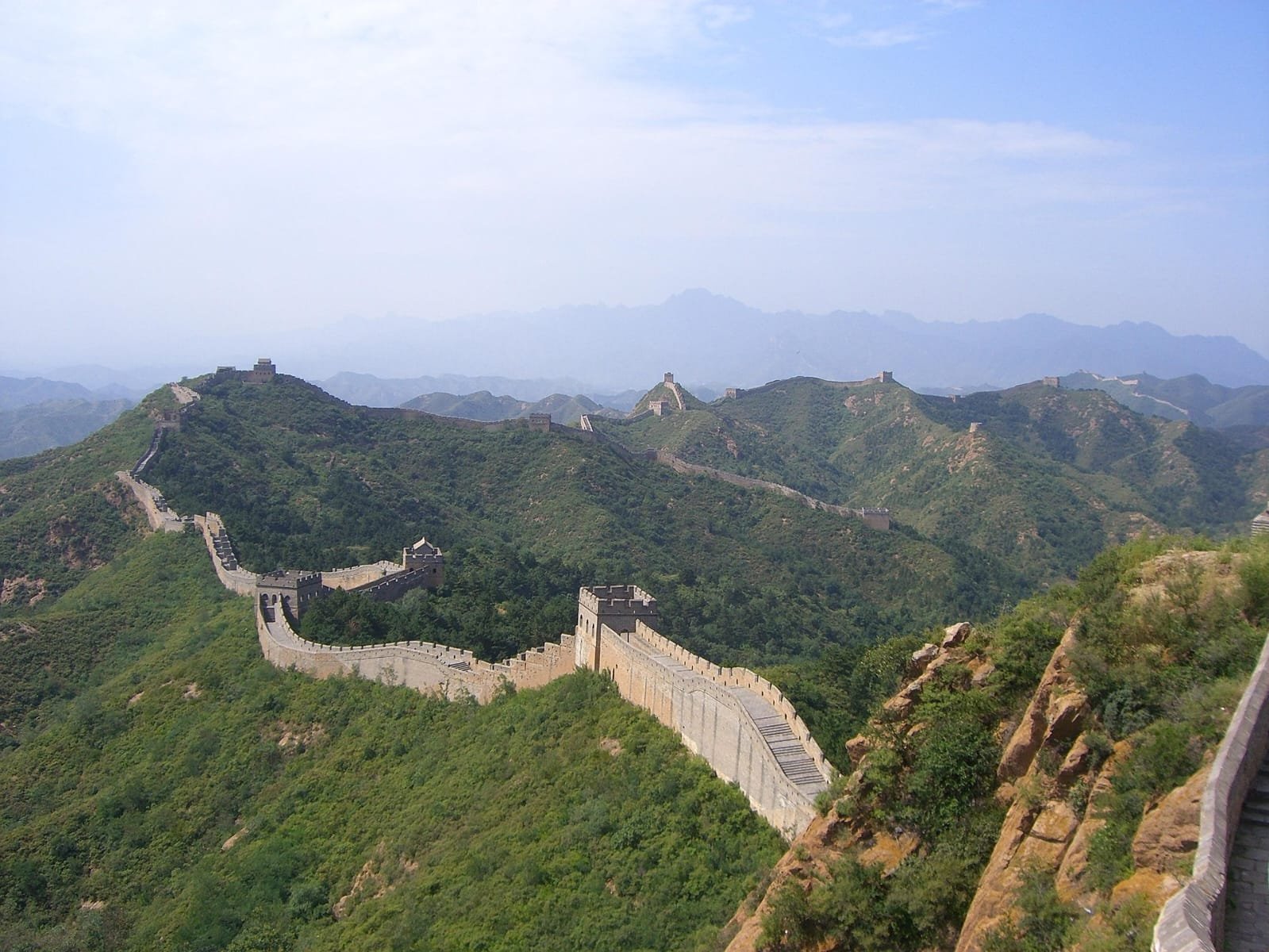
The Great Wall, one of China’s most iconic features, is a concrete manifestation of these qualities.
The Great Wall
When I first visited the Great Wall in the early 1990s, what struck me most forcefully was not so much the scale of the enterprise (all 21 thousand kilometers of it) but the realization that someone had had the audacity and conviction to consider undertaking anything of that magnitude in the first place. Plus the fact that it was a task that had started in the 7th century BC and continued more or less uninterrupted for about two thousand years until it was completed in around 1600 AD.
It is surely only with a deeply held sense of civilizational place, self- belief, and continuity at the core of society that such feats can be contemplated and accomplished. That is, an ingrained internal philosophy that says something like: ‘We know who we are, where we come from, where we are going, what we stand for, and that we belong in the place that we occupy. We also have an abiding belief in the collective good, and we therefore take our responsibilities seriously to those who came before us and those who will come after. In relation to the contemporary world, this means that we are confident in our abilities to manage our own development, believing that multipolarity should countenance a variety of means of state governance that can be employed for the general good.’
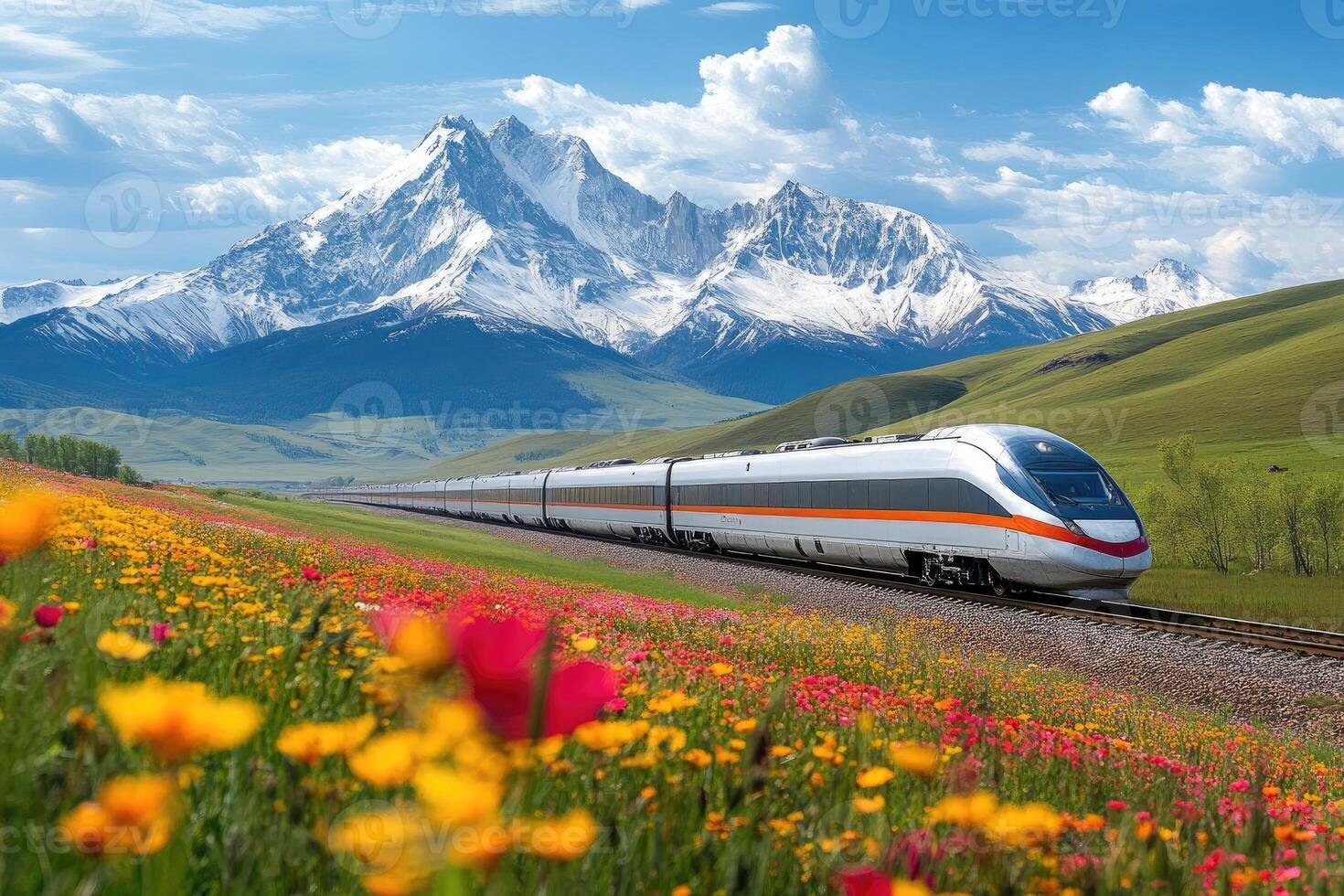
The metaphor of the Great Wall and the bullet train conveys something of the ways in which the norms and values that infuse civilizational states like China – and other ingredients that are discussed below – enable them to surpass the limits of prevailing notions of political economy in the West.
The Bullet Train
Monumental accomplishments from the ancient past find their modern expression in developments such as the bullet train, which, like its ancestor, traverses the country with fifty thousand kilometers of track. The speed of its construction and immensity – it comprises an astonishing 70% of the world’s total – dwarf what other countries have managed to achieve in this respect in the same time.
The civilizational differences that help to explain such lasting ambition and ingenuity are associated with many other contrasts, some of which are discussed briefly below.
Contrasting Performance
Contrast, for example, the destructive, genocidal behavior of the hucksters who run and profit from the capitalist Western nation state with the conduct of those whose forebears built the Great Wall and are representative of the civilizational states that said hucksters seek to subdue and subordinate. The most recent examples being Iran and Russia, with China locked in to their gun sights. Hucksters who care not about the mayhem they have wrecked in the past and just as little about the damage they will do to our collective future.
When in the modern era did a civilizational state last commit or support genocide, or deliberately bomb schoolchildren, or ‘decapitate’ a government, or assassinate another country’s scientists and religious leaders, or use ceasefire negotiations as cover for military attack, or abduct a President, or impose lethal economic sanctions, or confiscate another state’s assets?
And contrast the ‘diplomacy’ of the US and Israeli regimes with the calm intelligence, wisdom, dignity, and self-assuredness of their adversaries in the governments of China and Iran, or that of the European nations with Russia’s. When did you last hear a senior official of a civilizational state insult adversaries on TV by repeatedly calling them ‘scum’ or ‘crazy’ or ‘evil’ or ‘terrorists’ or ‘grasshoppers’ or ‘cockroaches’?
Such contrasts are repeated in many other aspects of governance.
Contrast, for example, the ‘smooth operator’, flawless functioning of the almost spotless megalopolis of Beijing with the gloomy, crumbling decay of the capitalist casualty cities of the US, like Detroit, and their equivalents, like Sunderland, in the north of England.
Contrast the abundance and palpable well-being of the plant life in Beijing – where every tree and flower bed seems to be leading a life that is cared for and valued – with the droopy neglect of their token equivalents in cities where they have been hastily installed to decorate the journeys of presidential cavalcades or as impression management for international events and then been left to fend for themselves.
In Beijing, I got the feeling that cities were regarded as places where people live and not just as concentrations of consumption, commerce, and profit. A city of more than 22 million people with an astonishing 50% of green space – where trees are treated as integral and indispensable rather than disposable obstacles to profit maximization. The same was true of the other major city I visited, Tianjin, which has a population of about 13.6 million.
Or contrast the pace and inclusiveness of China’s development with ‘progress’ in the West.
Bicycles rather than bullet trains were the norm during my first trip to Beijing. The trains of modern China embody the speed, technological sophistication, and inclusiveness that have characterized China’s breathtaking and unprecedented development since then.
Development that has been for the general good rather than the privileged few.
In that time, almost a billion people have been lifted out of poverty, comprising as much as 75% of the global total during the same period. Extreme poverty has been eliminated.
And it shows. Unlike so many capital cities in the West that I have visited, in today’s Beijing I saw no beggars, no cardboard communities on the pavements or under bridges, and I had no fear of being attacked or mugged or harassed or shot.
The homicide rate in Beijing, and China as a whole, is not a half or one-third but about one-hundredth of that in US cities like New Orleans and Birmingham, Alabama! Gun violence is virtually unheard of. And there has never been a mass shooting. The clearance rate for violent crime in Beijing is 100%.
The Minutiae of Everyday Life
And then there are the countless small things that convey much the same messages. Like the ground staff at Beijing Zoo who, after a rain shower, I saw carefully mopping the wooden benches along its tree-lined avenues so that visitors wouldn’t get their clothes wet when they sat down. Little wonder that one of the Zoo’s most celebrated residents – the famously mischievous Meng Lan (pictured) – seemed to be having such a good time.

The Panda shot taken by the author’s son, Alexander
Or the municipal workers in Tianjin patrolling the banks of the Haihe River in the city center, armed with long poles and nets to remove any suggestion of trash. The people fishing from the pristine promenades along the banks and the daily performances of the ‘Tianjin diving uncles’ testament to the river’s cleanliness.
Last was my personal sense of ‘the wonderful lightness of not being’ (with apologies to Kundera). By which I mean the feeling that I had ceased to be the person I was accustomed to being. A sense of self derived from the way in which one is always being ‘appraised’ in most other places – as a potential customer or client, a John or a Jill, a mark or a victim, straight or gay, black or white, rich or poor, mzungu or orang putih, wog or dago, toff or pleb, or the so many other ways in which we are pigeonholed and categorized by the capitalist system in all of its incarnations.
I do not mean to suggest that these things do not happen in China, but they are not nearly as pervasive or obtrusive.
In China, if I was noticed at all, the level of interest that my presence seemed to excite was measured between extremes of polite indifference and mild curiosity. If it was more than that, my conditioning to the cruder forms of such expression made it undetectable.
I found my sudden ‘invisibility’ to be both refreshing and liberating.
Citizen Satisfaction
For good reason, and unlike their counterparts in the West, the vast majority of Chinese citizens (according to longitudinal Harvard surveys, about 95%) are satisfied with the performance of their government.
The comparable figure in the US is approximately 20%, in the UK, 14%. The OECD average for trust in government is about 40%.
The statistics on green energy, universal health care and education, and home ownership (more than 90%) and life expectancy (which has risen from 67 to 79 in the time between my visits) in China are just as impressive.
The Conditions for Longevity
Clearly, my argument is that the statistics and my impressions reflect much deeper and more profound divides. Divides that come, on the one hand, from having your feet firmly planted in an ancient past that depends for its sustenance on things that cannot be packaged or bought and sold. And, on the other, an inculcated obsession with self and instant or short-term material gratification before all else. A never-ending economic splurge that depends on consumption for its own sake and on the relentless exploitation of people and the environment, and which is anathema to a collective sense of enduring purpose and well-being.
Capitalist indoctrination in the West does not encounter the deep wells of cultural resistance that it would in a civilizational state. The smorgasbord of contrasts discussed briefly above demonstrates how the fecklessness of Western state leadership is reproduced and suggests that the absence of profound countervailing social forces helps to perpetuate it. In their stead are popular docility and distraction that have been meticulously contrived and nurtured by the capitalist system.
Unlike the capitalist societies of the West, the role of government in a civilizational state like China is not primarily to create the economic and social conditions for elite enrichment but to manage the state for the common good and to sustain the environment, which they have occupied for thousands of years and will continue to do so.
The transformation of Beijing from one of the most polluted cities on Earth to one that is middle-ranking in this respect has largely been achieved in the last ten years.
Today, almost 90% of new vehicle registrations in Beijing must be electric. Comparable figures in London and Washington DC are around 20% and 13% respectively.
These are just a few examples of rapid, profound, and shared development that would not have been possible without resolute state intervention.
However, to survive and prosper for millennia, in addition to an ancient civilizational consciousness, the state must have internal critical resource availability, geographical size and position, a large and highly educated population, and advanced technological (and nuclear) capability. The measure and mix of these ingredients, and ideological influences, will shape the character of the governance of the state.
In China’s case, the evidence presented here suggests that these conditions have produced a state characterized by firm central control and regulation for the common good. The results achieved by this government have deservedly earned it almost universal support and acclaim from its 1.4 billion citizens.
But an offensive realist world where the most powerful country in human history has openly declared you to be its mortal enemy – as it has done with all the civilizational states discussed here – demands more than this. The war against Iran has demonstrated that it also behooves you to have control over trading routes and/or resources that are critical to the world economy.
China stands as the shining example of the civilizational state precisely because it possesses an abundance of the technological, governance, material, economic, social, and cultural prerequisites of longevity.
Thirty-five years after my first visit to China, what was a strong gut feeling that the keys to the future lay there has been transformed. It is now an unshakable conviction based on incomparable social and economic accomplishment and pervasive and palpable popular contentment that the bullet train of progress, which has pretty much everyone in the country on board, is unstoppable and unbeatable.
Geopolitical Implications
If the US was willing to learn from its mistakes and was paying attention, it would deduce from its bloody nose in the war against Iran the obvious lessons for the looming conflict over Taiwan with China that I have tried here to portray. The writing is indeed on the wall.
However, the repetitiveness of its inglorious past demonstrates that such wisdom is in desperately short supply in the asylums of US power. No more so than now, in our greatest hour of need.
The conflict with Iran has exposed the fatal blind spot of Western arrogance and racism: an inability to comprehend the material and non-material strengths of a formidable civilizational adversary. The war has shown how grossly the aggressors underestimated the inner strengths and cohesive centripetal social forces of that ancient civilization, its technological and strategic planning capability, the barriers posed by its geographic area and population size, its far-reaching economic leverage, and its resilience. Yet the US seems hell-bent on making the same – but immeasurably costlier – mistakes again, this time with China.
Just imagine how well-prepared China will be for that war and the extent to which the carefully calibrated lethality and accuracy of its response to being attacked will exceed Iran’s. Imagine what havoc it could cause to the global economy. And imagine what might be in store for the US vassal states in the region. Those that provide the ground for the US military bases that encircle China. What will probably turn out to be a benign version of their futures foretold by the experiences of the Gulf States in the war against Iran.
Conclusion
While my latest trip to China was strangely uplifting – strangely because the Western mainstream media deliberately ignores or downplays the good news – there is little solace in any of this.
Perhaps the best that we can hope for is that the implosion of US-led capitalism will not destroy the possibility of organized life on Earth completely – and that the inevitable messiness and trauma of transition from what remains will place the future of the planet in the hands of those who have a sense of responsibility for the continuity of all forms of life on Earth.
This outcome becomes far more feasible and secure when the power to set the global tone rests in the hands of a civilizational state of China’s caliber and orientation – one whose track record at home and its foreign policy reflect a concern for people and the environment that rests on collaboration for mutual benefit, rather than domination, extraction, and exploitation.