

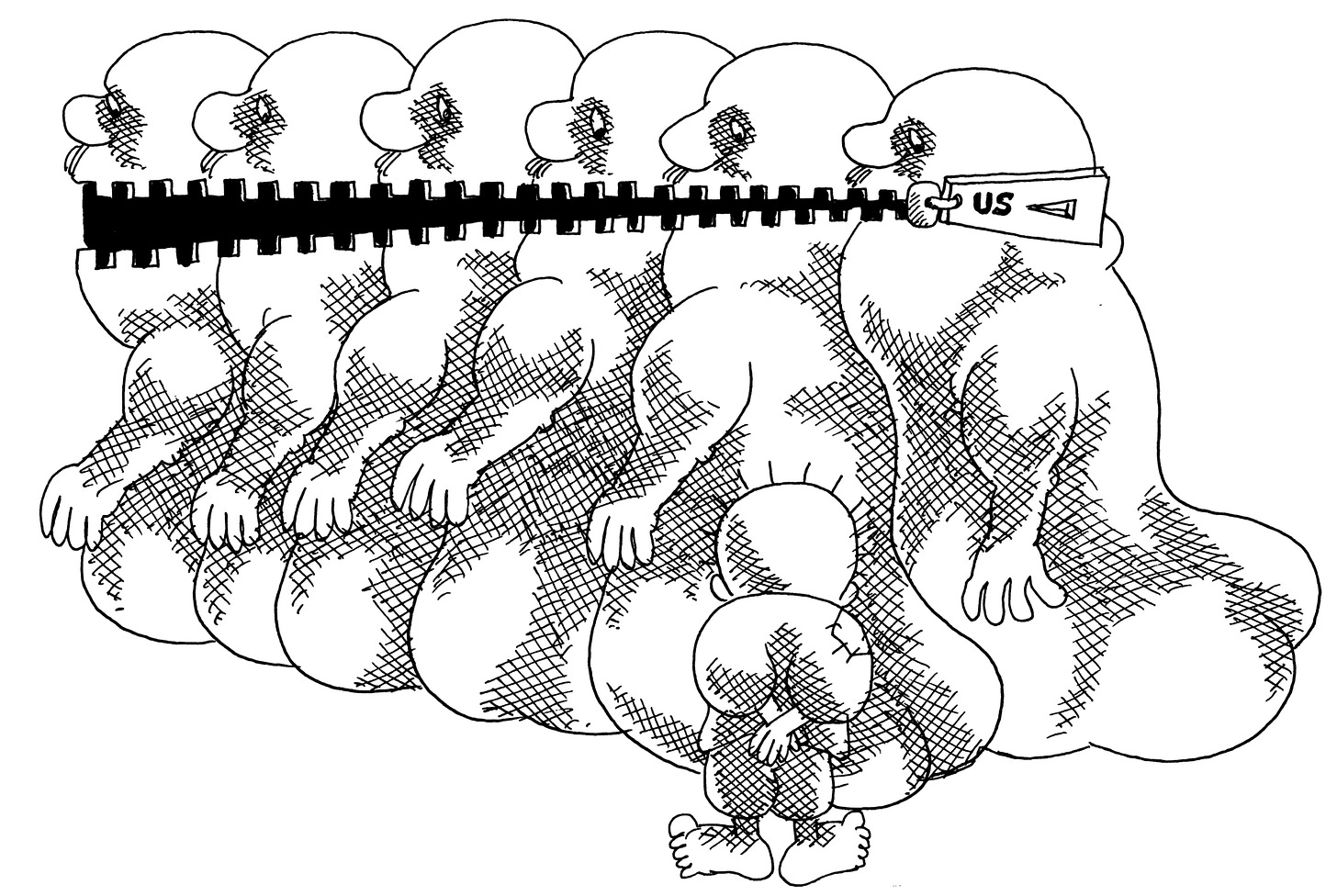
“Two centuries ago, a former European colony decided to catch up with Europe. It succeeded so well that the United States of America became a monster, in which the taints, the sickness, and the inhumanity of Europe have grown to appalling dimensions.”
— Frantz Fanon, The Wretched of the Earth
“Imperialism has laid its body over the world. The head in Eastern Asia, the heart in the Middle East, its arteries reaching Africa and Latin America. Wherever you strike it, you damage it, and you serve the World Revolution.”
— Ghassan Kanafani, The 1936-39 Revolt in Palestine
What follows is the articulation of a recycled grammar—the intellectual preconditioning that precedes bombs and war crimes. History, as it always does, repeats itself. It often does so as mockery, until the root of the rot is finally consigned to history.
We have been told the source of this rot. Yet, the cycle repeats itself. The good news, the native recognizes the weapon of words immediately.
It is again the Western-educated native who has absorbed the master’s language, who performs the vocabulary of justice and liberation while policing the native resistance, who judges the colonized on behalf of the Western empire.
The type is not new. It is the same recycled imperial grammar. And it has a name: the Imperial Uncle Tom.
The text we are addressing is titled Vijay Prashad’s Iran. (The author’s name is not essential to the function.) It opens:
“I’ve been sitting with this for a little while…. it’s about Vijay Prashad, campism, and the Iranian workers, feminists, and leftists who become invisible yet very much deserve defending. I use Prashad’s own commitments and frameworks to ask why he can’t see what his own analysis should show him.”
We have to ask from the outset: Why Prashad? And why Vijay Prashad’s Iran? Does he represent a mainstream, unified socialist view, or is this about the “misunderstanding” of one socialist activist?
Uncle Tom’s opening is incapable of producing a clear base from what has been sitting with them. The essay is about one person, the way “campism” is used here, an abstract Western combo of imaginary workers, feminists, and leftists that Western academics like to invoke and that “became invisible,” and the I that speaks the blind language about framework and commitments they claim to understand.
In other words, they, Uncle Tom, have the courage to remind us all of socialist thought and commitments.
And if the essay is truly about the “commitments and frameworks” of socialism, why not present a basic analysis of the proper socialist position on Iran?
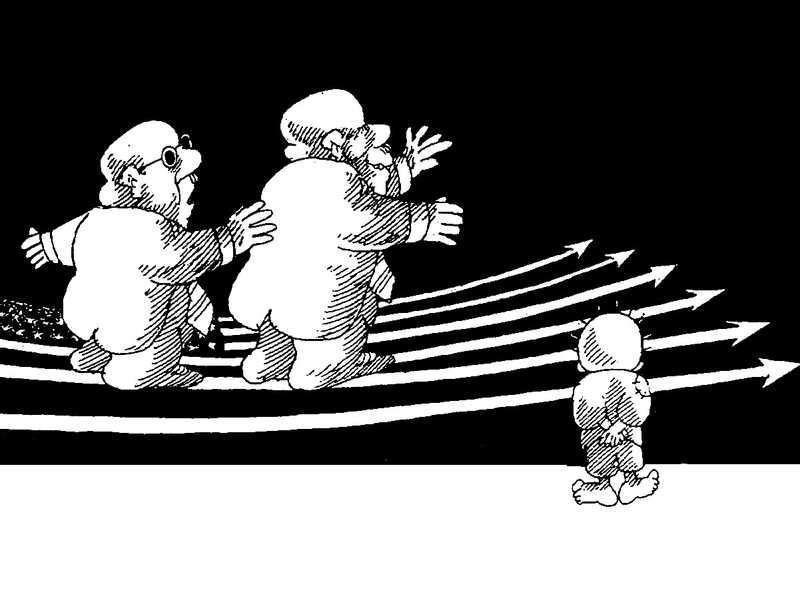
It is an old story. But some fools cannot see the elephant in the room: they keep pointing the finger at the native while swallowing Uncle Sam’s poison whole.
The Method
“The native intellectual nevertheless sooner or later will realize that you do not show proof of your nation from its culture but that you substantiate its existence in the fight which the people wage against the forces of occupation.”
— Frantz Fanon, The Wretched of the Earth
Throughout the long lecture of the new student, the author speaks like a Western academic, using the language of the colonial center to judge a native revolution.
The essay talks about class but forgets the imperial/colonial relation entirely. It mentions Lenin but never quotes him directly. Instead, it leans on a second-hand source—a 2012 piece from Viewpoint Magazine by Malcolm Harris, a writer focused on Occupy Wall Street and branding, not on imperialist war. Two simple examples show the poverty of this socialist thought.
The first two paragraphs are enough to extract the DNA of the entire essay:
“In January 2026, as protests swept Iran and the Islamic Republic responded with mass killings, the international left faced a choice about whose voices to amplify and whose to render invisible. The choice it made is the subject of this essay.
On April 10, 2026, a Holocaust denier, a white nationalist theorist, the founder of the World Social Forum, and a former UN Special Rapporteur on Human Rights all put their names on the same document. So did Vijay Prashad.”
The first paragraph frames the essay’s subject, after the claim of “mass killing,” as a choice the international left faced in January 2026: “whose voices to amplify and whose to render invisible.” This is an imaginary choice that divides people under constant imperialist attack.
The left is not a centralized broadcaster with a single microphone. It is a dispersed field of publications, organizations, and individuals, all amplifying different voices simultaneously. The framing fabricates a forced binary designed to produce a predetermined verdict.
The author is not investigating what happened. They are staging a trial where the charge—betrayal—is already written. The “choice it made” implies a unified, collective decision. That is a rhetorical device, not an empirical claim.
The second paragraph is guilt by adjacency, executed with precision. The most toxic descriptors are listed first—Holocaust denier, white nationalist—and Prashad’s name is placed at the end of the sequence, as if the company he kept is the argument. There is no engagement with the content of the document. No analysis of what Prashad actually wrote or signed. Just the contamination effect of proximity. The paragraph relies on the reader’s instinctive recoil from certain words to do the work that evidence and argument have not done.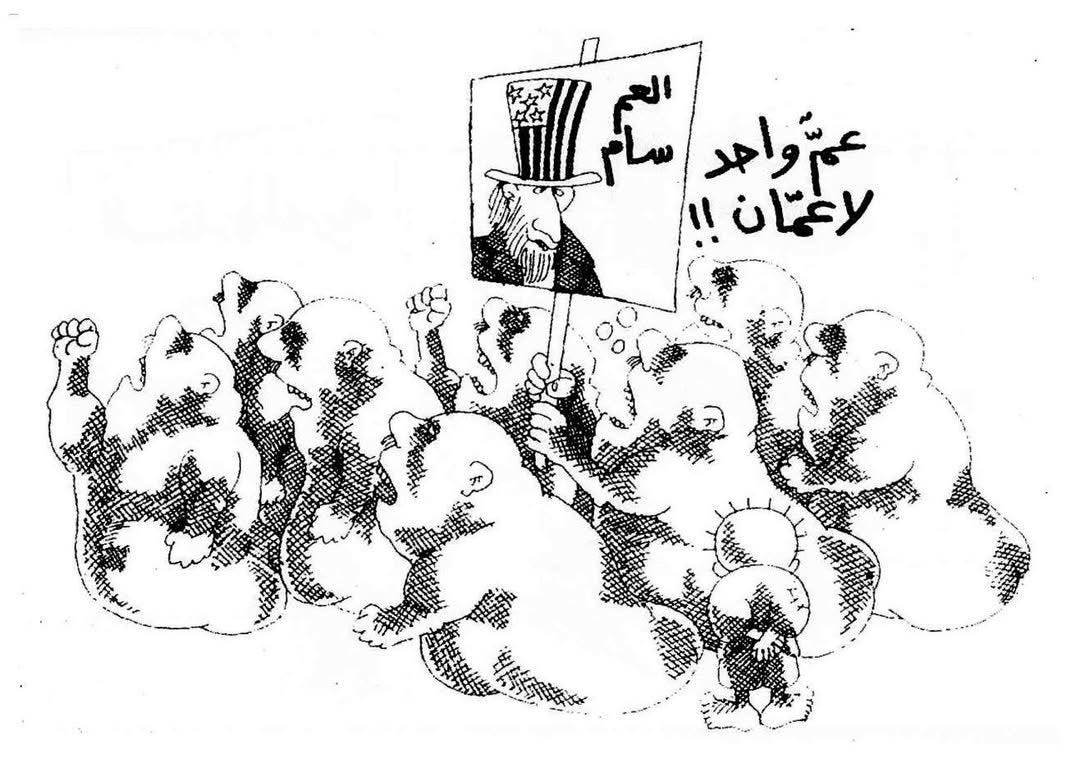
The Lenin They Invented
But let’s dig more into the claim that the author is using the Marxist framework of Prashad itself. In reality, the author only distorts this framework. The author writes:
“Where Lenin supported national liberation movements that were not proletarian in composition, that support was not unconditional, nor did it require the erasure of internal class struggle.”
This is the heart of Uncle Tom’s long argument presented in the author’s own words, not Lenin’s. But Lenin, writing in Socialism and War (1915) about a structurally analogous situation, stated this:
“If tomorrow, Morocco were to declare war on France, India on England, Persia or China on Russia, and so forth, those would be ‘just’ ‘defensive’ wars, irrespective of who attacked first; and every Socialist would sympathise with the victory of the oppressed, dependent, unequal states against the oppressing, slave-owning, predatory ‘great’ powers.”
And from The Revolutionary Proletariat and the Right of Nations to Self-Determination (1915):
“The revolutionary proletariat cannot remain passive in the face of the forcible retention of oppressed nations within the frontiers of a given state—something the bourgeoisie of the oppressing nations, including the petty-bourgeois pacifists, so readily accept. The proletariat must fight against the forcible retention of oppressed nations within the boundaries of a given state, and that means fighting for the right of self-determination. It must demand freedom of political separation for the colonies and nations that ‘its own’ nation oppresses. Unless it does so, proletarian internationalism remains an empty phrase; mutual confidence and class solidarity between the workers of the oppressing and oppressed nations are impossible.”
And finally from the “Conditions of Admission to the Communist International,” Condition 8 explicitly addresses the duty of parties in imperialist countries toward the colonial struggle:
“In the question of the colonies and of the oppressed nationalities, the parties in those countries where the bourgeoisie possesses colonies and oppresses other nationalities must adopt a particularly clear and unequivocal line. Every party that wishes to belong to the Communist International is obliged to expose the tricks and dodges of ‘its own’ imperialists in the colonies, to support every liberation movement in the colonies not only in words but in deeds, to demand the expulsion of their own imperialists from these colonies, to inculcate in the hearts of the workers of their own country a genuinely fraternal attitude toward the toiling population of the colonies and of the oppressed nationalities, and to carry on systematic agitation among the troops of their own country against any oppression of the colonial peoples.”
Lenin did not make his support conditional on what kind of government Persia had. He did not ask Persian socialists to first condemn their own state. He saw the main fight—oppressor nation against oppressed nation—and said socialists must back the oppressed nation in that war, no conditions. The author’s “conditional” Lenin is out of context. That is why his own words are never shown.
Lenin’s most direct discussion of conditional cooperation with the national bourgeoisie appears in the “Draft Theses on the National and Colonial Questions” for the Second Comintern Congress (1920):
“The Communist International must enter into a temporary alliance with bourgeois democracy in the colonial and backward countries, but should not merge with it, and should under all circumstances uphold the independence of the proletarian movement even if it is in its most embryonic form.”
And further:
“The need for a determined struggle against the attempt to clothe the revolutionary liberation movements in the backward countries that are not genuinely communist in communist colors.”
This is the source of the “conditional” Lenin. But note the context: Lenin is speaking about internal political alliances within the colonized country during the revolutionary process itself, not about the duty of socialists in the oppressor nation during an imperialist war.
The Imperial Alignment
“The passion with which native intellectuals defend the existence of their national culture may be a source of amazement; but those who condemn this exaggerated passion are strangely apt to forget that their own psyche and their own selves are conveniently sheltered behind a French or German culture which has given full proof of its existence and which is uncontested.”
— Frantz Fanon, The Wretched of the Earth
The essay holds up the Tudeh Party as the real voice of the Iranian left, praising its “dual refusal” of both U.S. imperialism and the Islamic Republic. But it leaves out an important fact: in March 2026, the Tudeh Party signed a joint statement with the Communist Party of Israel (CPI) and the Communist Party USA (CPUSA).
This is not mere co-signature. It is a formal political alignment. The CPI operates inside a settler-colonial state built on the ethnic cleansing of Palestinians and maintained through occupation and apartheid. A communist party that stands in formal alliance with a party of the zionist entity—no matter that party’s internal views—has lost its right to speak for anti-colonial struggle in West Asia. This is not a “dual refusal.” It is an alignment that makes the settler-colonial state look normal while pretending to be anti-imperialist.
And then there is Palestine. The article wraps itself in concern for Palestinian solidarity, warning that support for the Islamic Republic in Iran under U.S. attack weakens the resistance. But this is a rhetorical operation: it deploys the Palestinian struggle as a shield while the party it champions sits in formal fraternity with a zionist communist party. That is not solidarity with Palestine. It is using Palestinian struggle to launder Western academic credentials. The essay speaks of Palestine but aligns with those who normalize the entity that occupies it.
This is the very exercise of what Kanafani called the blind language: deploying terms like “campism” to mask the colonial relation and structure.
Fanon, who analyzed the native intellectual influenced by Western standards, wrote in The Wretched of the Earth:
“For the colonized subject, objectivity is always directed against him.”
“When the native hears a speech about Western culture (like the discourse we read here) he pulls out his knife—or at least he makes sure it is within reach. The violence with which the supremacy of white values is affirmed and the aggressiveness which has permeated the victory of these values over the ways of life and of thought of the native mean that, in revenge, the native laughs in mockery when Western values are mentioned in front of him.”
This essay is that speech. We do not debate this speech. We know it for what it is. And as Fanon said, we laugh.
This is not solidarity with the Iranian people. It is solidarity with the colonial relation itself.
“The ideological deficiency, not to say the total lack of ideology, on the part of the national liberation movements—which is explained by the ignorance of the historical reality which these movements aspire to transform—constitutes one of the greatest weaknesses of our struggle against imperialism.”
— Amílcar Cabral, The Weapon of Theory
The essay claims Marxism but ignores Lenin’s clear words on just war. It claims to stand with the Iranian people while promoting a party tied to a zionist communist group. It claims to speak for Palestine while erasing the actual anti-colonial struggle. It claims to reject “campism” while building its own sectarian camp: the camp of Western academic approval, adopting the language and standards of the imperial center.
The Itch
If the first essay’s crime was its method, the second essay’s crime is its subject. Uncle Tom repeats and writes: “Who Names the World? Anti-Imperialism and Iran’s Political Prisoners.”
Once again, the performance of the function—and the native sees it immediately. Uncle Tom has got an old known disease.
“The itch is a painful disease. And when people are seized by the itch of revolutionary phrase-making the mere sight of this disease causes intolerable suffering. Truths that are simple, clear, comprehensible, obvious and apparently indisputable to all who belong to the working people are distorted by those suffering from the above-mentioned kind of itch. Often this distortion arises from the best, the noblest and loftiest impulses, ‘merely’ owing to a failure to digest well-known THEORETICAL truths or a childishly crude, schoolboyishly slavish repetition of them irrelevantly (people don’t know ‘what’s what’). But the itch does not cease to be harmful on that account.”
— V.I. Lenin, The Itch.
Their second essay is a textbook case, like the earlier one—the product of the same Itch: blind language dressed in academic garb, gibberish socialist talk that uses the vocabulary of liberation to maintain colonial hierarchy.
The socialist cannot be neutral, nor abstractly objective, between the oppressor nation—a European settler-colonial society and a rogue state built on robbery and slavery—and the oppressed nation, because class struggle operates through national relations.
To support Iranian sovereignty against US imperialism is to take a class position: the position of the globally oppressed against the globally dominant.
The New Trojan Horse
“This traditional weakness, which is almost congenital to the national consciousness of underdeveloped countries, is not solely the result of the mutilation of the colonized people by the colonial regime. It is also the result of the intellectual laziness of the national middle class, of its spiritual penury, and of the profoundly cosmopolitan mold that its mind is set in.”
— Frantz Fanon, The Wretched of the Earth.
The second essay’s subject is Iran’s political prisoners.
The problem is not that the essay discusses internal contradictions. Internal contradictions are real, and socialists should discuss them—in the proper context, not isolated from foreign imperial intervention. The problem is the function the discussion performs. By centering the Islamic Republic’s prisons as a decisive moral test—the thing that separates real socialists from camp followers—the essay hands the empire exactly what it needs: a humanitarian vocabulary that can be turned into more sanctions, strikes, or war crimes the moment the empire decides to move.
The prisoner becomes the pretext. Meanwhile the empire’s own prisons—Guantanamo, Abu Ghraib, the immigration camps, the prisons of the settler-colonial state—disappear from the frame. Only the native state’s prisons and “brutality” are visible. That is the Trojan horse: not concern for prisoners, but selective concern that produces a moral alibi for imperial violence. They can claim to “oppose the imperialist war” all they want. The frame does the empire’s work.
This is the Uncle Tom of the privileged liberal Western academics, naming the world for us. The Uncle Tom here is not about race in the Yank sense. This is about the colonized intellectual who performs the master’s language, who polices the native on behalf of Uncle Sam.
This is not the open imperialist. This is the “nuanced” critic in socialist clothes—the one who says “Yes, US imperialism is bad, but have you considered the Islamic Republic’s human rights record?” This is the one who has internalized the master’s right to name, to adjudicate, to decide which struggles are legitimate. This is the colonial judge. This is the other blade of the imperialist scissors—the cultural one that provides moral cover for the bombs, from the inside.
Uncle Tom wields this blade through their “two blades” metaphor, demanding equal attention to the imperialist blade and the native state’s blade. They demand we focus on internal contradictions at the very moment when unity against the main criminal is the only strategic imperative.
But the actual blades are united at the core. One is the empire. The other is the proxy operating inside the native country and the anti-imperialist camp.
The Organic and the Traditional
“Our every action is a battle cry against imperialism, and a battle hymn for the people’s unity against the great enemy of mankind: the United States of America.”
— Ernesto “Che” Guevara, Message to the Tricontinental
They claim to care about Iranian prisoners. Their “critique” is cultural ammunition for the violence that makes their situation worse. They are not helping them. They are using them—framing their suffering as a choice between anti-imperialism and caring about prisoners, as if solidarity with the oppressed nation and concern for its prisoners were opposites, and as if the anti-imperialist struggle is not the framework within which their fate must be understood.
Uncle Tom speaks of “the difference between a state and a nation” in a state that has suffered repeatedly from Western intervention and colonial history, and now faces the hammer of imperialism—as if the nation exists outside the native state’s struggle for survival. In a war of aggression, the native state is the vehicle of national defense—however imperfect. To undermine it is to undermine the nation.
Anti-imperialists do not need Uncle Tom’s perspective on the native state’s prisons. We need their perspective on the empire’s prisons—Guantanamo, Abu Ghraib, the camps, the settler state’s cages—which their essay never mentions. The title screams “Iran’s Political Prisoners.” The silence screams louder. We ask Uncle Tom to stop providing the empire with the language it needs to justify its wars.
This is not about converting a functionary. This is about alerting the confused—those who might mistake this performance for genuine socialism—to the impostor in their midst.
This is not the organic intellectual native. This is the traditional colonized academic the West produces.
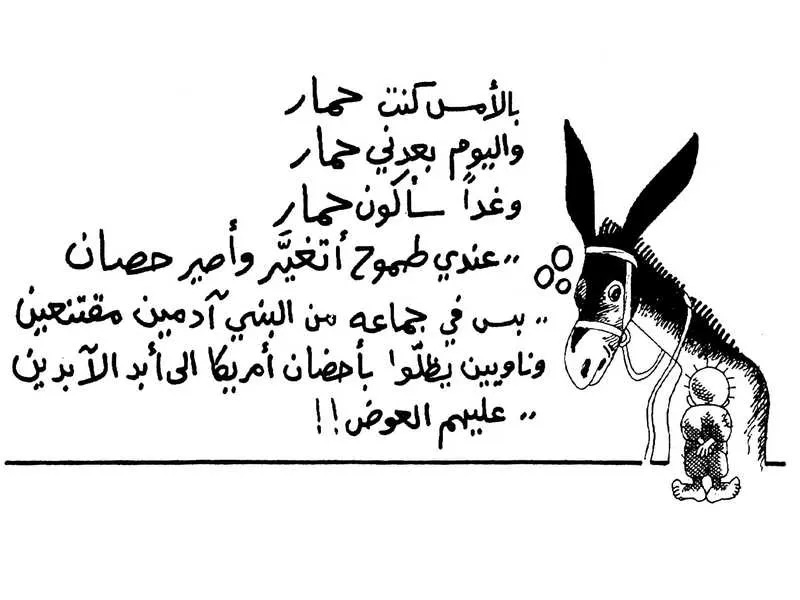
And so we end with the native’s mockery. And as Naji al-Ali’s donkey, in one of his caricatures, explained:
“Yesterday I was a donkey, today I’m still a donkey, and tomorrow I will be a donkey. I have ambition to change and become a horse. But there are a group of humans who are convinced and intend to stay in America’s embrace forever and ever—may they be compensated for their idiocy!!”