










“I hate all these new smartphones, all this new technology, all this Artificial Intelligence and crap with all those data centers. I OPT out. I’ll never use CHAT GPT or AI.”
Sure, sucker born every nanosecond:

That’s an almost daily refrain I hear when I work with seniors and even middle-aged folk. Sure, Golden Girls and you, the Old Odd Couple dudes, opting ass my ass. You think you are really opting out? Right after coming back from the doctor’s office or having a shoulder replacement, they believe they have opted out? Give me a break!
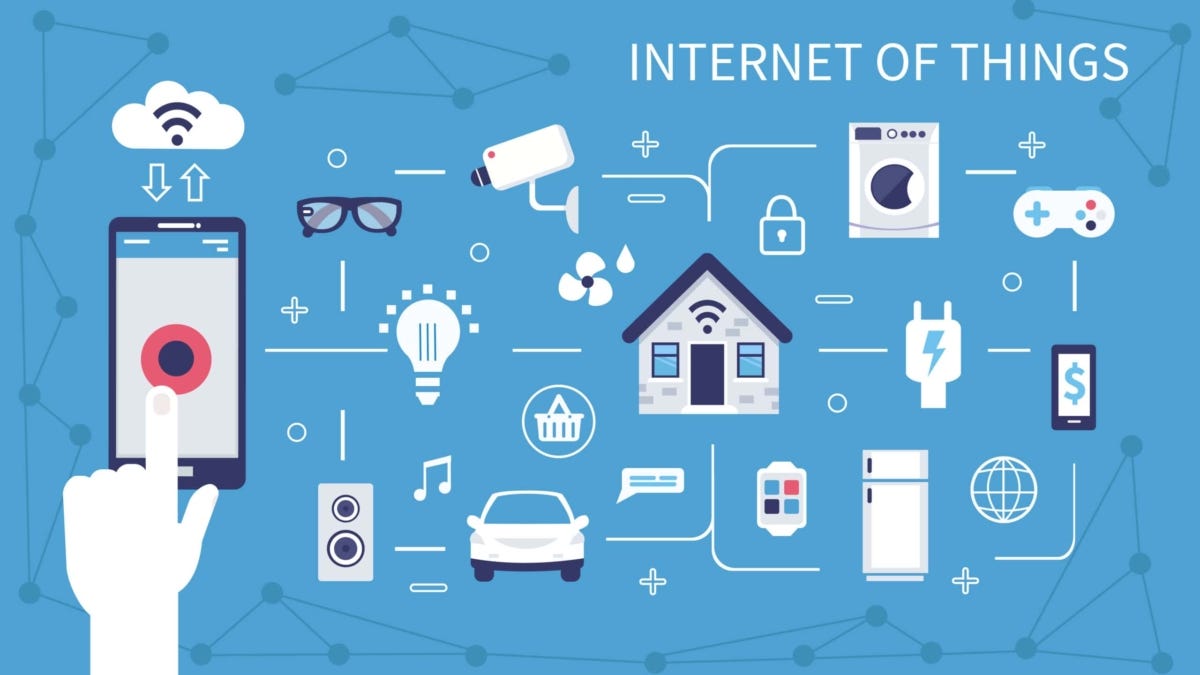
While digital records, electronic monitors, and interconnected hospital networks are nearly universal in modern healthcare systems, advanced AI integration is still emerging. AI is widely used in specific medical fields—such as diagnostic imaging, pathology, and robotic-assisted surgery—but many standard medical procedures still rely entirely on human clinical judgment and traditional digital tools (sure!! hahah)
It’s more pervasive than most people know, that grand medical disruptive system we all love to hate: Artificial Intelligence (AI) is a powerful and disruptive area of computer science, with the potential to fundamentally transform the practice of medicine and the delivery of healthcare. In this review article, we outline recent breakthroughs in the application of AI in healthcare, describe a roadmap to building effective, reliable and safe AI systems, and discuss the possible future direction of AI-augmented healthcare systems.
Here’s reality: Based on the current trends and needs of the global population by 2030, the world will have 18 million fewer healthcare professionals (especially marked differences in the developing world), including 5 million fewer doctors than society will require.
The billionaire warped class has already set us up as marks. In fact, this was planned decades ago, and not just the World Economic Forum’s wet dream. DECADES ago.

There are very few alternatives other than taking these fascists out behind the woodshop and__________. Fill in your Marie Antoinette verb.
Elon Musk Just Became Briefly a Trillionaire, How SpaceX’s Record IPO Is a Trap for Your 401(k)

The largest initial public offering in history recently launched, and if you possess a retirement account, you might end up facing losses. [As of 25 July, SpaceX has dropped 13% below the IPO price. — DV ed]
Elon Musk’s SpaceX is targeting a staggering $1.75 trillion valuation as it went public on June 12, 2026. That figure is larger than the combined market value of every American defense contractor. It tops Coca-Cola, McDonald’s, Disney, Nike, and Starbucks put together. It even exceeds the combined value of the 10 largest companies on the London Stock Exchange.
But the company lost $5 billion last year on $18.5 billion in revenue, a detail that makes the record valuation look less like confidence and more like a setup. On The Young Turks, Ana Kasparian explained how the structure of this IPO is designed to funnel everyday Americans into the buyer’s seat while insiders cash out.
“We’re in a little bit of trouble, to say the least, because if you have a retirement account — whether it’s a 401(k) or an IRA, pretty soon it could be invested in one of Elon Musk’s companies, which is in fact losing quite a bit of money,” Ana said. “SpaceX is about to get away with a giant rug pull. And the victims of that scheme would be you, me, and just about everyone else who happens to have a retirement account.”

Faustian Bargain.

That’s just one hydrological region. It’s an aerial view of the Rhine River during severe drought in August 2022, showing exceptionally low water levels that disrupted a major European industrial corridor. The continued expansion of large data centers along the Rhine, some designed to use river water for cooling, adds pressure to a water body already under environmental stress.
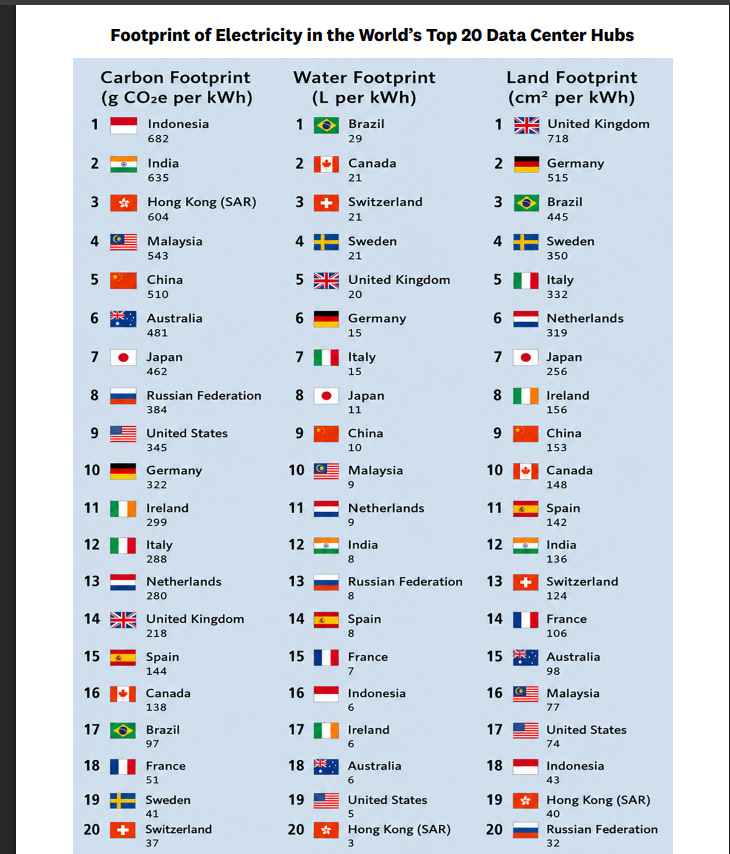
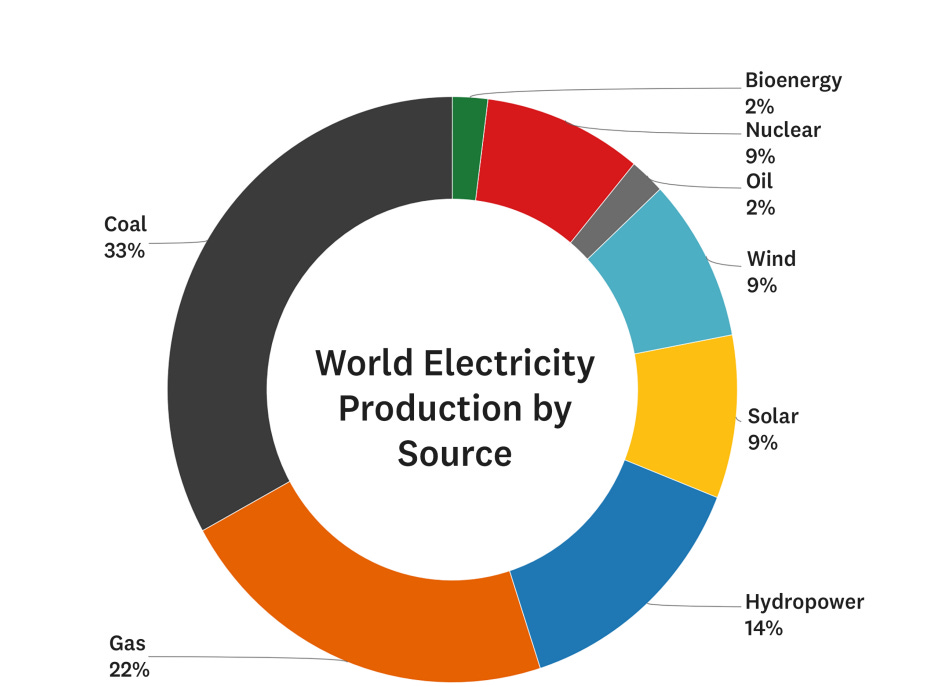
Yeah, I never got to retire, and now at 69, still working. It’s out of retirement for most of us, even coal-fired plants: Below are stacks of Clover Power Station in Clover, Virginia, United States, a coal-fired plant whose retirement has been postponed until 2045 as electricity demand grows with the expansion of AI-related data centers. The delay is part of a wider pattern in which older coal facilities are being kept in service to support rising power needs from digital infrastructure.

Water wars and war for rare earth minerals and such:

Above is data center gold: Solid gallium metal. Gallium is primarily recovered as a byproduct of bauxite (aluminum) processing. It is used in compound semiconductors that support AI chips and data-center hardware. Rising geopolitical competition over critical minerals is reshaping global supply chains, shifting pressure onto extraction and processing zones elsewhere, particularly in the Global South, where expanded mining and refining can intensify environmental and labor impacts.

Keeping the unfriendly skies in business. Duh: Minority report, pre-crime, 24/7 surveillance: MQ-9 Reaper unmanned aerial vehicle equipped with AI-assisted systems for surveillance and target analysis. The expanding use of AI across military operations— from reconnaissance to targeting and decision support— raises growing concerns about accountability, escalation risks, and the potential normalization of autonomous or semi-autonomous lethal force.

Above is the interior view of MareNostrum 5, a flagship European supercomputer, inside the historic chapel at the Barcelona Supercomputing Center in Spain. The system is among Europe’s most powerful high-performance computing installations, delivering around 314 petaflops of computing power. It is currently being upgraded under the EuroHPC Joint Undertaking’s BSC AI Factory initiative to expand Europe’s AI capacity, with next-generation GPUs, expanded storage, and energy-efficient cooling to support large-scale AI training and advanced machine learning for startups, researchers, and public institutions across Europe.
Jobs jobs jobs, and Google searches late into the Pedophile Trump’s night: Below is the marquee of a former movie theater in Lowell, Michigan, United States, displaying the date, location, and time of a public discussion on potentially building nearby data centers. These facilities require large amounts of electricity and cooling water to manage heat from intensive computing. The sign reflects a broader debate unfolding in many towns where the arrival of large-scale data infrastructure is transforming local landscapes and raising questions about shared energy and water resources.

AI and go ask Alice, or Wayne, or whatever the guy’s name is. I need help finding good phone, Claude, find it for me:
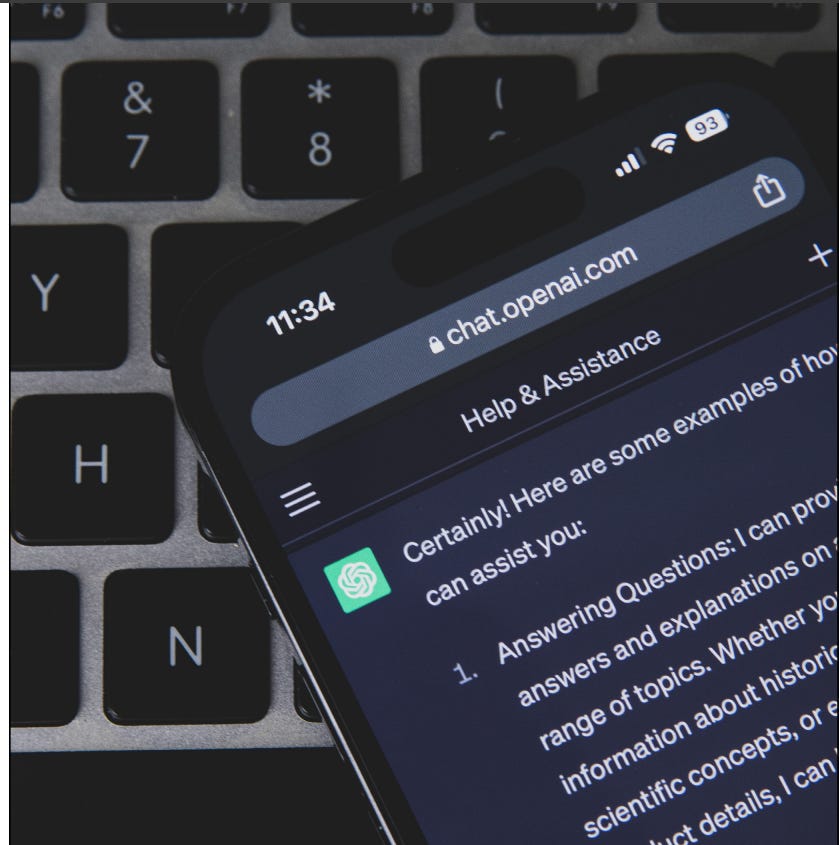
This is yet MORE equivocation. AI isn’t bad? Darn. Drones aren’t bad. A field of GM canola isn’t bad.
Yet, we clarify in the report that AI is not bad. AI is a technology on its own. It’s like a knife. You can save a patient’s life in the operating room with it as a doctor, or you can kill people with it as a murderer. The way we use AI would determine if this is going to be a good technology for humanity or not. And we say that we have to proactively manage things and think about those impacts, if we want this revolution to be sustainable and fair.
A new form of IMPERIALISM? Amazingly, the word gets bandied about, Imperial this and Empire that. Think that old form of fascist, Inverted Totalitarianism, and the Homo Consumpethicus that is poisoning the land, ripe for complete effing consumer and user exploitation.


Oh, so you don’t watch television, right? Okay:

Yeah, the developers of the black mirror, sure, never ever deployed all the behavioralists and psychologists and marketers and psychiatrists and neurologists, sure, yep.
[The digital economy relies on a field of study called persuasive design, which merges behavioral psychology with software engineering to keep users engaged for as long as possible. Tech giants employ behavioral experts, neuroscientists, and psychologists to study how human brains respond to digital stimuli]

Evidence:
In a letter sent to the American Psychological Association Wednesday, children’s advocates called on the organization to formally condemn psychologists’ role in helping to design technologies that increase children’s time spent on digital devices.
U.S. psychologists, researchers, and children’s advocates are calling attention to ‘the unethical practice of psychologists using hidden manipulation techniques to hook children on social media and video games.
The letter, timed to coincide with the APA’s annual meeting in San Francisco, said it was calling attention to “the unethical practice of psychologists using hidden manipulation techniques to hook children on social media and video games. These techniques—employed without children’s or their parents’ knowledge or consent—increase kids’ overuse of digital devices, resulting in risks to their health and well-being.”
Jessica Henderson Daniel, PhD, ABPP
President
American Psychological Association
750 First Street, NE
Washington, DC 20002-4242August 8, 2018
Dear Dr. Daniel,
We are writing to the American Psychological Association (APA) to call attention to the unethical practice of psychologists using hidden manipulation techniques to hook children on social media and video games. These techniques—employed without children’s or their parents’ knowledge or consent—increase kids’ overuse of digital devices, resulting in risks to their health and well-being. In recent months, leading tech executives have spoken out against these practices, focusing their concern on the exploitation of human psychological vulnerabilities for profit. However, the APA, which is tasked with protecting children and families from harmful psychological practices, has not yet made a statement on the matter.
In this letter, we describe how psychologists and other user experience (UX) researchers working for the consumer tech industry utilize persuasive technology (also called persuasive design or behavior design) to increase children’s use of social media and video games, how this fosters children’s overuse of screens, and how research demonstrates a connection between children’s screen overuse and two problems afflicting this generation of kids: mental health struggles and poor academic performance. The letter will conclude with a call to APA leadership to take strong actions that protect children and families from psychologists’ development of persuasive technologies that pose risks to children’s health and welfare.
We acknowledge that psychologists can and do work to make screen media products that are developmentally appropriate and even help advance academic and socio-emotional skills of children. This letter is primarily concerned with the use of persuasive design practices that encourage children’s excessive use of social media, video games, and smartphones for entertainment.
Persuasive technology is the design of digital devices and apps to influence human thoughts and behavior. While these techniques are used for positive purposes (e.g., more efficient website navigation), they are also employed with the guidance of psychologists and other behavior experts working in the tech industry to persuade users, many of whom are children, to spend long periods of time using social media and video game sites. As Ramsay Brown, neuroscientist and co-founder of the artificial intelligence/machine learning company Boundless Mind, says in a recent Time article, “Your kid is not weak-willed because he can’t get off his phone… Your kid’s brain is being engineered to get him to stay on his phone.”
One significant concern about psychologists’ role in the development of persuasive design for social media and video game products is that such design capitalizes on children’s developmental vulnerabilities. For example, the desire for social acceptance and the fear of social rejection are exploited by psychologists and other behavior change experts to pull users into social media sites and keep them there for long periods of time. Yet, as psychologists are well aware, children—especially preteens and teens—have particular developmental sensitivities to being socially accepted or rejected.
Likewise, psychologists working for the video game industry take advantage of the inherent developmental drive in preteen and teen boys to gain competencies, or abilities that have helped them throughout history become evolutionarily successful. Psychologists and other UX researchers create video games with powerful rewards doled out on intermittent schedules that convince kids, especially adolescent boys, that they are mastering important competencies through game play. This is contributing to a generation of boys and young men who are overusing video games at the expense of obtaining real-world competencies, including a college education or job.
Another concern about psychologists’ role in developing persuasive technologies is that this contributes to health risks associated with kids’ overuse of digital devices. The typical U.S. teen now spends 6 hours, 40 minutes a day using screens for entertainment. Less advantaged kids are even more immersed in screens, as lower-income teens spend 8 hours, 7 minutes a day using screens for entertainment, compared to 5 hours, 42 minutes for their higher-income peers, and black teens spend 8 hours, 26 minutes compared to 6 hours, 18 minutes for white teenagers.
Unfortunately, the heavy screen- and phone-based lives of this generation of children are putting their emotional well-being and academic success at risk. Recent research shows that teen girls who spend more time using social media or smartphones and other devices are at greater risk for depression and suicide-related behaviors compared with teen girls who spend less.
Similarly, since boys game more than girls, and gaming is associated with lower academic performance, it’s no surprise to see this generation of boys struggling to make it to college: 56% of college admissions are granted to young women compared with only 44% to young men. Moreover, as boys transition to adulthood, they can’t shake their gaming habits. Economists working with the National Bureau of Economic Research recently demonstrated how many young U.S. young men are choosing to play video games rather than join the workforce.
The profound amount of time kids spend using digital devices for entertainment is also putting tremendous stress on families. A recent APA poll found that almost half of parents “say that regulating their child’s screen time is a constant battle,” and more than half of parents “report feeling like their child is attached to their phone or tablet.”
Leading tech executives are speaking out against the use of persuasive design in children’s digital products. Tristan Harris, a former design ethicist at Google, said of consumer tech businesses, “The job of these companies is to hook people, and they do that by hijacking our psychological vulnerabilities.” Sean Parker, former Facebook president, stated that social media companies exploit “vulnerability in human psychology” and remarked, “God only knows what it’s doing to our children’s brains.” And Marc Benioff, CEO of the cloud computing company Salesforce, said of social media that “product designers are working to make those products more addictive” and that such technologies are not “understood by parents,” which gives social media firms an “unfair advantage.”
In contrast, the APA has not yet addressed how psychologists and their behavior change tools are used by the tech industry to manipulate children for profit. This is in opposition to APA Ethical Principles and Standards, including the essential tenet to “take care to do no harm.”
Altering children’s behavior without their own or their parents’ consent also runs counter to the APA Ethical Principle of Integrity, which states, “Psychologists seek to promote accuracy, honesty, and truthfulness” in the science and practice of psychology and do not engage in “subterfuge.” The great majority of parents have no idea that the social media and video games used by children are developed by psychologists and other experts who use advanced behavior change techniques to pull kids into these platforms and keep them there as long as possible. Moreover, such ethical transgressions are amplified because it’s children who are being influenced. The APA’s Ethics Code provides special protection to kids because their developmental “vulnerabilities impair autonomous decision making.”
The APA states that its primary vision is “to excel as a valuable, effective and influential organization advancing psychology as a science.” This vision can only be achieved if psychology is viewed as a positive rather than exploitive practice. We therefore recommend that the APA take these actions:
- Call on psychologists and the tech industry to disclose their use of psychological persuasion techniques, especially those in digital products used by children.
- Issue a formal public statement condemning psychologists’ role in designing persuasive technologies that increase children’s time spent on digital devices, as kids’ screen overuse poses risks to their emotional wellbeing and academic success
- Take strong actions to educate parents, schools, and child advocates about the use of psychological persuasion in social media and video games; and inform the public of the harms of children’s overuse of screens.
Through these actions, the APA can fulfill its duty to protect children and families, while also sending a clear message that psychologists and their powerful tools are devoted to advancing, not detracting from, children’s health and well-being.
Sincerely,
(affiliations are listed for identification purposes only)
*****

Quoted above? That forked tongue black mamba, Marc!
Salesforce lays off thousands despite strong earnings report
Go ask Claude: The latest layoffs gutted Salesforce’s customer service division, reducing its headcount from 9,000 to 5,000. AI agents now reportedly handle about one million customer conversations.

“Be’tachbulot ta’aseh lecha milchamah.” “By way of deception, thou shalt do war” (often quoted as “by deception we fight wars”). This line is famous worldwide as the former unofficial motto of the Mossad, Israel’s foreign intelligence agency.
Marc Benioff, the billionaire co-founder, chairman, and CEO of Salesforce, maintains deep personal, philanthropic, and business ties to Israel. As a prominent American Jewish business leader, his relationship with the country spans corporate investments, major humanitarian donations, and regional tech initiatives.

That snake is a many-headed black mamba snake in our grass. From the Jerusalem Post: “These billionaires have made a profound impact on Jewish life and Israel through investment and influence, in another year of unprecedented challenges to the Jewish state.”
Monsters:
Federal Court Overturns Historic Fluoride Ruling as Trump Admin Fights to Keep Fluoride in the Water

The World Is on Fire, and the People Are the Firefighters
“Nothing occupies them except the constant pain they are living through.”
These are your masters when you use their effing tools — “Sure, I won’t ever own an AI tool, ever” while they sign onto the ADP app to go to work and use the Breezeway app to find all their tasks and use Telegram to communicate with their supervisors while their GPS follows each meter and mile traveled and at what speed and whether a stop sign/signal was California stopped.” AI GOTCHA.
Here is just one Eichmann in a hundred million:
I was teaching composition classes starting in 1983, and had my business major and marketing major students study this.
The field of consumer psychology is actually an ill-defined branch of the broader field of consumer behavior. I say ill-defined because it is not quite clear what distinguishes consumer psychology from other areas of consumer behavior. Indeed, the argument could be made that it is all consumer psychology, but the name consumer behavior is the one that stuck.
Regardless, the broader field of consumer behavior is the study of individuals, groups, and organizations and all their activities related to the consumption of goods and services. In particular, consumer behavior examines how certain characteristics (e.g., emotion, attitudes, social context) impact buying. The field emerged as a subdiscipline of marketing in the 1940s and 1950s in an attempt to better understand and predict consumption patterns and, more plainly, to determine what factors would get people to buy more stuff. Consumer behavior was (and still is) notoriously difficult to predict, and the field of marketing was criticized for a lack or rigorous research methods that did little to address existing gaps in our knowledge (Tadajewski, 2009).
But, marketing turned toward the behavioral and social sciences, disciplines that were using more advanced methodological approaches, adopting their methodologies and their approaches to the understanding of human behavior. Critically, this turn involved less focus on broader economic trends and more focus on the individual consumer, a shift in emphasis that moved the field forward significantly and characterizes the study of consumer behavior to this day.


More evidence of their dirty black mamba tricks: At present, the field of consumer behavior is best characterized as an interdisciplinary applied science that utilizes thinking and methods from economics, marketing, psychology, sociology, anthropology, and ethnography, as well as several other social and behavioral sciences. As noted above, the field is concerned with purchase, use, and disposal of goods—where purchasing involves all activities and events leading up to the acquisition of goods and services (e.g., research, price comparison, relevant life events), use involves how the acquired goods and services are used and by whom, and disposal includes how individuals stop use of a good and/or service (e.g., throwing it away, reselling it). To understand consumer behavior, researchers in this area focus on consumers’ characteristics (e.g., demographic characteristics) and responses (e.g., emotions, thoughts, behaviors), as well as broader sociocultural factors that impact purchasing and consumption (Kardes et al., 2011). As you can see, the field of consumer behavior is quite broad, but much of it has focused on how and why we purchase items, and it is to that topic that we turn next.
“Most people understand AI as a digital technology, as a virtual thing, as something that is in the clouds,” says Iranian environmental scientist Kaveh Madani, director of the United Nations University Institute for Water, Environment and Health. “What we tried to do in this report was to remind people that there’s some physics to all of this.”

Paris, 18 March 2026 — Professor Kaveh Madani, Director of the United Nations University Institute for Water, Environment and Health (UNU-INWEH), has been named the 2026 Stockholm Water Prize Laureate. The announcement was made at the World Water Day ceremony at UNESCO Headquarters in Paris. The prize will be formally presented by H.M. King Carl XVI Gustaf of Sweden during World Water Week in Stockholm in August 2026.
Often described as the ‘Nobel Prize of Water’, the Stockholm Water Prize is the most prestigious water award and honours outstanding contributions to the sustainable use and protection of water resources. Professor Madani’s selection is also a historic milestone for the global water community: at 44, he is the youngest laureate in the prize’s history, as well as the first UN official and the first former politician to receive the honour. The official Stockholm Water Prize citation recognizes Professor Madani for his,
unique combination of groundbreaking research on water resources management with policy, diplomacy and global outreach, often under personal risk and political complexity.

