
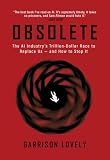

But reading a great writer can get you thinking, even if it’s along a line of thought you were already on, and even if it’s along a line of thought the writer might himself not have gone down with you. In this new book is a note that Ellsberg wrote in 2017:
“Trump’s destruction of facts, evidence, and truth does not newly prevent us from knowing the reasons for our policies; these were always lied about. The difference now is that the purveyors of denials, assertions, and cover stories no longer bother to appear ‘plausible’ or ‘moral,’ nor do they hesitate to embrace racism and misogyny.”
To add perhaps something of a Trump 2.0 observation, I would say that not only do the cover stories seem hardly half-hearted with no creativity or real effort put into them (“maybe we’ll protect Iranian women” or “Iran might have thoughts about having nuclear weapons”), but also the notion that anything is preventing our knowing the actual reasons for government policies (or — as it’s not necessarily identical to that — the candid statements of the enactors of policies) is incomprehensible. Trump and gang just blurt it all out (“it was for Israel,” “it was for the bases,” “we’re going to take the oil,” “we’re going to make money,” “I want to kill them all,” “I don’t think about the welfare of the U.S. public at all.”) There’s nothing left secret that could be worse than what’s public, and there’s transparently no ability — at least at the very top — to keep anything secret anyway.
Whistleblowers have done tremendous service to the world, Ellsberg included, of course. And I think they still can, especially when they tell us things that are actually secret — such as plans to attack a former President of Bolivia, and when they do so in time for people who might do something about it — such as the people of Bolivia — to do something about it. But a great deal of whistleblowing over the ages has amounted to giving us the more candid and uncensored comments of insiders who have been publicly lying about events that we were already perfectly capable of knowing that they were lying about. If you follow local reporting in places being hammered by U.S. drone missiles, for example, and then a whistleblower makes public that the people behind the missiles almost never have any idea who they are killing, a couple of things happen, neither of which is your becoming aware of a new outrage. One is a sort of confirmation from an authoritative source that might prove useful in persuading some people who have managed to avoid or disbelieve the news for months or years. The other is a shifting of the story from the basic immorality of mass-murder and terrorizing to the question of why the victims aren’t being identified and targeted better.
The most important facts are usually the ones that cannot be hidden. Almost everyone can be made to not think about them. But that is a very different thing from being hidden. When Obama was at peak drone murdering, a lawyer told a congressional committee that if those drone murders were not part of any war, then they were murder, but if they were part of a war, then they were perfectly fine — and there was no way to possibly know which they were because Obama had written a memo on the topic and was keeping it hidden. The basic fact that lots of people were being blown up with missiles was not hidden and could not be hidden. But the revelation that there was a memo that was hidden served to make one stop thinking about the people’s limbs scattered into the branches of trees and start thinking about the memo, and start believing that the thoughts of a President could transform a series of public events into a war or a non-war, and that this could render those events legal or criminal actions.
When the New York Times marginally (as “opinion”) mentions that rapes go on in Israeli prisons as part of the torture of the victims of imprisonment, that fact doesn’t become something that hasn’t been knowable for generations. The endless struggles over who can say what, where, and in which way are rarely questions of actual secrecy, of proof or disproof. They are questions of respectability. Not “What is true?” but “What is it appropriate to believe?”
The notion that the Cold War ended and that this encompassed the elimination of nuclear danger would be an absolutely absurd concept as a matter of actual fact. Reducing the number of times that existing nuclear weapons could redundantly eliminate all life on the planet simply does not count as eliminating the risk to life on the planet. But as a question of fashion, it makes perfect sense. It is not fashionable to worry about nuclear apocalypse. It is not what the smart people do. You might as well smoke cigarettes, dance disco, and fill your house with Teflon. Nuclear Armageddon, for goodness sake! It isn’t hip. It’s a little bit kooky, if you want to know the truth. It suggests that you’ve got a troubled personality.
Yeah, well, we all have troubled personalities, Daniel Ellsberg included. And he wrote about that topic a lot in notes he didn’t publish. But whether or not he obsessed over the nuclear danger or the environmental danger or any other major risk because of his personality or childhood cannot really alter the fact that a basic conception of morality — a simple calculation of good or evil that can be accomplished, prevented, or allowed to proceed — also dictates that we prioritize eliminating the risk of apocalypse, fashionable or otherwise. The very first thing on a list of moral priorities simply has to be eliminating threats of total annihilation. Then comes eliminating threats of partial annihilation. This doesn’t mean that you can’t also work a little on item #678, whatever it might be. This is simply basic morality. And if it takes an unusual personality to recognize that fact, then we need to work on making such a personality more common.
And if we’re imagining that some new revelation, some new piece of information, could cause people to drop their belief in nuclear safety and recognize the danger, then we’re off track. The basic facts needed to transform the world for the better are widely available. The ever-growing risk of nuclear accident, mishap, screwup, or demented dictatorial deployment is known and not debatable. The risk of nuclear winter can be debated in its details, but not morally hazarded. When a war creates an excuse to close a waterway and a fragile, sociopathic lunatic declares that he will escalate that very war until that very waterway is opened, the fundamental problem is perfectly knowable. It isn’t top-secret. It isn’t classified. It’s just hard to hear through all the screaming about the evils of Muslims, the sacrilege of misusing the ongoing pollution-propaganda of Pearl Harbor, or the excitement of a European music contest with Israel somehow in it, but actually enjoyable music absent.
My point is not that the world is simple and easy. In the real world, the horrendously evil war on Iran that is causing economic and human devastation far beyond the rubble and the raining oil is also facilitating a desperately needed push for clean energy, bringing closer a world in which the war profiteers would have to struggle pointlessly to blockade shipments of wind and sunshine. Using less oil is near the top of the list of things we should do, but we should do it as part of a humane transition that does not cause needless suffering while further concentrating wealth in a smaller and dirtier number of hands. The world is complicated. But the problem isn’t that there’s something someone is refusing to tell us. If the Epstein files turn out to include accounts of sexual assault by Trump and other powerful individuals, who among the reasonable will even pretend they didn’t already know that Trump was guilty of such actions? The benefit, if any, of making such documents public will be to make it more difficult for certain deniers to go on denying with pretended “plausibility.”
The problem is the tendency to engage in denial — that and the tendency to avoid putting thought into action. The people of the United States just are not the people of Bolivia. Cover up a runway to prevent a criminal gang from landing? That hardly seems very tasteful or respectable, and would it take past 10 o’clock because the stores are opening?
These are the questions: how to get basic facts made respectable, accepted, and acted upon. I have no answers. I think these questions may be harder than that of how to get a few more whistleblowers. I also think that if masses of people had a better understanding — and that better understanding were normalized on television — then government insiders would share that new zeitgeist and the secrets, critical or not, would flow like a river.
Some of the basic facts that are knowable but not widely known are those related to alternatives to war, including the power of nonviolent activism, the capacity of unarmed civilian resistance, the accomplishments that could be achieved by actual aid for a fraction of what has been dumped into military “aid,” and the potential of the rule of law were the elephants in the room to deem it worth more than hypocritical rhetoric.
Toward the end of the new book is an essay Ellsberg wrote in 1984, appropriately enough. It’s called “My Anguishing Secret.” And it’s not about any secret. It’s about the difficulty of advancing a basic understanding that is dictated by facts but impeded by a wall of propaganda. Ellsberg at first says that the so-called secret is this: “We are doing something worse than the Nazis.” I’ll set aside the question of using “we” to mean a government that you are doing everything you can to change and which nominally governs only 4% of the people you care about and identify with. That the U.S. government — in planning, building for, threatening, and risking nuclear murder on an unprecedented scale — is doing something worse than the Nazis did, or that the U.S. government will have — after the death clouds emerge — done something worse than the Nazis did, is a straightforward analysis. Killing everyone is just worse than killing a lot of people. But Ellsberg goes on to discuss the hurdles he encounters in trying to get people to accept the existence of this problem. They are not hurdles created by a lack of information, but by an overabundance of misinformation, by propaganda dictating blind faith in authorities and patriotism, by pseudo-expert decrees about the wisdom of “deterrence,” and by the scapegoating and demonization of some of the other types of people who would die with your type of people if we all perish.
One of the biggest hurdles Ellsberg focuses on is getting people to believe that their leaders, who are, in every superficial way, like themselves and even do good things here and there in their public work and personal lives, could simultaneously do tremendous evil. This is also, of course, why a Big Lie is sometimes easier to sell than a small one; nobody wants to believe that their admired and honored public figure could do something beyond a certain scale of wrongdoing. Ellsberg notes that people often convince themselves and others that they have no better option. And yet it is only tradition and fashion that keep us from recognizing the logic of nuclear deterrence as no less silly than the logic of waging a war that closes the Strait of Hormuz in order to open the Strait of Hormuz. The same government that is doing that is building the nuclear weapons that cause the other governments to build nuclear weapons in order to prevent those other governments from using nuclear weapons.
Or so they tell us, and expect acceptance. If they told us they were just doing it thoughtlessly, or for campaign bribes from the profits, or for the sadistic thrill, or so that media outlets would invite them on, or in order to be allowed into the important meetings, or because apocalypse will bring back Jesus, or because Iranians need to die like the evil Japanese, and so on, many of us would not treat them as worthy of the slightest respect. But risking all life on Earth in order to be in on pushing the buttons should they be pushed, or out of such staggering incompetence and lack of confidence that the very idea of abolishing nuclear weapons is beyond your understanding — albeit written down in law? That’s supposed to be taken seriously? If Dr. Strangelove couldn’t break through this forcefield, I surely don’t know what can. I just think that if there is something, it’s probably not principally information. If Chernobyl or Fukushima couldn’t grab people by the lapels and shake them, how can we hope to do so? Not by publishing a memo, I think. Only by – -SOMEHOW — making basic existing facts into accepted respectable wisdom.
Getting everybody to read Daniel Ellsberg would, of course, work wonders. Getting everybody to read anything at all, for that matter . . . . But if there’s one thing I’d tweak, it would be Ellsberg’s holding back. Maintaining that there could possibly ever be a justifiable war is where he would always lose me. And the distinguishing between civilians and non-civilians, even in this new book, is a drawback. For Ellsberg, it was the killing of civilians that was wrong. But most wars are not fought between uniformed squads on a pitch somewhere with referees and salaried lineups. Most victims of most wars are people killed in or near their homes, civilian or not. Most non-civilians have been given little choice about that status. To imagine that such people slaughtering each other, as a fraction of their wider slaughtering of general populations, is somehow self-defense by one or both sides is a bizarrely twisted metaphor. When you bomb an army, an advancing one or a retreating one, each of those people you kill was not about to kill you. At worst, some of them were potentially going to try to kill some other people — and they could say the same when bombing your side. When we outgrow the idea that an “illegal” war is anything other than a war, that an “unjustified” war is a particular type of war, and that inappropriate victims can be distinguished from appropriate ones, we will be a little bit further along.