





“Iran cannot have a nuclear weapon. It’s very simple.”
— Donald Trump, 17 April 2026
The Second Biggest Mistake
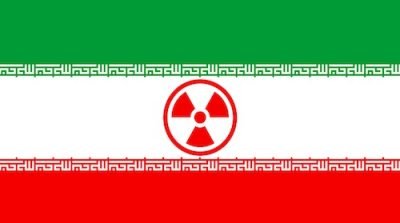
The second biggest mistake connected to the United States-Israel war of choice against Iran occurred much before the current warring. The mistake was Ayatollah Khamenei issuing and steadfastly adhering to his fatwa against Iran acquiring a nuclear weapon.
It raises a what if question. What if there had been no fatwa against Iran developing a nuclear weapon and that Iran had developed a nuclear weapon?
Peculiarly, if Iran had developed a nuclear weapon, it is highly likely that the octogenarian Khamenei would still be alive. The same goes for Khamenei’s 14-month-old granddaughter, daughter-in-law, son-in-law, and thousands of other murdered Iranians (including the ~ 175 elementary school girls and staff in Minab).
Considered in isolation, Khamenei’s opposition to a weapon of wanton destruction is laudable, but how should high ideals per se be considered when they carry the potentiality for great destruction?
Khamenei, despite good intentions, rendered what is, as evidenced by the blood-spilling and destruction, a fatal fatwa. Nonetheless, the severest criticism must be reserved for the entities directly connected to spilling the blood of humans.
Secondary to the murders of Iranians, is the destruction of Iranian infrastructure, including bombing of nuclear sites, hospitals, schools, universities, bridges, steel plants, pharmaceutical companies, etc.
However, the second biggest mistake would have been obviated by US president Donald Trump not committing the biggest mistake: launching a war of choice, which clearly was Israeli prime minister Benjamin Netanyahu’s choice. A pliable Trump, acquiesced and broke his often repeated campaign promise of no more wars.
The Biggest Mistake
The biggest mistake by far was the launching of a war of aggression by the US and Israel against Iran. Both the US and Israel utterly miscalculated (assuming they actually made any serious calculations) the blowback from attacking Iran.
The longstanding pretext harangued over decades by Netanyahu was that Iran was on the verge of acquiring nuclear weapons. There is something logically incoherent in two nuclear-armed states demanding that another state not become what they are; in other words, do as we say and not as we do. However, there is a logical argument — one devoid of moral consideration — to be made that if a state wants to attain and retain full spectrum dominance, then it behooves a hegemon to ensure that no other state approaches its level of dominance anywhere across the worldscape. Another argument to be made is that of elementary morality, which in this case is violated; namely, the equality of sovereignty must be accorded to all states. To put it another way: what is good for the goose is good for the gander. If you have nukes, then I can have nukes.
Surprisingly for the US and Israel, Iran has been far more capable of defending itself from aggression than the two rogue states had bargained for. Israel is reported to have incurred much destruction, with videos and reports leaking out despite Israeli censorship of reporting. US bases in the Middle East have taken a massive pounding by Iran. The US bases were predicated on providing protection to Arab states and sheikdoms, a predication revealed to be false. In fact, it was the presence of US military bases that made such Arab countries targets for Iranian retaliation.
Then the Strait of Hormuz was gated, with only friendly nations granted passage, while the ships of other countries were allowed to sail through after paying a toll to be paid in Chinese RMB (thus chipping away at the petrodollar). The status of the Strait of Hormuz has been in much flux during the warring.
Learning from the Second Biggest Mistake
I had already argued back in 2006 that when faced by a threatening nuclear foe that one should bring an equally formidable arsenal.
Ask: if Iran had developed a nuclear arsenal, would the US and Israel have attacked Iran?
The evidence suggests that lack of a sufficient military deterrence leaves a country prone to attack. For example, after Libya unilaterally disarmed in the early 2000s, NATO attacked, enabled a genocide, had Muammar Gaddafi horribly assassinated, and immiserated Africa’s richest country. [see A.B. Abrams, Atrocity Fabrication and Its Consequences, (Clarity Press, 2023): 358-395.]
On the other hand, the Democratic People’s Republic of Korea, demonized as part of the Axis of Evil, developed a nuclear deterrent, and despite much American vitriol and posturing, it has never been attacked since.
Iran has many times been assessed by US intelligence as not pursuing nuclear weapons and, therefore, not being nuclear armed. Yet, in 2025 and 2026, Iran has twice been victim of sneak attacks launched while being engaged in negotiations to achieve a modicum of peace.
The war against Iran is ongoing. Professor Ted Postol, a nuclear weapons expert, has stated his expert opinion that “Iran must be considered a nuclear weapon state.” That would constitute the narcissist Trump’s worst nightmare: indelibly besmirching his already besmirched legacy.
What Iran Should Do Next
What is morally defensible about a state choosing to reject having nuclear weapons, thereby leaving the state and its people vulnerable to attack?
An important distinction is in order here. It is important to distinguish between a state peacefully in possession of nuclear weapons exclusively to deter attacks against it by warmongering states in contrast to a nuclear-armed state that threatens other states. As such, the preponderance of criticism must be directed against the nuclear-armed states that threaten or attack non-nuclear-armed states. It is wrongheaded to criticize peaceful, nonthreatening states that possess nuclear weapons for purely self-preservation; especially, since the possession of nuclear weapons might well be what is deterring wars and, thereby, saving lives.
Imagine if China and the DPRK did not possess nuclear weapons.
It is argued that if Iran were a nuclear state to begin with, many of its physicists and prominent leaders would never have been assassinated; citizens would have avoided having to experience the destruction and deaths caused by bombing; Iranian technology would not have been targeted with the Stuxnet virus; and the current warring would never have been launched against it.
The Status of Ayatollah Khamenei’s Fatwa
To escape the insidious consequences of warring, past and present, serious consideration ought to be given to having the fatwa rescinded or amended to a new interpretation.
The security of the state and its peoples must be the first priority of a government. As such, a reworded fatwa might state that nuclear weapons are considered anathema to the state; however, given the existence of threats against the state and its citizenry, this requires that a sufficient deterrent be developed to ensure the security of the state, with the proviso that a nuclear weapon only be used when the state faces an undeniable existential threat from enemies.
As such, Iran would join the ranks of states that declare being nuclear-armed but with a No First Use (NFU) policy (as with China and India) — unlike the US. Moreover, Iran could support compliance with Article VI of the Nuclear Nonproliferation Treaty that requires nuclear armed states to surrender their nukes. Of course, such compliance would require mutual openness to inspection and verification of the surrender of all nuclear weapons by all states known to possess nukes.
Were a nuclear-armed Iran to incorporate such principles into its deterrence structure, then it would further buttress its morally superior stance in comparison to rogue-state actors such as the US and Israel which commit aggression against other states. After all, aggression was deemed by the Nuremberg Tribunal as the “supreme international crime … in that it contains within itself the accumulated evil of the whole.”