






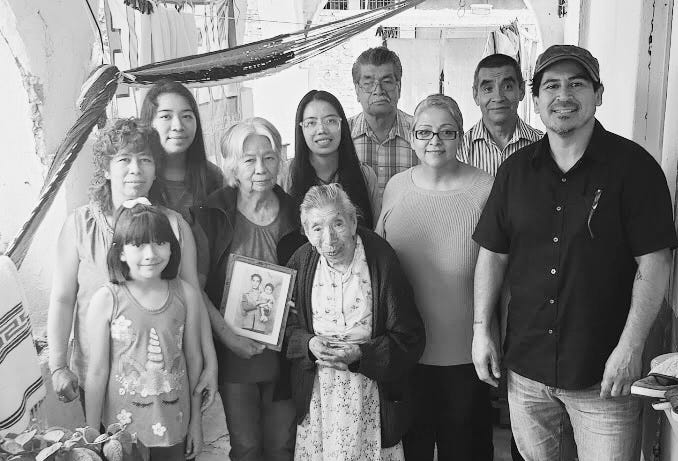
That plane crash was in 1948. Nameless then, and put into a mass grave, unnamed remains. DC-3 was losing its enflamed wing, broken apart, and people on the ground saw bodies falling from the sky before the plane hit nose-first into Los Gatos Canyon.

[DC-3, a troublesome plane.]
But Tim Hernandez has done more than just give shape and form to the story. He’s worked to get these migrant “legal” workers their names: “Forevermore We Will Call You By Name.”
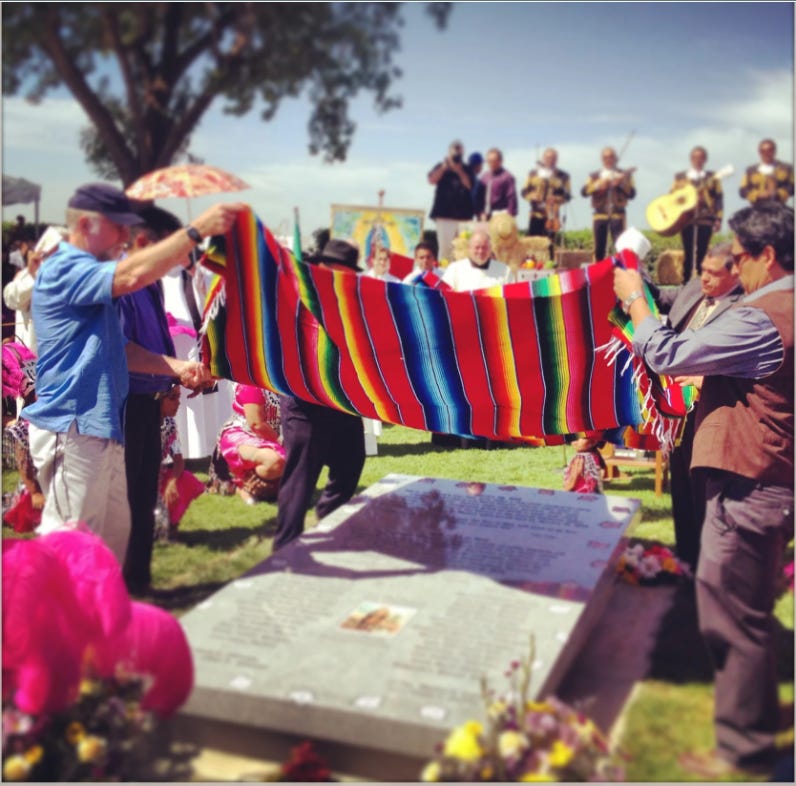
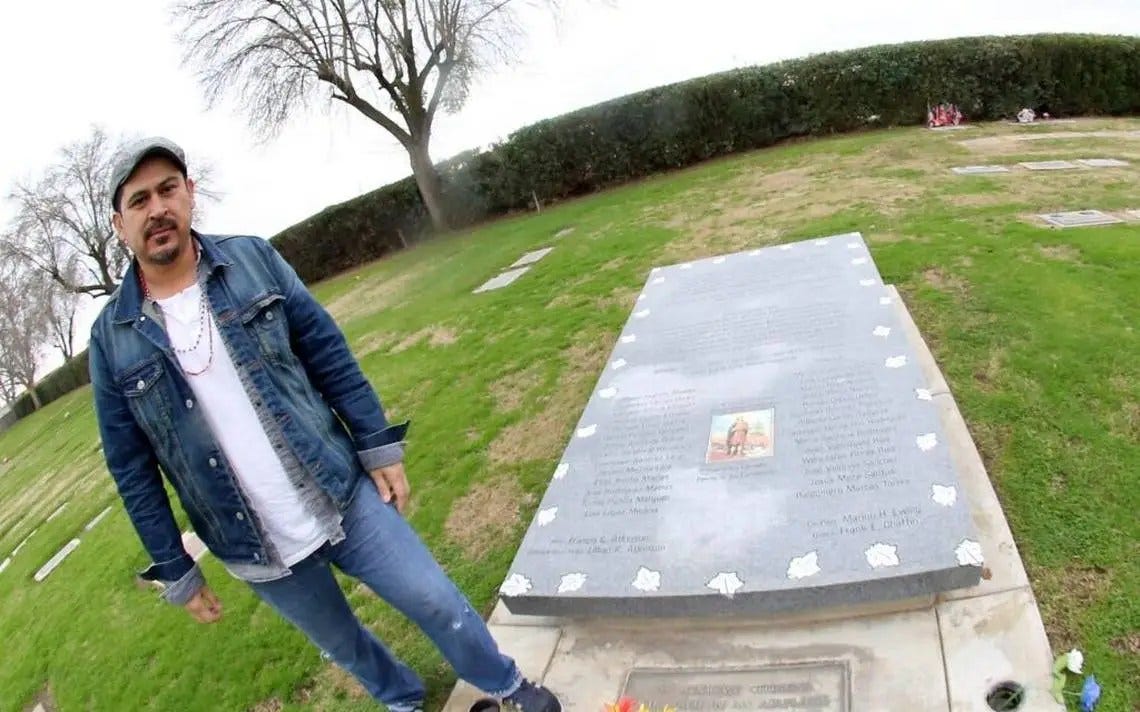
His work led to the installation of a new headstone at Holy Cross Cemetery in Fresno in 2013, which finally listed all 28 workers by name. He’s researched this for more than 15 years.
Go to Tim’s website for more information about the film, the last few months of fundraising, etc.,
Deportees
The crops are all in and the peaches are rotting,
The oranges piled in their creosote dumps;
They’re flying ’em back to the Mexican border
To pay all their money to wade back again
Goodbye to my Juan, goodbye, Rosalita,
Adios mis amigos, Jesús y María;
You won’t have your names when you ride the big airplane,
All they will call you will be “deportees”
These are the opening lyrics of a historic song “Deportee (Plane Wreck at Los Gatos Canyon)” written by American folk singer Woody Guthrie and recorded by many musicians, including Pete Seeger, Peter, Paul & Mary, Kingston Trio, Dolly Parton, Joan Baez, Judy Collins, Bob Dylan, and others.
Guthrie wrote the song about the 28 Mexican farm workers who died in a 1948 plane crash near Coalinga in Fresno County, as they were being deported from this country. A description of the crash includes this horrendous account: “… witnesses noticed the plane trailing white smoke from one of its engines when the left wing suddenly ripped off, spilling several passengers out of a large hole in the fuselage before the plane caught fire and spiraled to the ground, exploding in a ball of fire.” (Luis du Mort, Find a Grave, Deportee Plane Crash)
National newspaper and radio reports identified the four American crewmembers who perished, but did not bother to name the Mexican victims other than identifying them as deportees. They were buried in a mass grave at Holy Cross Cemetery in Fresno.
This disregard for the value of life, this indifference towards the vital contribution people make to keep our country and its communities thriving, seems to be repeating 76 years later as we hear vicious political condemnation of immigrants, whether Mexican, Haitian, or anything other than the desired status quo. The current threat of mass deportation made by Trump brings this incident and Guthrie’s song back to many people’s memories.
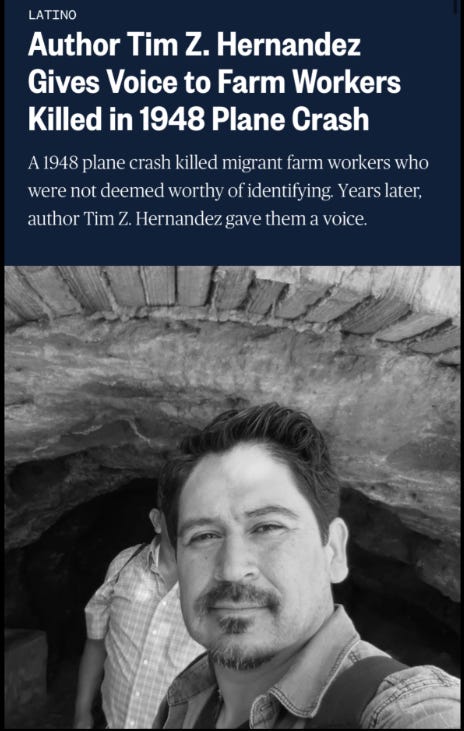
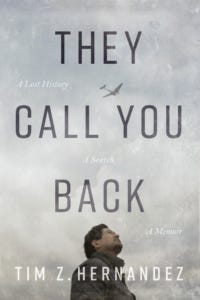
Contemporary author and professor Tim Z. Hernandez has taken on the goal of identifying and honoring the Mexican crash victims in his 2017 book “All They Will Call You.” He researched, interviewed, and traveled within the United States and Mexico to meet family members of those who perished. His work documents the disaster as well as the workers’ personal stories. Hernandez’s 2024 follow-up book, “They Call You Back,” reveals his own family’s farm worker history and fulfills his desire to restore dignity to all.
Through Hernandez’s efforts, a headstone was dedicated at the mass grave in 2013, which included the names of all 28 workers. In September 2024, a stone marker was dedicated near the Coalinga crash site. It bears the inscription “Forevermore We Will Call You By Name.”
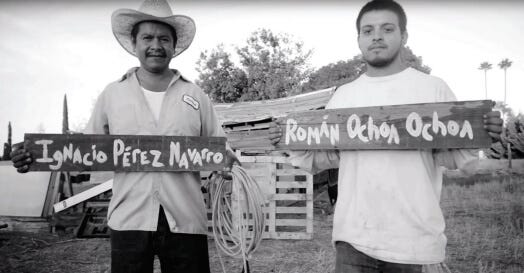
They are: Miguel Negrete Álvarez, Tomás Aviña de Gracia, Francisco Llamas Durán, Santiago García Elizondo, Rosalío Padilla Estrada, Tomás Padilla Márquez, Bernabé López Garcia, Salvador Sandoval Hernández, Severo Medina Lára, Elías Trujillo Macías, José Rodriguez Macías, Luis López Medina, Manuel Calderón Merino, Luis Cuevas Miranda, Martin Razo Navarro, Ignacio Pérez Navarro, Román Ochoa Ochoa, Ramón Paredes González, Guadalupe Ramírez Lára, Apolonio Ramírez Placencia, Alberto Carlos Raygoza, Guadalupe Hernández Rodríguez, María Santana Rodríguez, Juan Valenzuela Ruiz, Wenceslao Flores Ruiz, José Valdívia Sánchez, Jesús Meza Santos, Baldomero Marcas Torres.
In 2013, Tim was at the graveside dedication. He’s since tracked down many of the families of those listed above, and he’s ready for a premiere of the documentary-memoir film in August.
“It’s not every day that we get to witness or take part in a closure of this capacity,” Hernandez said.
He told the crowd that the ceremony demonstrated how one tragedy affected the lives of so many people.
“Since that song has been recorded, this history has been one-sided,” he said. “But now, now we know the other side of the story, now we know who people are behind the nameless, now we know who their lives are, who their family are.”
He’s still searching for the families of the 26 other Mexican nationals who died in the crash. He wants to include their stories in his upcoming book.
“I invite you to share the story now,” he said. “The more we share the story, the more we all participate in correcting the past.”
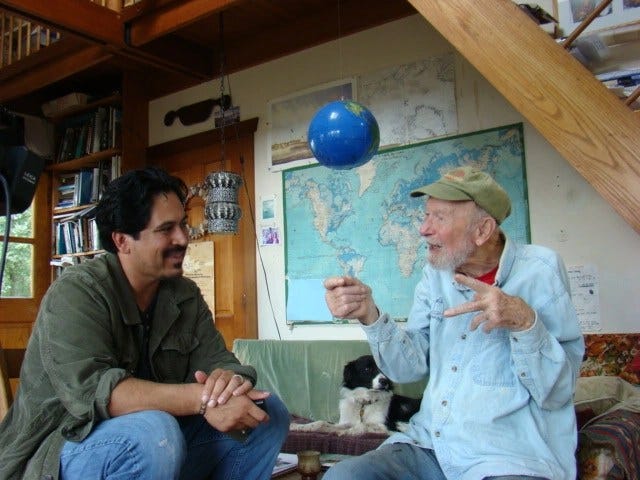
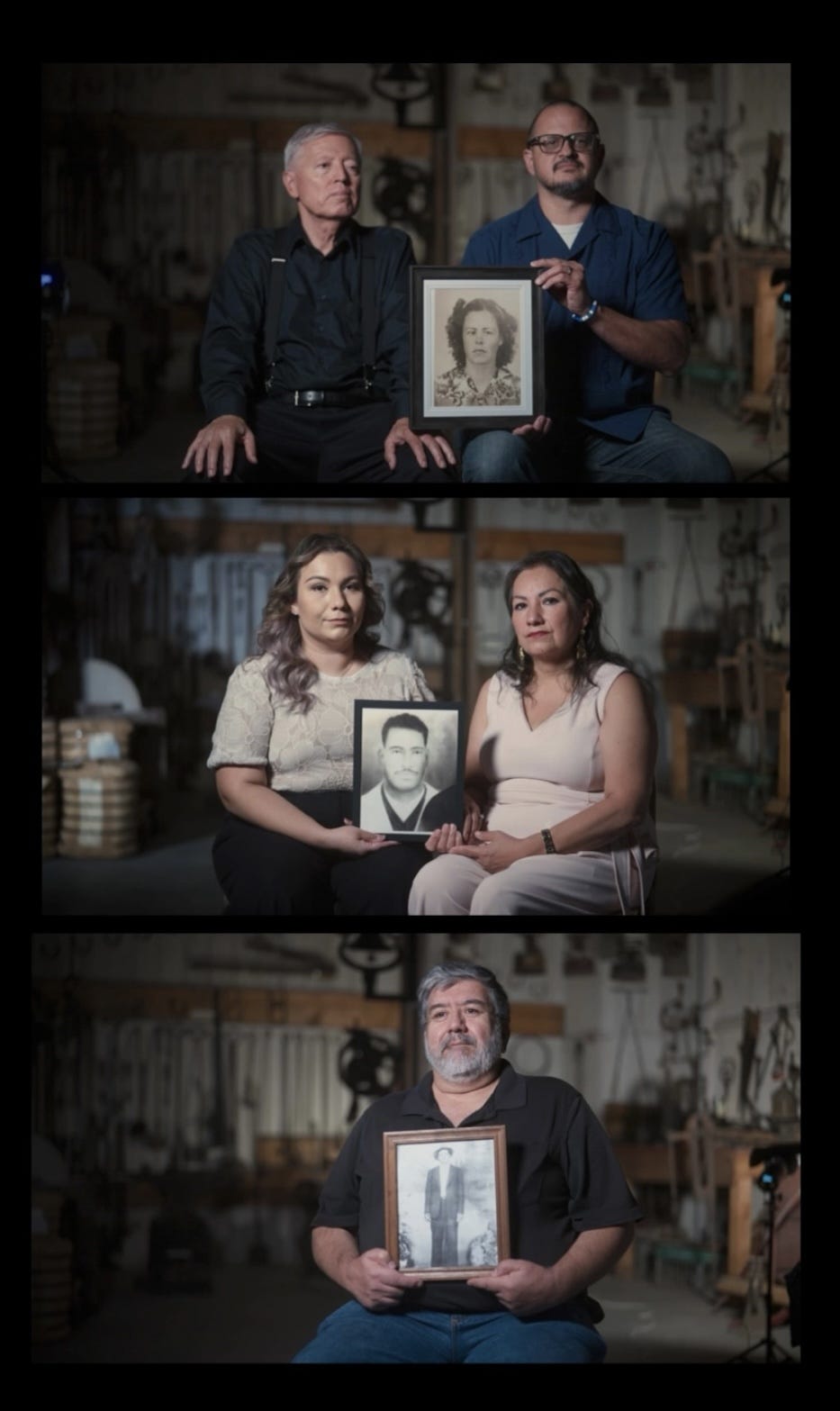
Quoting Tim: “Since 2010, I have documented nearly every step of this journey through video, audio, and photographs—my research, travels, and intimate conversations with families and experts. What began as a personal search has grown into a deeply human story spanning two nations, decades of U.S. immigration policy, American folk music, and lives—including my own—forever shaped by tragedy. With my producers and an award-winning post-production team, this story is now coming to the screen—and the moment could not be more urgent.
As immigration enforcement intensifies and fear dominates the national conversation, we urgently need stories that restore our shared humanity. This film does exactly that: it names the unnamed, honors lives long erased, and insists on dignity when too many are treated as disposable.”
Joan Baez:
Official music video for “Deportee” featuring Lyle Lovett by Los Texmaniacs, from Cruzando Borders out on Smithsonian Folkways Recordings.
Here’s the trailer for Tim’s film:
Team
Tim Z. Hernandez, Director/ Producer
Charles Horak, Producer
Laurie Coyle, Producer
Ray Santisteban, Camera/ Audio
Rumi Sevilla Hernandez, Camera/ Audio
Facundo Torrieri, Camera/ Audio
Jake Yeager/ Mount Up Studios, Camera/ Audio/ Drone
Project Consultants
Carlos Avila, Director/ Filmmaker/ Producer
Patty Rodriguez, Screenwriter/ Producer
Dr. Michele Fazio, Educational Consultant/ Grant Writer
Tim was gracious enough to spend an hour with me for my Oregon Radio Show, Finding Fringe: Voices from the Edge. Wednesdays 8 pm and rebroadcast Thursdays at 3 pm, on kyaq.org. You get it early, since it will air April 15, as part of National Poetry Month, once a week, I will be riffing with POEMS and poets and writers.
Here’s a poem of his he didn’t read on the show:
Father of Clarity
A poem for Sunday
Each day the same now:
I wake her up—she’s a woman
in the making, and me,
I’m still a boy, given this responsibility
of another, and my boy,
he’s visiting his mother, one
thousand miles away. We drive
to school each morning, discussing
the state of all things—
how she will need to use my razor
blades, for my legs, she says,
and armpits, except she doesn’t say
armpits, she says for under my arms.
I mention the color of the sky
at 8:15 a.m. being something like
the color of her eyes seconds after she was born.
She responds by asking me
what verisimilitude means, and I tell her
to look it up. These are
the particulars of raising Rumi.
Not like when we would once hold hands
and write our names in the snow.
Not like when she would fall asleep
in the bicycle seat tethered to my back
as we rode down Colorado pathways.
This is El Paso, the face without
makeup. We cannot hide behind
hiding any longer. The dry cycle never dries the first
go-round. Living alone is learning
to speak for both sides
of the conversation. And God,
isn’t this true? And God replies,
it is only verisimilitude. Lately, I don’t have
much to say, except I wish
I could go back to Hejira and
that rainy cafe in Asheville, North Carolina.
I wish I could go back to the back
of the beginning, try again. Like a video game,
hit the reset button, throw
a love tantrum, force round pegs to fit
my square anatomy. I’ve always wanted
a kitchen with a view of both sides,
and now I’ve got two, El Paso / Juárez.
It’s like looking through a kaleidoscope that refracts
the surreality of our days. See here,
a mountain preaches, with accent:
La Biblia es la verdad, leéla.
See here, the river howls in American twang:
Go back to where you come from.
Between the two, a chaparral bows:
This is not what brotherhood looks like.
This is not the conversation for Rumi, though.
She reminds me of this. Held up the bird.
Unnamed still. Trained it to land on her finger.
How it returns to its cage when it flies
too far. I’m the opposite. I return to flying
when I’m too far in the cage.
She’s always been a friend-soul
to me. More than a daughter.
The hierarchy is this: I make her
eggs with arugula and toast. She eats them.
We attempt yoga in the mornings.
There is a peacefulness in our routine.
We don’t speak about the day
when all of this
will be nothing more
than a poem.
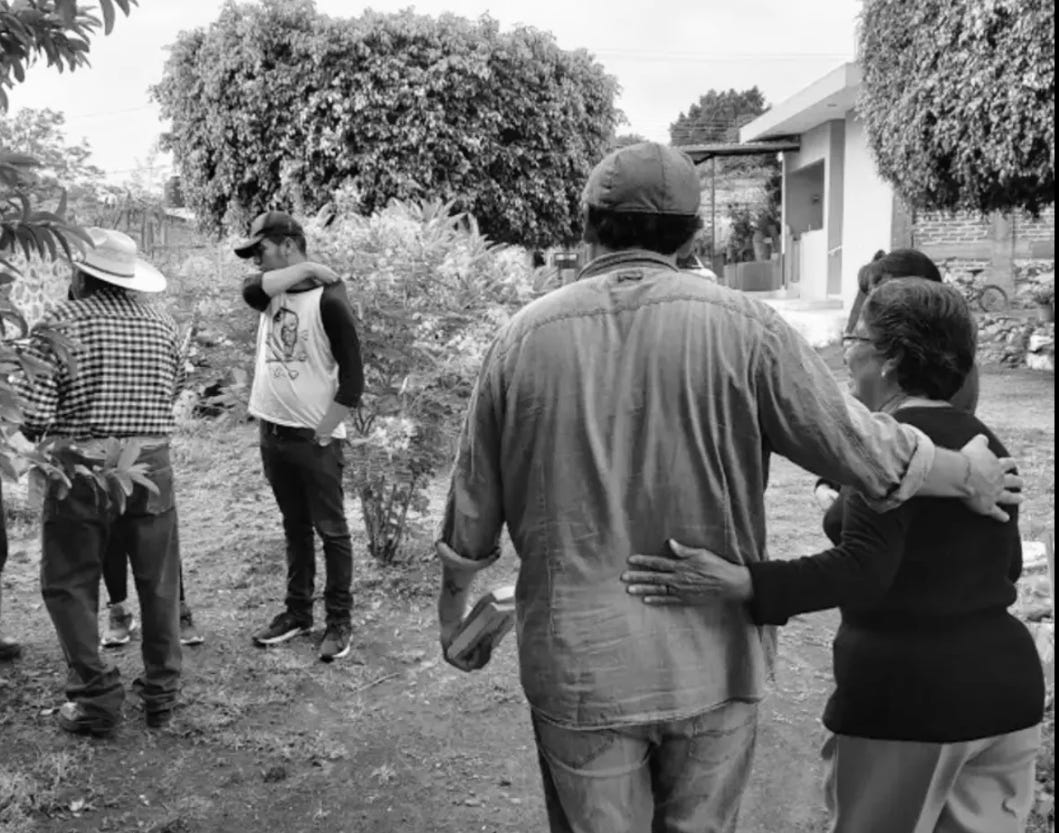
And, alas, as I’ve repeated many times — what I write about in the newspapers and my own auto-fiction and on the radio, in interviews, many times interlinks with my own narrative, more own gravity fed life, and if I am a compadre or hermano or just plain amigo of my guests because we might share geographic locales, or avocations and interests, that’s also part of the flow.
One hour is NOT a lot of time to riff and probe and have a deep conversation. This time around, Tim got some words in, so give me that, give me that. This posting, well, it’s about LISTENING to the podcast, i.e. radio show.
Did I bring up Chavez Ravine, and did I bring up the Border Patrol, and the Highway of Death, and more? Sure.
This is a place of intersections and tangential reality from yours truly: I want to spread out, to go outside the confines of typical journalism or essay writing.
Exhibit A:
A vibrant community, Chavez Ravine, was erased for Dodger Stadium. Residents recall the forced uprooting, lost homes, and broken promises. This is a story of community, loss, and the price of progress in Los Angeles.
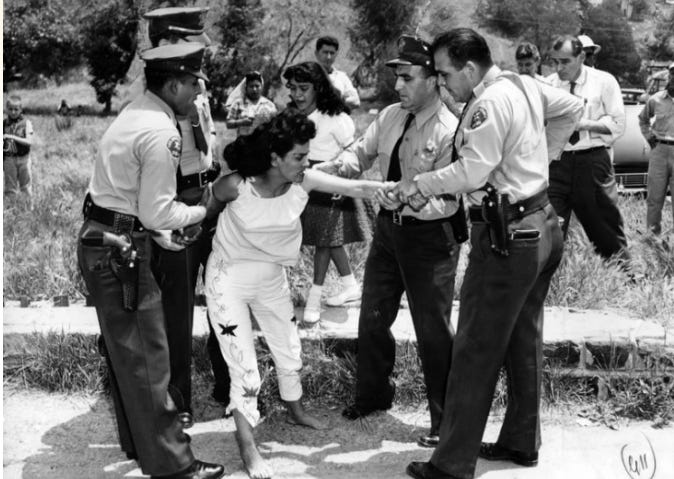
The ugly, violent clearing of Chavez Ravine before it was home to the Dodgers.
Chavez Ravine was named after Julian Chavez, a rancher who served as assistant mayor, city councilman, and, eventually, as one of L.A. County’s first supervisors. In 1844, he started buying up land in what was known as the Stone Quarry Hills, an area with several separate ravines. Chávez died of a heart attack in 1879, at the age of 69.
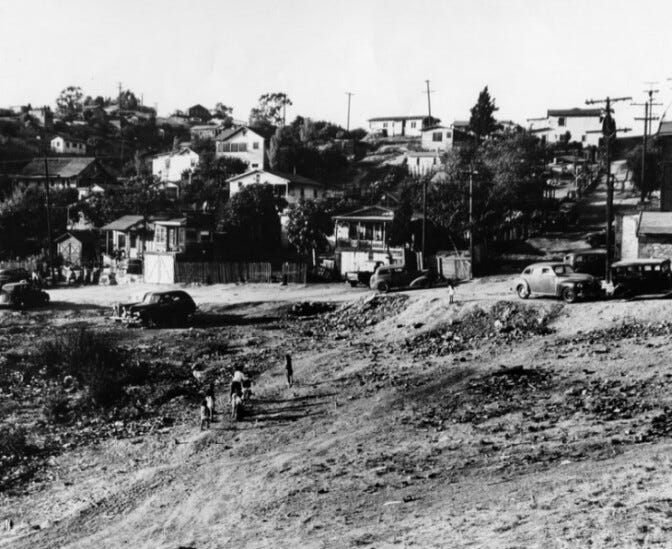
[Chavez Ravine, 1948]
What eventually came to be called Chavez Ravine encompassed about 315 acres and had three main neighborhoods — Palo Verde, La Loma, and Bishop.

[1951: “The Navarro family poses at their Chavez Ravine home before their relocation to the William Mead Homes Housing Project. Blasito Navarro (divorced) lived with her 3 children in this 5-room house, which was rented for $25 per month.”]
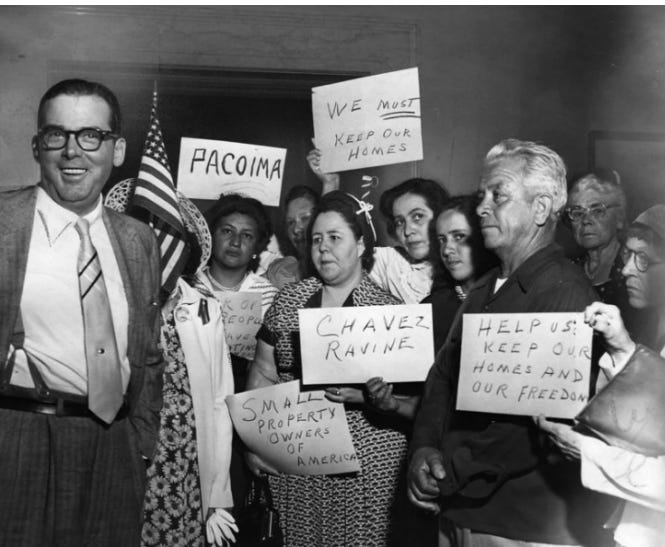
[July 20, 1953: “Home owners from Chavez Ravine, Rose Hills and Pacoima tell Mayor Norris Poulson (left) to fight on for abandonment of housing projects.”]
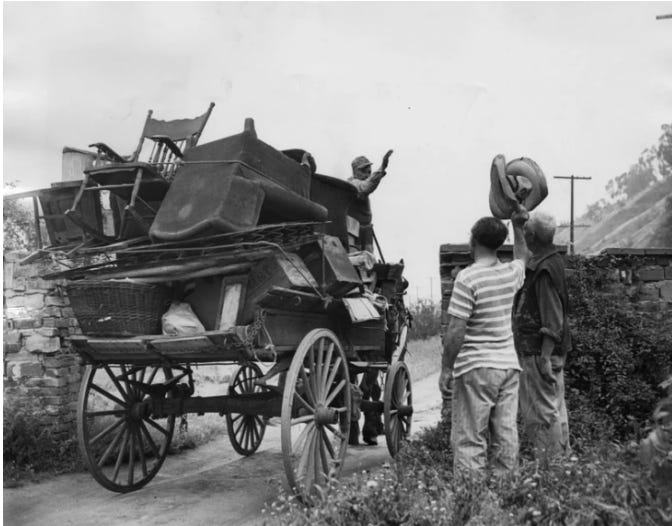
[May 14, 1951: “New projected housing project is forcing many oldtimers like Julian, on wagon, to move from Chavez Ravine to new quarters. Later, the area became part of the baseball stadium of the Los Angeles Dodgers instead.”]
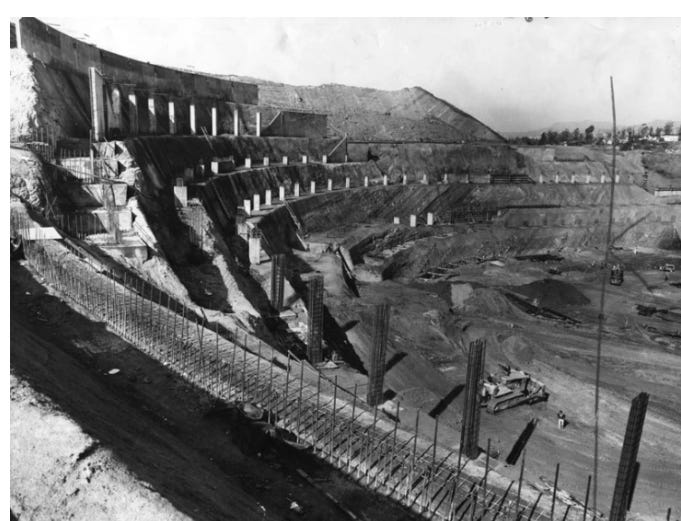
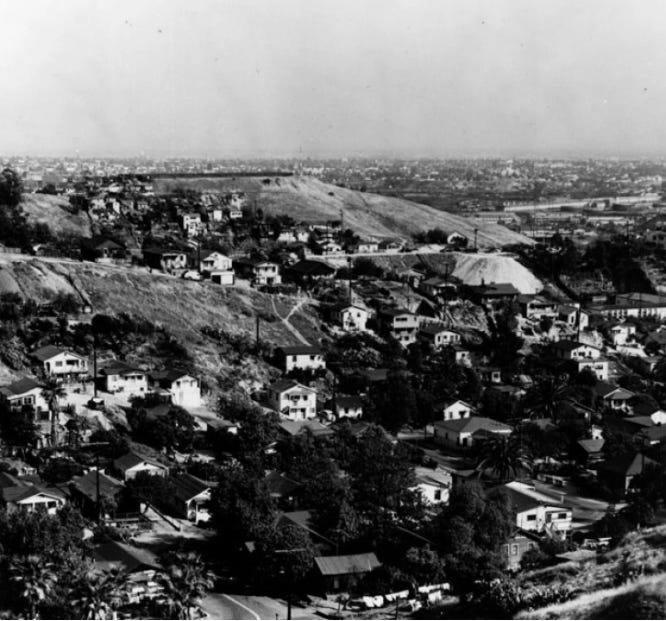
[Archival caption: “Panoramic view of the Elysian Heights and Chavez Ravine area as photographed by the Los Angeles City Housing Authority in an effort to document slum conditions.]
You want some lowdown on the bracero program, a la a socialist like me? This is what I taught, or at least exposed my students to at UT-El Paso, before I left for Spokane: Transient Servitude: The U.S. Guest Worker Program for Exploiting Mexican and Central American Workers by Richard D. Vogel,Issue: Vol. 58, No. 08 (January 2007)
The history of the Bracero Program, an indentured servitude program that allowed for the temporary migration of Mexican agricultural workers to the United States from 1942 to 1964, is important because of its impact on the lives of millions of Mexican workers. In addition, it was the first bilateral agreement regulating migrant labor between the two nations. The Bracero Agreement offers the historical and legal precedent for the program currently being developed for the mass exploitation of Mexican and Central American workers in the United States.
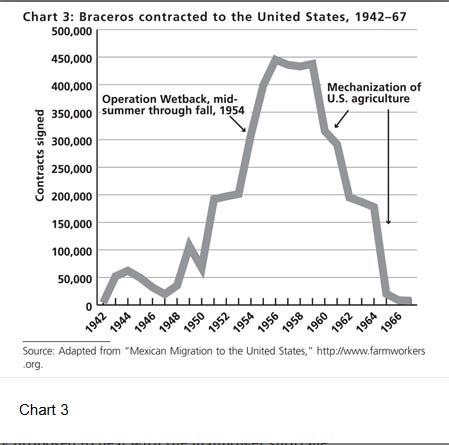
Chart 3 captures the dynamics of the Bracero Program. The timeline in chart 3 tracks the official number of individual contracts that were signed with the U.S. government by Mexican workers during the period covered by the Bracero Agreement. It shows that the program, initially proposed to deal with the manpower shortage in the United States triggered by the Second World War, worked as it was intended—the number of bracero contracts signed rose rapidly during the war and then declined steadily in the immediate postwar period. The most significant feature of the timeline, however, is that it reveals that the vast majority of the Mexican workers who signed bracero contracts were employed during the 1950s, indicating that U.S. capitalism was quick to take advantage of cheap Mexican labor and expanded the program far beyond its original mandate.
Chart 3 also documents the duplicity of U.S. policy toward Mexican migrants that was manifested quite clearly in the 1950s when an economic recession triggered a political backlash against Mexican migrants. Operation Wetback, as it was officially designated, was a paramilitary campaign conducted by the U.S. Border Patrol against Mexican communities across the nation that resulted in the deportation or flight of well over a million migrant workers and their families. Chart 3 shows clearly that the demand for indentured Mexican workers continued to rise despite Operation Wetback, reaching an annual average of 430,000 a year during the second half of the decade.
Chart 3 also records the decline of the Bracero Program. Although both opposition by organized labor and public outrage against the abuses of the program were factors in the termination of the agreement, the dramatic drop in demand for indentured Mexican labor corresponded to the overall decline in farm employment resulting from the extensive mechanization of U.S. agriculture during the 1960s (The 20th Century Transformation of U.S. Agriculture and Farm Policy, http://www.ers.usda.gov). In short, most of the backbreaking fieldwork that was being done by bracero labor simply disappeared. Although the official program of utilizing indentured workers ended in 1964, the exploitation of Mexican migrants in the worst and lowest-paying jobs in U.S. agriculture has continued to this day.
Ultimately, over 4.6 million Mexican citizens entered the United States under the Bracero Agreement, providing an abundant supply of cheap workers for U.S. agriculture as long as it was needed. Though the program provided desperately needed jobs to Mexican workers, the bracero experience was characterized by poverty wages, substandard working conditions, social discrimination, and lack of even the most basic social services for braceros and their families.
U.S. demand for Mexican workers did not disappear with the termination of the Bracero Program. The tradition of exploiting cheap Mexican labor, firmly established during the First World War, institutionalized through bilateral agreement during the Second World War, and expanded during the postwar era, continued with the establishment of the maquiladora manufacturing system in Mexico.
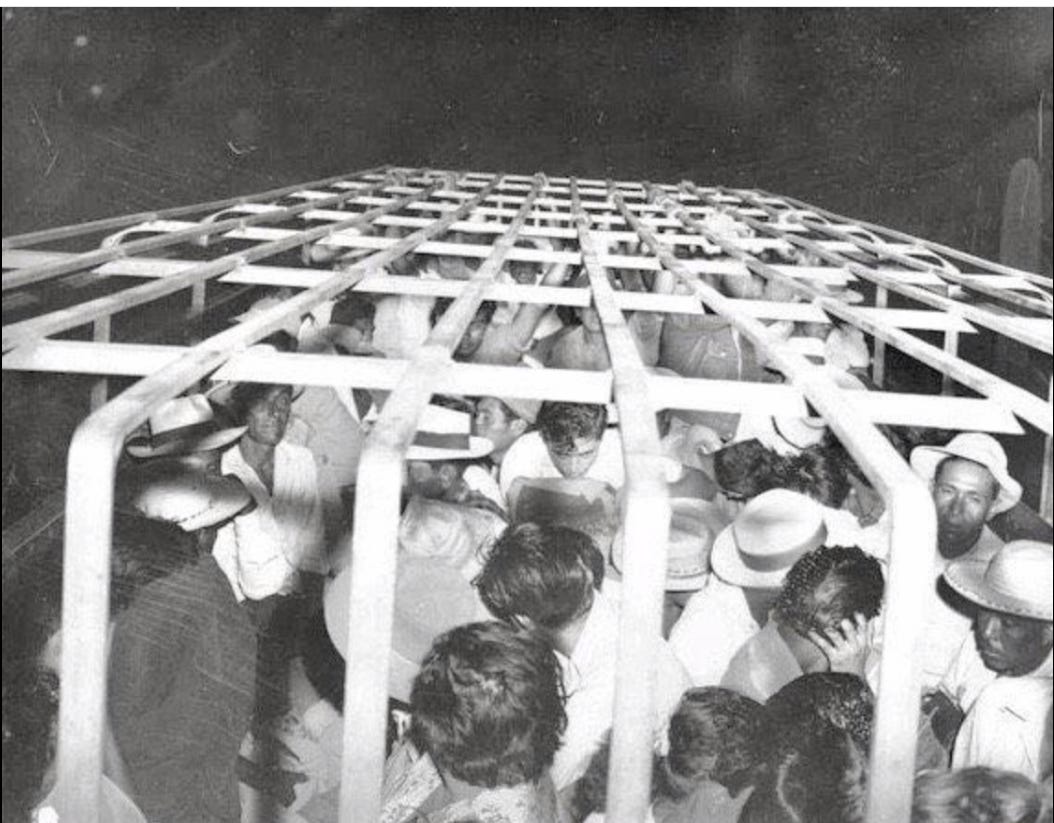
That fucking border patrol, Gestapo then and now: The U.S. Border Patrol packed Mexican immigrants into trucks when transporting them to the border for deportation during Operation Wetback.
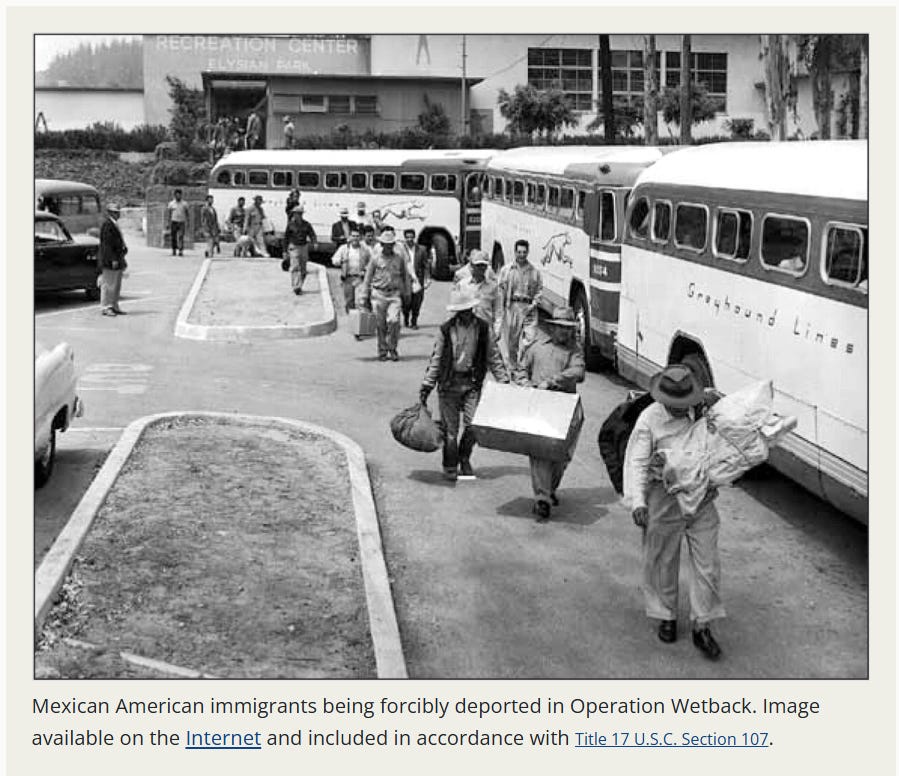
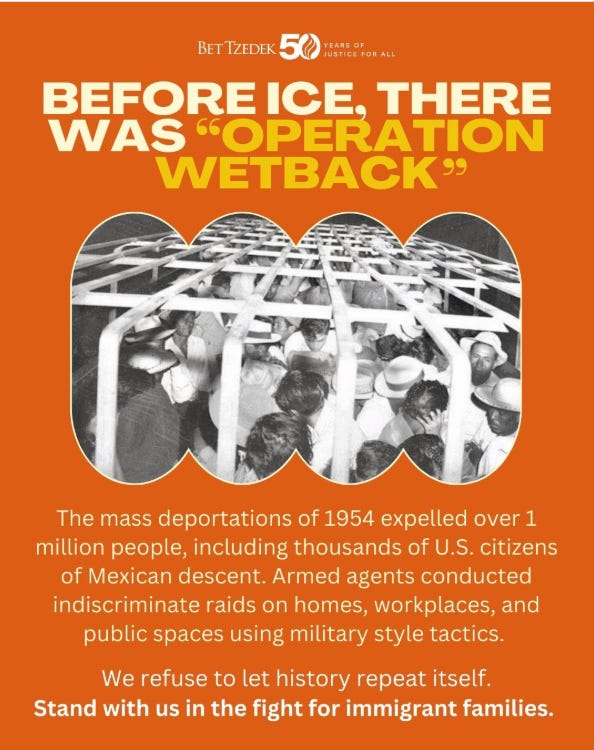
In 1954, the Eisenhower administration launched “Operation Wetback,” forcibly deporting over 1 million people, including thousands of U.S. citizens of Mexican descent. Armed agents raided homes, workplaces, and public spaces, separating families and sending many to remote areas without resources.
Today, the current administration has promised the “largest deportation operation in U.S. history.” ICE raids continue the cycle of racial profiling, fear, and forced, illegal removals.

Exhibit C:
Status: Acquitted
About the situation
On 21 November 2019, migrant rights defender Dr. Scott Warren was found not guilty by an Arizona court on two counts of “harbouring migrants” for providing them with food, water, and clean clothing. The jury unanimously agreed that the human rights defender was lawfully carrying out life-saving humanitarian aid by providing assistance to two men crossing the border on foot.
On 12 November 2019, the United States authorities will prosecute migrant rights defender Dr. Scott Warren for the second time, charged with harbouring two migrants, after he provided them with humanitarian assistance in his town of Ajo, Arizona.
On 2 July 2019, the US Attorney’s Office in Tucson, Arizona, announced it would retry Scott Warren in a felony case. The government dropped a conspiracy charge and will retry Scott Warren on 12 November on two counts of harbouring migrants.
On 11 June, jurors in the felony trial against Scott Warren were unable to reach a verdict, prompting the judge to declare a mistrial in the case. U.S. District Judge Raner C. Collins brought the 12-person jury into the Tucson federal courtroom on the afternoon of June 11, after they indicated for a second time that they were deadlocked on all three charges Warren faced. The judge dismissed the jury after each member told him that additional time deliberating would not result in a verdict. Eight of the twelve jurors were committed to finding Scott Warren ‘not guilty’.
On 29 May 2019, Scott Warren will face a felony trial at the Evo A. DeConcini United States Courthouse in Tucson, Arizona. The human rights defender is charged with two counts of “harbouring” migrants in Ajo, Arizona, and one count of “conspiracy to transport and harbour” migrants. If found guilty, he could face up to 20 years in prison.
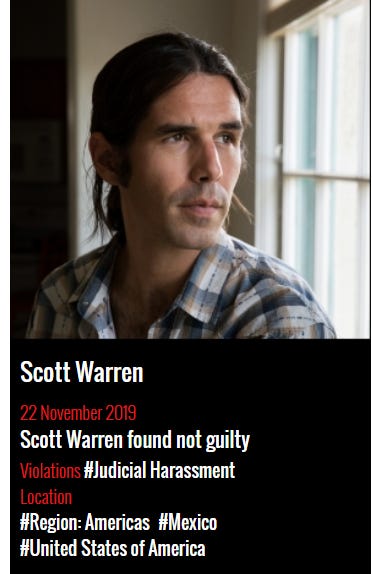
Dr. Scott Warren is a human rights defender working on migration issues in Ajo, Arizona. For over ten years, he has provided humanitarian aid to migrants and asylum seekers who attempt to cross the Mexico-US border through the Sonora desert. He helped establish the humanitarian aid group No More Deaths/No Más Muertes, which provides water and medical aid on migration routes, and documents the deaths of migrants in the desert.
Bodies in the Borderlands
Scott Warren Worked to Prevent Migrant Deaths in the Arizona Desert. The Government Wants Him in Prison.
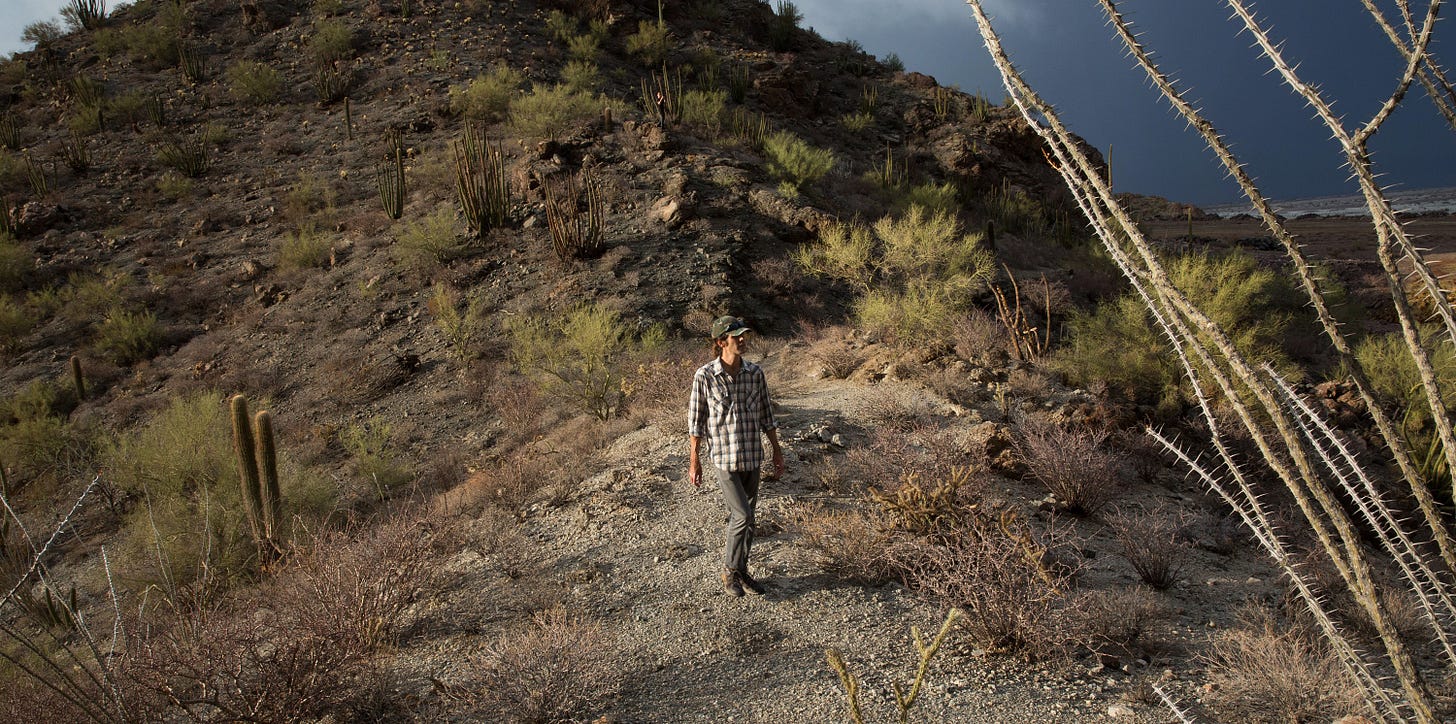
Scott Warren visits the site of now-closed copper mines outside Ajo, Ariz., on July 10, 2018. Photo: Laura Saunders for The Intercept
Ryan Devereaux 2019, 8:00 a.m. A Slow-Motion Disaster
Scott Warren has a checklist he goes through every time he finds a body in the desert. The earthly components are straightforward. Log the GPS coordinates. Take photographs and notes. Scour the brush for more bones and pull together all the data pertinent to the investigation that local authorities will, in theory, initiate once they arrive. These elements are basic evidence-gathering. But for Warren, the process doesn’t end there.
Warren believes that these moments merit an acknowledgement of humanity. And so, after years of recoveries, the 36-year-old has developed a modest ritual for the grim encounters. He goes quiet, lowers himself to the earth, collects the dirt around him, and then lets the soil pour through his fingers. The point, Warren says, is to take a moment to reflect or, as he puts it, “hold space.” It may not sound like much, but for him, this process and everything that attends to it is as sacred as anything one might find in a conventional house of God.
When a person dies, Warren believes, some extra-physical element of them remains, dwelling in the place where they passed. In the last six years, Warren has communed with the dead no fewer than 16 times in the desert outside Ajo, the tiny Arizona border town he calls home. Those bodies and fragmented sets of human remains have served as his window into the slow-motion disaster unfolding in the borderlands, one in which U.S. government policy funnels migrants into the desert, creating a black hole of disappearance and death of historic proportions.
In response, Warren has helped convene a network of Arizona humanitarian aid volunteers with roots that go back decades. Through sweat-drenched marches deep into the Sonoran Desert, this collective has expanded access to water and medical aid in one of the border’s deadliest and most remote corridors, and fueled a historic increase in the number of bodies accounted for there. Even for those who can’t be saved, the finding of human remains opens the door for bodies to be returned to grief-stricken families, providing answers to painful questions. In an alternate universe, one could imagine the efforts of Warren and his cohort being the kind of thing a society might actively support, or even prioritize. But that’s not what is happening in Arizona right now.
Deportee (Plane Wreck At Los Gatos)
Song by Woody Guthrie
The crops are all in and the peaches are rotting
The oranges are filed in their creosote dumps
They’re flying ‘em back to the Mexico border
To take all their money to wade back again
Goodbye to my Juan, farewell Roselita
Adiós mis amigos, Jesús y María
You won’t have a name when you ride the big airplane
All they will call you will be deportees
My father’s own father, he waded that river
They took all the money he made in his life
It’s six hundred miles to the Mexico border
And they chased them like rustlers, like outlaws, like thieves
Goodbye to my Juan, farewell Roselita
Adiós mis amigos, Jesús y María
You won’t have a name when you ride the big airplane
All they will call you will be deportees
The skyplane caught fire over Los Gatos Canyon
The great ball of fire it shook all our hills
Who are these dear friends who are falling like dry leaves?
Radio said, “They are just deportees”
Goodbye to my Juan, farewell Roselita
Adiós mis amigos, Jesús y María
You won’t have a name when you ride the big airplane
All they will call you will be deportees
+—+
Tim is connected to El Paso, to Texas, and he’s fourth generation here, in the United States. He’s connected to his parents, Lydia Hernandez and Felix Hernandez. Lydia was tied to her transformative magic in language and narrative. Going from field to field, from Wyoming, California, Texas, Arizona, and New Mexico, the Hernandez family worked to provide for the breadbasket of North America. One of Tim’s mentors was Juan Felipe Herrera, and Tim says his life as a poet is galvanized and ensconced with … “a word, image, music, shadows, and detritus of life.”
- bonfire conversations
- anecdotes of intimacy
- raw speak
- macho ballads
- ball games
- scars
- urgency
This is just one checklist of Tim’s drive to create with words and song and film and murals, the memoiric flow into his work.
Exhibit D:
I brought up Chopes, near El Paso/Las Cruces. I spent time there with friends, students, and others. I did run into a dude in Vietnam, Hanoi, in 1994, with a t-shirt that I recognized:

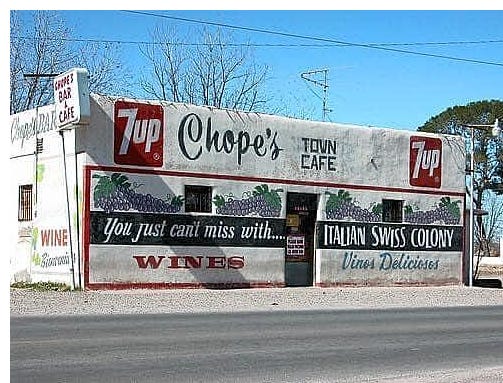
Chope’s, a 150-year-old home converted into one of New Mexico’s very best restaurants.
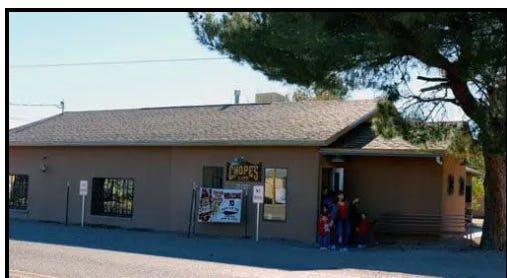
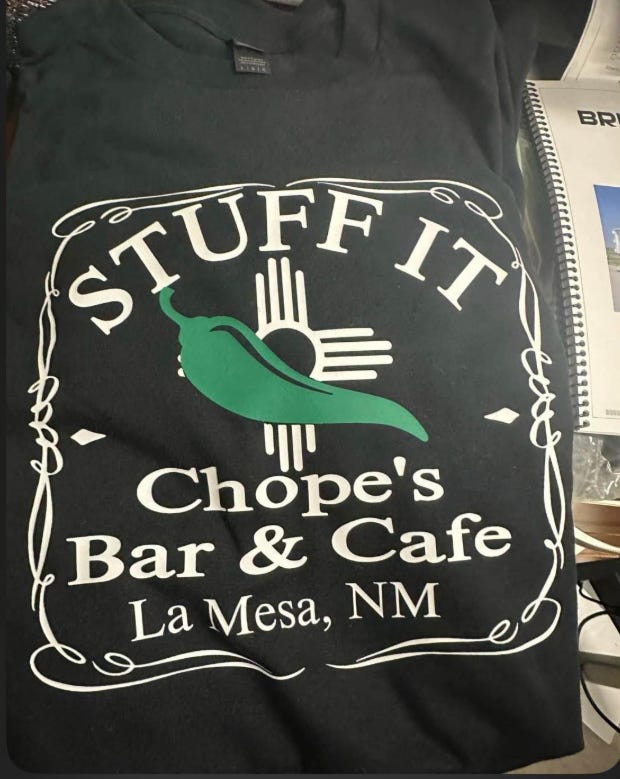
And so the world, as Tim noted, is synchronous and small and wonderful.