





Here, published in my local rag. Source.

You might know the facts about last month’s white supremacist day, Columbus Day, and this upcoming National Day of Mourning, AKA, Thanksgiving. But let’s give it another spin.
Let’s go forward a bit from 1492:
Bartolomé de las Casas, a Spanish priest, witnessed and documented many more atrocities committed by his fellow European invaders against the Indigenous peoples.
“I saw here cruelty on a scale no living being has ever seen or expects to see.” “Our work was to exasperate, ravage, kill, mangle and destroy…” which is exactly what they did. Bartolomé de las Casas, a Spanish priest, who witnessed and documented many more atrocities committed by his fellow European invaders against the Indigenous peoples.
I’m not going to give every detail of Christopher Columbus’ mass murder and mass rape project in his “new” world:
Thousands of Natives committed suicide to escape Columbus’s brutality. After decimating much of the Indigenous population through smallpox and murder, Columbus began another form of abhorrent brutality and sent ships to enslave African people, beginning the Atlantic slave trade.
And, sure, we have our own Epstein President and a slew of billionaires and other “dignitaries” caught in their white slavery lust and pedophilia. But then, this country celebrated, especially the Rapist in Chief Trump, Columbus, who himself in the year 1500 recounted, “… girls … from 9-10 … are … in demand.”
Moving on a few decades: That thanksgiving a la Conquest, the Doctrine of “Discovery.”
- Cultural Destruction and Forced Conversion: Indigenous temples, sacred art, codices, and cities were systematically destroyed or looted, and native populations were forcibly converted to Christianity under threat of violence.
- Displacement and Land Seizures: Entire communities were forcibly uprooted from their traditional homelands to serve Spanish mining, agricultural, and military operations.
- Retaliatory Slaughters: Conquistadors engaged in punitive destruction of entire towns, such as Hernán Cortés ordering the destruction of Tecoaque (Zultepec) in 1521, where women and children were killed in retaliation for the capture and sacrifice of a Spanish convoy.
Ahh, who would have thought Washington and Ben-Gurion of Occupied Palestine parroted each other:
- “Indians and wolves are both beasts of prey, tho’ they differ in shape.” – President George Washington (1789-1797), Letter from George Washington to James Duane, September 7, 1783
- “The Arabs will have to go, but one needs an opportune moment for making it happen, such as war.” – Israel’s first prime minister, David Ben-Gurion (1948-54 and 1955-63). Ilan Pappé in his book The Ethnic Cleansing of Palestine and an article in the Journal of Palestine Studies, attributed to a 1937 letter from David Ben-Gurion to his son.
When Blacks – intellectuals and scholars as well as creatives – are asked “which white person of historical significance can you think of in a positive manner,” they hesitate.
Watch the four-part documentary, Everything’s Gonna Be All White, for some interestingly odd and funny aspects of how Blacks see this country’s founding and white fragility. Of course, like Rauol Peck’s, “Orwell: 2+2=5,” we get much from the exclusively white mobs and rioters from the January 6 fiasco. The tone and charge during that “save the criminal Trump,” I mean, “save the steal” event was all about the chant: “white people let’s take this country back.”
The Everything’s Gonna Be All White thinkers and creatives did not come up with Abe Lincoln as the white historical figure they hold in prominence.
December 26, 1862, President “Honest” Abe Lincoln ordered the largest mass execution: 38 Dakota men, who were hanged in Mankato, MN. He is not someone to idolize, as I’ve seen him become, and this history kiddos in Lincoln County won’t learn in school. A few days later, two more Dakota men. Over 4,000 settlers watched and celebrated this execution. Leading up to this was the US – Dakota War of 1862, which led to thousands of Native Americans being held captive and forced to move west from Minnesota. Conflict arose due to the limitations of the lands from treaties not being sustainable for the Dakota people. As settlers said, “let them eat grass.”
During this holiday season, Spirit Riders ride, drive, and run, starting from Crow Creek, SD, to Mankato, MN, honoring their relatives.
It would behoove both kiddos and adults to pick up a few seminal books, and watch documentaries like Peck’s Exterminate all the Brutes as a counterweight to the lies of the Trump Administration and the World Wrestling Federation Secretary of Education’s spin on American “white” lies.”
Lakota historian Nick Estes talks about Thanksgiving in his book, Our History Is the Future. He is a co-founder of the Indigenous resistance group The Red Nation and a citizen of the Lower Brule Sioux Tribe.
Many people have been embraced by Estes’ movement: “Instead of doing to settler society what they did to us—genociding, removing, excluding—there’s a capaciousness to Indigenous resistance movements that welcomes in non-Indigenous peoples into our struggle.”
That’s why Black Lives Matter and Free Palestine activists have embraced activism around the Dakota Pipeline and Native American protests.
“Thanksgiving is the quintessential origin story a settler nation tells itself: ‘peace’ was achieved between Natives and settlers at Plymouth, Massachusetts, where Mayflower pilgrims established a colony in 1620, over roast turkey and yams. To consummate the wanton slaughter of some 700 Pequots, in 1637 the governor of the governor of the Plymouth Colony, William Bradford, proclaimed that Thanksgiving Day be celebrated ‘in honor of the bloody victory, thanking God that the battle had been won.’ Peace on stolen land is borne of genocide.” — Nick Estes
And so “no thanks” to the fragility and colonialism of whites: Trump revoked protections for Bears Ears National Monument on July 13, 2026, removing roughly 1.24 million acres of sacred landscape from national monument status and opening the area to mineral leasing, mining claims, and other public land uses. Bears Ears is revered by the Navajo Nation, Hopi Tribe, Pueblo of Zuni, Ute Indian Tribe, and Ute Mountain Ute Tribe.
*****
So, published LAST week in the Newport News Times, AKA Lincoln County Leader. And, as is so consistent, a letter to the editor gets the last word because I/the reporter/author is/am not going to go toe to toe with those who read my 1,000-word pieces and parse out what they believe are errors in fact or polemics or just plain anti-prime time narrative.
This sort of journalism for more than 39 years, or more, has been my life: write some kick-ass features, or straight news, and Opinion pieces, and the last word comes from, well, out of the blue.
Here, if you can link to it: “Letter: Honesty means telling the whole story” (Updated
I read Paul Haeder’s guest column, “White fragility and the no thanks giving reality for the rest of us,” and want to offer a fuller picture.
This letter writer attempts to tell the world that before the English arrived, the Pequot had “expanded by conquest at the expense of the Wampanoag, Narragansett and Mohegan. That’s why those tribes fought alongside the colonists in 1637…”

Look, this is the terrible white man’s burden, as if those colonists were innocents, as stated by the letter writer, “when Pequot warriors killed unarmed settlers in Wethersfield and laid siege to Fort Saybrook.”
UNARMED?
Those innocents, man, you know, colonists setting up Forts, man.
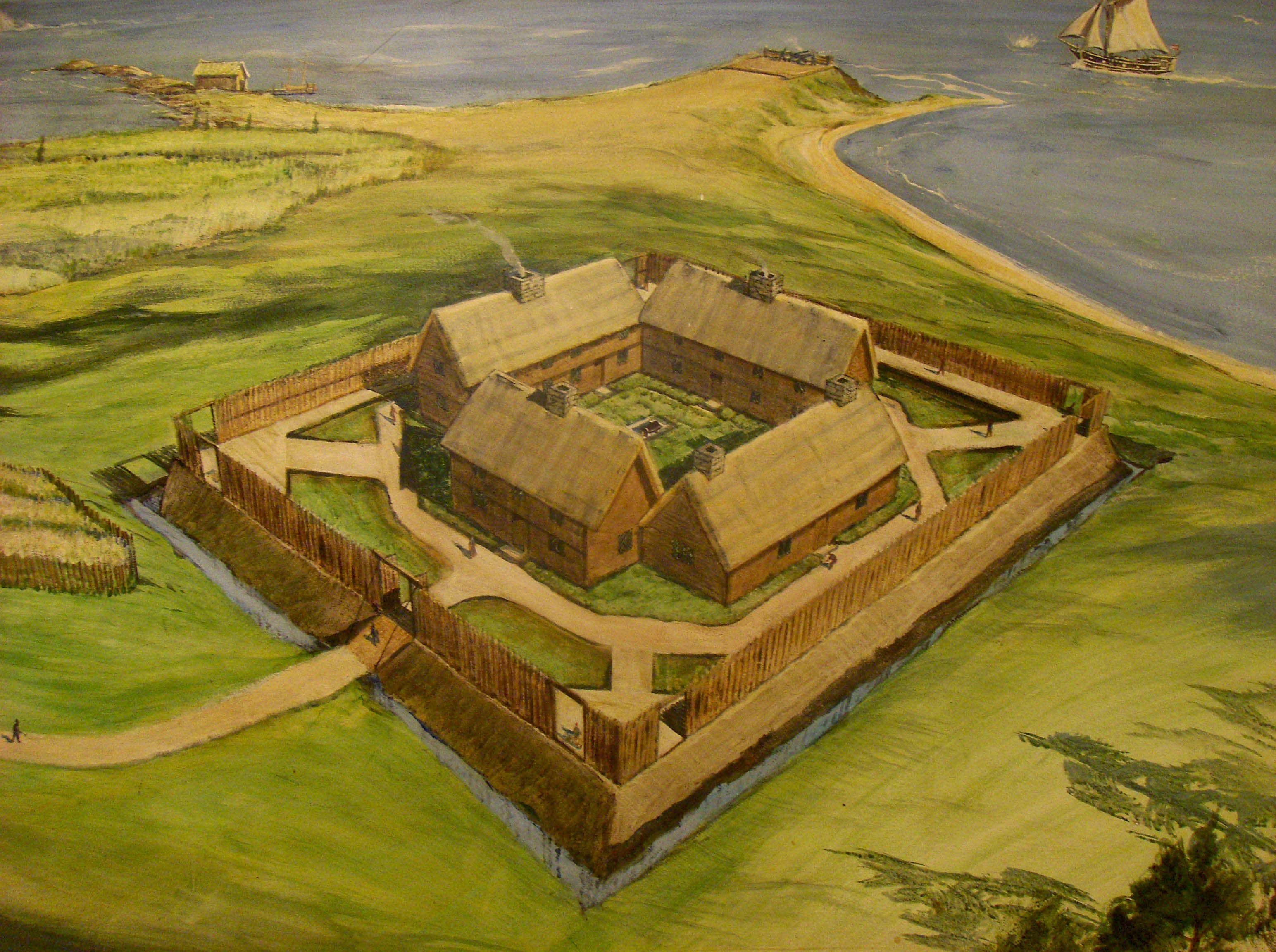
- Overseas slavery in island colonies: Many Pequot prisoners were shipped south to Bermuda and the Caribbean islands as enslaved laborers rather than taken back across the Atlantic to England.
- Servitude in New England: Colonists in places like Massachusetts and Connecticut kept some captured women and children as servants or enslaved laborers.
- Distribution to allied tribes: Under the 1638 Treaty of Hartford, surviving Pequots were divided among allied Indigenous nations, such as the Mohegan and Narragansett, and forbidden from calling themselves Pequot.

Sure, always the White Man’s Burden and Narrative, NOT:
Long before Europeans arrived in North America, the coastal and inland territory along the Long Island Sound, between the Niantic and the Pawcatuck Rivers, was home to the Pequot people.
Known as the “Fox People”, the Pequots prospered for thousands of years on their land, which encompassed approximately 250 square miles. In the age of Western Colonialism—European exploration, colonization, and exploitation—the Pequots lost their land and faced annihilation. Yet, through resiliency and determination, the Pequots not only recovered but thrived–becoming the prolific sovereign tribal nation they are today.
Their strategic coastal location and resources made them powerful economic players among English and Dutch settlers and neighboring tribes. In the course of time, European diseases decimated the Pequot population. And a series of raids culminating in the Pequot War (1636-1638) pushed the Pequots to the brink of near extinction.

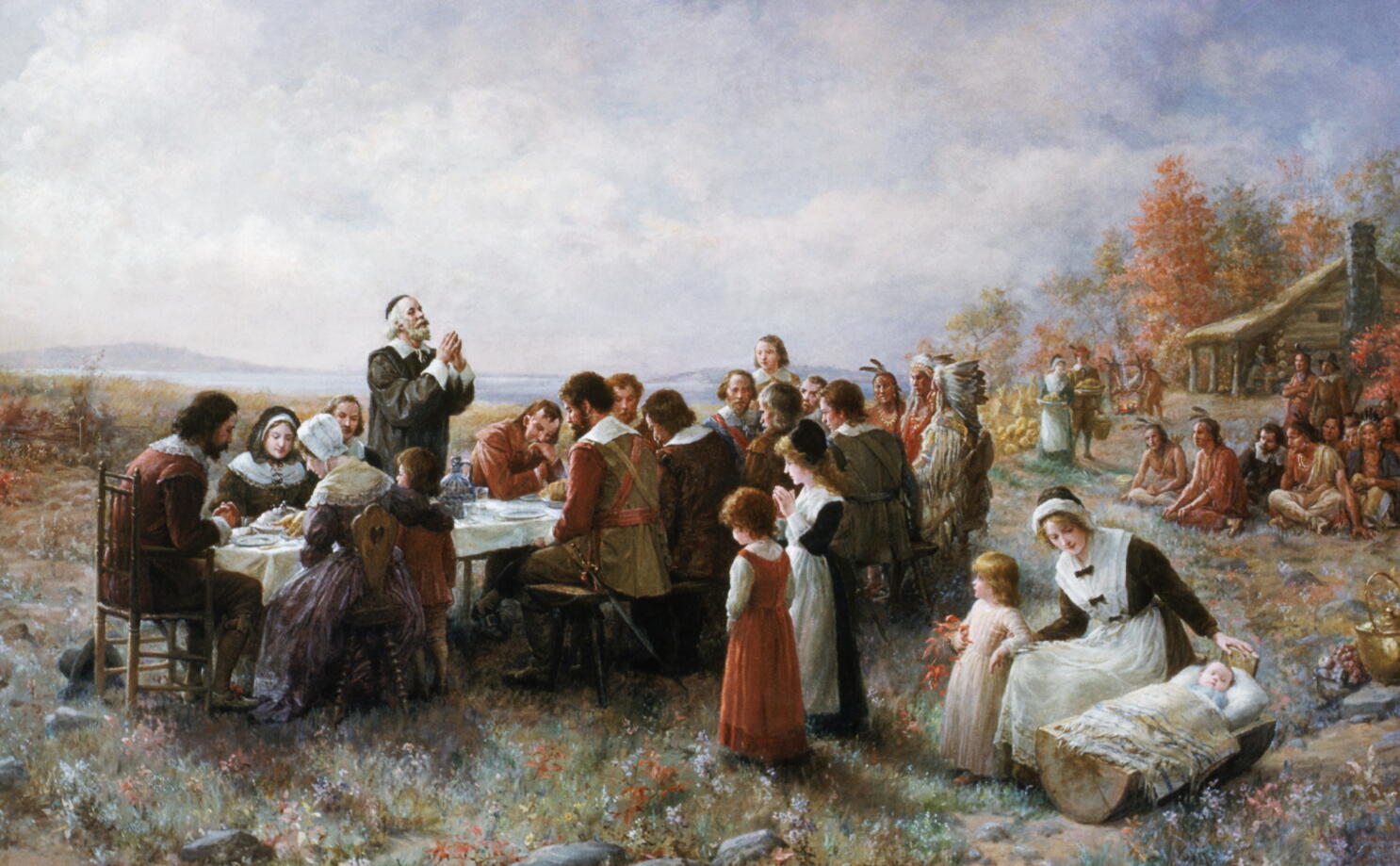


PROVIDENCE, R.I. [Brown University] —A study by Linford D. Fisher, associate professor of history at Brown University, finds that Native Americans, including noncombatants, who surrendered during King Philip’s War to avoid enslavement were enslaved at nearly the same rate as captured combatants.
Native American slavery “is a piece of the history of slavery that has been glossed over,” Fisher said. “Between 1492 and 1880, between 2 and 5.5 million Native Americans were enslaved in the Americas in addition to 12.5 million African slaves.”
While natives had been forced into slavery and servitude as early as 1636, it was not until King Philip’s War that natives were enslaved in large numbers, Fisher wrote in the study. The 1675 to 1676 war pitted Native American leader King Philip, also known as Metacom, and his allies against the English colonial settlers.

Fisher’s study, “‘Why shall wee have peace to bee made slaves’: Indian Surrenderers during and after King Philip’s War,” appears in the journal Ethnohistory, a volume devoted to scholarship on indigenous slavery in the New World. Native American enslavement was documented in colonial correspondence, shipping records, court cases, town records, colonial government orders, and petitions from colonists to the British government.
“Even contemporary official histories of the war all point to the same thing: Indians were enslaved en masse and either distributed locally or sent overseas to a variety of destinations,” Fisher wrote in the study.
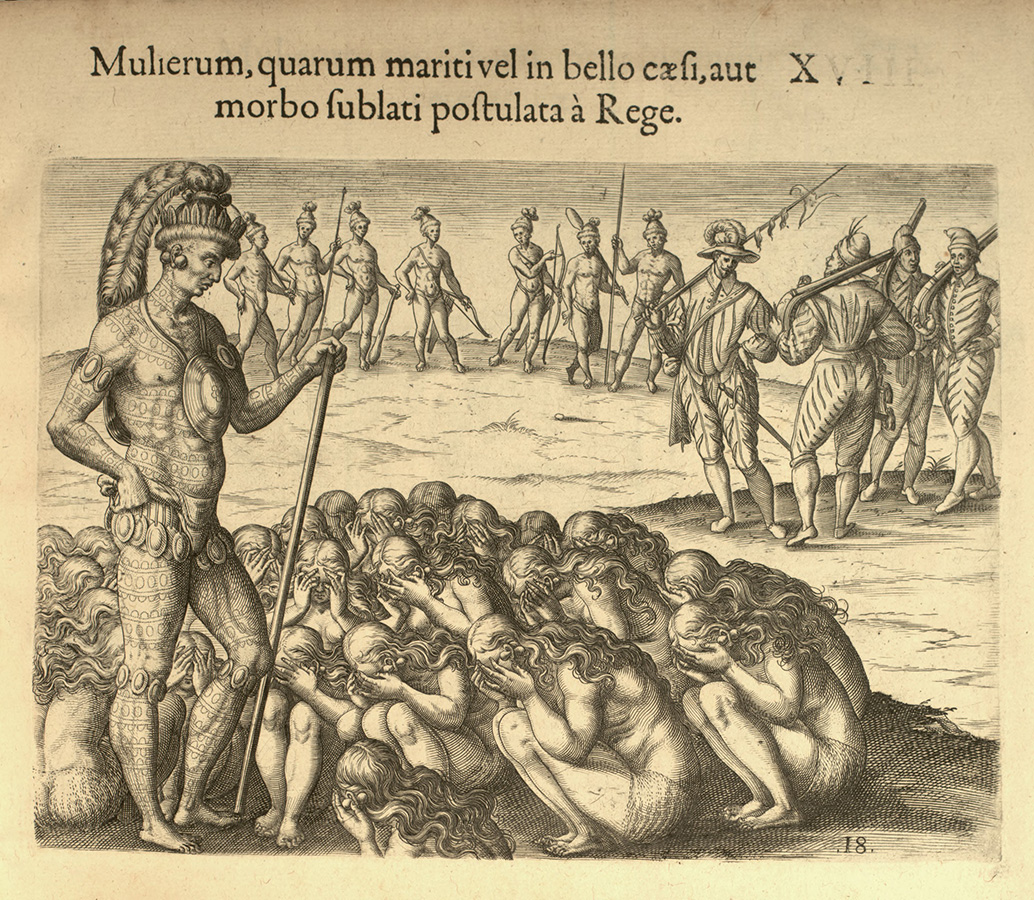
It gets redundant, and so bloody racist, to listen to these Americanos go on and on and on about “if the glorious English and the Spanish before them had never come to the New World to civilize the natives, what kind of a world would THAT be?”
“The shadow of native enslavement in New England extends into the 18th century and beyond. There are records of people petitioning for freedom in the 1740s who were the descendants of Native Americans first enslaved during King Philip’s War.” — Study by Brown University historian finds that Native Americans who surrendered during King Philip’s War were sold into slavery, with long-lasting effects.
And so the Nov. 18 letter writer ends with Hallmark:
“Thanksgiving can be a day to be grateful and also a day to remember the past honestly. H0onestly means telling the whole story.”
And that’s the last word people will read until my next commentary. Or, here, at DV, another ending:

For centuries, the Mashantucket Pequots struggled to maintain and regain their land and yearned to bring their people home to restore the Tribe’s community. Throughout the eighteenth and nineteenth centuries, colonials cleared trees on Tribal lands for logging and grazing livestock, often destroying the Tribe’s crops. Colonials signed purchase deeds for Tribal lands without honoring their payments. They seized the Tribe’s acreage with no legal authority. The Tribe’s state-appointed overseers sold Pequot plots to colonial farmers without the Tribe’s approval. Diminishing the Tribal land possession further, the poverty-stricken Tribe intermittently sold off parcels of land for subsistence and money. By 1865, only 214 acres of reservation land remained at Mashantucket.
The resilient spirit of the Pequots resisted subjugation, assimilation, neglect, and government appropriations of Tribal lands, ultimately preventing their extermination. To preserve their values and traditions, Mashantucket Pequot tribal members fought disease, poverty, and hostility from state and local governments. In the mid-1970s, two sisters, Elizabeth George Plouffe and Martha “Matt” Langevin Ellal remained as the last residents at Mashantucket; both determined to keep the spirit of the Mashantucket Pequots alive.

Following the deaths of Martha and Elizabeth, some 50 Tribal members from around the United States returned home to the reservation. In 1974, they completed a tribal Constitution based on a draft that Elizabeth George, Amos George, and members of the Tribal Council had created in the 1960s. Richard “Skip” Hayward was elected Tribal Chairman in 1975 and began a vigorous campaign to encourage Mashantucket Pequots to return to their homeland. The mission was to restore the Tribe’s culture and traditions and to address housing needs, sustainable economic development, and self-sufficiency on the reservation.