







 Findings of genocide by a tribunal are usually the stuff of lofty expectation. Considered one of the most heinous of crimes in international law, the standard of proof required for the offence is exacting. There must be that most problematic of convergences: the appropriate mental state and the hideousness of the action demonstrated by systematic dedication to targeting, with an intention to kill, in whole, or in part, a national, ethnical, racial or religious group.
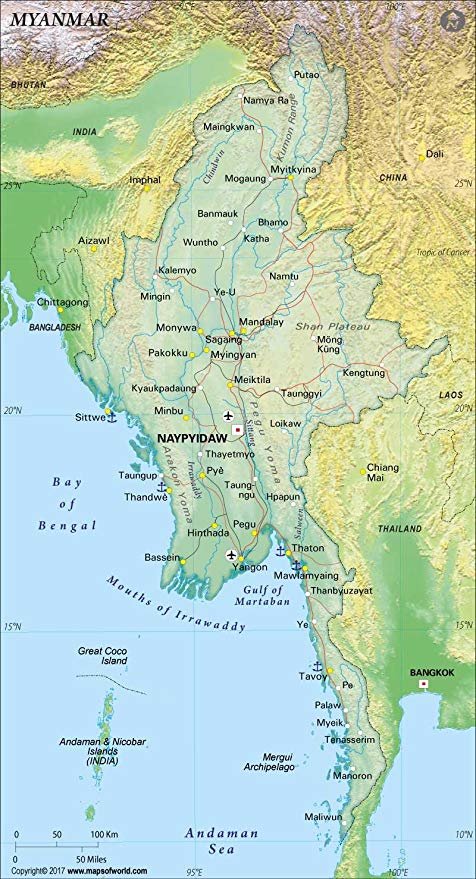
The judgment handed down by the International Court of Justice on November 19 finding Myanmar responsible for committing genocide was the first over its eight decade history. In two previous cases, Bosnia v Serbia (2007) and Croatia v Serbia (2015), the requisite state intention had not been satisfactorily shown. (The ICJ did, however, find in the former case that Serbia had violated the Genocide Convention in failing to prevent the 1995 Srebrenica genocide while also failing to punish or transfer the relevant perpetrators.) The proceedings had arisen from an application by The Gambia in November 2019 arguing that breaches of the Convention on the Prevention and Punishment of the Crime of Genocide had taken place. The proceedings had been instituted in the aftermath of a campaign by Myanmar’s security forces in August 2017 that involved the commission of atrocities against the ethnic Rohingya in northern Rakhine State, involving massacres, rape and arson. The Gambia also asserted that the military and security forces of the state had already commenced “clearance operations” against members of the Rohingya group, involving arson, murder, rape and other forms of sexual violence as early as October 2016. Some 10,000 Rohingya are said to have died, with 700,000 fleeing to Bangladesh seeking sanctuary.
In December 2019, The Gambia sought provisional measures to protect the remaining Rohingya population in Myanmar from acts of genocide. The following month, the ICJ ordered Myanmar to “take all measures within its power to prevent the commission of all acts within the scope of Article II of [the Genocide Convention]”. These were, respectively, to avoid killing members of the protected group, causing serious bodily or mental harm to those members, deliberately inflicting on the group conditions of life calculated to bring about its physical destruction in whole or in part and avoid imposing measures intended to prevent births within the group. In addition to preventing such acts, Myanmar was to also preserve evidence relevant to any said allegations of genocide.
A flurry of paperwork followed, evidenced by 12 reports from Myanmar. These claimed, among other things, that compliance with the provisional measures had taken place. Three presidential directives seeking compliance with the Genocide Convention had been issued. Evidence had been preserved and efforts made to prevent hate speech. An investigative body had been formed to comb through any relevant allegations. These did nothing to impress The Gambia. Attempts were subsequently made by Myanmar to prevent the case from proceeding. These were stymied, largely on the grounds that The Gambia, despite not being directly involved in the conflict, still had an interest under the Convention to ensure compliance. The ICJ had previously accepted the proposition that “non-injured” states had standing to bring proceedings to enforce these collective obligations, also known as obligations erga omnes partes.
The main grounds in The Gambian case involved claims that the acts prohibited under Article II of the Convention had been largely committed by Myanmar’s military and security forces against the Rohingya populace. During the merits hearings, attention was paid on the sheer scale and systematic nature of the acts, with a focus on military actions in such villages as Min Gyi, Chut Pyin and Maung Nu. The submission made by Andrew Loewenstein on behalf of The Gambia, drawing on evidence gathered by the International Fact-Finding Mission on Myanmar (FFM) the Independent Investigative Mechanism for Myanmar (IIMM) and the UN Rapporteur on the human rights situation in Myanmar was meant to “collectively show beyond any reasonable doubt that in Rohingya villages across northern Rakhine State, the Tatmadaw and associated forces committed atrocities in the most inhumane manner against the Rohingya – men, women, children, infants, the elderly, the infirm – that can only be understood as having been intended to destroy the group as such.” In his submission for The Gambia, Attorney General and Minister Justice of Justice Dawda Jallow argued that genocidal intent was present during the “clearance operations” that had taken place in 2016 and 2017 and subsequently. The evidence admitted “of one reasonable inference” with respect “to that pattern of conduct: that Myanmar acted with the intention to destroy the Rohingya as a group, in whole or in part.”
The presentation from The Gambian delegation also focused on sexual violence as a central part of the military regime’s policy. Tafadzwa Pasipanodya submitted that five patterns of sexual violence probative of genocidal intent as outlined by the International Criminal Tribunal for Rwanda in the Jean-Paul Akayesu case and subsequent jurisprudence were present. These were, respectively, evidence of the routine coupling of raping women with the killing of their children; the express declaration by the Tatmadaw of an intention to kill their victims in the course of raping them; perpetrating acts of sexual violence by the security forces in public, including gang rape; the intentional targeting of women and girls of reproductive age, including pregnant women; and the practice of routinely scarring and branding rape victims.
The submissions did not stop there. Pointing to the fact that the intention to commit genocide can accrete over time, The Gambia also noted how the passage of the 1982 Citizenship Law and barring the Rohingya from accessing rights of citizenship through the discriminatory application of the law, had served to facilitate the destruction of the group. Just as the stripping of Jews of their citizenship by Nazi Germany had helped engineer the Final Solution, “Myanmar’s discriminatory policies paved the way for the genocidal ‘clearance operations.’”
In the face of such evidence, Myanmar resorted to conventional lines of argument. The 2016-2017 military operations were in response to terrorist attacks against its forces by the Arakan Rohingya Salvation Army (ARSA) and its collaborators, a point The Gambia did not press. The counter-terrorism operations were not executed with genocidal intent, The Gambia having failed to prove the requisite elements through the necessary pattern of conduct. The evidentiary picture painted in the submission against them was also, argued Myanmar, questionable, being drawn from such reports as the UN Independent International Fact-Finding Mission on Myanmar and other UN bodies.
By nine votes to six, the judges found that Myanmar had committed genocide against the Rohingya group in northern Rakhine State. The majority gave much weight to the FFM and IIMM findings. By the same margin, the judges also found that the Union had violated its obligations to prevent the commission of genocide by individuals alongside its security forces. The state had also breached the Genocide Convention by failing to enact legislation giving effect to its provisions and had to remedy this by passing the appropriate statute of implementation. Among other measures, the ICJ also directed that Myanmar “take immediate and effective steps to investigate” and punish genocidal acts arising from the clearance operations, ensure non-repetition of violations of the Convention, and enact measures of restitution and compensation for members of the Rohingya group, with the terms to be settled by the Court. The state had also failed to prevent the destruction of evidence of genocide and preserve it. The judges by a majority failed to see that Myanmar had “directly and publicly incited the commission of genocide against the Rohingya group by private persons in northern Rakhine State”.
This decision strikes a discordant note in an age where impunity reigns and international law finds itself ingloriously disregarded. The judgment, insists Santiago A. Canton, Secretary-General of the International Commission of Jurists, “must not remain a symbolic victory: it must translate into accountability, reparations for victims, and the legal and institutional reforms needed to ensure that these crimes are never repeated.” Myanmar’s backers, be they a diplomatic China or a military sponsor such as Russia, will hope that symbolism is as far as things go.