




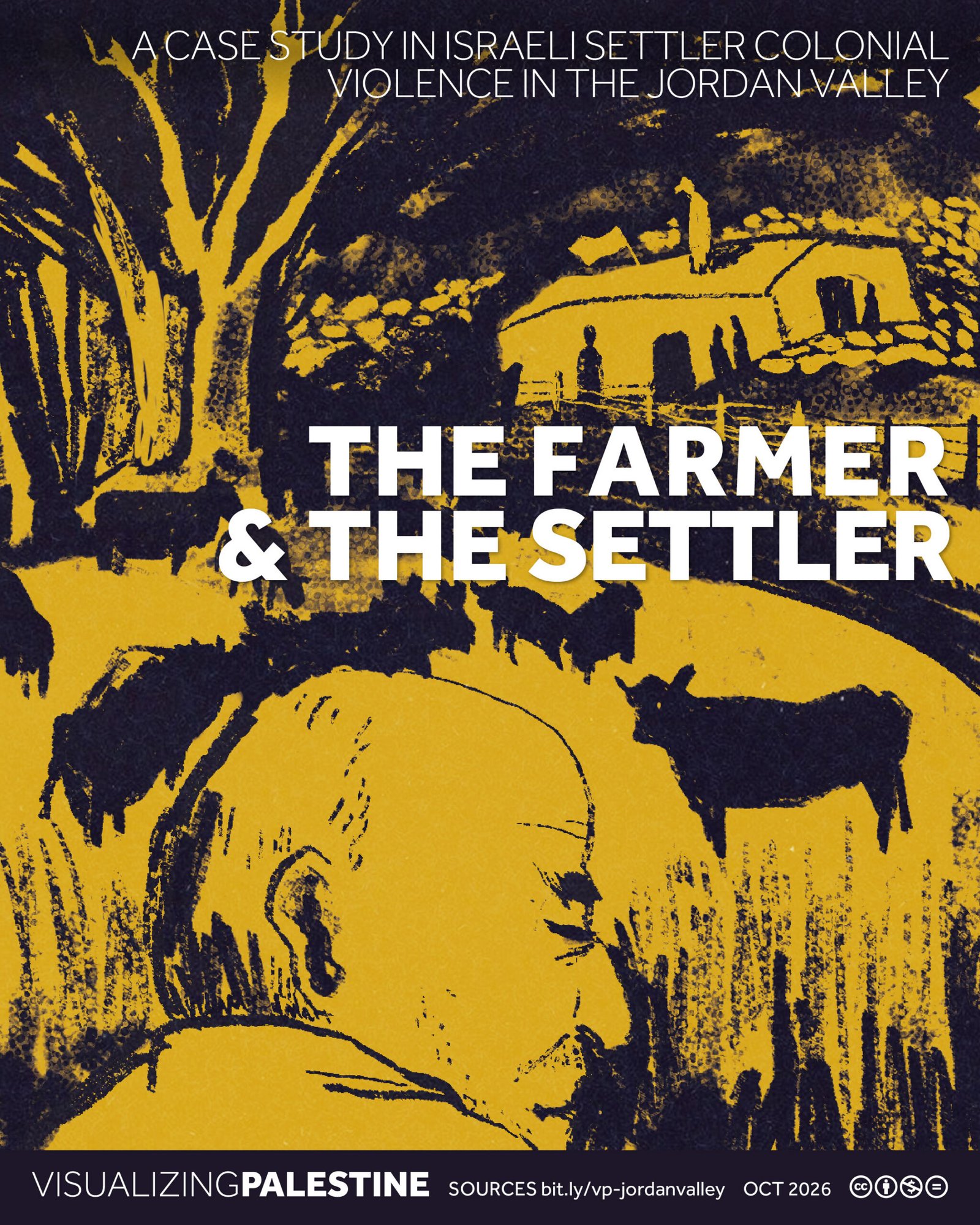
While preparing the brief for the visual “Sowing Terror in Palestine’s Harvest” earlier this year, we reviewed dozens of case reports on incidents of Israeli settler violence. The statistics on this issue are alarming, but the stories are unforgettable. In case after case, the level of collusion between Israeli settlers and Israeli officials created situations so absurd and nightmarish that they belong in the pages of a Franz Kafka novel. The Farmer and the Settler is just one example of what Israeli settler colonialism is systematically doing to Palestinian families across the West Bank.
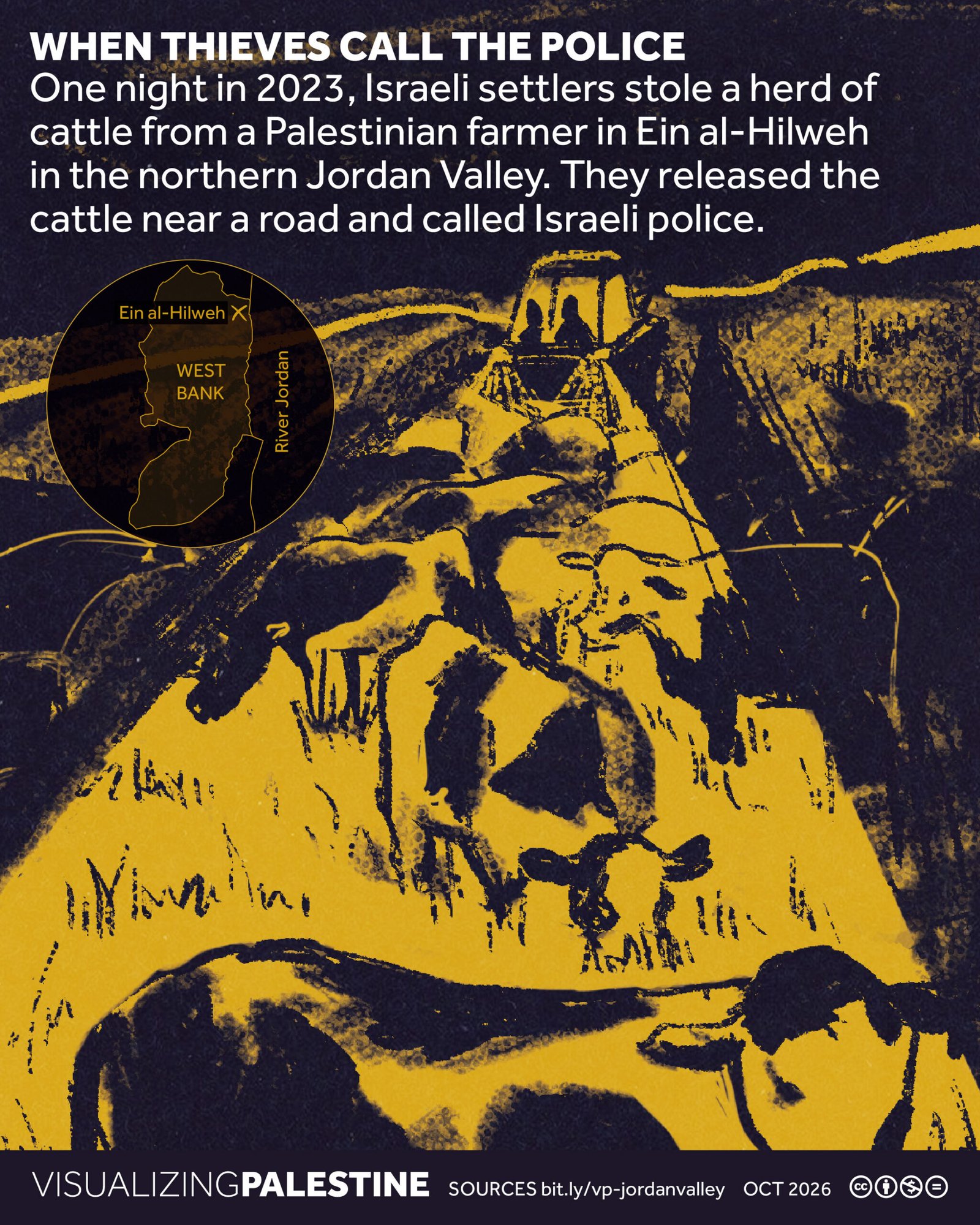
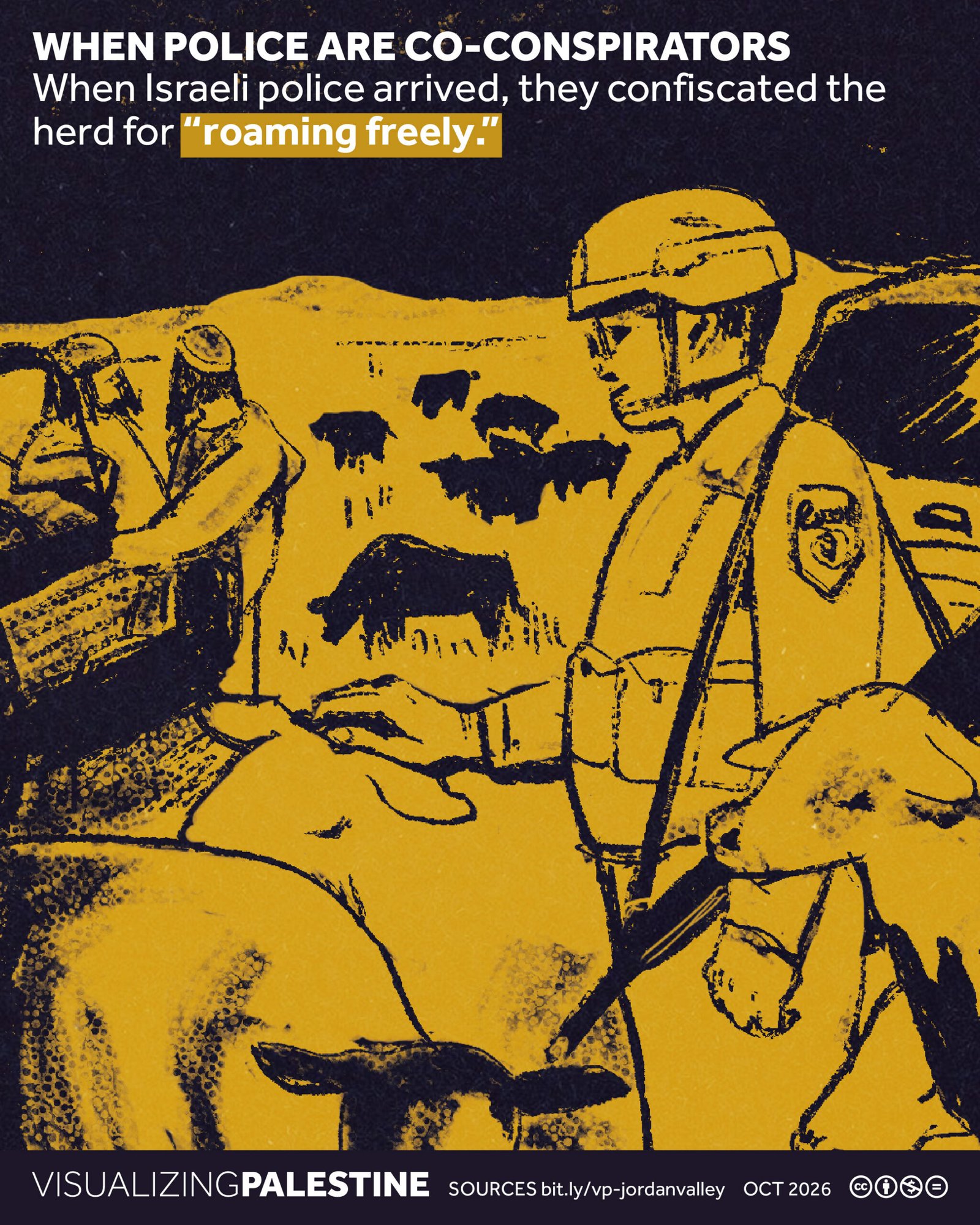
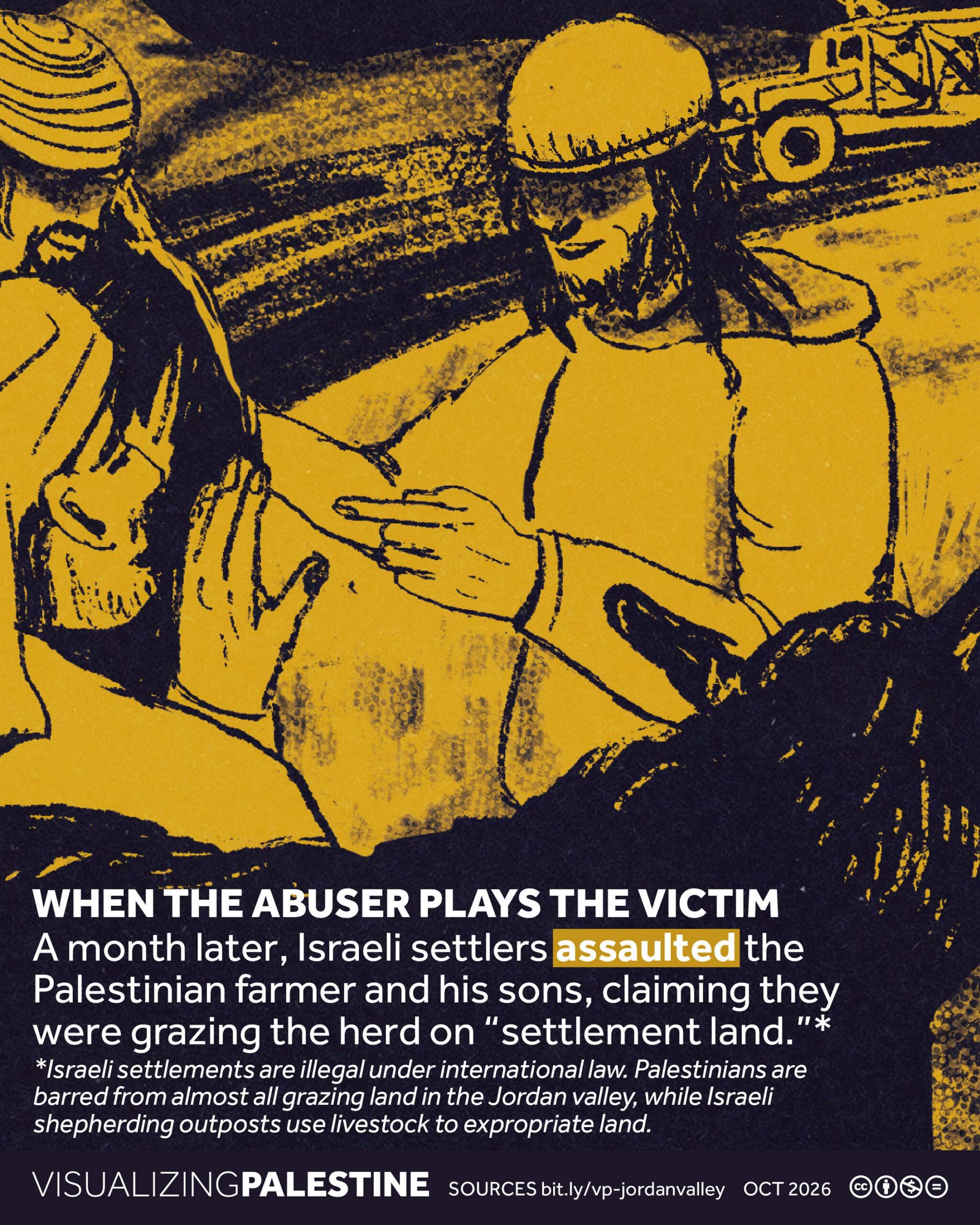
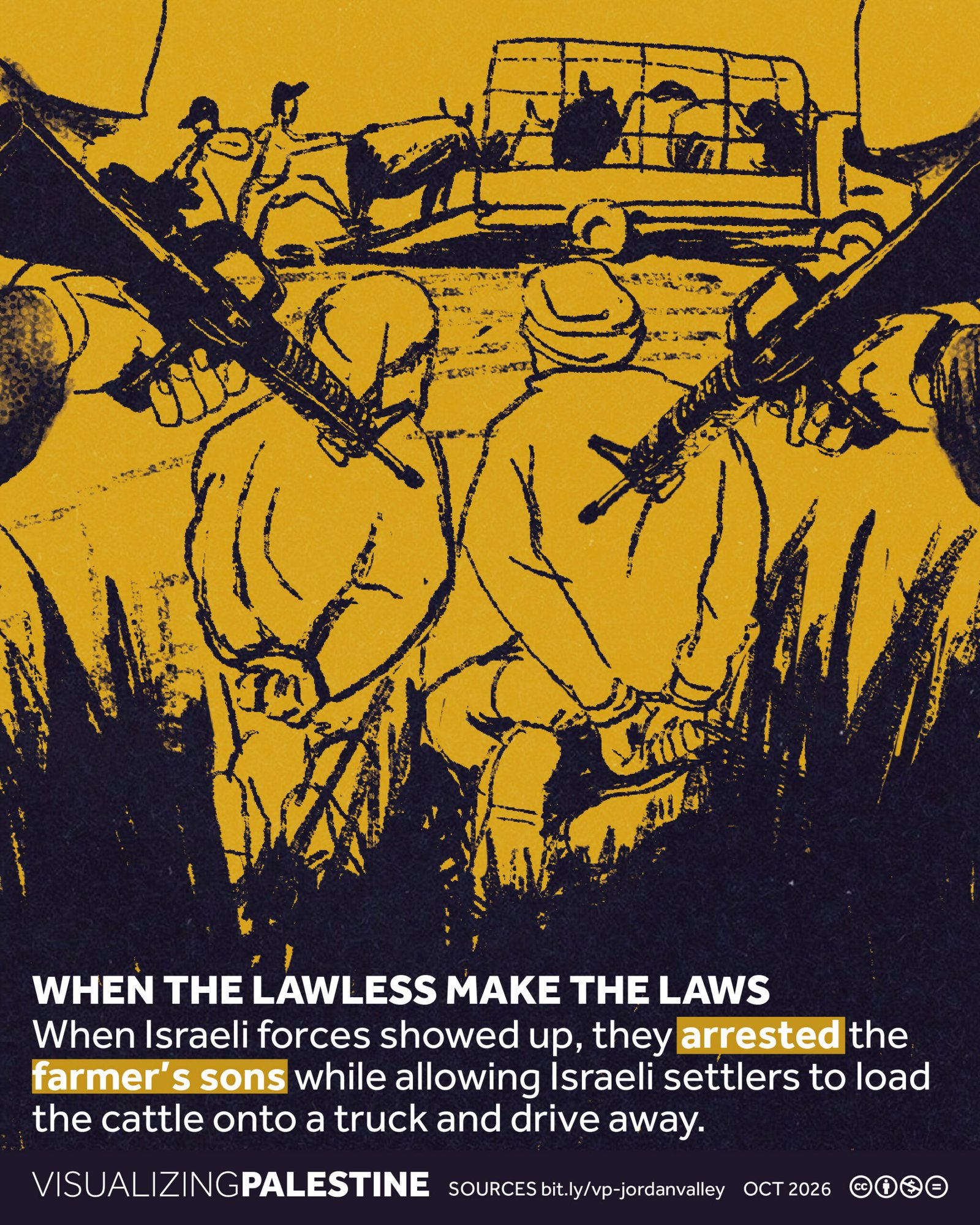
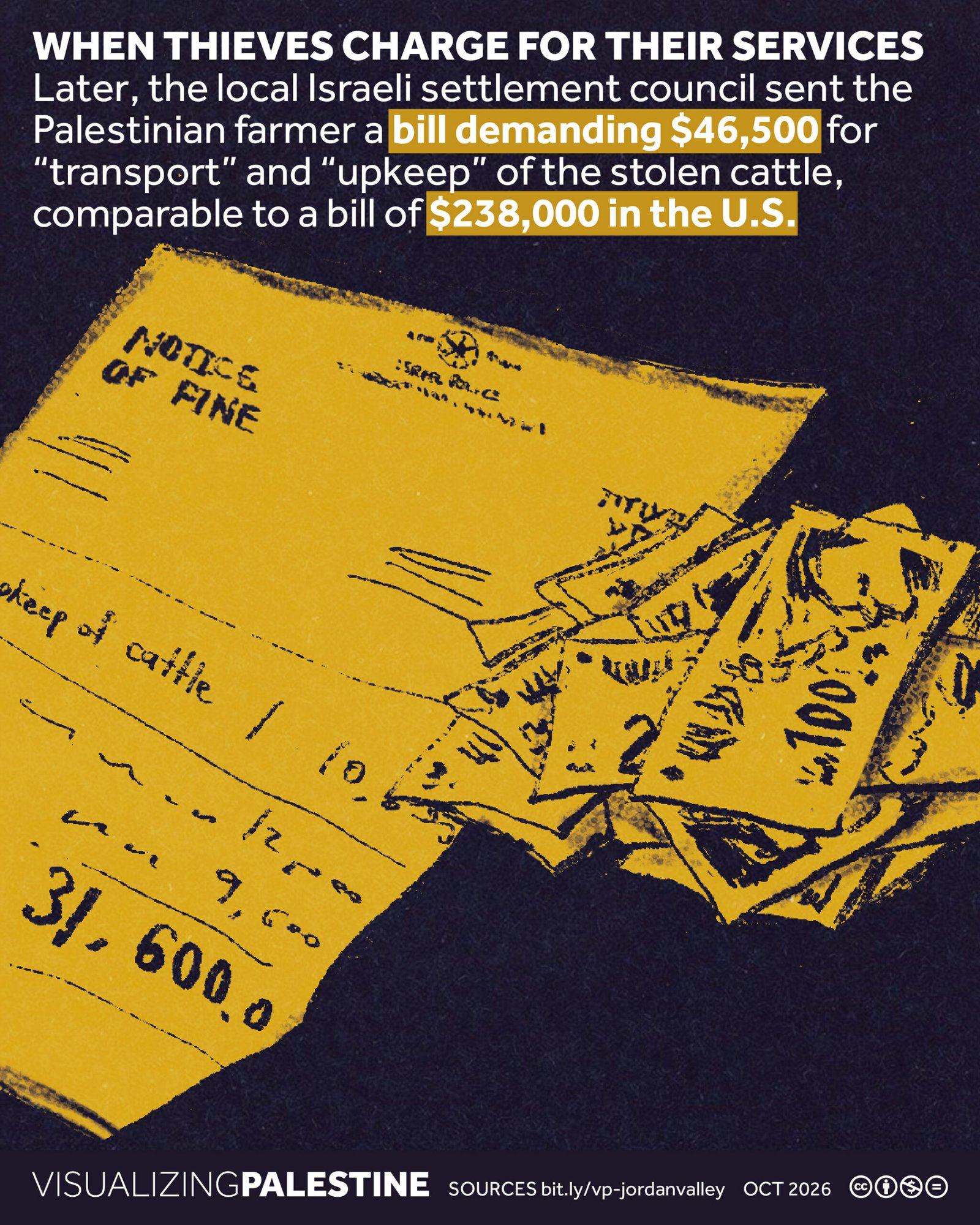
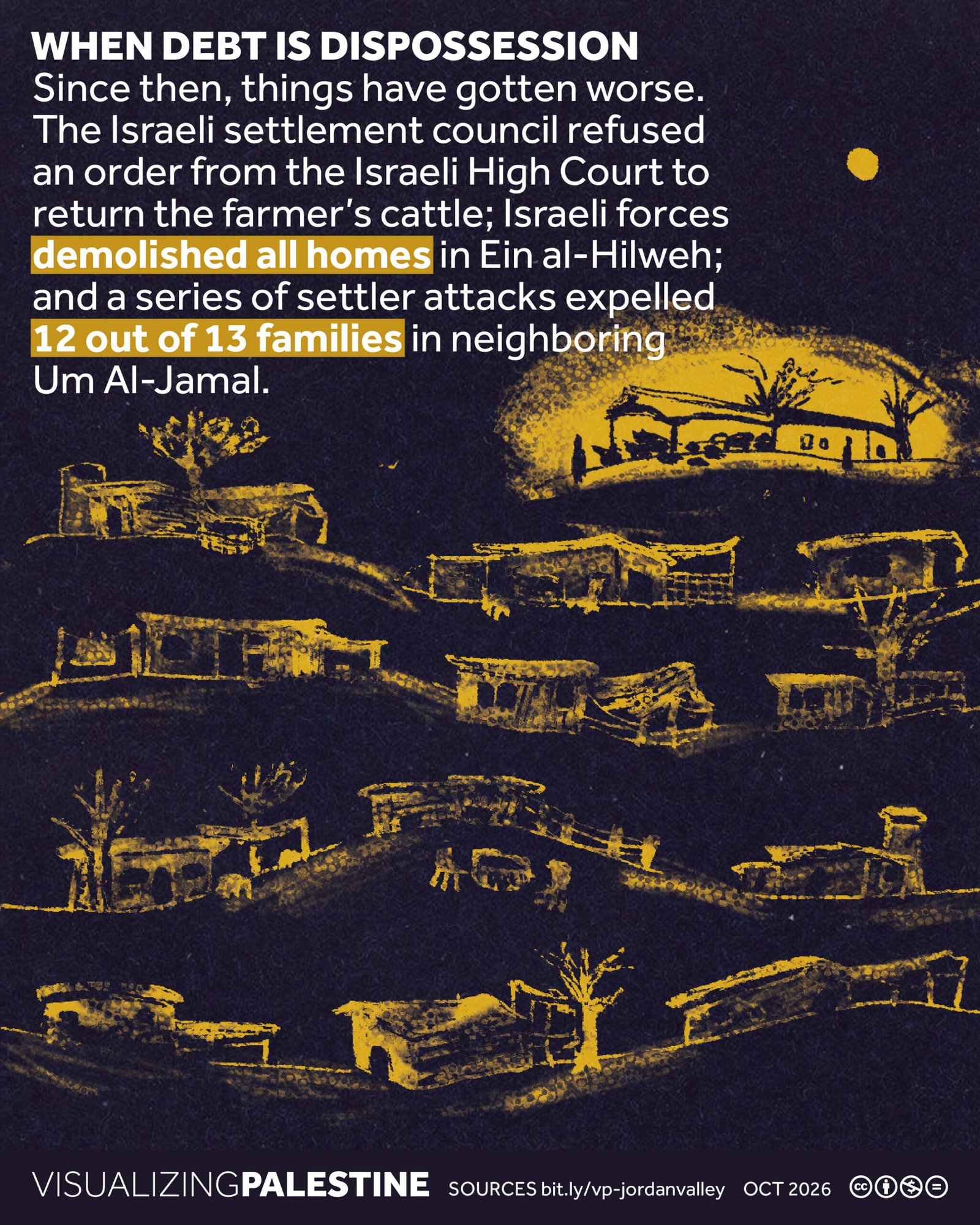
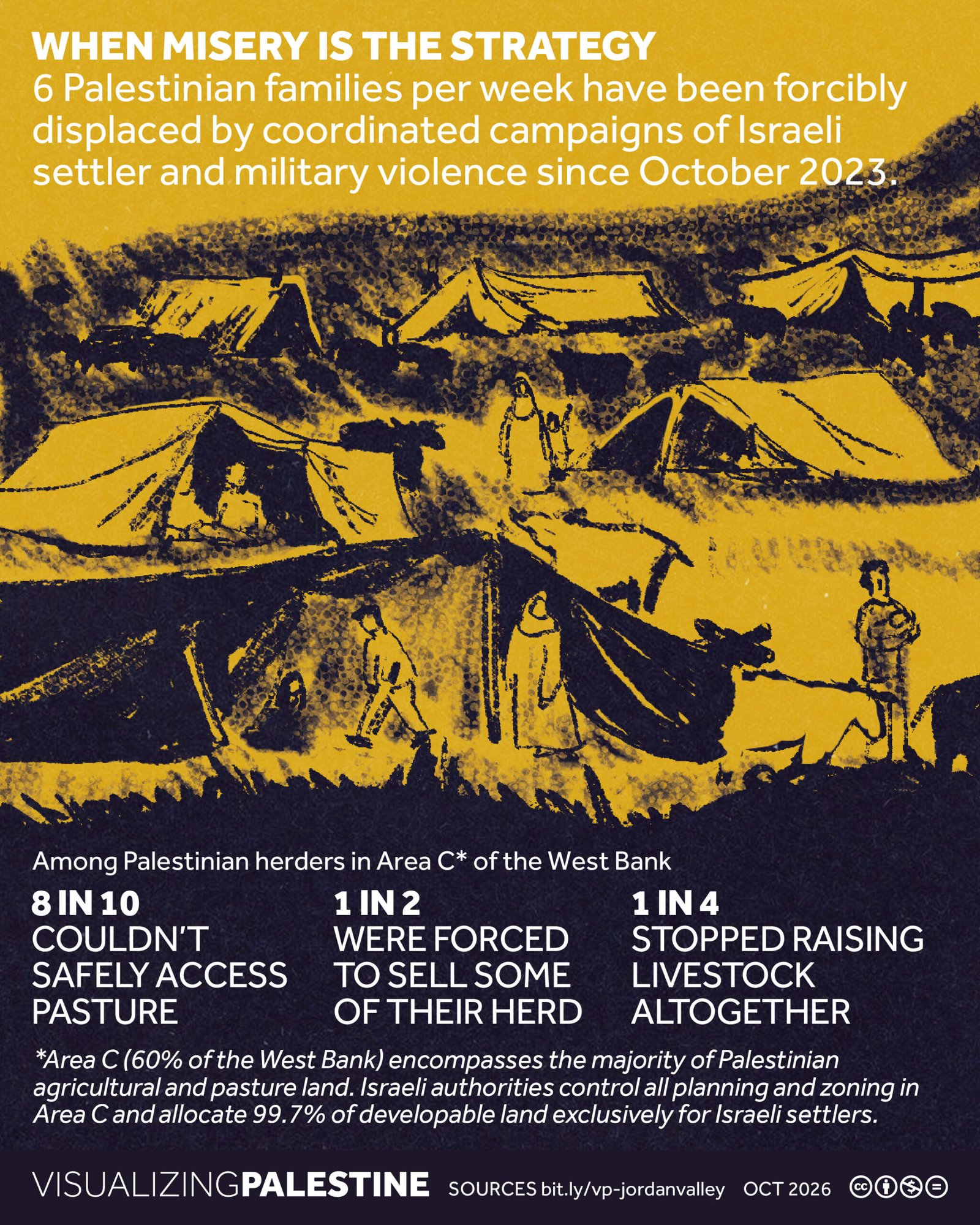
Illegal Israeli shepherding outposts are responsible for seizing 70% of all land stolen by Israeli settlers in the West Bank since the 1990s, meaning stories like the Daraghmeh family’s are far too common. In 2025, Israeli finance minister Bezalel Smotrich praised “heroic” and “pioneering” settlers for taking over Palestinian grazing land, saying they are “doing Zionism.” Smotrich’s comment captures the truth of Zionism as a settler colonial ideology. This is not merely an abstract idea, but an active and accelerating political project. The Nakba of 1948 was “doing Zionism.” Eighty years later, it continues unabated.
The Jordan Valley is often referred to as the breadbasket of Palestine, as it contains much of the West Bank’s fertile and agricultural land. Systemic Israeli attacks on Palestinian agricultural communities in this area deny Palestinians their right to food sovereignty and to exist and thrive on their land. Through restrictions on access to land and water, the destruction of agricultural infrastructure and crops, theft of livestock, state-supported settler attacks, and the displacement of farming and herding communities, Palestinians are increasingly prevented from cultivating the land and maintaining the agricultural livelihoods that have long supported their communities. These measures do not just harm individual farming families; they also erode the material conditions Palestinians need to sustain locally-rooted food systems, which are fundamental to survival and self-determination.