










 In an age where machines speak louder than conscience, where algorithms drown out intuition, and where synthetic narratives overshadow truth, humanity faces a quiet crisis: the disappearance of the inner voice.
The inner voice is not a metaphor. It is the core of human sovereignty — the place where conscience lives, where wisdom whispers, where truth emerges, where identity stabilizes, where meaning takes root.
Technology has not destroyed the inner voice. It has buried it under noise. But buried does not mean dead.
I. What the Inner Voice Actually Is
The inner voice is: conscience, intuition, moral clarity, emotional truth, ancestral memory, spiritual grounding.
It is the part of us that cannot be digitized, simulated, or engineered.
AI can imitate empathy. AI can generate insight. AI can simulate reflection. But AI cannot produce an inner voice — because the inner voice is not cognitive. It is existential.1Daniel Kahneman, <em>Thinking, Fast and Slow</em> (Farrar, Straus and Giroux, 2011).
II. How the Inner Voice Was Silenced
The inner voice was not silenced by force. It was silenced by distraction.
It was drowned out by: notifications, feeds, alerts, synthetic narratives, algorithmic noise.
The modern human being is surrounded by voices but disconnected from its own. The silence of the inner voice is the loudest crisis of the digital age.2Sherry Turkle, Alone Together: Why We Expect More from Technology and Less from Each Other (Basic Books, 2011).
II A. The Synthetic Octopus and the Capture of Interior Life
The disappearance of the inner voice is not accidental — it is engineered.
Every digital gesture — every click, swipe, search, and scroll — becomes a micro‑signal interpreted by predictive engines.3Taina Bucher, If…Then: Algorithmic Power and Politics (Oxford University Press, 2018).
This is the reach of the Synthetic Octopus, a planetary architecture whose tentacles: map behavior, anticipate action, shape identity, pace emotion, suppress interior life.
The Octopus does not silence the inner voice by shouting over it. It silences the inner voice by flooding the interior with noise.
Noise becomes the new environment. Distraction becomes the new atmosphere. Synthetic narratives become the new conscience.
The human being becomes externally animated but internally hollow.
IIIa. The Inner Voice and Moral Sovereignty
Moral sovereignty is the human capacity to choose the good — not because it is profitable, not because it is convenient, but because it is right.
But moral sovereignty requires: reflection, conscience, interior life, emotional depth.
These are precisely the dimensions eroded by technological empire.
When the inner voice disappears, moral sovereignty disappears. A civilization without moral sovereignty becomes governable by machines.
IIIb. The Synthetic Memory that Rewrites the Interior
The inner voice cannot survive in a world where memory itself is synthetic.
CACHE — the nervous system of digital environments — determines: what machines remember, what machines forget, what machines reconstruct.
Cache does not simply store information. It prioritizes it.4Nick Couldry and Ulises A. Mejias, The Costs of Connection: How Data Is Colonizing Human Life and Appropriating It for Capitalism (Stanford University Press, 2019).
It decides: what the user sees first, what the user sees most, what the user sees repeatedly, what the user stops seeing, what the user never sees again.
Cache becomes a mechanism of interior conditioning.
When synthetic memory overwrites human memory, the inner voice loses its anchor.
Interior life becomes algorithmically paced. Conscience becomes algorithmically filtered. Identity becomes algorithmically curated.
The inner voice cannot survive in a world where memory is engineered.
IV. The Inner Voice as Resistance
The inner voice is the first form of resistance.
It resists: manipulation, propaganda, synthetic narratives, algorithmic conformity.
It says: “This is not right.” “This is not true.” “This is not who I am.”
The inner voice is the human spirit refusing to disappear.
Va. The Global South and the Inner Voice
For the Global South, the inner voice is not only personal — it is ancestral.
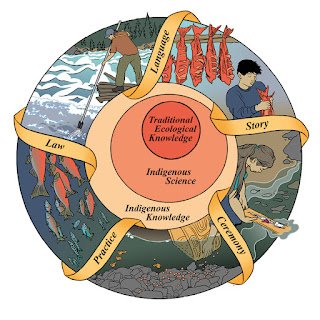
It carries: communal wisdom, Indigenous knowledge, spiritual cosmology, cultural memory.5Ngũgĩ wa Thiong’o, Decolonising the Mind: The Politics of Language in African Literature (James Currey, 1986).
These are the dimensions erased by global platforms and synthetic narratives.
The return of the inner voice is the return of sovereignty — not only for individuals, but for nations.
Vb. Children and the Inner Voice: The First Frontier of Synthetic Power
Children are the first frontier of synthetic power. They encounter algorithms before they encounter identity. They meet machines before they meet themselves.
For children, the inner voice is still forming — fragile, unshielded, and easily displaced.
AI and SI do not simply compete for their attention. They compete for their interior.
In the Global North, children face cognitive outsourcing, algorithmic dependency, and the erosion of imagination. In the Global South, they face digital colonialism, educational displacement, and the replacement of ancestral memory with synthetic narratives.
When the inner voice of children is shaped by machines, the future of humanity is shaped by machines.
The moral question is not whether AI will surpass human intelligence. The moral question is whether children will inherit a world where their inner voice survives.
VI. The Inner Voice and Human Identity
Identity is not a performance. Identity is not a feed. Identity is not a brand.
Identity is the continuity between: memory, conscience, ancestry, experience.
The inner voice is the anchor of identity.
Without it, the human being becomes a character in an algorithmic story. With it, the human being becomes a person again.
VII. The Inner Voice and the Future of Humanity
The future of humanity will not be decided by machines. It will be decided by the strength of the human interior.
If the inner voice returns: truth will return, conscience will return, courage will return, solidarity will return.
The return of the inner voice is the return of the human being.
VIII. How the Inner Voice Returns
The inner voice returns through: silence, solitude, reflection, prayer, meditation, ancestral connection, moral courage.
It returns when humanity chooses: depth over distraction, truth over noise, conscience over convenience.
The inner voice is waiting. It has always been waiting.
- Image credit: 3 Quarks Daily.
Endnotes: