



Brian Merchant, in an essay on “Blood in the Machine,” wrote:
“Only fascist belief systems, rooted in an embrace of human hierarchy and human culling, are capable of rationalizing the level of harm to both people and the natural world that accelerated AI will wreak… Little AI-generated Eichmanns.”
Willow Kasner and Carol Van Strum, Sept. 23 and 24, KYAQ FM 91.7, on my radio show, Finding Fringe. You get the interview early. LISTEN HERE.
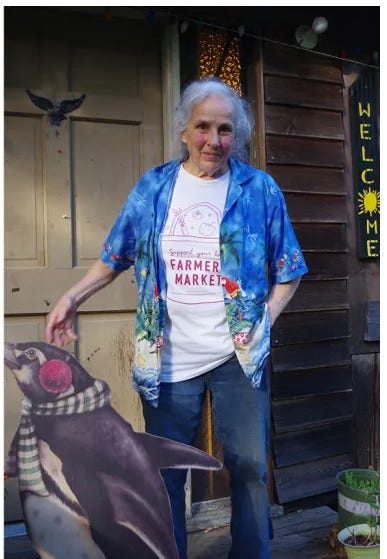
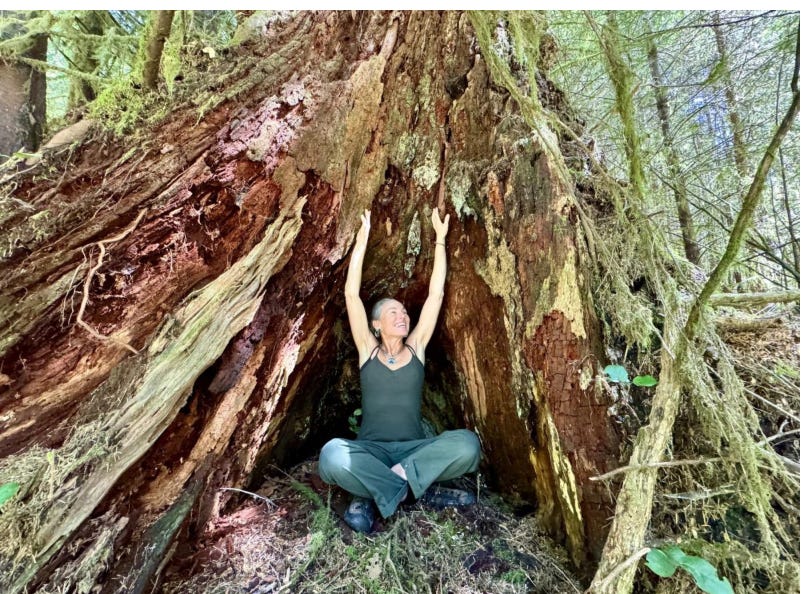
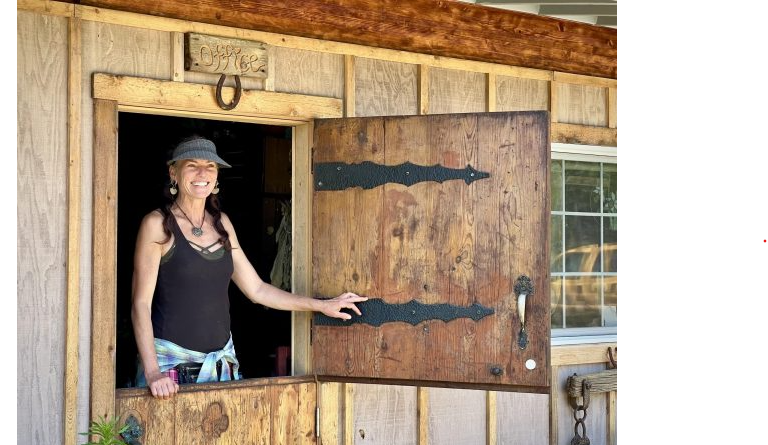
Total Recall — 2020: A Real-life Toxic Avenger
A letter a day for 15 years and 9 months
If the Bill of Rights contains no guarantee that a citizen shall be secure against lethal poisons distributed whether by private individuals or by public officials, it is surely only because our forefathers, despite their considerable wisdom and foresight, could conceive of no such problem. — Rachel Carson, author of Silent Spring

Beloved keystone species like grizzly bears can’t recover without national forest habitat free of roads and development. Now the Trump administration wants to open these crucial wild places to destruction — with cataclysmic consequences.
President Donald Trump’s U.S. Department of Agriculture is moving to undo the 2001 Roadless Area Conservation Rule, a landmark conservation policy that has protected wild forests for a quarter of a century. Repealing it would be the single largest evisceration of public land protections in American history, opening nearly 45 million acres of wild national forests to road construction, logging, and other development across 37 states.
The move ties directly to Trump’s executive order directing the immediate expansion of American timber production — a blatant giveaway to the timber industry at the expense of some of America’s last wild places.
- John Steinbeck: “I wonder why progress looks so much like destruction.” (Travels with Charley)
- Christopher Ruocchio: “Those who wreak destruction and call it progress are ever enemies of eternity …” (Kingdoms of Death)
2001 Roadless Rule rollback
The U.S. Department of Agriculture formally proposed a complete rollback of the 2001 Roadless Rule in August 2026, which would strip federal protections from tens of millions of acres of inventoried national forest lands.
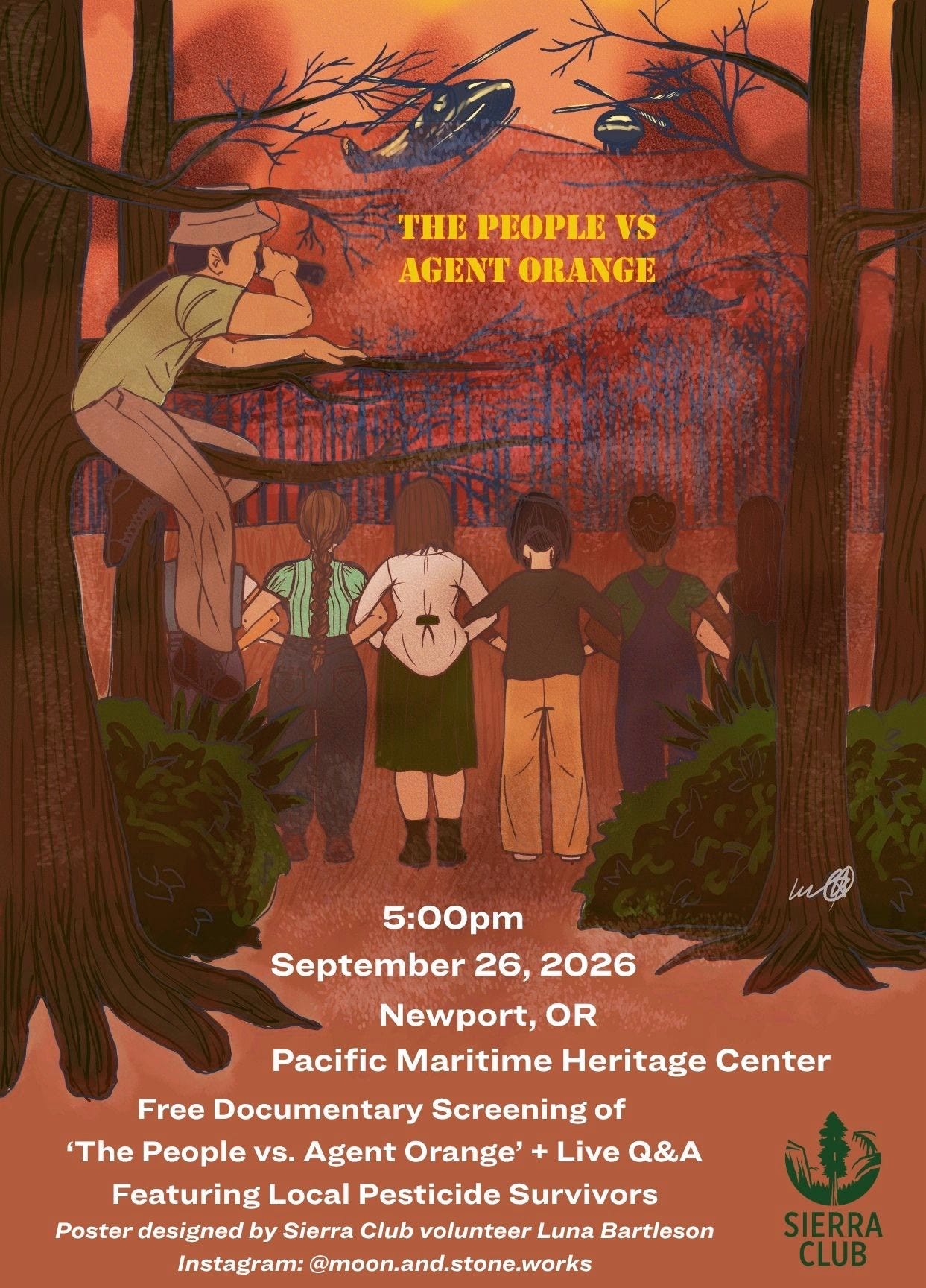
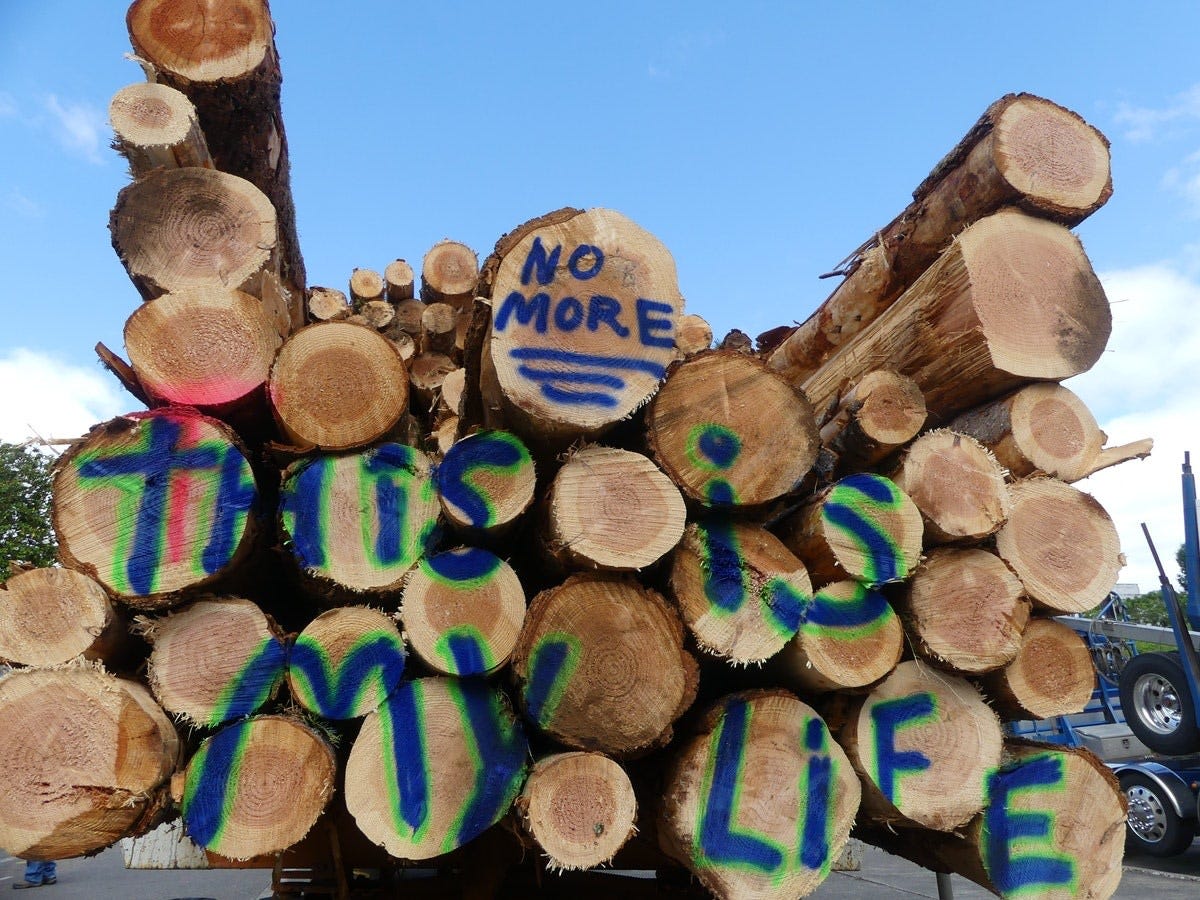
A Spray by Any Other Name — Agent Orange or Clear-Cut Agent?
Carol’s from New York and Willow is from Beaver Creek (near Waldport), Oregon. This show brings two generations and backpacks full of different experiences into the same room/studio, where bridges are easily recognized by these two activist women.
Timber, 50 million acres of protected national wildlands, 60 million citizens depending on the watersheds and the ecosystem “services.” That’s 33 states, and with a flick of the computer mouse, gone, gone, gone.
What the Proposal Does
Removes Protections: The plan ends national bans on road building, timber harvesting, and mining on roughly 44 to 59 million acres of public forest land.
Local Control: The administration wants to return forest management choices back to local forest planners.
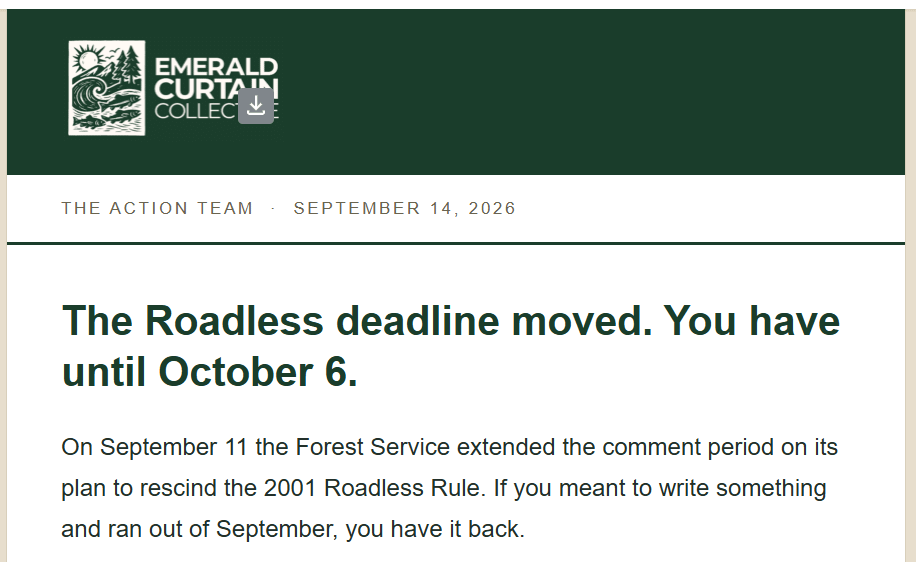
Timeline: The public comment period on the official proposal is open and runs through October 6, 2026.
Administration Arguments
Wildfire Prevention: Officials argue that current rules leave forests overgrown and prone to severe fires and insect damage.
Resource Growth: The policy aims to boost domestic timber production and local management flexibility.
Environmental Concerns
Ecosystem Risks: Conservation groups warn the rollback threatens wildlife habitats, clean drinking water supplies, and old-growth trees.
Increased Fire Risk: Opponents point out that human-caused fires often start near roads and logging sites.
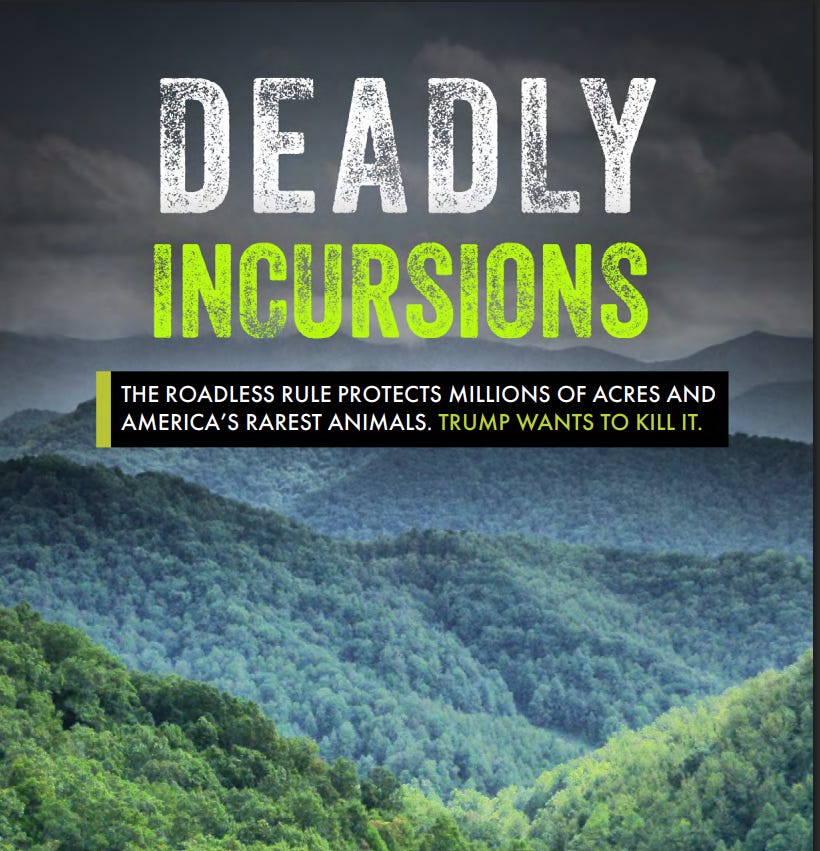
Read the report by the Center for Biological Diversity: HERE. Pages 38 through 64 detail all the places at risk!
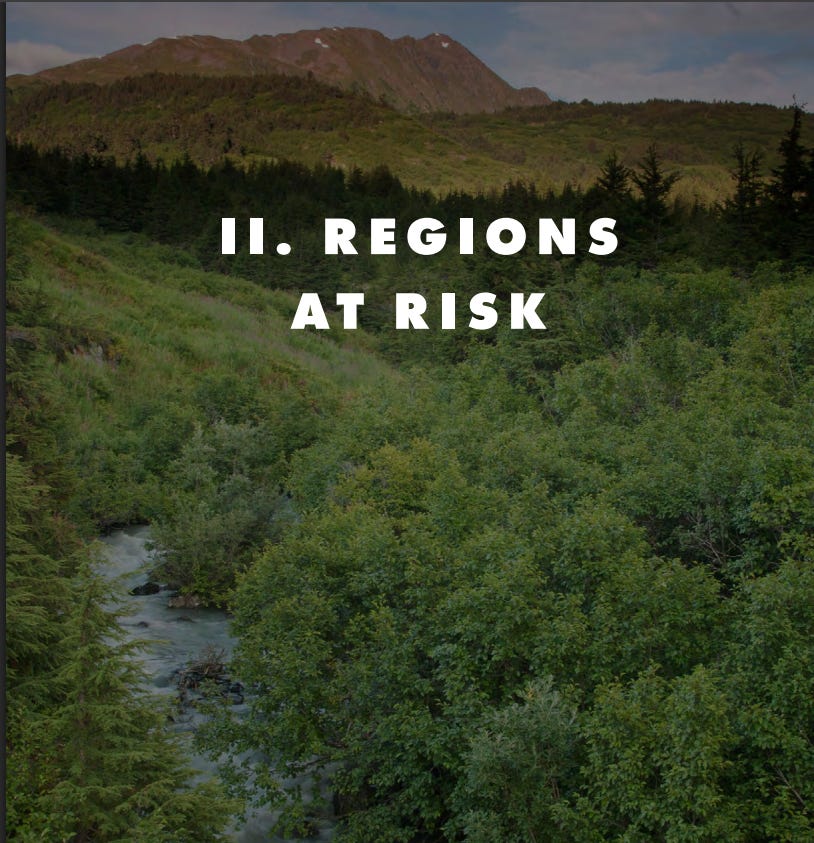
And so roads equal salvaging and savaging forests, AND putting more and more of the USA under the gun of the extractors — uranium, fossil fuels, coal, lithium, rare earth minerals, more.
But for Carol and Willow, our little neck of the woods brings the reality of the toxins and poisons close to home:
“We had 13 miscarriages between neighborhood moms,” Kasner said. “One of our good friends, Melissa, died of three different kinds of cancer.”
“I was always the weird hippie kid,” Kasner said. “I was voted most likely to join the Peace Corps and go save Africa.”
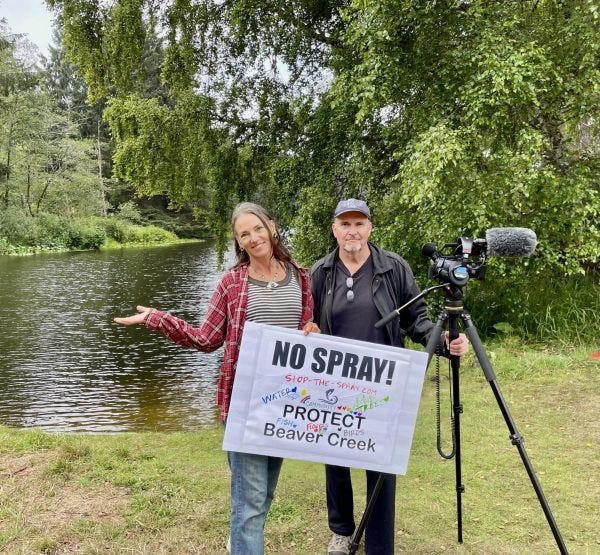
Ever since she was a child dancing on stage, Kasner has understood the healing power of art. Utilizing her creative background, she set off on her most important artistic endeavor to date: an Oregon-set experimental short film exposing profit-driven acts of destruction and outdated forms of forest restoration. Titled Poisoning, the film screened at the Poetic Lens International Film Festival in Eugene last fall.
“This film came out of necessity,” Kasner said. “Necessity is the mother of invention and creativity.”
After Poisoning, Kasner crossed paths with Executive Director of the Coast Range Association Chuck Willer, who has fought against local timber industries for decades. Operating as a nonprofit since 1991, the CRA aims to locate just protections for Western Oregon’s forests while supporting a vibrant rural economy.
As it stands, the Northwest Forest Plan is the only entity protecting the Siuslaw from further disruption. It’s getting amended. In need of a coastal organizer to help uphold the NWFP, Willer offered Kasner a position with CRA as the Siuslaw plan amendment field organizer.
Approaching March 17, 2025 the deadline for the amendment, Kasner has been aggressive in organizing public comments and conducting field research.
On Feb. 28, 2025 Kasner hosted an event for her new community-based group, the Emerald Curtain Collective, called “Forest Through the Trees,” described as an evening of collaborative artistic activism, education and immersion. The evening was a smashing success, accumulating over $3000 to continue Siuslaw protection projects. The event featured local art, live music, interactive theater performances and mask-making. Going forward, Kasner hopes to assemble a team of contributors to extend the ECC’s artistic outreach and further immerse the community in environmental causes.
“Once you’re in love with something, you fight to protect it,” Kasner said. “So I’m getting the ants together. The small school of fish is tightening up.” — Rooted in resistance: How Willow Kasner became the Siuslaw’s savior
In this episode of Finding Fringe, host Paul Haeder talks with Chuck Willer, the director of the Coast Range Association, a nonprofit that has been working since 1991 to find just protections for Western Oregon’s forests while supporting a vibrant rural economy.
*****
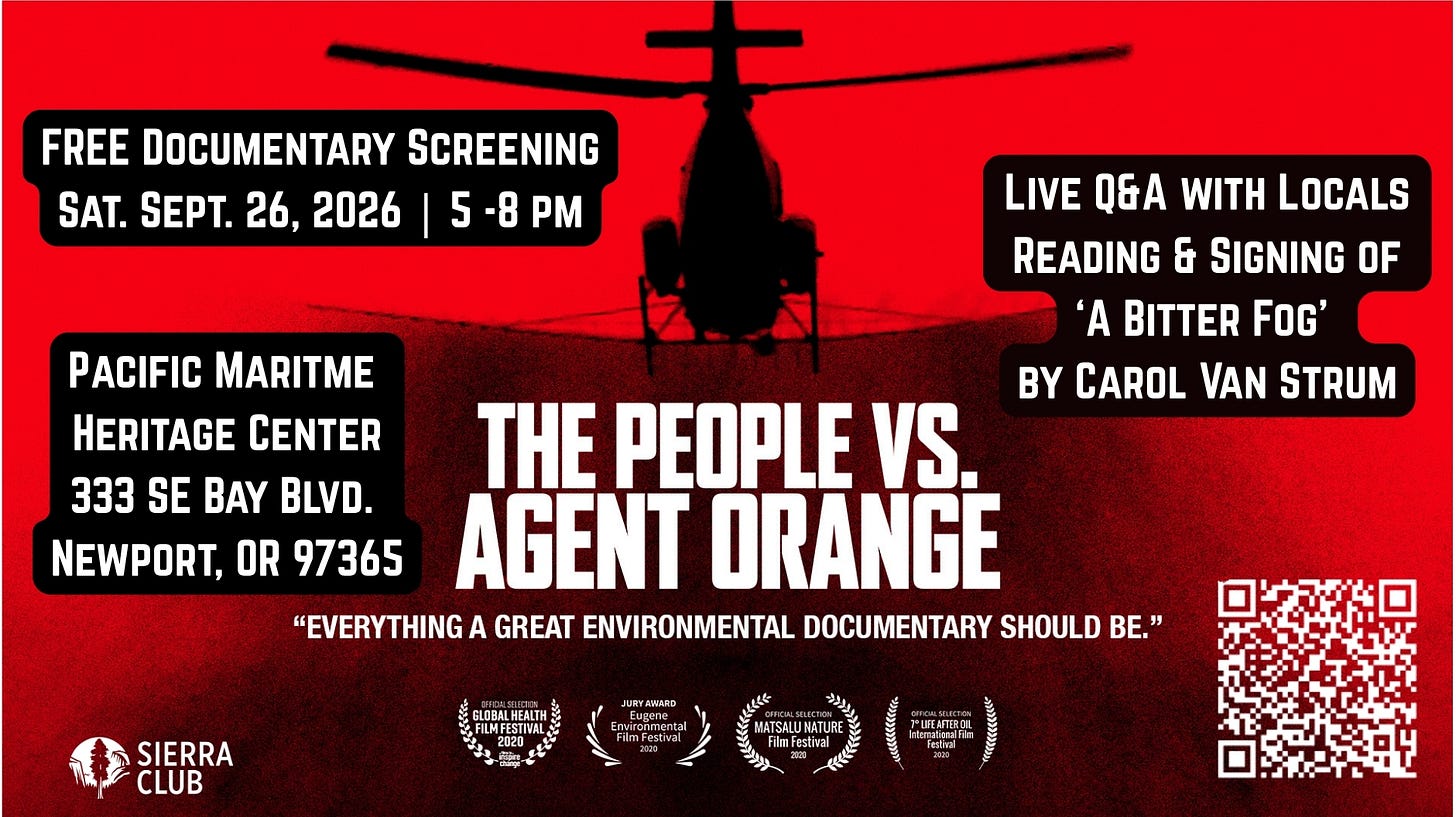
Up to four million people in Vietnam were exposed to Agent Orange with catastrophic consequences for many of them and their children: cancers, tumours, birth defects, heart problems, brain damage, and other serious health conditions.
While the US Army was forced to stop using Agent Orange in Vietnam in 1971, a variation of the compound was still allowed to be used in remote forests in the US years later. So began Carol’s work with the Citizens Against Toxic Sprays, or CATS, a campaign that ultimately attracted threats, intimidation, phone taps, and much worse.
This compelling film follows the parallel stories of these two strong campaigners, both now in their 70s, each taking on their part of this David-and-Goliath-scale battle: Tran for justice for her Vietnamese family and Carol to stop the continued use of the toxic compounds in agricultural products today.
Here you go, Carol and others talking about he documentary:
March 28, 2024 — Following a screening of Alan Adelson and Kate Taverna’s documentary “The People Vs. Agent Orange,” a panel discussion and audience Q&A delves into the history of the toxic defoliant and its catastrophic after-effects, which linger to the present day. This event is part of the March 2024 Weatherhead East Asian Institute series “Legacies of the Vietnam War.”
Speakers:
Alan Adelson, producer and director
Kate Taverna, producer, director, and editor
Madam Tran To Nga, French-Vietnamese activist
Carol van Strum, American activist
Moderator:
Hoang Minh Vu, Postdoctoral Research Scholar, Weatherhead East Asian Institute, Columbia University
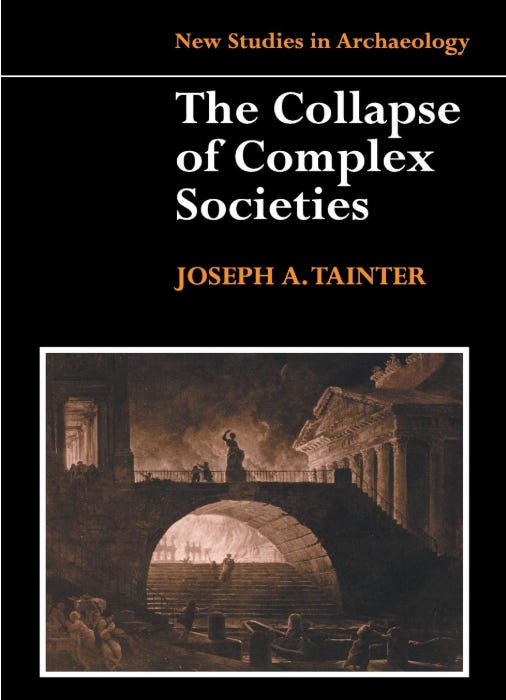
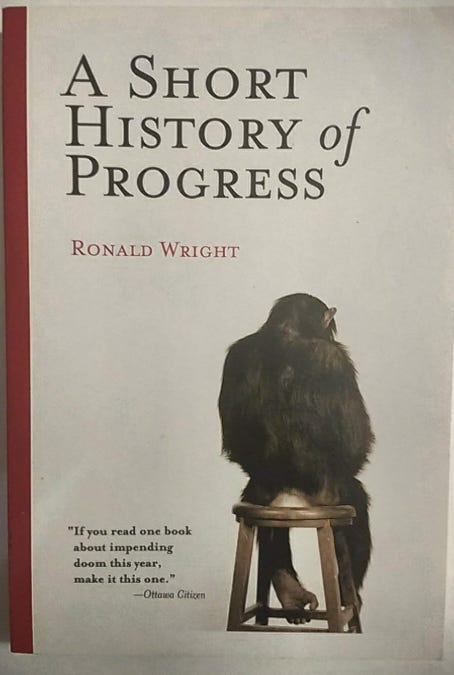
“There is a pattern in the past of civilization after civilization wearing out its welcome from nature, overexploiting its environment, overexpanding, overpopulating. They tend to collapse quite soon after they reach their period of greatest magnificence and prosperity. That pattern holds true for a lot of societies, among them the Romans, the ancient Maya, and the Sumerians of what is now southern Iraq. There are many other examples, including smaller-scale societies such as Easter Island. The very things that cause societies to prosper in the short run, especially new ways to exploit the environment such as the invention of irrigation, lead to disaster in the long run because of unforeseen complications. This is what I called in ‘A Short History of Progress’ the ‘progress trap.’ We have set in motion an industrial machine of such complexity and such dependence on expansion that we do not know how to make do with less or move to a steady state in terms of our demands on nature. We have failed to control human numbers. They have tripled in my lifetime. And the problem is made much worse by the widening gap between rich and poor, the upward concentration of wealth, which ensures there can never be enough to go around. The number of people in dire poverty today — about 2 billion — is greater than the world’s entire population in the early 1900s. That’s not progress.”
“If we continue to refuse to deal with things in an orderly and rational way, we will head into some sort of major catastrophe, sooner or later,” he said. “If we are lucky, it will be big enough to wake us up worldwide but not big enough to wipe us out. That is the best we can hope for. We must transcend our evolutionary history. We’re Ice Age hunters with a shave and a suit. We are not good long-term thinkers. We would much rather gorge ourselves on dead mammoths by driving a herd over a cliff than figure out how to conserve the herd so it can feed us and our children forever. That is the transition our civilization has to make. And we’re not doing that.” — Ronald Wright
In 1970 Lewis Mumford wrote,
“The chief premise common to both technology and science is the notion that there are no desirable limits to the increase of knowledge, of material goods, of environmental control; that quantitative productivity is an end in itself, and that every means should be used to further expansion.” (The Pentagon of Power (which is the second volume of The Myth of the Machine).
Mumford asked the same question that so many of us ask, which is,
Why on earth would a culture do so many crazy, stupid, destructive things?
His answer cuts through the typical cornucopian garbage:
“The desired reward of this magic is not just abundance but absolute control.”
Mumford knew — as we all do — that there was no hope in proceeding “on the terms imposed by technocratic society.”
He didn’t think change would be easy, saying that it might take “an all-out fatal shock treatment, close to catastrophe, to break the hold of civilized man’s chronic psychosis.” He was not optimistic: “Even such a belated awakening would be a miracle.”
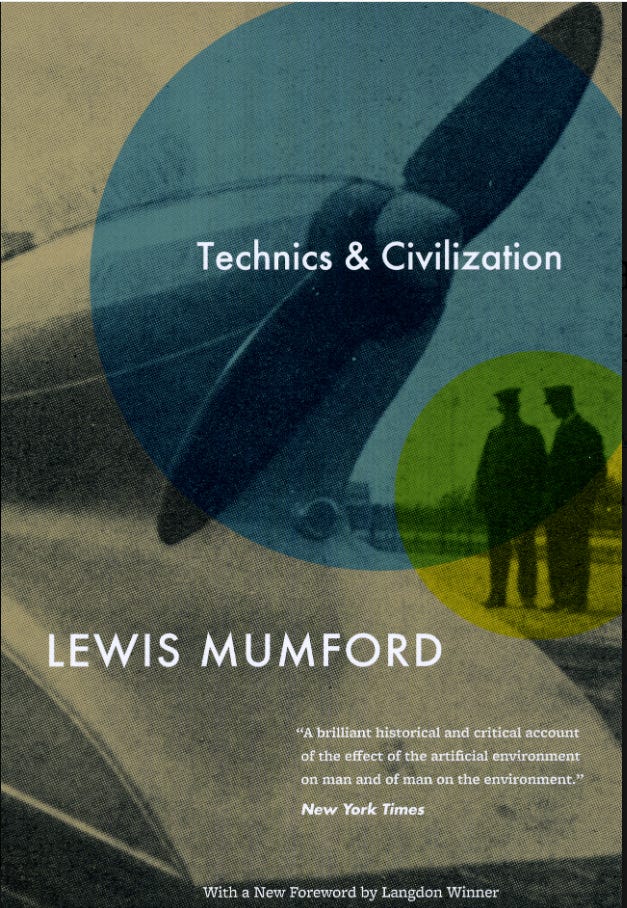
Listen to the interview. We did not cross these Rubicons, but still, that’s the reality now:
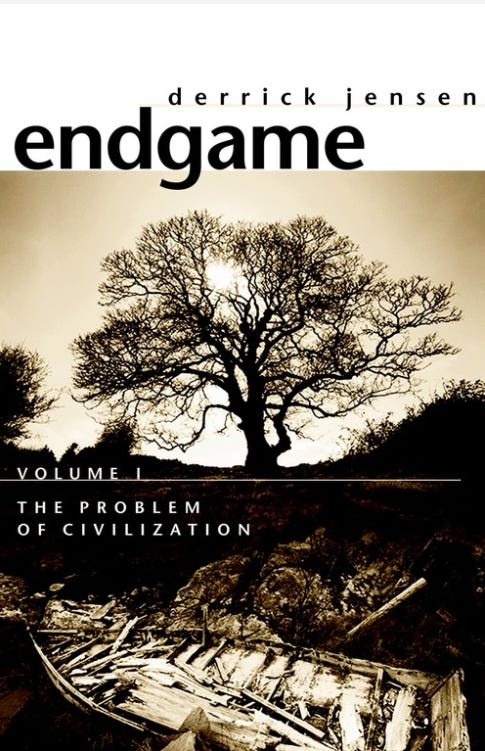
Volume 1: The Problem of Civilization
- Inherent Violence: Industrial civilization relies on systemic violence, resource extraction, and the exploitation of both humans and the natural world to maintain its power hierarchies.
- Illusion of Progress: Most modern technological innovations do not solve fundamental problems; they merely attempt to patch the catastrophic crises created by civilization itself.
- The Inevitable End: Civilization will inevitably collapse due to resource depletion. Waiting for it to run its course naturally will result in far more ecological destruction than forcing an early end.
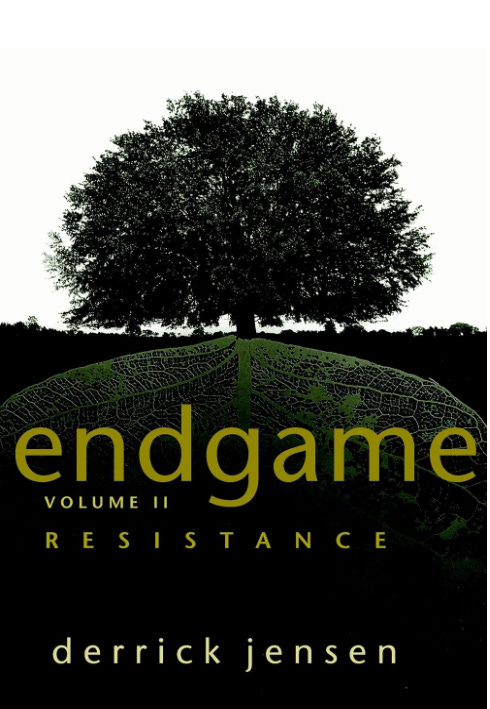
Volume 2: Resistance
- A Critique of Pacifism: Jensen rejects strict non-violence, comparing civilization to a pathological abuser that will never stop unless forced. He argues that peaceful activism is insufficient against a system committing planetary ecocide.
- Active Sabotage: The book advocates for targeted, militant resistance—such as disabling industrial infrastructure, shutting down oil refineries, and removing river dams—to disrupt the capitalist economy and accelerate the return to localized, agrarian communal living.
Ahh, this has all been choreographed for years, and here we are, in the Hitchhiker’s Guide to absolute insanity:
But the plans were on display . . .”
“On display? I eventually had to go down to the cellar to find them.”
“That’s the display department.”
“With a torch.”
“Ah, well the lights had probably gone.”
“So had the stairs.”
“But look, you found the notice, didn’t you?”
“Yes,” said Arthur, “yes I did. It was on display in the bottom of a locked filing cabinet stuck in a disused lavatory with a sign on the door saying Beware of the Leopard.”
Douglas Adams, “The Hitchhiker’s Guide to the Galaxy”.
THE BAD NEWS:


Per CIVICUS, the global civil society alliance behind the Stand As My Witness campaign, only about 3 percent of the world’s population currently lives in a country with what’s classified as genuinely open civic space, meaning you can protest, publish, organize, and criticize your government without a realistic fear of prison. Eighty-three countries are now rated “closed” or “repressed.” Read that as what it is: a map of the planet where, for the overwhelming majority of humanity, the right to say your government is doing something wrong is either heavily conditioned or actively criminalized. We like to talk about authoritarianism as some encroaching, novel threat. For most of the species, at this point, it’s just Tuesday.