




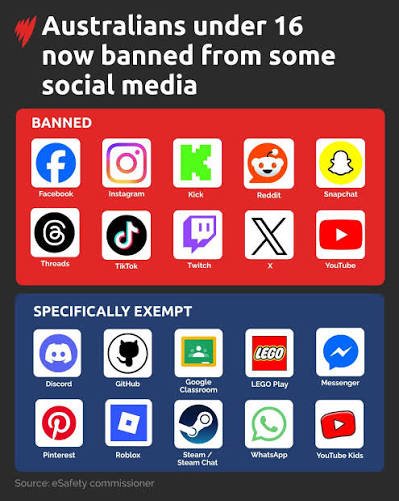
 Australia’s Prime Minister Anthony Albanese has made digital safety, especially regarding children, a mooring of his premiership. Politically, he is so invested in it as to have become a salesman of sorts. In September last year, when paying a visit to the UN General Assembly High-level week in New York, he hosted an event at a room overlooking the East River. A motley crew were in attendance to hear from grieving families whose children had taken their lives after sustained online bullying. Leaders from Greece, Fiji, Tonga and Malta approved of Australia’s program to ban social media platforms for children under 16. The European Union President Ursula von der Leyen revealed that Australia was being eyed for its efforts in that regard. From time to time, it seems that every government needs to have a good ban to target an alleged vice.
This September, according to his office’s media release, Albanese is spending September 18 to 24 in the US visiting Apple Headquarters in California before heading the Australian delegation to the General Assembly in New York. “During High-Level Week, the Prime Minister will promote Australia’s commitment to multilateralism and meet international partners to find collective solutions to shared challenges, including building a safe digital future.”
The aspirations for the visit involve a jumble of wishful thoughts in an age overseen by the mass distraction antics of US President Donald Trump, with his sneering disposition towards international alliances; accreting European anxieties, many of them pathological (refugees and Russia feature as twin bogeymen); the bold strides made by China; and gluttonous global military expenditure. Albanese’s own government had done much to encourage an increasingly provocative line of militarism and potential warmaking characterised by continued praise for the AUKUS pact, a security commitment unequally shared with the United States and the UK that promises more doom, more cost and nothing by way of genuine security assurances. Thus far, it is turning Australia into a garrison base for US interests in the Indo-Pacific, from which nuclear-armed bombers and submarines will be able to “project force”, as the armchair strategists like to call it.
For such reasons, Albanese’s remarks sound quaint: “Australia’s prosperity and security depend on a strong global system, where nations work together, agreed rules are respected, and cooperation delivers shared benefits.” That may be, but he goes on to reflect about the very things that are showering doubts upon these assumptions, including “fuel costs, climate change and conflict”. Elephants in the room are left unmentioned and undescribed. Instead, he parades his cherished objective of selectively abominating the Big Tech titans in favour of the child protection canard. “Australia is working to prevent online harm, particularly of our children, and I am proud that Australia is setting the world standard for digital safety.”
On September 20, Albanese paid Tim Cook, the Executive Chairman of Apple’s Board, a breezy visit at Apple Park in Cupertino. It was an occasion for mutual congratulation, with Apple not being seen as quite the Big Tech rotter as other companies when it comes to corrupting and spoiling youth. Apple, the PM’s office noted, had “worked to support Australia’s online safety laws and taken additional steps to protect kids online.” Cook, in turn, gave Albanese “a demonstration of Apple’s new tools which allow parents to more easily manage the content their children can see, who they can communicate with, and when they have access to apps.” With that heavy note of paternalism struck, the Australian PM was in a good mood. “Walking through Apple Park today and seeing these new safety features in action proves that when we draw the line in the sand, tech companies will step up.” Cook and his company had shown “that industry can, and must, compete on safety credentials, not just convenience.”
All this was a prelude to launching Australia’s campaign for a two-year term on the UN Security Council for 2029-30. The public relations side of it is being given over to hawking the merits of digital safety, simply another description for government regulations and restrictions in the name of righteous demagoguery. The campaign for the seat is taking place under the following meaningless banner: “We listen. We partner. We protect.” Speaking to reporters at UN headquarters, Albanese explained that Australia’s presence on the Security Council would make it “part of shaping some of these biggest issues [including technology and artificial intelligence] which are facing the world and our nation.” Australian Foreign Minister Penny Wong also insisted that a constructive role could be played by Canberra. “As an active and ambitious middle power, we have a practical contribution to make to international peace and security.”
The press stable seemed, for the most part, uncritical of the Albanese government’s elevation of digital safety and restraints to the level of high advertisement and international cooperation. They might have mentioned that the Online Safety Amendment (Social Media Minimum Age) Act 2024 (Cth) is failing to bite, despite propaganda-sweetened figures provided by the eSafety Commissioner’s office. (The January 2026 compliance update celebrated the removal or restriction of 4.7 million accounts from mid-December 2025.) An analysis by researchers from the University of Newcastle on the effects of the legislation published in June in the medical journal BMJ offered a more sobering picture. The observational study of 408 children between the ages of 12 and 17 found that over 85% of the participants “reported using social media platforms subject to the Act at follow-up”. Between 54-68% reported the use of their own accounts; 66% “reported exposure to platform age verification, most commonly self-declared age (24-39%) or uploading a picture (‘selfie’) (13-27%).” Instances of circumvention or the use of social media via a private browser (6-11%) were also noted.
In July, the eSafety Commissioner released a report that should have poured much cold water over the initial, warm bath assessment of the social media ban. Grudgingly, the office concedes that “we saw only a relatively modest decrease in the use of age-restricted social media platforms from baseline to three months.” With the ban three months old, 81.5% of children were still using an age-restricted social media platform. The office identifies the predicable culprit for these unimpressive results: the “ineffective implementation of age assurance measures by platforms.” Cyber safety commentator Susan McLean offers a more apt assessment: you “cannot ban your way to safety”.
The Guardian Australia resorted to some utter silliness in observing that Albanese had “shown a level of leadership not always expected from a smaller country.” This smaller country, so utterly enmeshed in the vassalizing arrangements of a nuclear superpower keen on causing mischief in the name of defence. This supposed middle power, so keen to impress upon the world that technology bans work when they do not, targeting children who have already subverted restrictions or been left stranded from digital communities they have come to value. In all of this, where did the issue of education, instruction and guidance go?