




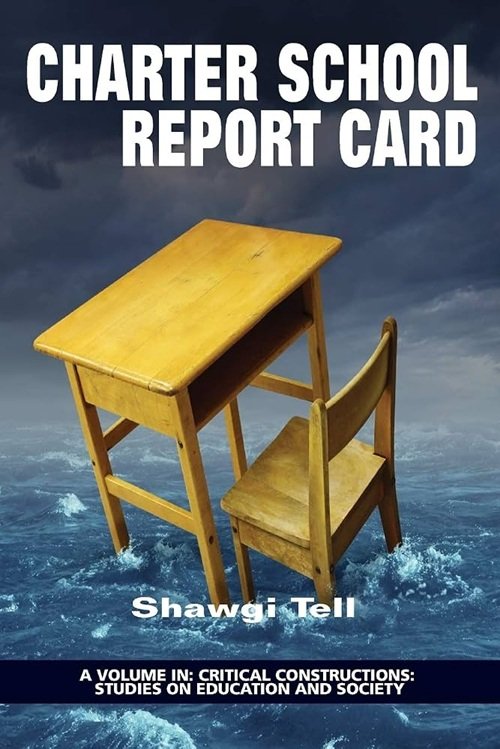
 Fraud, corruption, scandal, and embezzlement have been constants in the charter school sector for more than 30 years. Unfortunately, numerous attempts in many states to bring greater transparency, integrity, and accountability to charter schools have done little to change the equation. Endless problems persist. New laws barely move the needle.
Although they siphon massive sums of public money from public schools every year, charter schools seem immune to transparency and accountability measures. Indeed, charter schools remain mired in many illegal and unethical activities, proving that they are unable and unwilling to uphold basic standards of transparency and accountability. This is partly due to the fact that charter school laws were written long ago to allow for little to no transparency and accountability.
While poor transparency and accountability affect the entire charter school sector, South Carolina brings such problems to the fore in a sharp way. An August 30, 2026, article in The Post and Courier, “South Carolina charter schools fall short of state’s new transparency laws,” states that, “The vast majority of South Carolina public charter schools are coming up short on a new state law requiring they post a raft of key financial and governing documents to their websites, a Post and Courier review has found.”
Revealing the scope of the problem, the article notes that, “Nearly four months ago, South Carolina lawmakers passed sweeping legislation that compelled the state’s charter schools to meet many of the same online transparency standards that traditional public schools have been subject to for more than a decade. The law — South Carolina’s Charter School Accountability Act, also known as Act 123 — took years to pass, even as oversight gaps resulted in multiple lawsuits and state investigations.”
The news article admits that “Getting schools to comply will be the next challenge.” Why though? What is so hard about complying with basic requirements for transparency and accountability? Why is this such a stubborn challenge?
David Prentice, the head of finance for the Charleston County School District, whose 88 public schools include eight charters, reminds us that, “All stewards of public funds should be held to the same standards of transparency and reporting.” So why aren’t charter schools being accountable and transparent despite receiving tens of millions of public dollars?
In late August The Post and Courier “reviewed the websites of 105 charter schools for the presence of items required under Act 123 as well as transparency provisions of the state’s updated education statute and Freedom of Information Act.” What exactly did the inquiry look for? It looked for things like “a school’s current budget, audit and monthly check register, required under Act 123, as well as board meeting agendas and recordings required under other state transparency laws. These items are among dozens of documents that statewide authorizers — The Charter Institute at Erskine and the South Carolina Public Charter School District — as well as the Charleston County School District have told schools they must post.”
The newspaper found that, “Financial documents were missing from the websites of 88 schools. Governance documents were missing from 60. Only eight had all five legally required items posted that The Post and Courier was looking for. Six had none at all.” In other words, well over half of charter schools that were examined were lacking in some significant manner. This is all the more important given that, “Some 60,000 of South Carolina’s 780,000 public school students attend a charter school, and the schools received an estimated $738 million in local, state and federal funds last year alone.” Unfortunately, “the law does not spell out a deadline or establish penalties for schools that fail to post required records.” It appears that the law has no teeth. How are transparency and accountability to be taken seriously under such circumstances?
The Post and Courier goes on to detail a variety of other problems with charter schools and their lack of compliance with Act 123.
While efforts to hold charter schools accountable should be supported, the historical record shows that such efforts often fall short. More often than not, charter schools continue to engage in many illegal and unethical activities year after year. There appear to be few serious consequences for not meeting basic transparency and accountability requirements. This shows that charter school owners and operators continue to wield significant political and economic power. It shows that such actors have seized enough control of state levers, mechanisms, and institutions to continue to operate with impunity, proving once again that school privatization harms the public interest. So long as this is the case, charter schools will continue to operate with less transparency, accountability, and oversight. They will continue to engage in fraud, waste, and corruption while placing profits above all else.