


The article, “Alex Ovechkin claims he’s ‘not in politics’. His pro-Putin video says the opposite,” starts with an assertion — “When Russian launched its invasion of Ukraine in 2022,” — an assertion because the writer, Colin Horgan, did not provide any evidence or rationale of Russia launching an invasion, which Russia contends was a special military operation to protect the people of Donbass from military attacks launched from western Ukraine.
In the subheading, Horgan says because Ovechkin appeared in an ad for the political party United Russia that “it’s fair to start pressing about the impact of his stances.” Sounds ominous. One wonders does the same fairness apply to supporters of the departed Keir Starmer, the unhinged Donald Trump and the genocidaire Benjamin Netanyahu?
Fair? Free speech is free speech. One can agree or disagree with the content of the free speech. However, discussion of fairness is a red herring. Free speech is a right.
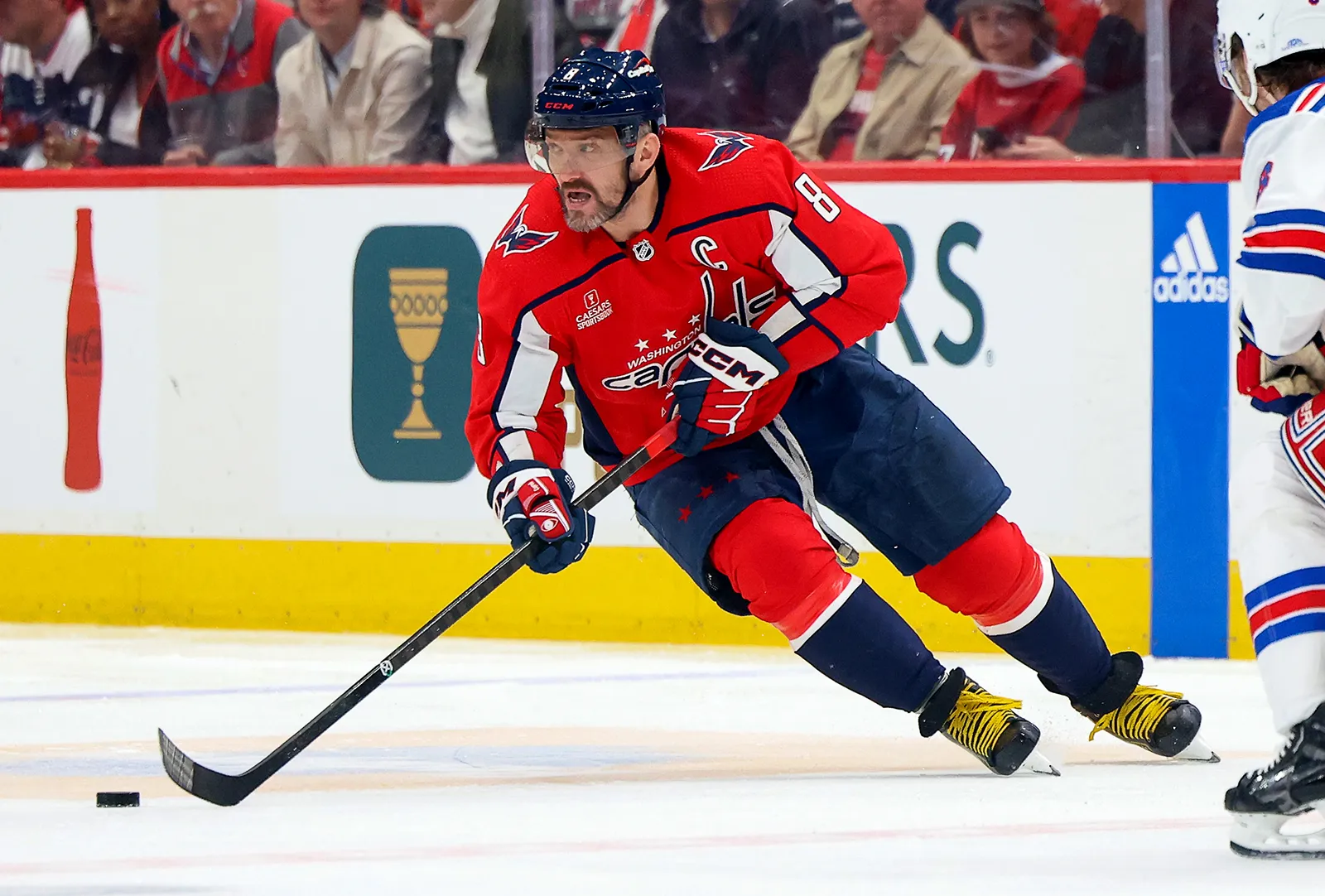
Immediately following was the demonization of Russian ice hockey player Alexander Ovechkin, a star player for the Washington Capitals in the National Hockey League, who was identified as “close to Vladimir Putin” and had supported his political campaigning. So what? The Brits have their share of war-supporting politicians, athletes, celebrities. British politicians have been overwhelmingly supportive of Israeli aggression against Palestine, with recent cracks appearing when the revulsion among ordinary Brits began causing concern among the political classes. So why not target British athletes who back genocide-supporting British politicians?
Horgan refers to an earlier quotation from Ovechkin saying, “I’m not in politics, I’m an athlete.” Yet for Horgan, Ovechkin is now in politics, writing, “That’s over. He [Ovechkin]’s in politics now.” It is a risible statement. Ovechkin is obviously not “in politics.” [emphasis added] He is a professional athlete, not a politician.
The British Cambridge Dictionary (online) defines politics as:
the activities of the government, members of law-making organizations, or people who try to influence the way a country is governed:
the job of holding a position of power in the government:
the study of the ways in which a country is governed:
Per such a definition, the only application to Ovechkin might be that he tried to influence the way a country is governed. Still, that would not make Ovechkin “in politics.” Ovechkin can be depicted as involved in influencing electoral outcomes, but so is everyone that casts a vote or engages in discussions about politics. Does that render everyone so engaged as “in politics”?
Despite Horgan’s uncompelling statement that Ovechkin is “in politics,” he doubles down:
It’s undeniable that Ovechkin has had an impact on DC during his long NHL career, never playing anywhere else, bringing the Capitals their first and only Stanley Cup and becoming the sport’s greatest goalscorer. But now that Ovechkin is also into politics – by choice – it’s fair to start asking what the impact of those politics is, too, even if he doesn’t want to talk about it.
Now Ovechkin is characterized as “into politics.” [emphasis added] Being “into something,” is commonly understood to be interested in something. Again, so what? Maybe people are interested in politics. But Horgan uses this to buttress his claim that it is now fair to ask about impacts connected to Ovechkin’s alleged politics.
Then Horgan implies a connection between Ovechkin and five men accused (note: under US law these men are presumed innocent of any accusations until a court has determined that they are guilty beyond a reasonable doubt) of planning assassinations in the US that happen to live in the same locale as Ovechkin. Ergo, as Horgan adds, Putin must be involved as well in the alleged scheming. A wider impact of Horgan’s proffered logic: Be careful of nefarious planning by people in your locale lest you be implicated as well. Such is the absurdity that the Guardian publishes.
Horgan writes of an argument for action by Ovechkin’s team: “For the Capitals, taking a moral stand could mean anything from making a donation to a Ukrainian charity to stripping Ovechkin of his captaincy, to barring him from playing.”
Next, Horgan casts shade on the fans of Ovechkin, the most prolific goal scorer in NHL history, who he contends are forced to make a choice.
“If you keep watching or keep wearing your Ovechkin jersey, you’re liable to be accused of tacitly supporting a repressive regime; if you choose to boycott, you’re accused of ‘politicizing’ sports.”
Writes Horgan, “Just because Ovechkin can’t muster an opinion (outside Russia, anyway), it doesn’t mean fans can’t. We don’t have to pretend to be neutral.”
Except Horgan seemingly glosses over quotations from Ovechkin in his article, and tries to belittle them unless spoken outside Russia:
In the video Horgan cites, while before the media in Washington, Ovechkin says (from 1:34 to 1:51): “I’m for peace and love, and I hope, in the world, it doesn’t matter who you are.”
“I hope everybody understands everybody wants peace, and everybody hope everything’s going to be OK in the world.”
Does this not sound like a stance that should dominate politics?
*****
From an ethical journalistic standpoint, I suggest Horgan, a Toronto-based writer, might take his own advice and travel to Russia and cast aspersions on Ovechkin while there because it is too easy casting stones from his ethical Guardian or from wherever he types his missives.
Better yet, Horgan might focus on his own turf where the government of Marc Carney in Canada backs the genocidal government in Israel, or on prominent Brits who support British involvement in the ramped-up fighting for Ukraine against Russia or well known Brits who support the Jewish State massacres of Palestinians, Lebanese, and assassinating the Iranian religious leader.