




“There is no excuse for those who realize the idea and abandon it.”
“If we are failed defenders of the cause, it’s better to change the defenders, not the cause.”
—Ghassan Kanafani
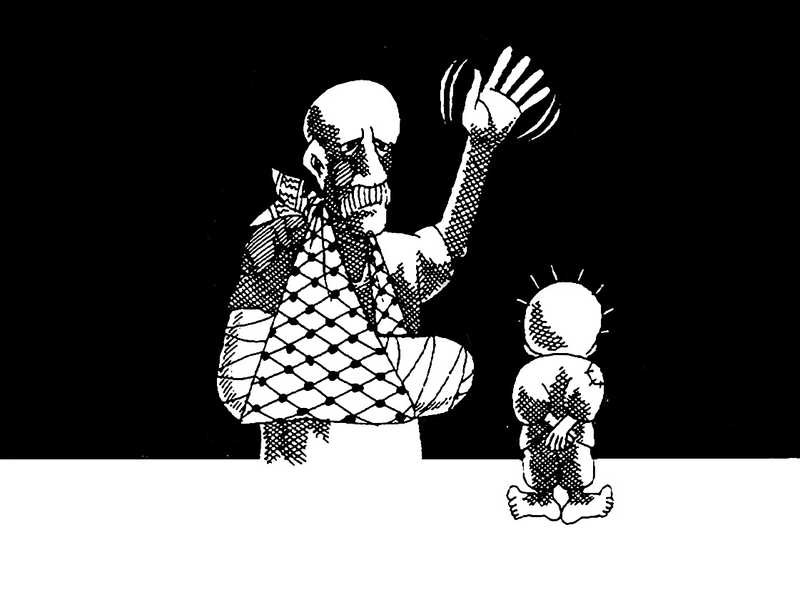
“I want to give the call to prayer out to people and ask them: Where is their cause? And where has it reached? I want to draw for the simple people, those who understand and those who cannot read or write.”
—Naji al-Ali
This is for people in the solidarity movement who get the emails, sign the petitions, donate their earnings and labor, show up to the rallies—and wonder why the system stays the same.
There is a pattern in Canadian NGO activism. Once you see it, you cannot unsee it. It is produced by a form within the system. Many people in these campaigns are sincere. The form and its NGO specialists make sincere people do the state’s work while believing they oppose it. Challenge the form, and the pattern changes. Leave the form unchallenged, and it reproduces itself.
This is a struggle over hegemony—over common sense, civil society, the spaces where consent is produced. The solidarity movement is one such terrain. It is a local front. The question is what function this practice serves.
The Particular
Before the system, one scene.
It is a local public forum on Palestine solidarity on the lək̓ʷəŋən and W̱SÁNEĆ peoples’ territories. A thread opens. Four people participate. Two are Palestinian organizers. Two are Canadian activists who work in an NGO solidarity group.
Palestinian 1 posts a reel on BDS—Boycott, Divestment, Sanctions against the Israeli occupation state and its apartheid regime. The strategy Palestinian civil society has asked the world to adopt—as was the case in South Africa.
Palestinian 2 replies: “Good reminder for the AFC (Apartheid Free Campaign) also.”
Activist 1 posts: “The Elbit Out of Canada campaign led by Arms Embargo Now is very focused.”
Activist 2 replies: “The Arms Embargo Now is an extremely important campaign. Every delay or blockage in even the smallest equipment or part that is required to keep the weapons working means lives, limbs, hearts, lungs, children, family members saved.”
Look closely at the sequence. Palestinians name the campaigns that actually help Palestinians and connect the apartheid system. A Canadian names the NGO’s “very focused” campaign — without engaging theirs. A second Canadian says the NGO’s “extremely important” campaign saves lives. Two Canadians, one campaign, no Palestinians.
The Palestinians’ call is not acknowledged and completely replaced. The conversation moves from BDS and apartheid acknowledgment to the industrial NGO. The Palestinians are not addressed. The Palestinians are bypassed and depoliticized—their political call for their cause was replaced inside the house of the Palestine solidarity movement and in the local rally.
Neither Canadian is at the rally. They are in the rally’s forum. They are discussing a Canadian NGO whose effectiveness the Palestinians at the rally have doubts about. They talk about Palestine. They do not talk to the Palestinians who are there.
Later, one of the Canadians writes privately to a Palestinian organizer—and then leaves the group:
“I am working with Palestinians across Canada who are also working directly with Palestinians in Gaza. I just want you to know that nothing I do is trying to supersede the Palestinian voice. … I have not been attending the rallies—unfortunately, due to scheduling conflicts. … There are lots of things that I am working on with other Palestinians, so I will carry on that way.”
Read it politically, as an example of the form, not as a personal position.
The claim is: I am not superseding the Palestinian voice. The practice is: speaking about the Palestinian in the group—without speaking with them—and carrying on with “other Palestinians.” The voice is named as the thing being respected, centered—and bypassed. And read again: “There are lots of things that I am working on with other Palestinians, so I will carry on that way.”
The Universal
How to See the Form: The Substitution Test
Imagine a Canadian activist declares a campaign about Indigenous rights.
An Indigenous person says: I have doubts about the vision and the effectiveness of this campaign.
A second Canadian activist says to the first: your campaign is extremely important. It helps Indigenous peoples.
Now imagine, a little more. The same campaign with a land acknowledgment, then emails the MP to ask the settler-colonial state to discipline itself.
That is the same scene. The native raises a doubt. The Canadian activist answers with the campaign’s importance. The native’s analysis is not engaged. The campaign is defended. The Canadian activist’s work bypasses the native’s judgment. In the Palestinian example, the right campaigns were replaced with the NGO’s one.
This is the form appearing in miniature. If the scene is legible, then the form is exposed.
The form has a rule. The colonized and the refugee may be spoken about. They may be spoken for. They may not set the terms. When they name the campaign that helps them collectively, the Canadian activist names the campaign that helps the Western citizen feel useful. The louder campaign “wins”—because the privileged activist has the staff, the funding, the “language,” and the NGO.
The System
The particular is this forum. The universal is this form. The system is what produces it: the funding, the careers, the access, the official respectability—and the state’s need for dissent it can file, process, categorize, and render inert.
Now look at the campaigns themselves: their actual focus, and their importance to whom. The same displacement happens at scale.
1. The Pattern
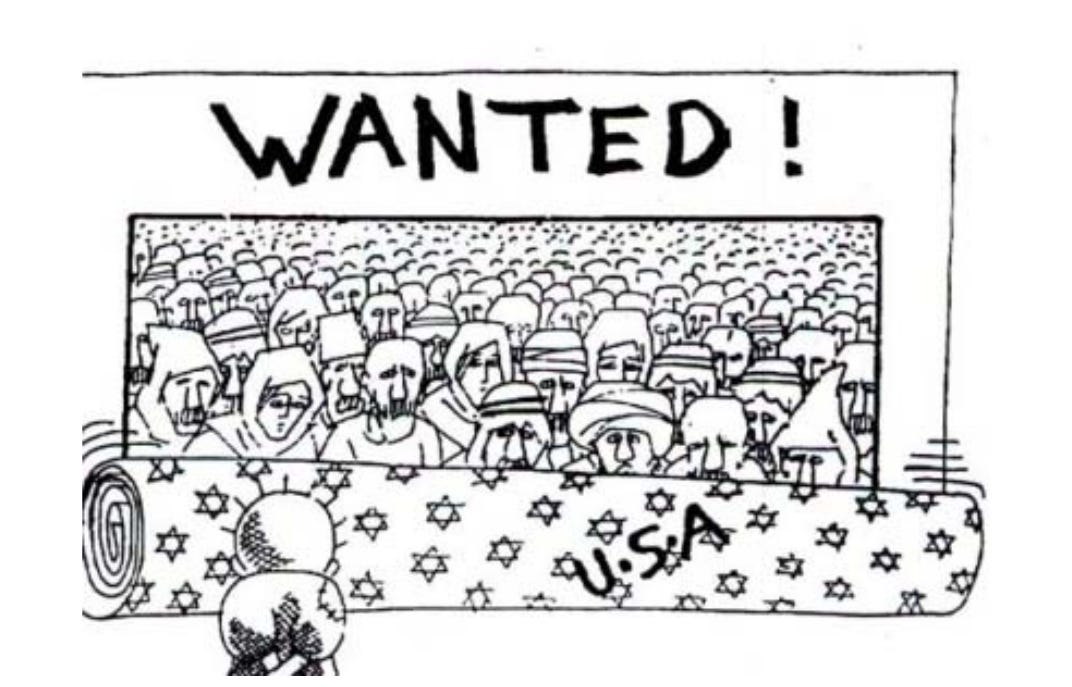
Multiple Canadian arms embargo campaigns name the state receiving the weapons. They do not name the settler-colonial state that makes them and sends them.
The weapons are Canadian-made. The export licences are Canadian. The factory is in Ontario. The decision is in Ottawa. The beneficiary is Uncle Sam and its northern agent.
The campaign says: stop arming Saudi Arabia. Stop arming the UAE. Stop arming Israel.
Never: stop arming and planning from Canada, in our name.
The target is always the receiver, never the sender. Never the beneficiary—the one who profits politically and financially, signs the licence, and ships the weapons.
2. The Chain and the Inversion
Yemen: Canada signed an $11-billion arms deal with Saudi Arabia. The demand: stop arming Saudi Arabia.
Sudan: Canadian weapons reach the RSF through the UAE. The demand: stop arming the UAE.
Palestine: Arms Embargo Now targets Elbit supply chains. It hedges on “genocide.” It cannot say “Palestine.”
The next client rotates: Turkey, Egypt, India. The local work—connecting the metropole to the front line—evaporates.
Every catastrophe has the same structure:
The proxy and the settler-colonial outpost kill. The puppet—or the comprador—transports. The architect makes the weapons and shields the system.
They name the occupation’s crimes in Gaza, Occupied Palestine—because Gaza is live, because it cannot be ignored. The campaigns name the proxy. They name the client states. The architect is never named. And the activist is treated as innocent of the state’s crimes.
The Canadian state is the architect—it makes the weapons and shields the system. The UAE is the comprador delivery service.
Here is the inversion. The demand is an embargo on the UAE.
You are asking the maker to stop the deliverer. You are asking the complicit state to investigate its complicity. Canada becomes judge over its own crimes.
Then every campaign ends the same way: call your MP.
Stop arming Saudi: call your MP. Stop arming the UAE: call your MP. Divest from Elbit: call your MP.
The name changes. The client rotates. The word “genocide” appears and disappears. The last instruction never changes. The citizen is sent to the state to ask the state to discipline itself.
That is not a campaign. That is a form. Its function is to deliver your anger to the state in a form the state can file and process.
The same operation runs on the target. The campaign can say: divest from Elbit. It cannot say: cut ALL ties with occupation and apartheid. Break with the United States. A company is a name for a poster. The campaign can reach it. A state is the guard of the system. The campaign cannot reach it. An empire is the system. The campaign does not even see it.
Rebranding preserves essence. Blackwater became Xe, then Academi, then Constellis. Monsanto became Bayer. Raytheon became RTX. The state does the same: “Indian Affairs” became “Indigenous Services.” Five names over fifty years. One relation. The system is still running. The new name is on the same bomb.
3. The Intermediary and the Loophole
The deepest function of the form is not only that the campaign fails to confront the state’s complicity. It is that the campaign certifies the state.
To ask a state complicit in its own genocide to discipline a client state is whitewash. The state that committed genocide on this unceded land is asked to enforce international law.
The state whose Indian Act is still law is asked to investigate war crimes. The criminal is elevated to the bench. The nations whose territory the campaign operates on are expected to watch, on the side. A land acknowledgment becomes compensation.
Every time the campaign emails the MP, it does two things: it asks the state to act, and it certifies the state as a legitimate actor. The petition is a vote of confidence. The campaign licenses the state by asking it to act.
The crime is reframed as a defect. The No More Loopholes Act aims to close a gap. Fix the paperwork. Not: dismantle the factory. The state is corrected, not confronted. The crime is repaired, not named.
It is the same operation as the rebrand. The loophole is closed. The factory stays open. The structure stays. The label changes. And the campaign files another demand.
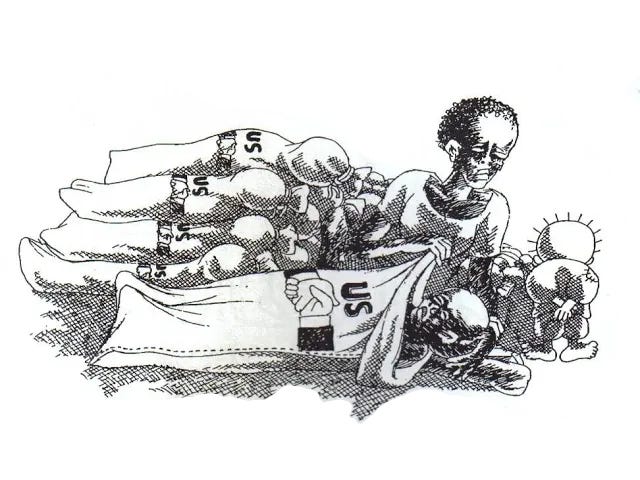
The language of anti-imperialism—genocide, war crimes, accountability, complicity—was created to name what imperial and colonial states do to oppressed ones.
Now look at how it is used.
Read the campaigns themselves. Here is the same sentence, written three times, for three different catastrophes.
Yemen: “Canada has exported over $8 billion in arms to Saudi Arabia since 2015.”
Sudan: “Canadian-made weapons continue to flow to the RSF in Sudan, with all signs pointing to them traveling via the United Arab Emirates.”
Palestine: “Canadian-made weapons and components that are shipped to the United States, untracked and unreported, before being exported to Israel.”
Canada is the subject. The weapons are Canadian. The verb is “export” or “flow” or “ship.” The chain is named: Canada, then the intermediary, then the perpetrator. The three campaigns see the same structure. They describe it in the same grammar.
Now read the demands.
Yemen: “#CanadaStopArmingSaudi.”
Sudan: “an arms embargo on the UAE.”
Palestine: “a full arms embargo in Parliament.”
Three demands. Three client states. One structure. Every demand targets the client. None demands “stop arming from Canada.” None demands “dismantle the factory.” None names the architect as the target.
Now read the words.
The campaign for Yemen says Canada has “blood on its hands.” It calls the war “brutal.” It calls it “horrific.” It does not use the word “genocide.”
The Sudan campaign uses the word. It is in the subject line of the email. It is in the headline. It is in the demand: “Canada Cut Ties with Genocide.”
The Arms Embargo Now campaign uses the word inside its scripts. But in its public framing, it says “risk of complicity,” “more than two years of genocidal violence,” “obligations under international law,” “take decisive action.”
Three campaigns. Three registers. One says blood. One says genocide. One says risk of complicity.
The same crime.
The word “genocide” is loud when the killers are Arab puppet states, with no mention of the Western puppeteer. It is hedged where it precisely belongs—when the killer is the settler-colonial state and imperialist outpost.
The selective use of the word equates the native with the foreign military occupier—a message the Israeli apartheid state uses, and one that legitimizes the occupation and its violence.
And nowhere—in any of the three campaigns, in any of the three catastrophes, in any of the three emails—is there a single line about the Canadian genocide. That is not silence. That is the form. And the form has a rule: the genocide must be somewhere else.
5. The Silence and the Foundation
The Sudan email names Darfur, the RSF, the UAE, Carney, the trade deal. Arms Embargo Now names Gaza, Venezuela, ICE, General Dynamics, the Canadian Commercial Corporation. The Saudi campaign names blood and profit. None names the land or the nations whose territory the campaign operates on.
Why? Because the campaigns need Canada to be a normal, neutral, reasonable state. A capitalist democracy can be lobbied, petitioned, appealed to—this is the accepted, dominant hegemony.
But Canada is a settler-colonial state. Its foundation is the genocide of Indigenous nations. The land is appropriated and exploited. The treaties are broken. The wealth is built on dispossession. The courts have ruled that Aboriginal title exists and was never extinguished. And the state defies the law.
Naming the Canadian genocide would break the fiction of the neutral state. Without the neutral state, the campaign form falls apart. So the campaigns do land acknowledgments—then carry on.
6. The Agent State
Canada is not its own boss. It is an agent state of the US empire and a settler-colonial state. It is both at once. These are not two separate facts. They are one structure: racial capitalism in its settler-colonial and imperialist unity. The same state that refuses Indigenous sovereignty produces consent for the imperial core.
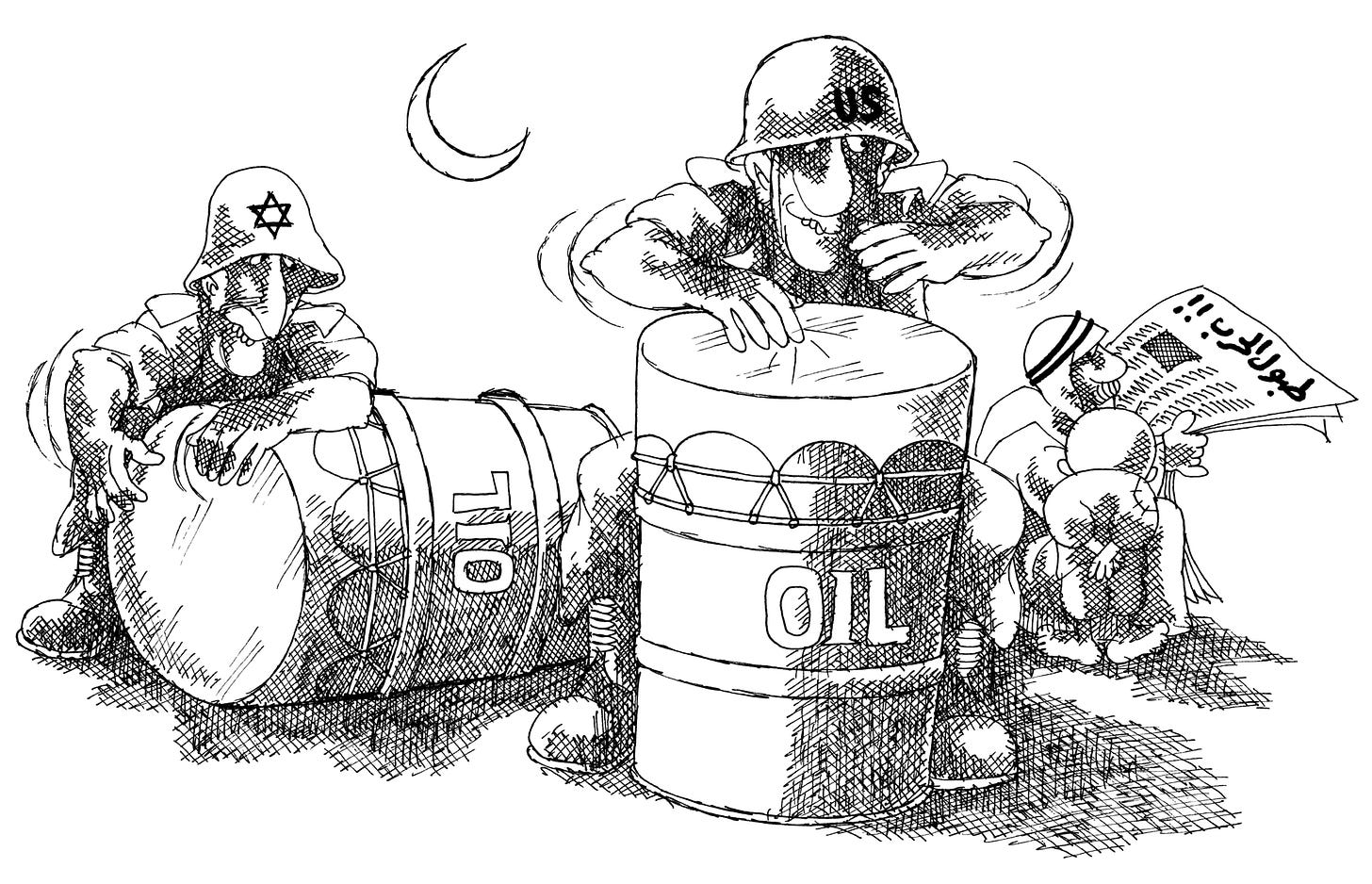
NORAD. Five Eyes. Permitless arms exports to the US. Pension funds, banks, UN votes. The campaign is asking the branch office to overrule headquarters.
The Prime Minister gives speeches about “sovereignty.” Then he signs the “trade deal,” approves the arms deliveries, votes the way he was always going to vote. The agent state has two audiences: its citizens, who must believe in sovereignty, and its manager, who must know they do not.
Uncle Sam’s “51st state” remark made the fiction visible. The campaigns were quietly pleased. Suddenly Canada was a real “country.” But nothing structural changed. The air is still shared. The intelligence is still shared. The weapons still cross the border with no permit. The votes at the UN still line up. The state is the same state.
7. Their Own Complicity
The campaigns never name their own complicity. This is the point that would end the whole discussion. The point they cannot make because making it would dissolve them.
These activists are the citizens of a settler-colonial state. Beneficiaries of a dispossession the majority ignores or doesn’t even realize. They hold the passport. They pay the taxes. They draw the salary. They live on unceded land.
Their duty is at “home”—to the Indigenous nations whose territory they occupy, to expose the settler-colonial state that gives them citizenship and comfort, to break with empire’s wars that pay their salaries and frame their mandates.
That duty is hard. It would require giving something up—privilege, position, comfort, land control instead of sharing, as the people of the land always asked. It would require naming their own complicity in the ongoing genocide here.
So instead they shift their focus to the natives abroad. Yemen, Sudan, Palestine, Haiti, Afghanistan—the list rotates with the corporate news. And they come to you.
They send you emails. They ask you to sign petitions. They send you registration for webinars. They perform solidarity for distant peoples—and never ask you to confront our collective position on this land.
That is not solidarity. It is a discharge. A way to feel good without giving up anything. A way to be a radical on weekends without being accountable on weekdays.
The campaign names the proxy. It names the puppet. The architect is never named. And the campaign never names itself.
The Choice: The Raft or the Boat
Every campaign is a raft. A raft could carry you across one river. It could win one demand. It could raise awareness. It could save lives, sometimes. But a raft falls apart when the campaign ends, and the energy scatters.
The boat is different. The boat lasts across campaigns. It gathers people. It builds political education. It connects struggles. The raft expresses the energy of the moment. The boat accumulates it. A raft cannot cross an ocean—not because the people lack courage, but because the form cannot carry them.
There is one campaign that cannot exist: the one aimed at the architect, at the system and its main switch.
It would say: Canada is the arms dealer. Canada is the settler-colonial state. Canada is the agent of the imperial core. Stop the factory. Respect Indigenous sovereignty. Break with the United States.
It would connect Palestine, Sudan, Yemen, and Turtle Island. It would name the imperial core as the root cause. It would not ask the state to discipline itself. It would not email the MP. It would demand that activists do their local immediate duty before they try to help the natives abroad.
This is not a campaign. It is the boat. And this boat is for the activist of the Canadian state. It is not for the colonized. Its purpose is to dismantle the activist’s complicity from within—parallel to Indigenous sovereignty, not to lead or speak for the colonized.
“What matters is not how you start, but how you finish.”
—Ghassan Kanafani
What You Can Do
That is the nature of the terrain.
Learn the pattern. Learn the chain and the inversion. Learn the intermediary and the loophole. Learn the words. Learn the silence and the foundation. Learn the agent state. Learn your own complicity.
Then learn the difference between a raft and a boat.
Next time you get an email asking for an arms embargo on a client state, ask: Who made the weapons? Who signed the licence? Who profits? Who is being asked to be the intermediary? Is this, really, NGO or GO?
Next time you see a campaign that can say “genocide” in one native state and not a settler-colonial one, ask: Why? Who is protected? And where is the genocide on this land?
Next time you see a performance—a land acknowledgment, a webinar, a Prime Minister’s speech about “sovereignty”—ask: Was there land or Indigenous reconciliation? Which audience is it for? What did they sign the next day?
Next time the last instruction is to call your MP, ask: Who is the MP? What caucus, ideology, or state does he serve? What is the state being asked to do to itself?
Next time you sign a petition, ask: Does this build the boat? Or another raft?
Next time you feel like a good person for helping the natives abroad, ask: What did I do on this land today? What did I give up? What did I confront? What is my complicity?
The campaign arrives with a broom. It says “Let’s focus on the campaign. Let’s email the MP. Let’s do a land acknowledgment first.” The work is not to reform the campaign. The work is to build what the campaign was designed to prevent: the boat.
The boat does not begin with a manifesto. It begins with a group of people who decide to stop chasing campaigns and start building something that lasts, locally. A study group. A reading circle. A local committee. A decision to meet every week, to study together, to connect the collective to the struggles, to name the architect and the root cause, to confront the system, and to do the work that belongs here and now.
From moment to movement. One structured organization. One concrete analysis. One clear struggle that connects Palestine, Sudan, and Turtle Island as one exploitative, unjust system.
Analysis names the architect. Only organization can confront the architect.
Name the architect. Name the original sin. Name your own complicity, first.
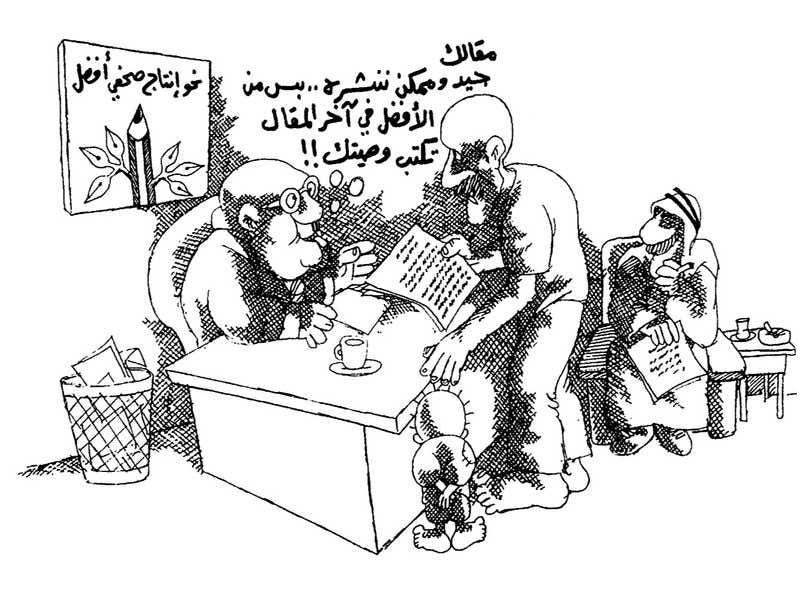
Toward Better Journalistic Production. The officer: “Your article is good and can be published… But it would be better, at the end of the article, to write your will!!”
How to Read
Read the title first. It carries the whole operation.
Read line by line. Ask what each line does, not just what it says.
Read the contradictions. They are the central confessions.
Read against the author’s claims. Compare what the text says to what it does.
Read the silences. What is not said is a political act.
Read the language as political grammar. Words are not neutral.
Read the speaker. Who is talking? From where? With what authority?
Read the function. What work does this text do in the colonial relation?
Read the colonizer’s archive as confession, not history.
Read every text in its colonial context. Nothing is separate from it.
Then, write anti-colonial text.
We read, we think, then we write.