



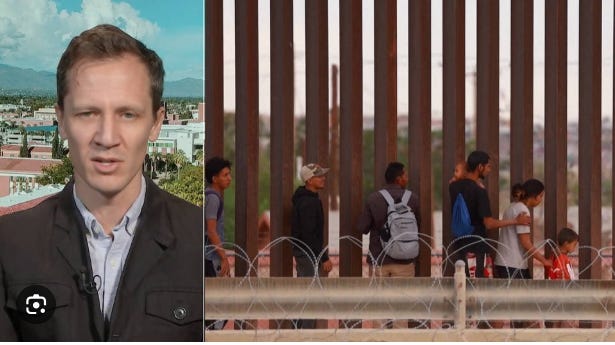
The interview was played March 18, 2026, 6 pm, kyaq(dot) org — LINK.

I committed a violent act that day—a violent act of omission. The Germans once used the term Mauerkrankheit, or “wallsickness.”
— John Washington
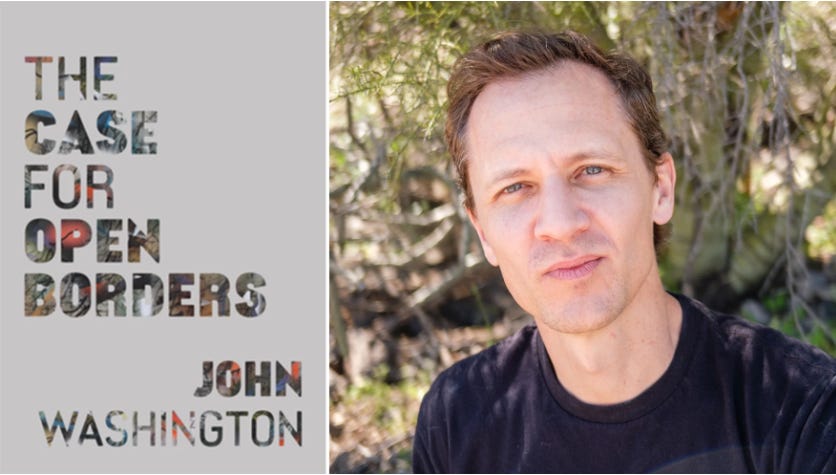
From the Preface of The Case for Open Borders (Haymarket Press):
My first such confrontation (I’ve since had plenty of others) took place in the mid-2000s when I met with a young border crosser in distress in Southern California. A friend and I were driving down an empty road in the Anza-Borrego Desert, about eighty miles east of San Diego and fifteen miles north of the border. The valley we were cutting through lies between the peninsular mountain range to the west, from which on clear days you could catch distant flashes of the Pacific, and the flat expanse of the Imperial Valley to the east. The desert is slowly undulating scrubland with shocks of gullied badlands and occasional palm oases. Our plan was to cook over a fire, drink some whiskey, sleep under the open sky. We were only a few miles from where we’d intended to camp—a primitive site close to a series of winding canyons—when we saw a figure standing by the road.
This was before I spoke Spanish, before I knew much about the border or migration, apart from my mother’s stories of her flight from Romania. I pulled to a stop. The figure—a kid, seemingly in his late teens—stepped into the road. He was wearing a thin, black hooded jacket, heavily dusted jeans, and a broken-billed hat. There were pimples on his cheeks. He carried an empty gallon bottle. His eyes looked recently sparked back to life.
Across the language divide—Agua, he said, and, instead of miming drinking, gripped his neck, as if something there had gone wrong—he let us know he was pained and thirsty, that he’d walked a long time, and that he wanted a ride to the next town. My friend and I looked at each other, then back at the kid. We handed him some water, still not sure what to do. I tried to tell him that the next town was far, that there were Border Patrol agents around. We gave him a half bag of oranges and topped him off on water. I mumbled through an apology, wished him luck, and then we drove on.
Twenty minutes later, as we were hefting supplies out of the car, I stopped. What the hell had we been thinking? How could we have left him on the side of the road? We jumped in the car and sped back toward where we had seen him. He wasn’t there. We drove back and forth, walked the shoulder, called out. There was no sign of him, no trace. We weren’t even sure exactly where—in the stretches of bush and cactus, wash and hummock—we had first seen him.
That night we drank our whiskey, crawled into sleeping bags, and slept rough. As I woke up the next morning to dawn’s brilliance, and a slight headache, I took a long pull from my water bottle before starting on the coffee. Where had that young man, that boy, slept? How much water did he have left? Had he finished the oranges? Had he walked all night through the thornbushes, hiding in arroyos, risking his life and freedom walking the unlit road?
I committed a violent act that day—a violent act of omission. The Germans once used the term Mauerkrankheit, or “wall sickness.” It is a violence, a sickness—the wall creeping into the head—that is one of the most dangerous developments in the world today, imperiling millions of people who are forced from their homes by war, economic despoilment, or climate crises, and then barred (both by law and by the everyday practice of people like me who refuse to act with decency and humanity) from finding homes elsewhere.
My actions that day in the Anza-Borrego were my fault. But to take responsibility for a wrong doesn’t mean that you can’t also point a finger at others, that you can’t call out the system that trains and expects you to favor and protect those on the inside of the wall and to disfavor and neglect those outside of it.
*****
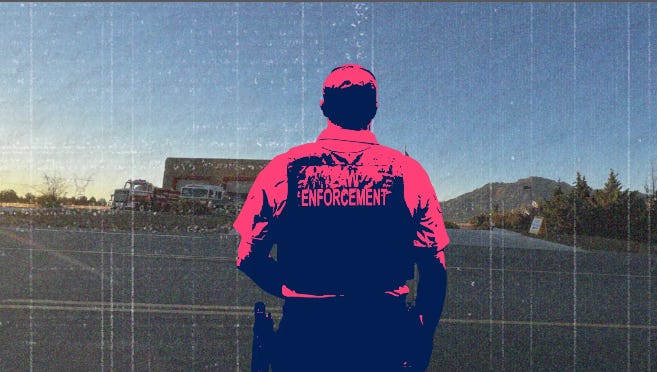
Sure, I am way out in front of this — policing? The militarization of the cities, townships, and rural areas?
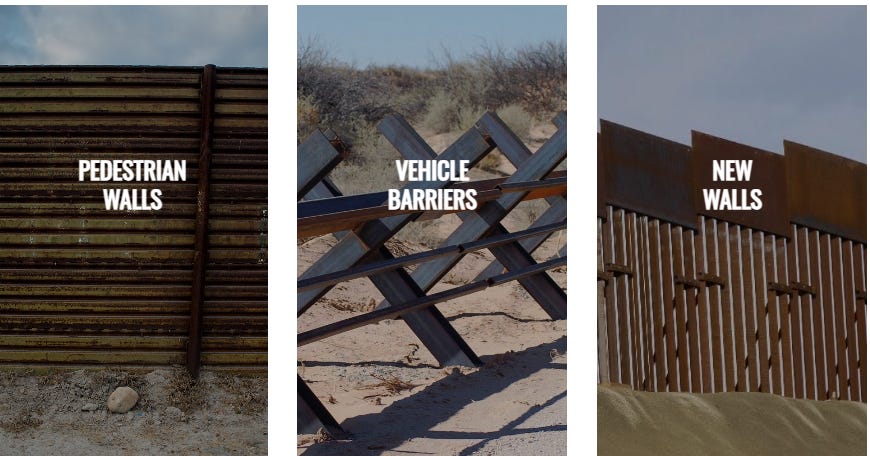
The Southern Border region has always been a place of opportunity, encounter and hope, and many of the cities and towns along the border have enjoyed a diverse and lively binational and multicultural character. While cruel and unaccountable border agents have existed since the 1920s, they didn’t have the massive budgets they have today. The implementation of the pilot Operation Hold the Line, followed by Operation Gatekeeper and “prevention through deterrence” tactics in the 1990s, changed all of that.
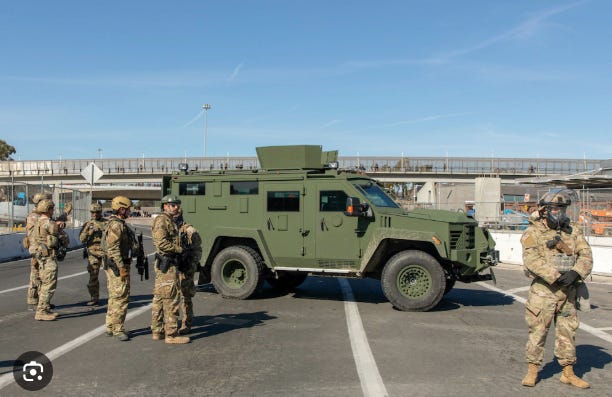
Border militarization, which has turned the Southern Border into a mock war zone — complete with border agents masquerading as soldiers toting assault rifles and donning tactical gear, the violent and deadly border wall, and the policies that allow this to happen — has ravaged our communities for decades.
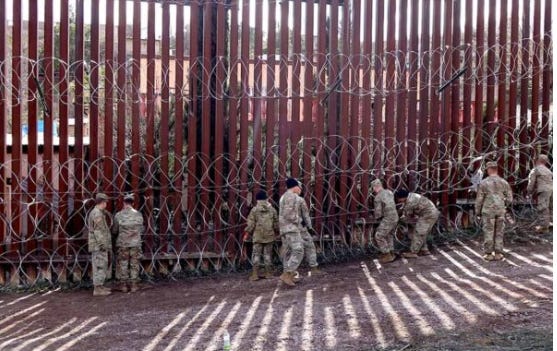
Turning the region we call home into a war zone doesn’t make us safer. In fact, it leads to more violence, corruption, and even death. We can’t afford to continue with harmful enforcement-only policies that militarize our communities. We need a New Border Vision that expands public safety, upholds human rights, and welcomes all people to our borders.
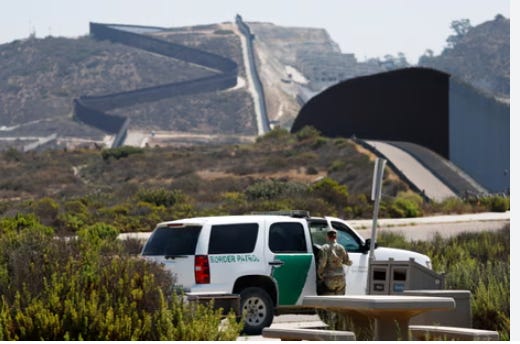
These are not my f**king friends!!!!!!
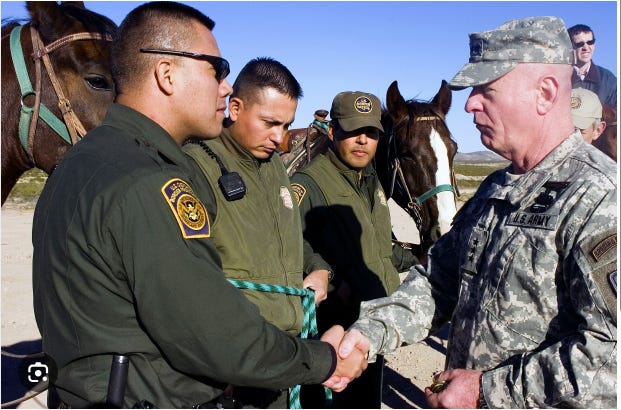
It is NOT Trump:
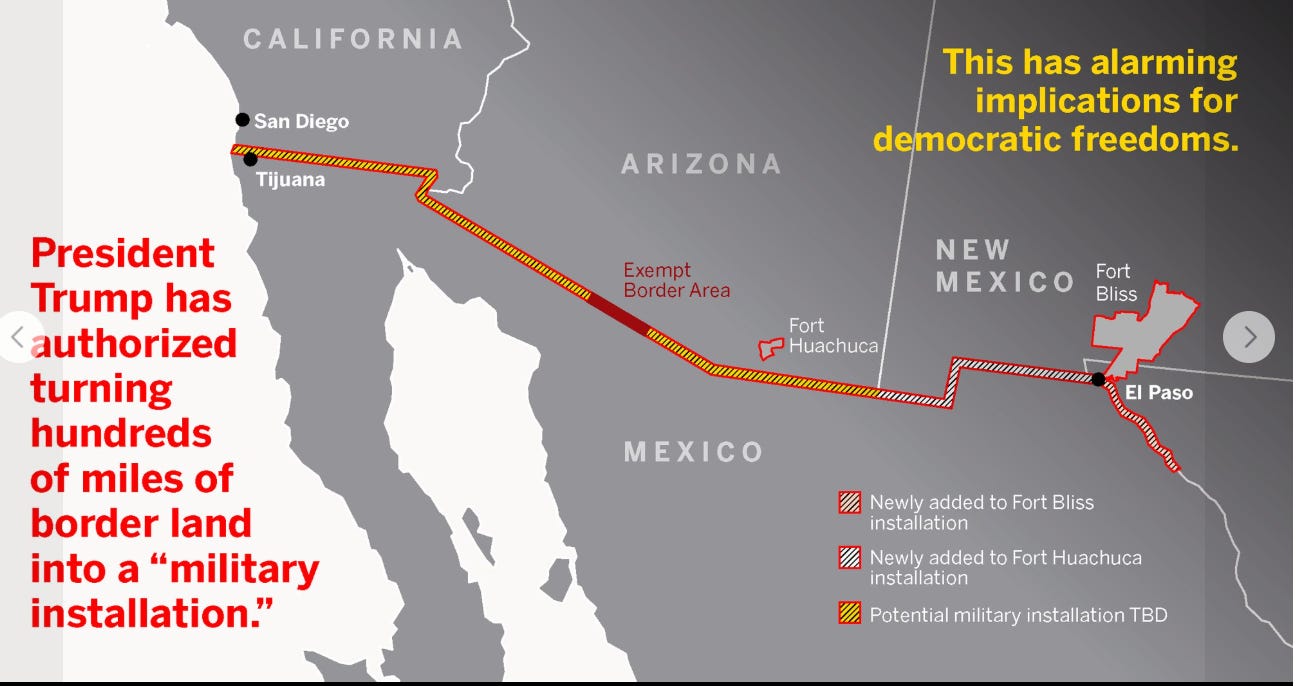
Stephen Glosser-Miller is in terms of ICE and BP:
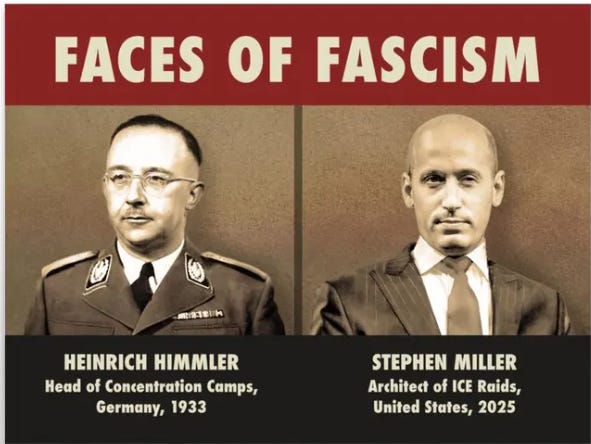
*****
But John and I riffed with these quotes, not with the idea of Glosser-Miller as the lead of this fascism, and ICE may be chilled a bit, but spring is upon us, and the summer is going to be hot hot hot.
Borders are liminal spaces. Anyone worthy of the title of ‘writer’ is a border writer. We all are border people. — Luis Alberto Urrea
Fences and borders are a sign of weakness. — Yanis Varoufakis
But human borders mean nothing to air, water, windblown soil or seeds or migrating fish, birds or mammals. — David Suzuki
John was kind enough to get me hooked up with the Kindle version of the book: Here, the last chapter, with headings that go into detail about how open borders can and should be a reality.
- Borders have not always been
- Immigrants Don’t Steal Jobs—They Create Them
- Immigrants Don’t Drain Government Coffers
- Borders Don’t Stop Crime and Violence; They Engender Crime and Violence
- Immigrants Don’t Threaten Communities; They Revitalize Them
- Migrants Rejuvenate
- Open Borders Doesn’t Mean a Rush to Migrate
- The Nonsense of Nationalism
- Closed Borders Are Unethical
- Brain Drain Ain’t a Thing
- The Libertarian Case
- Dehumanizing Border Machinery Targets Native Residents Too
- Opening Borders Is Economically Smart
- Open Borders Are an Urgent Response to the Climate Crisis
- Open Borders As Reparations
- World Religions Agree: Open the Borders
- Closed Borders Are Racist
- Walls Don’t Work
- “Smart” Walls Are Stupid
- The Right to Migrate / The Right to Remain
- The Simple Argument
*****
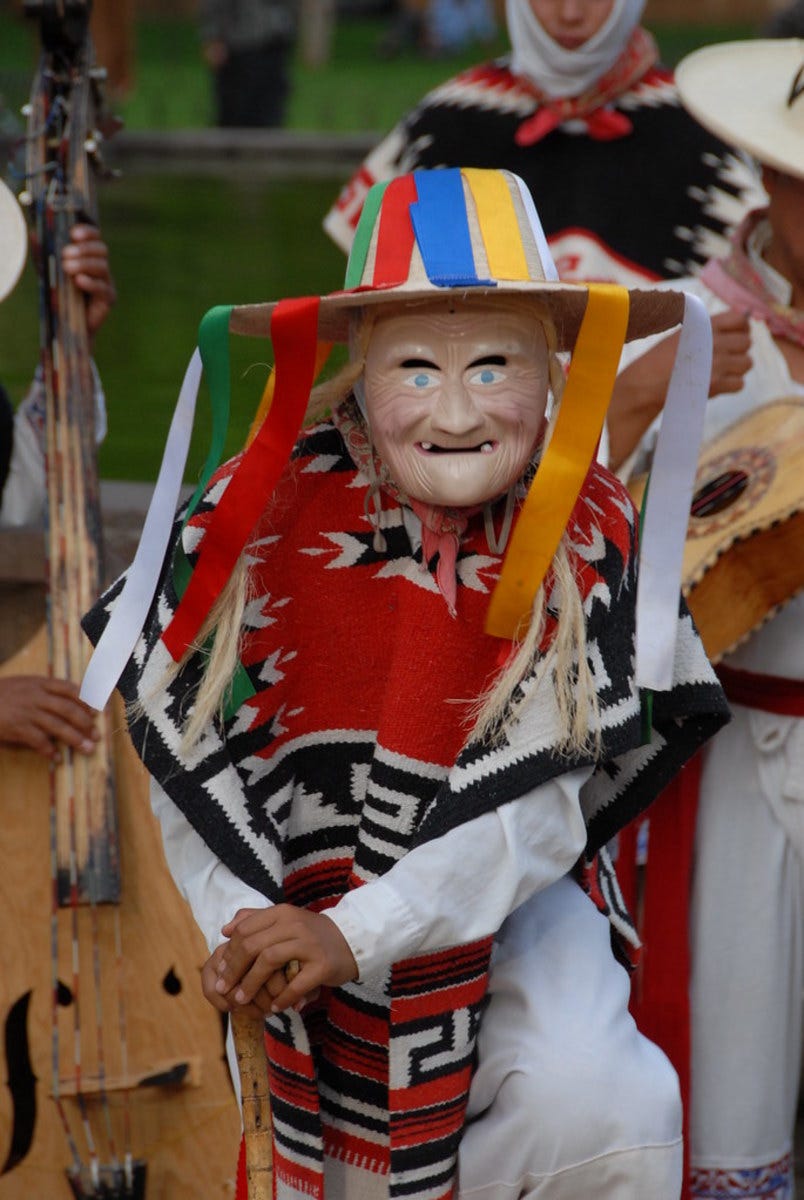
I know, I know, these interviews are not just about my guests. They are about me, my own journeymanship in the world.
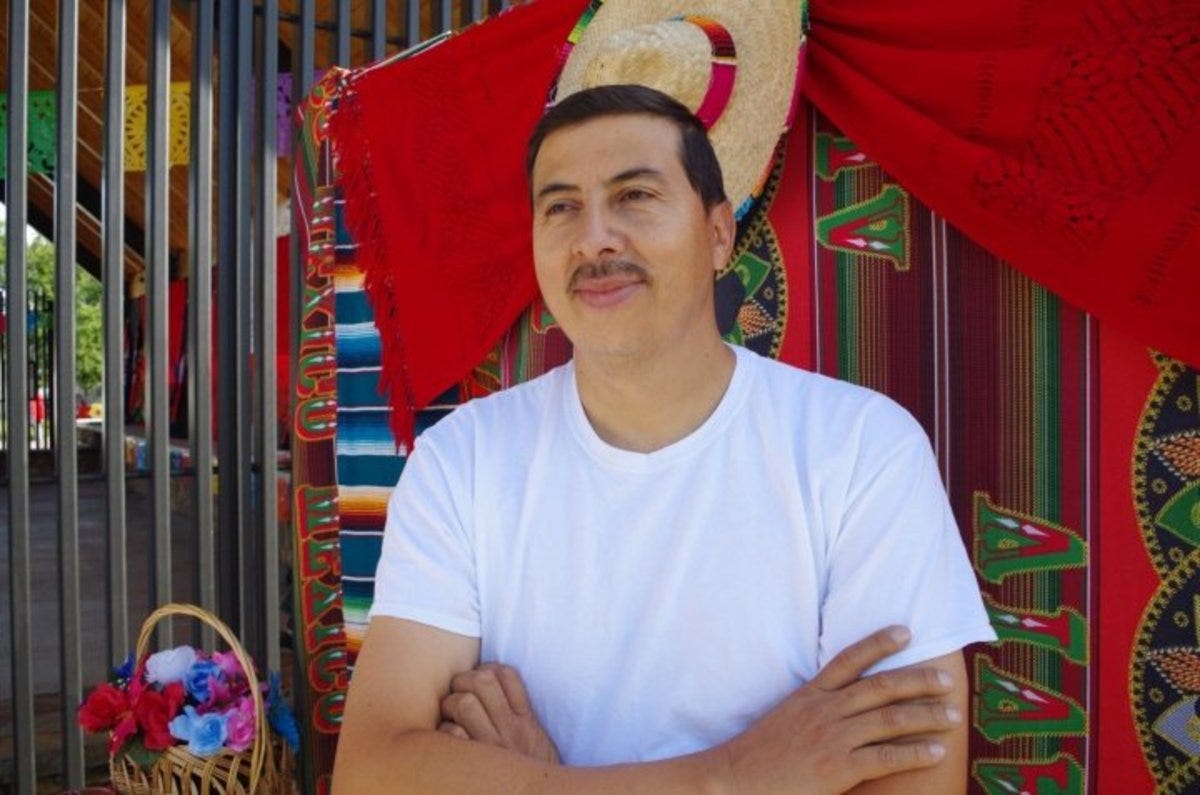
Makwirituni Erakuni – “I’d Like to Introduce You to My family”
Twenty Years ago, when I first started cranking it out over at Dissident Voice:
This Land is Their Land, and We Are the Illegal Aliens
www.dissidentvoice.org
April 7, 2006
”We are all illegal aliens.” It’s a bumper sticker that many of us on the frontlines of the fight against the United States’ government’s assault on Central Americans plastered on our car bumpers down El Paso way.
That was in the 1980s.
You know, when Reagan was running amok ordering his captains, Ollie North, McFarland, Casper Weinberger, the whole lot of them, to send bombs, CIA torture manuals, and US agents in order to aid terrorist contras and other despotic sorts in killing hundreds of thousands of innocents in civil wars in El Salvador and Guatemala.
We worked with women and children who had witnessed fathers, uncles, and husbands eviscerated by US-backed military monsters. Victims of torture in Texas, are illegal. You know, what those brave Smith and Wesson-brandishing, chaise lounge Minutemen of today would call aliens.
We worked with people in faith-based communities, mainstream churches, and non-profits throughout El Paso, Juarez, and the general area known as La Frontera. Everyone I met working with in this refugee assistance stint had humanitarian blood coursing through their veins. We were proud of our law-breaking work — we gave refuge to terrorized and sometimes half-dead civilians.
We were called lawbreakers by the Reaganites and the Minutemen of that time. Communists. Pinko-fags. Those were the good old days of low-tech surveillance and simple FBI lists.
But what we did was human and humane, in the tradition of that very universal (with roots in Quakerism) belief in bearing witness and acting upon that which has been judged as unjust and inhumane.
Of course, we were up against the laws of this land and coarse, politically driven judges who denied victim after victim permanent or temporary status while seeking asylum in the US.
We have so many stories of people sent back who were, at best, imprisoned, and in the worst cases, mutilated, disappeared, and murdered.
Guatemalan and Salvadorans, that is. Your readers don’t want to hear the narratives and visualize the descriptions of photos of those victims of torture. Ghastly things happened to teachers, nuns, medical workers, and farmers, more heinous than what we’ve heard happened in the cells of Abu Ghraib.
We were there to assist, but more importantly, to bear witness to our country’s terror campaign. Some of us got so riled up that later in our lives — me included — we hoofed it to Central America. Kicked around. Wrote articles for the few newspapers in this country that even cared about poor, misbegotten, displaced people of Latin America.
But no matter how hard-nosed we became, or how much we could withstand the photographs of women’s sliced backs and beheaded fetuses, we couldn’t shake the images of the children of torture at this two-story refugee house, Annunciation House. It was full of scruffy-looking East Coast volunteers who had hooked up with Ruben Garcia, the House’s director, through Catholic services organizations. It was their stint with public service, their spiritual duty calling. Part of their degree plans. But most were converted and slammed hard by the violence their charges had suffered under.
Those PTSD-induced cartoons those children drew sucked the air out of even the hard-ass border patrol guys who used to “dump” the Central Americans at Ruben’s door at all hours of the night. Who can believe it now, that once upon a time, official INS and border patrol officers knowingly let their perps go, knew that Ruben and his volunteers could heal the emotional and physical wounds of these tortured crossers.
Their chance at freedom. Except for the piss-ant judges. And the memories of pregnant aunties being raped, their fetuses cut out alive, speared, and the laughing Reagan-loved military punks in the highlands and jungle.
Annunciation House was bulging at 100 people — disheveled lives jammed in. Beans always cooking. Songs. Mattresses and piles of donated clothes. Guitars strumming. Gueros, the white ones, and the Chicanos would help with intakes- asylum transcripts, translation, dotting all the i’s and t’s. Help with getting jobs. Odd jobs in the community. Help with making sure the refugees didn’t get caught again.
But it was always those by-the-letter-of-the-law jurists helping confound the torture. More than 70 percent of our brothers and sisters seeking asylum in the US were denied entry by some fat cat, cocaine-sniffing immigration judge who usually had a friend in the back pocket of some Bush or buddy of Bush somewhere.
Then it was trying to get the denied victims off to Canada without being caught. You remember, “the Canada” back then, which used to open its borders to refugees.
The judges, politicians, and Minutemen all professed, “Send them back. Those aliens broke our immigration laws.”
But “we are all illegal aliens” as a rejoinder went much further than USA’s mayhem in Mesoamerica. We worked in solidarity with the housekeepers, bricklayers, agricultural workers, and so many other worthy Mexicans who worked their butts off in the US for little pay and much less respect.
These were workers who crossed the Rio Grande to find low-paying jobs with American families and businesses — working for mayors, bigwigs, even on government contracts. In Texas, New Mexico, Arizona, elsewhere. With a wink and a smile from the American exploiters.
Mojado — wetback. Squatter. Beaner. Illegal alien. These were the more tame epithets.
But let’s not kid ourselves about the genesis of this new round of empowered Latinos fighting against racist laws put forward by the dispassionate conservatives running the ship of fools in DC.
This is not a country of legal immigrants. It’s a country based on colonialists, undocumented white people who helped displace native tribes through broken laws and genocide.
It’s a country based on the illegal occupation of native lands and on Mexico’s lands, pure and simple. Colonialists were protected by Federal laws that deemed free white people as the only ones who had the right to be fully-fledged citizens.
Manifest Destiny was a violent, racist act to seize lands illegally. Everything this country’s current anti-Mexican and pro-Apartheid border war proponents stand upon — all that doctrine and those so-called laws — is based on illegally seizing lands of Native tribes.
And worse — laws that “removed” natives. Laws that starved natives. Laws that approved of eradicating native families, entire tribes.
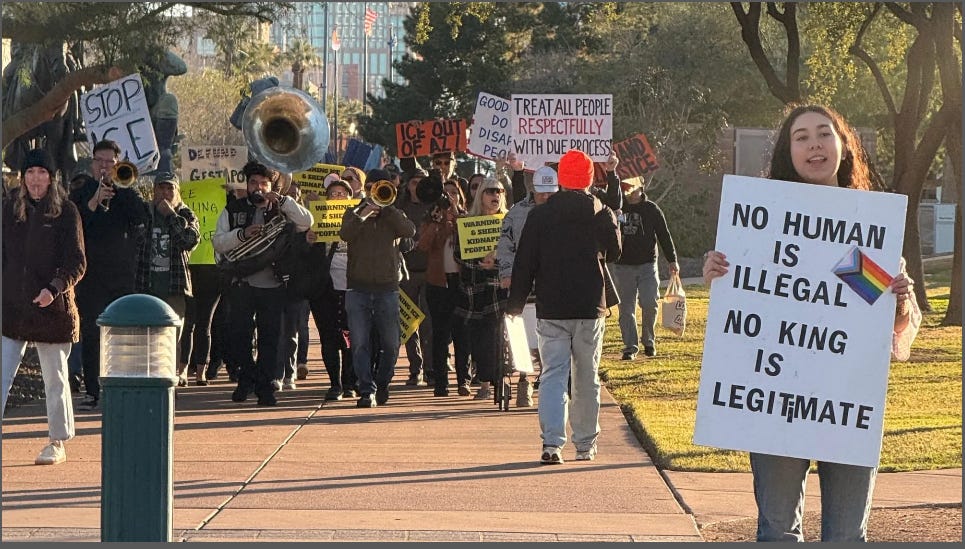
The current massive turnout of students and workers alike in this country’s major cities is a testament to these Americans’ backbone to fight this new exclusionary law — HR4377 — a Washington, DC-inspired racist act that has its roots in the Chinese Exclusion Act of 1882.
Many Americans do express a certain humanity and dignity for the people many deem aliens, but it’s not awe-inspiring that some citizens of Denmark or Limerick, Ireland, obey the so-called immigration laws of this country during their initial years as landed immigrants.
Let’s make no bones about the motives of Jim Sensenbrenner, the author of this racist House bill: He sees those brown-skinned south-of-the-border lettuce pickers, linen washers, house framers, and their US-borne children as what? “Alien gang members terrorizing communities.”
Anyone spouting that we are a nation of immigrants and laws has a disease, what George Orwell called the illness of doublethink.
And until those many white Americans stop spewing that this is their land, a land of their laws, and a land made for Christians, the racist Minutemen will ramp up their gun brandishing on the southern and northern borders. And racist politicians will continue to play on the fears of uninformed constituents and try to pass the 21st Century’s racist exclusionary laws.
I wonder what these modern-day Nazis would say about those children’s cartoons — images of bodies floating in rivers. Blood-soaked church walls. Military men with their M-16s trained on men while others were in their rape hunch. Beautiful jungle birds flying in the sky next to US-paid-for helicopter gunships spraying the corn fields below. Dead mommies cradling dead babies.
Yeah, I’m an illegal alien. We all are illegal aliens, under the laws of these creeps in high office. Humanity, caring, and simple benedictions for suffering so much, those are alien traits only held by a minority in this country of exclusion. Yeah, those creeps on hate radio and in the newspaper columns and on Capitol Hill, sure, they recognize all of us who see the lies and fight the injustice as aliens.
And the children whose post-traumatic cartoons brought tears to men and women who had been in Vietnam. Simple Crayola colorings brought tears to a county sheriff who had survived drug runners shooting up his town and unearthed bodies.
Yeah, we are all illegal aliens. Except them.
*****
*****
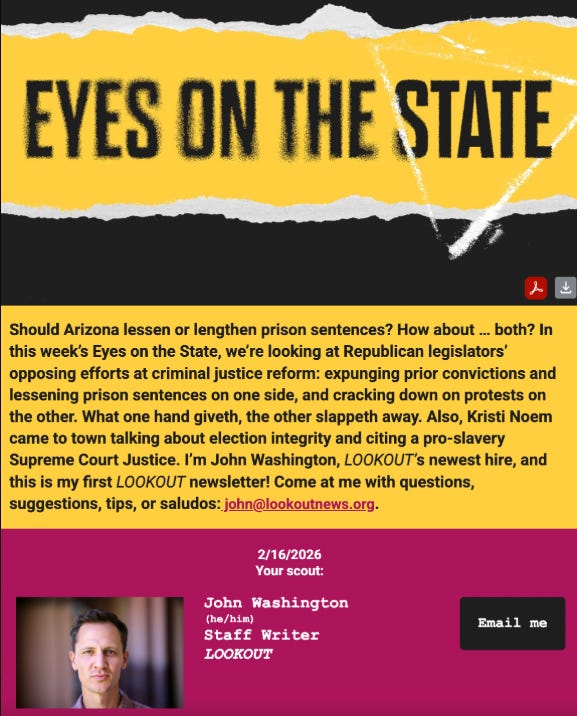
John’s at a new publishing organization, Lookout, and he has his Substack, Lit & Border News
*****
Here’s the last Chapter in The Case for Open Borders:
Barring small island nations, all countries’ borders have been drawn in blood. Genocidal slaughter and ruthless imperialism helped form the United States and bottom-lined the wealth of France, the UK, Spain, Germany, Israel, and other countries in the global North. To claim the right to stop a migrant from crossing a line that was previously and flagrantly trespassed by the controlling elite (or their ancestors) is absurd and, in the most basic sense, unfair.
The 1884 Berlin Conference, in which imperial European powers slashed lines across a map of Africa and divvied up territorial claims, is only the most blatant example of how borders are violently imposed onto people and landscapes. The source of some of history’s most destructive episodes is the claim that only certain people belong on certain tracts of land, and that others are interlopers who must be denied or deported. Doing away with such brattish selfishness and blinkered xenophobia would ease, not exacerbate, geopolitical tension.
A country is not a house. Locking your doors at night is not the same as barring a migrant from a country’s territory. When we deny the migrant welcome, we are exposing and dishonoring our own home—forgetting the history of the land and conquest, or the traditions of freedom and hospitality practiced there. Paradoxically, we deracinate ourselves by claiming exclusive attachment to space. We lose our own home by denying it to others.
The Spanish word querencia, with a taproot in the verb querer—to desire or to love—refers to the place one feels at home, from where we draw our strength and spirit. Querer itself has origins in Proto-Indo-European: to seek, to ask. To establish or reestablish querencia, our home anchor and spirit,is to drop a root. But the lurking question in that root, that seeking—the desirous nature of both roots and humans—also reveals our inherent transience, the itch to seek, to ask, and the constant motion of being itself.
Roots are on the move. In our increasingly mobile world, for those who are uprooted and unroofed, as well as for those who feel firmly planted, we are all always still seeking and asking, queriendo, always building and finding home, whether we have one now or not.
The way to go home, the way to stay home, is to welcome the migrant.
*****
Nice Blurb for John’s Book.
Perhaps the most profound book you’ll read this year. Washington cleaves through all the cruel obfuscations and militaristic cant that derange our border and immigration politics and offers a better human alternative. Borders will not save us, or our rapidly broiling planet, but Washington’s reportorial courage and ethical clarity just might.
— Junot Díaz
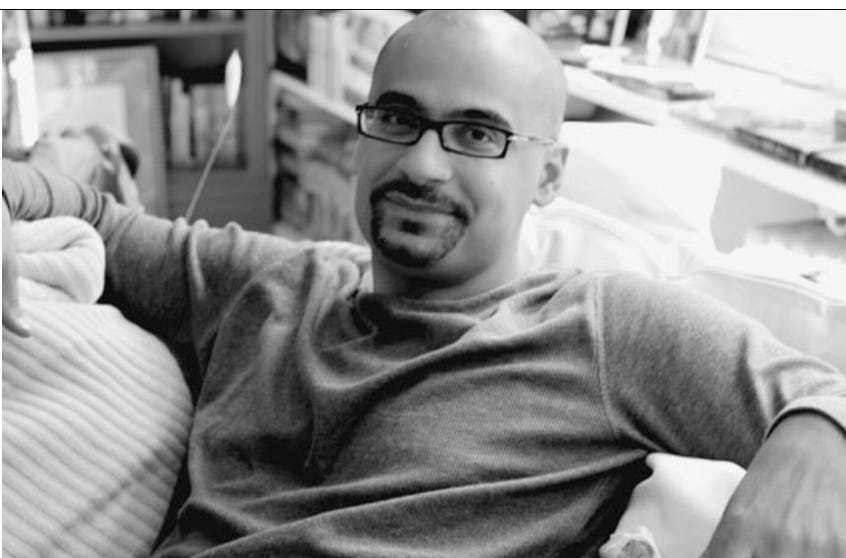
Okay, a little aside, on Junot: Almost twenty years ago… Junot Díaz by Edwidge Danticat
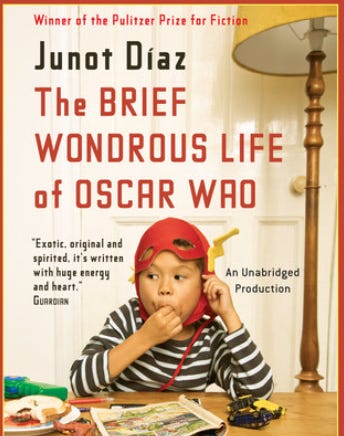
That’s the sort of writer John Washington goes to for a book blurb. Bravo!
Further reading? See the end of John’s book:
*****
Finally, I just got this in my email July 14, cuz they think I am one of THEM: 400+ senior leaders from CBP, ICE, DHS, DoD, USCG, state and local law enforcement, and international partners to address the evolving challenges shaping border security operations today
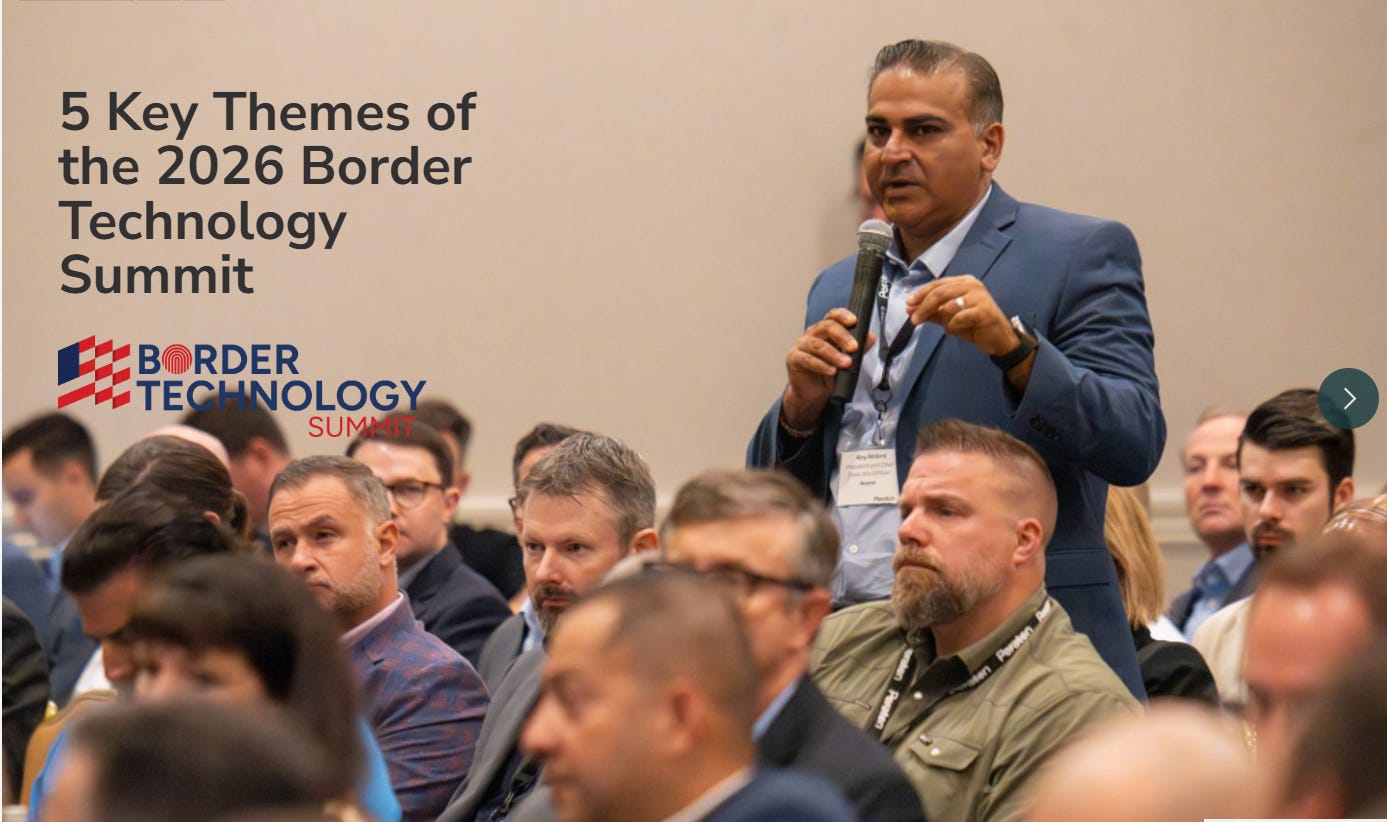
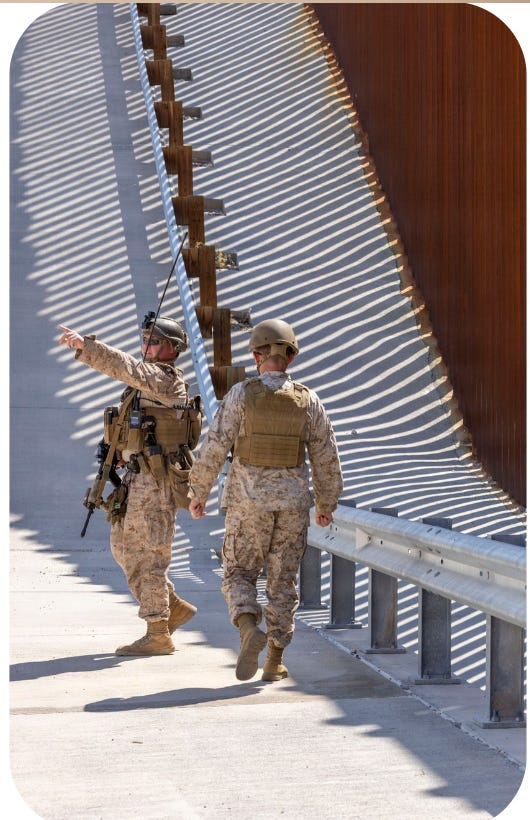

We are doomed. Mo protests here with that old saw,
Upton Sinclair — ‘It is difficult to get a man to understand something, when his salary depends on his not understanding it.’
Note:
John’s got a new book, and maybe he’ll come back on the show.