









The ocean can turn on a dime. Temperature, pH, oxygen levels and salinity can vary drastically — across distances of centimetres and within time frames of minutes. That’s the latest view being revealed by measurements from thousands of instruments anchored to shores or attached to floats, ocean gliders and ships.
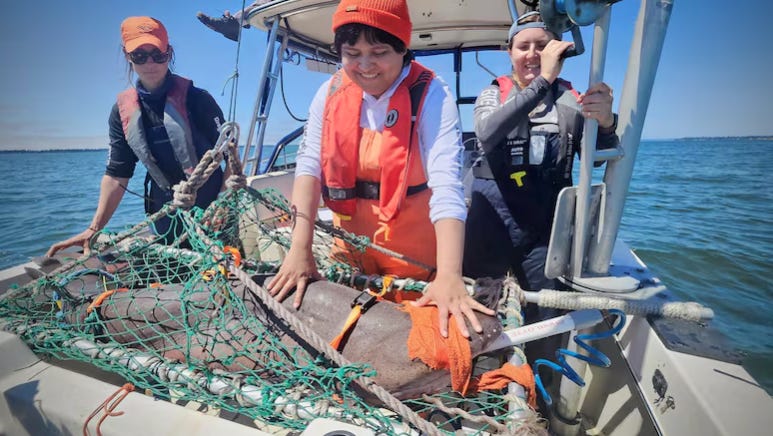
He will be on the show, live, June 3 and June 4, 8 p.m. and 3 p.m., respectively, KYAQ FM 91.7 (kyaq.org streaming).

J. Wilson White, Assistant Professor, Coastal Oregon Marine Experiment Station, Oregon State University, investigates factors affecting the dynamics of marine species across spatial scales by linking empirical data with mathematical models of population dynamics. Such models are essential in order to detect trends in noisy data, to predict large-scale, long-term consequences from field observations, and to generate new hypotheses that can be tested by directed fieldwork. His research group’s approaches allow scaling up from knowledge of smaller-scale processes, such as size-selective mortality in fish, to population-level consequences (and vice versa). His work with PISCO primarily focuses on the development of bioeconomic population models for the design and adaptive management evaluation of Marine Protected Areas, the effects of nearshore oceanography and methods for improving knowledge about movement of the pelagic larvae of fish and invertebrates.
Marine Protected Areas:
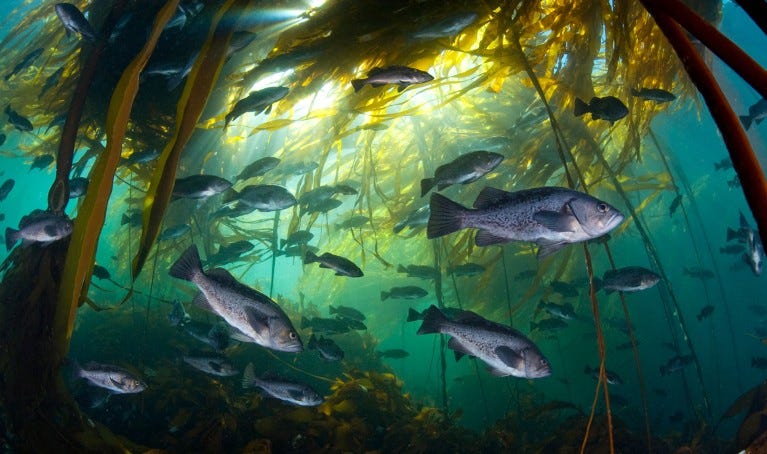
For some species, habitats are seasonal or vary from year to year. In such cases, creating a large MPA can offer a buffer, says Will White, a fisheries ecologist at Oregon State University. For example, biologists are beginning to see moving regions of hypoxia (low levels of oxygen) in the water during the summer off the west coast of North America, pushing fish and invertebrates to follow the oxygen. Governments should design MPAs large enough to encompass such shifts, he says.
Ocean conditions change from year to year as well, and that has a big effect on fish and vertebrate reproduction in temperate waters, such as those off the west coast of Canada, says White. Larger MPAs offer a safety net.
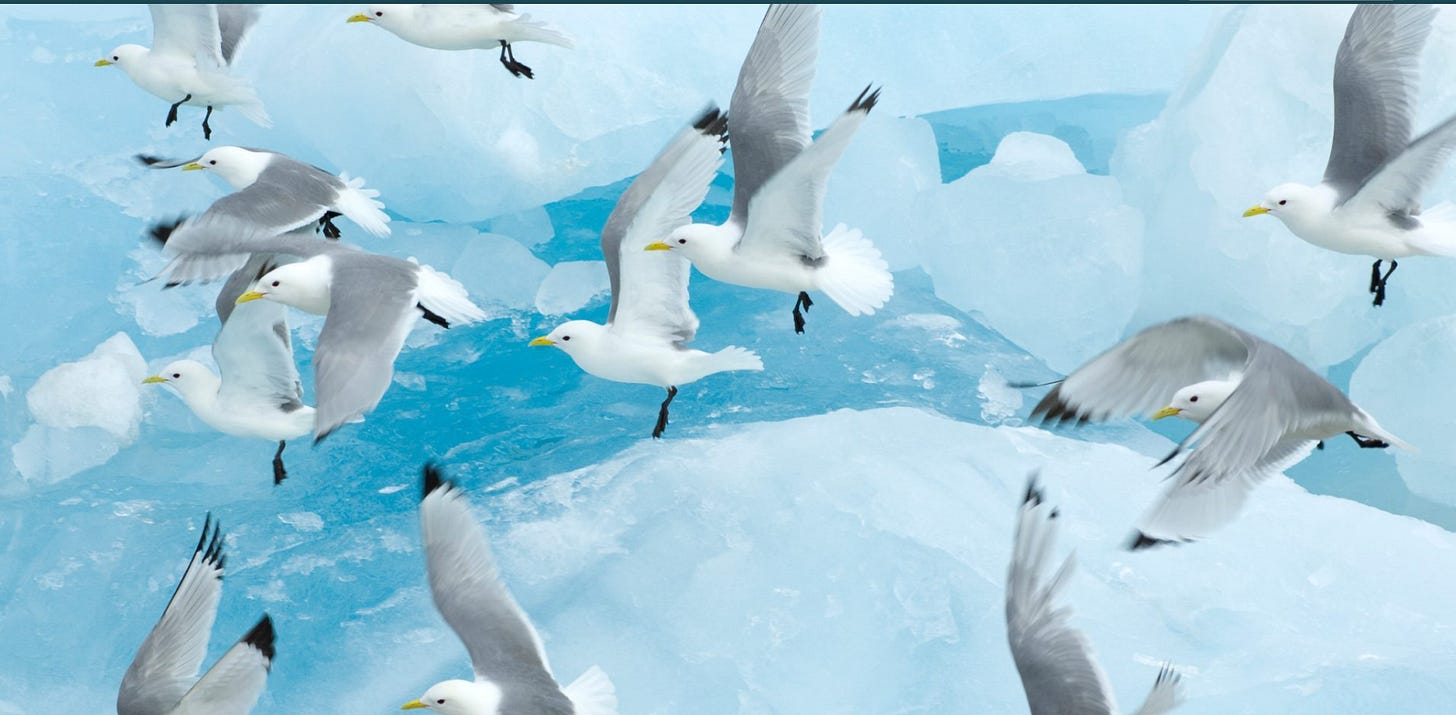
One of the best ways to provide for diversity is through a network approach: multiple protected areas across latitudes and at varied depths, between which species can move as environmental conditions change.
When catastrophic events such as heatwaves or large storms hit, a network acts as a “spatial insurance policy,” White says, adding that these events are expected to increase with climate change. If a population of kelp is knocked out in one area, for example, it may survive in another MPA, allowing it to recolonize the first.
We talked about biodiversity, collapsing fisheries, and much more:
Aichi Biodiversity Targets
- Strategic Goal A: Address the underlying causes of biodiversity loss by mainstreaming biodiversity across government and society
- Strategic Goal B: Reduce the direct pressures on biodiversity and promote sustainable use
- Strategic Goal C: To improve the status of biodiversity by safeguarding ecosystems, species and genetic diversity
- Strategic Goal D: Enhance the benefits to all from biodiversity and ecosystem services
- Strategic Goal E: Enhance implementation through participatory planning, knowledge management and capacity building
We discussed just how bad off the oceans are, me bringing up a film I used in my college writing classes and work as sustainability director in Spokane:
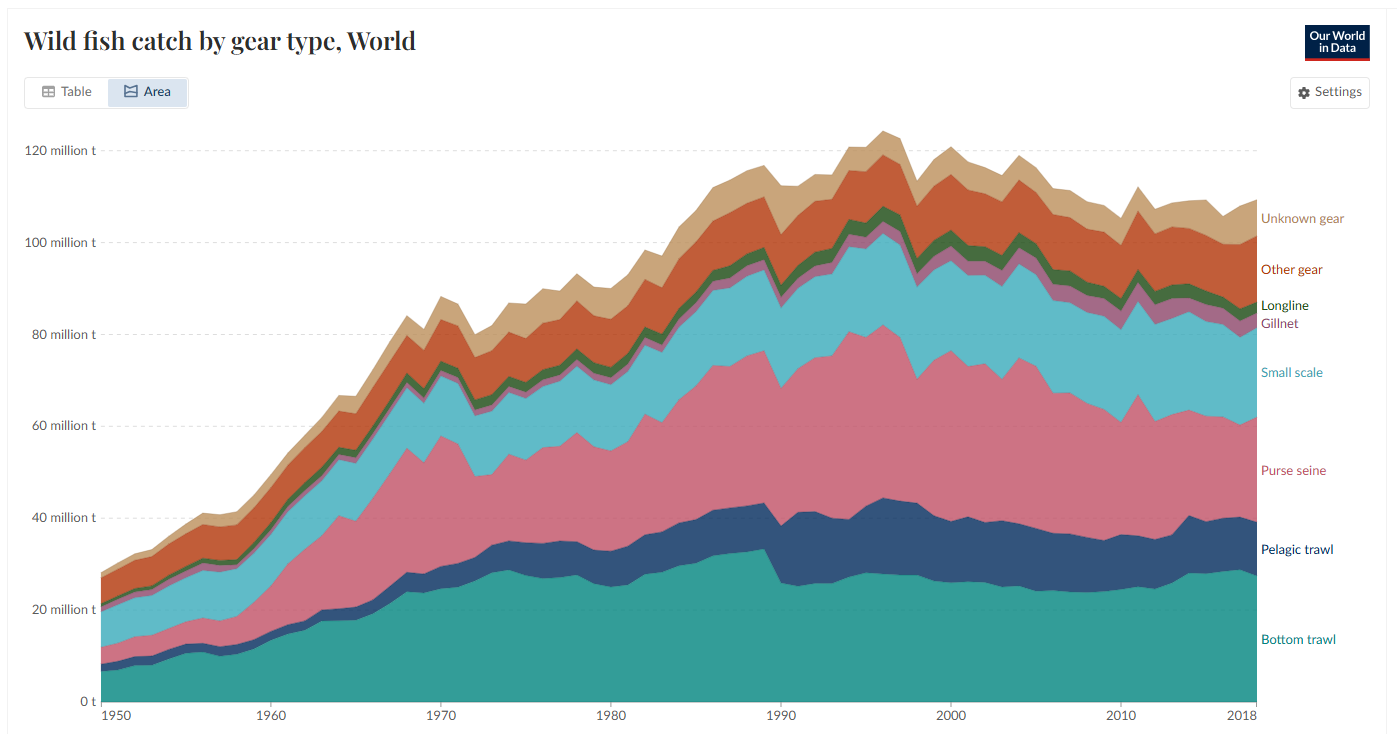
Long-term trends in fish catch
Most records of global fish catch only date back decades. But, of course, fishing is an industry that dates back much further.
We don’t have good global records that go so far back in time, but we can draw upon data from some rich countries that have statistical records dating back centuries. This gives us insights into how modern-day fishing compares to the more distant past.
In the chart here, we see five centuries of cod catch in Eastern Canada.1 These fishing records date back to the year 1500. We see that fish catch started to increase from around 1700 through to the mid-20th century. It peaked in 1968 before a collapse in fish stocks led to a dramatic decline. In fact, fisheries were forced to close 24 years later, in the early 1990s. Since then, stocks have not been able to recover due to the reopening of fisheries and their overexploitation afterward.
Lots of elephants in the room:
Statement by the Executive Secretary of the Convention on Biological Diversity, Astrid Schomaker, on World Health Day (7 April 2026)
Theme: “Together for health. Stand with science.”
“Together for health. Stand with science” is a call to action the world must heed. In these geopolitically fraught times, in which science and multilateralism have been facing strong headwinds, reflecting on their vital importance for our common future is crucial.
Advancing the One Health approach—which recognizes that the health of people, animals, plants, and ecosystems are interdependent—requires that policies and action be grounded in science, not conjecture. It also requires international cooperation, because pandemics, antimicrobial resistance or the nefarious impacts of biodiversity loss, pollution and climate change do not stop at national borders.
The science is clear. The diversity of genes, species and ecosystems constitutes a foundational determinant of the health of nature and all people. We know, for instance, that biodiversity loss is exacerbating infectious disease outbreaks that account for approximately 16 per cent of all deaths globally, and 44 per cent of deaths in low-income countries.
Invasive Alien Species are one of the top drivers of biodiversity loss. According to the Intergovernmental Science-Policy Platform on Biodiversity and Ecosystem Services (IPBES), 85 per cent of them have adverse impacts on human health and wellbeing.
In December 2022, COP 15 of the CBD delivered the Kunming-Montreal Global Biodiversity Framework (KMGBF), the world’s blueprint to halt and reverse biodiversity loss. By adopting it, governments representing most nations of the world chose to stand with science and work together towards a vision of unprecedented scale and ambition: living in harmony with nature.
The KMGBF is articulated around 23 targets that contribute to strengthening the ecological foundation sustaining human health and well-being. Target 11, in particular, structures global efforts to restore, maintain, and enhance nature’s contributions to people, including the health benefits that flow from thriving ecosystems.
Adopted at COP 16, the Global Action Plan on Biodiversity and Health constitutes a vehicle for the implementation of the Kunming-Montreal Global Biodiversity Framework through the One Health approach. It contains measures to prevent zoonotic and non-communicable diseases and promote healthy ecosystems.
We at the Secretariat of the CBD are working with our partners at the World Health Organization to support the implementation of the Global Action Plan as an enabler of integrated, cross-sectoral policies that deliver biodiversity and health co-benefits for people, animals, plants and ecosystems.
The international One Health Summit, taking place this week, six months ahead of an implementation-focused COP 17 of the CBD in Armenia, is expected to renew global commitment to science and multilateral cooperation. Both are sorely needed to accelerate the implementation of the KMGBF—the world’s most effective health insurance policy for nature and for people.
*****
- Multiple-Use MPAs: These allow for sustainable activities, such as managed recreational or commercial fishing, diving, and boating.
- No-Take Reserves: The strictest form of MPA, where all forms of resource extraction (fishing, collecting, mining) are prohibited. While these offer the highest level of ecosystem recovery, they currently cover less than 3% of the global ocean.
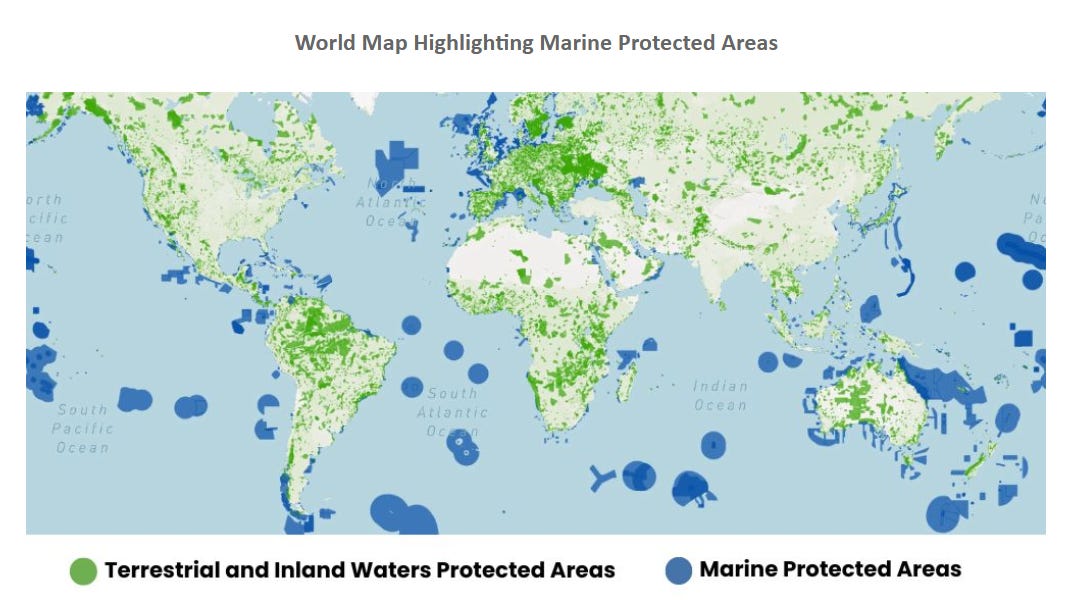
[Marine Protected Areas (MPAs) are designated regions of the ocean where human activities are restricted to safeguard vital ecosystems and preserve marine biodiversity. As pressures from overfishing, pollution, and climate change escalate, MPAs play an important role in ensuring the health of our oceans. These areas protect critical habitats and help preserve and restore damaged marine environments.]
White believes in systems thinking and holistic planning: White says that decision-makers should also be thinking about what happens outside MPAs. For example, many ocean animals reproduce by casting their larva into the currents, which are being sped up and slowed down by climate change. “We’d be better off if we could think about the whole system at once, instead of just trying to do MPAs in isolation.”
Here’s his talk at the Hatfield, in Newport, Oregon, as part of OSU’s marine sciences program:
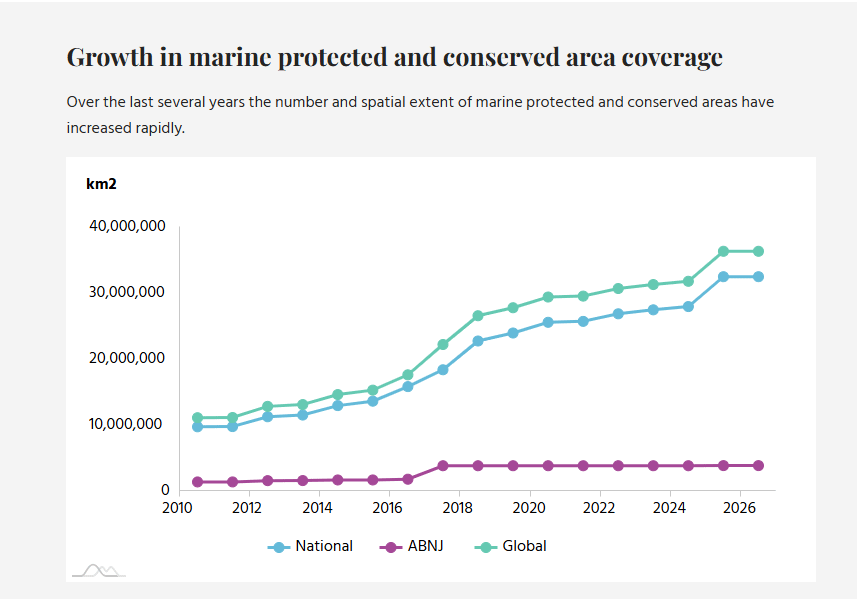
As of 2025–2026, approximately 8.2% to 9.6% of the world’s oceans are covered by marine protected areas (MPAs), encompassing over 16,000 sites and nearly 30–35 million square kilometers. While coverage is increasing, only about 3% of the ocean is considered fully or highly protected, falling short of global 30×30 targets.
30×30 Target: Almost 200 nations committed in 2022 to protecting 30% of Earth’s lands and waters by 2030.
The global ocean includes areas within national jurisdiction (National Waters) and those in international waters (Areas Beyond National Jurisdiction (ABNJ)). National waters make up 39% of the global ocean. At present, 23.01% of this area is within protected areas and other effective area-based conservation measures (OECMs). ABNJ make up 61% of the global marine area or nearly half of the Earth’s surface. Currently only 1.45% of this area is within protected areas and OECMs. Located beyond the jurisdiction of any single country, these protected areas and OECMs have been designated and reported to Protected Planet by secretariats of international conventions and frameworks of cooperation on behalf of their member states.
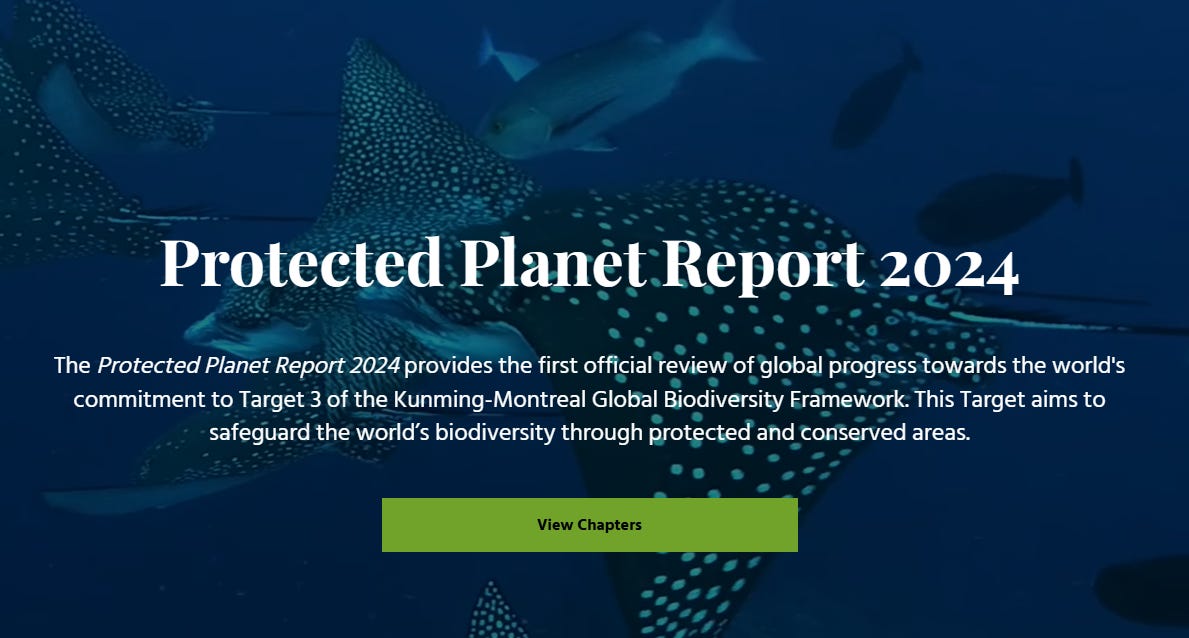
The Protected Planet Report 2024 is the first report to fully assess the global status of protected and conserved areas in the context of Target 3 of the Kunming-Montreal Global Biodiversity Framework. The report brings together the latest official data reported by governments and other stakeholders to the Protected Planet Initiative.
The aim of Target 3 is to expand the global network of protected and conserved areas to 30% coverage in a way that is equitable and that respects the rights of Indigenous Peoples and local communities. The aim is also to ensure that these areas are effective, well-connected and strategically located in the places that are most important for biodiversity and ecosystem services.
Each chapter in the report is dedicated to a separate element of Target 3. In this way, the document assesses progress not just towards 30% coverage but also the full scope of other important elements of the target, including towards improving the quality of protected and conserved areas around the world.
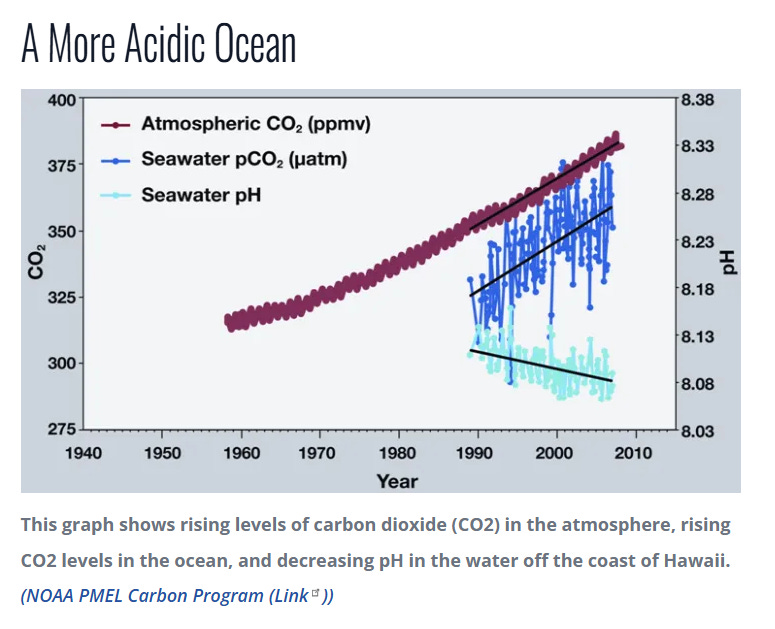
Will and I talked about ocean acidification, hypoxia, El Nino, ocean currents, flushing of the currents, and more:
Ocean acidification is sometimes called “climate change’s equally evil twin,” and for good reason: it’s a significant and harmful consequence of excess carbon dioxide in the atmosphere that we don’t see or feel because its effects are happening underwater. At least one-quarter of the carbon dioxide (CO2) released by burning coal, oil and gas doesn’t stay in the air, but instead dissolves into the ocean. Since the beginning of the industrial era, the ocean has absorbed some 525 billion tons of CO2 from the atmosphere, presently around 22 million tons per day.
And Zeldin and Trump LLC are dismantling USA protections for national parks, waterways, rivers, lakes, streams, beaches, reefs, oceans:
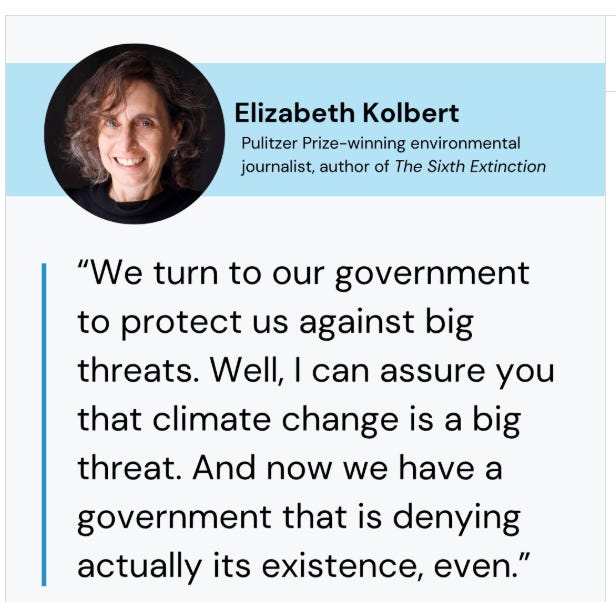
This is a sick culture now under the convicted Rapist in Chief:

“Carbon dioxide, which is required for life on Earth…is not a pollutant and never was.”
Trump’s EPA Chief Delivers the Keynote at a Conference of Climate Change Deniers
Lee Zeldin opened a meeting of the Heartland Institute, which has compared environmental advocates to the Unabomber.
“What happened for years and decades in this country is that the elite, the ruling class, the people who would run the agencies, the people who have decided that they are in charge of the science, the politicians, the biggest grifters: there would be a cabal that would decide exactly which model is the chosen model, which methodology is the higher methodology,” he said. “And if all of you in this room, if any of you in this room dare to challenge any of that, well shame on you.”
At a lecture Monday evening at the American Museum of Natural History in New York City, paleontologist Peter D. Ward laid out the argument that life as we know it serves to make Earth less habitable—a downward spiral that might spell the eventual end of life on the planet. Ward, a professor at the University of Washington, calls this the Medea hypothesis, named for the murderous mother of Greek mythology. It is a direct challenge to scientist and futurist James Lovelock’s Gaia hypothesis, which asserts that life constantly tweaks the dials on Earth’s control systems to keep the planet in a nice, habitable homeostasis.
Kick it with Will:
Will’s got a long CV, long list of publications. Here’s a recent one: Marine reserves can buffer against environmental fluctuations for overexploited but not sustainably harvested fisheries J. Wilson White, D. Patrick Kilduff, Alan Hastings, Louis W. Botsford
Abstract
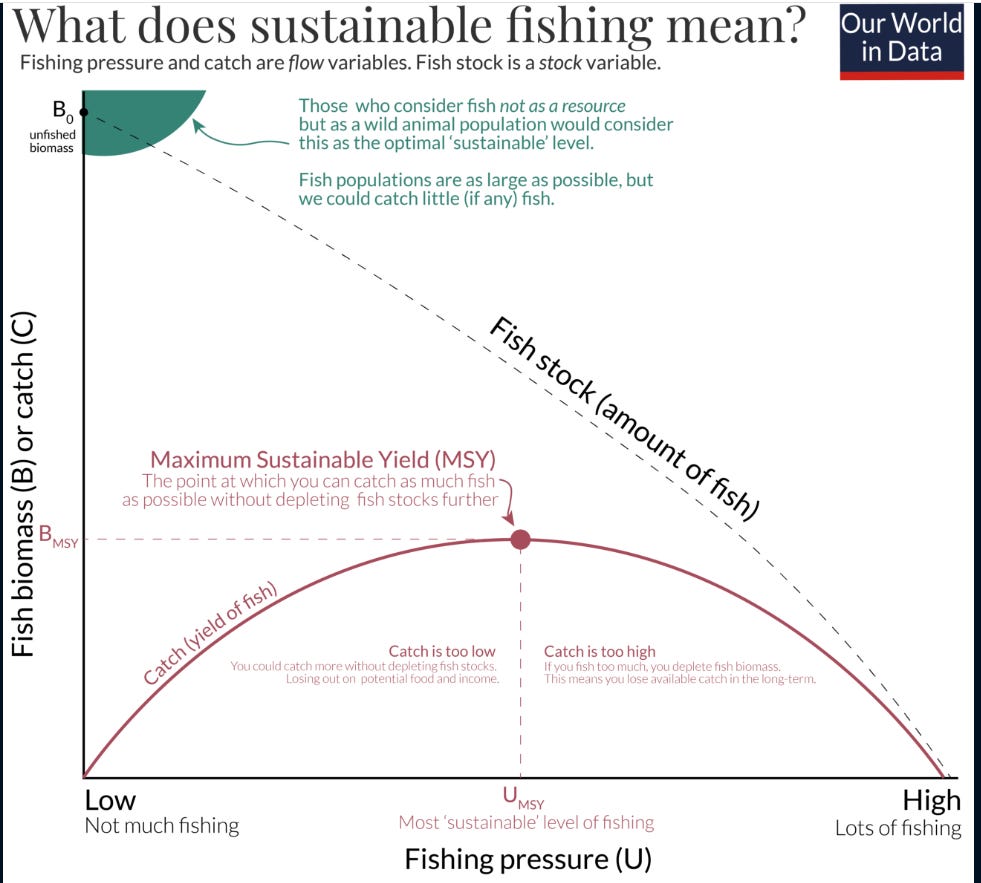
Globally, decision-makers are seeking management levers that can mitigate the negative effects of climate change on ecosystems that have already been transformed from their natural state by the effects of fishing. An important question is whether marine reserves can provide buffering (i.e., population-level resilience) against climate disturbances to fished populations. Here, we examine one aspect of this question, by asking whether marine reserves can reduce the variability in either overall biomass or in fishery yield, in the face of environmental variability. This could happen because greater reproduction of longer-lived, larger fish inside reserves could supplement recruitment to the fished portion of the population. We addressed this question using age-structured population models, assuming a system where some proportion of the coastline is protected in marine reserves (0%–30%), and the remainder is fished (at a range of possible harvest rates). We modeled populations with sedentary adults and dispersal via a larval pool. Since recent extreme climate events (e.g., marine heatwaves) have reduced juvenile survival for some fish species, we assumed that environmental variability affected the survival of the first age class in our model. We viewed population variability as a question of buffering, measured as the proportion of time a simulated population spent below a target reference point, with the idea that marine reserves could prevent the population from reaching low levels in the face of fishing and environmental variability. We found that fisheries with more area in marine reserves always had less variability in biomass. However, adding marine reserves only reduced variability in fisheries yield when the fished part of the population was being harvested at a rate exceeding the maximum sustainable yield. This new result on reducing variability is in line with previous findings that the “spillover” effects of marine reserve benefits to fishery yields only accrue when the fishery outside reserve boundaries is being overharvested.