







 For many socialists and revolutionaries for a long time, the “working class” has been seen as THE revolutionary group. Karl Marx in the 1840s was among the first to identify the working class as a key sector, particularly the industrial working class which was growing in numbers in the mid-1800s as the industrial revolution advanced in Europe and elsewhere. Marx saw this sector of the population as the key revolutionary sector for several reasons.
First, industry was concentrating large numbers of people, by the hundreds and thousands, into factories where the workers shared the common experience of debilitating exploitation of their labor by the owners of the factories. Because of this shared common exploitation, over time the industrial working class, and other workers influenced by them even if not in as stark or clear-cut a situation as workers in large factories, would come to see the power in their hands due to their crucial role in the functioning of capitalist society. In Marx’s, and Friedrich Engels’, line of reasoning, and that of many revolutionaries who came after them, this situation was distinct from the realities of life for peasants/farmers, artisans and craftspeople who may have been poor and were definitely workers, but whose conditions of life did not teach them the lesson of collective organization as the means toward improving those conditions.
Marx saw this industrial working class growing to the point where there would be a vast gulf between the great majority of exploited workers and the tiny minority of private property-owning capitalists. In other words, over time the working class would become and would learn that it was the dominant class in terms of numbers. This, combined with the experience of working together in the factories and learning how to struggle together against the capitalists for improvements in their lives, were the major reasons for the Marxist determination that the unification and enlightenment, through experience and training, of the working class, particularly the industrial working class, was the way in which capitalism would be replaced by socialism.
On the face of it, there are transparent difficulties with a couple of the key components of this theoretical/strategic perspective when it comes to United States realities today. First, the number of workers in factories has been going down as runaway shops and exporting of jobs, automation, robots and computerization increasingly take over industrial processes within many industries. Right now we are facing a major escalation of this process through Artificial Intelligence, AI, and massive and destructive Data Centers. Related, the “industrial proletariat” is hardly the dominant group even within the overall working class, much less the population as a whole. Government workers, retail salespeople, office employees, health sector workers, truck drivers, those in so-called “service” industries—these are much more the types of jobs that are growing in numbers, and are projected to do so for years to come.
The US working class, however, those who own no significant income-generating property and must work for others for a living, is a decided majority, taking all of the many occupations and sectors into account. Estimates by economists who have studied this question put its total range at around 60-65% of the adult working population but others see it as higher.
Many of these working-class people are people of color, women and/or lgbtq+ folks, which is one reason why in our work for fundamental, systemic change, it is essential that our movement deal not just with “class issues” but also the issues of racism, sexism, heterosexism, and other “isms” that can keep us divided and weaker.
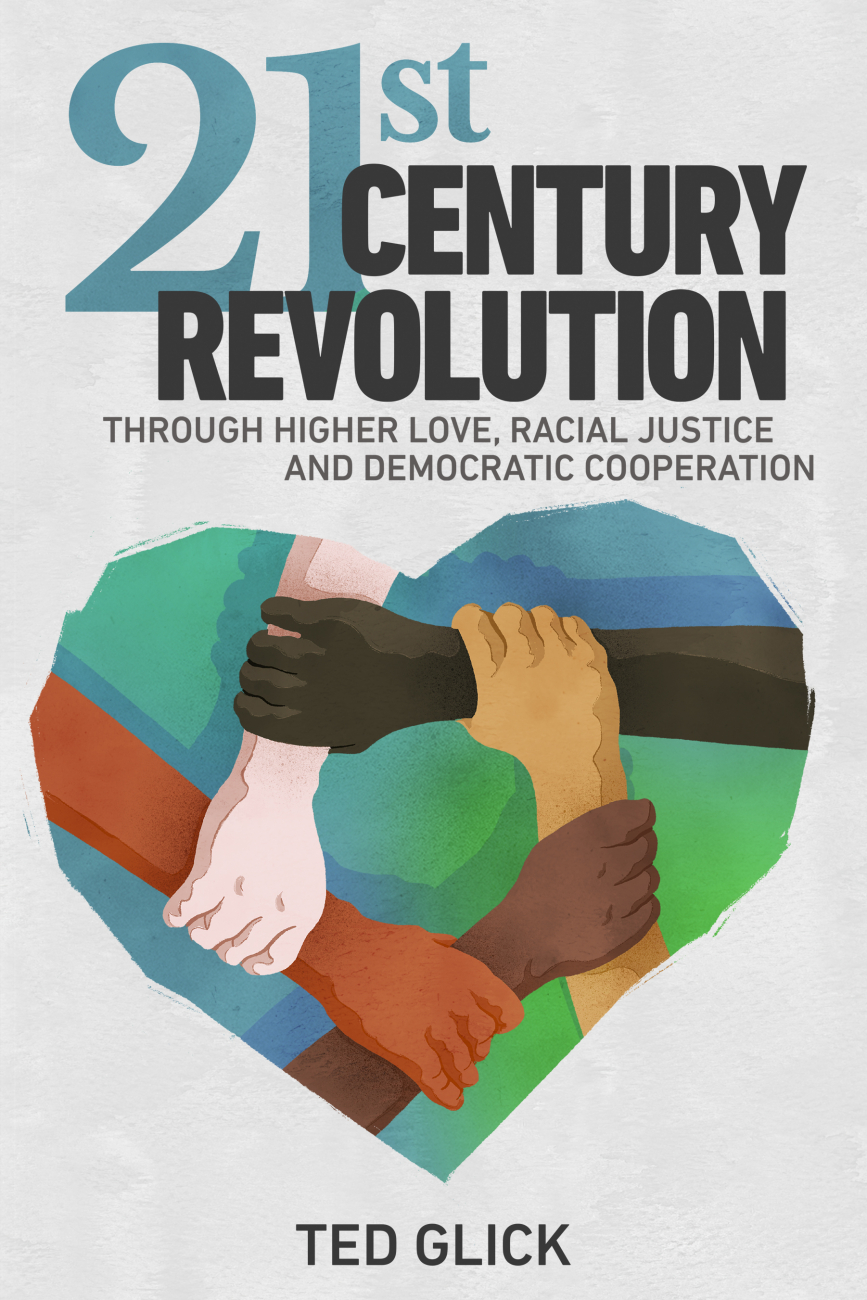
In my book 21st Century Revolution: Through Higher Love, Racial Justice and Democratic Cooperation, I do my best to analyze what I see as seven class groupings within US society, trying to help us get a handle on our particular realities in the USA as far as class differences. These are the seven:
-the barely-surviving working class
-the low-income working class
-the moderate- to middle-income working class
-the property-owning, small/medium business class
-the professional and managerial middle class
-the lower level, capitalist supporting elite
-the corporate/financial ruling class
What does all this mean as far as the question of how we bring about revolutionary, transformative change in the world?
First, we need to reaffirm the realities of class exploitation as central to how capitalism works. More specifically, we need to reject strategic perspectives which downplay the importance of class because the industrial working class, in the US and other economically advanced societies, is declining in numbers. We must also reject the argument which says that the correct approach to bring about major change is just to bring together all of the various sectors of the population who are putting forward their specific demands for change, without seeing class as a key element within that popular alliance.
The fact is that even though industrial workers are no longer a major portion of the workforce, virtually all workers in various categories of work continue to experience difficulties and injustice on the job. Many are forced to work at stressful, boring or dangerous jobs that are one small part of an overall set of fragmented tasks divided up among many workers. Most of the new jobs that have been and are continuing to be created are part-time, temporary or contract jobs with no or few benefits. Wages and benefits for full-time work are generally stagnant, but for the barely surviving and low-income sectors of the overall working class, they have been going down for decades.
Within the roughly 2/3rds of the population that makes up the working class, all three sectors of that class—the barely surviving, the low income and the moderate/middle income sectors—are important to the alliance that must be built, but it is the low-income sector that is both the largest numerically and, for various reasons, most consistently progressive, most open to a progressive consciousness, and capable of engaging in effective action.
Another major reason for the strategic importance of this sector is the reality that a significant percentage of the women workers and workers of color in the US workforce are to be found here. The dual or triple oppressions of class/race, gender/class, or class/race/gender, are powerful teaching tools about the true nature of the system.
The major divisions keeping the working class separated are racism, sexism and heterosexism. As a popular alliance emerges that unites the movements of people of color, the women’s movement, the lgbtq+ movement, the climate and environmental movement, young people, and the progressive elements of the labor movement and community-based working-class based movements, there is an arena for popular education on these and other divisive and backwards-looking ideologies. In the process of working together around commonly felt issues of concern, people grow and change. This can only benefit the working class.
A popular alliance will be of benefit to the progressive trade unions that continue to contend with middle-of-the-road to conservative elements within their ranks. By putting forward its program for resolution of the crises of US society, by organizing around that program and in support of its immediate demands on the government and on corporate power, by running candidates for office on that program, masses of working-class people both inside and outside of the trade union movement can be educated and galvanized into action. This can only help the process of trade union organization and working-class based community organization.
Of course, in order for these positive developments to take place out of the alliance building process, it is essential that there be significant involvement of working-class leaders in the leadership of the alliance. There will be other classes part of it, farmers, professionals, small businesspeople, ministers, others. The potential of the alliance will not be realized unless there is a broadly-based, multi-racial, multi-gender, multi-issue leadership representing not just the different movements and sectors of the population but especially the different sectors of the working class, 2/3rds or more of the population.
With such an alliance, and with sound strategy, tactics, methods of organizing and ways that we relate to one another, we can truly create another world.