





UPDATED on 28 August 2026.
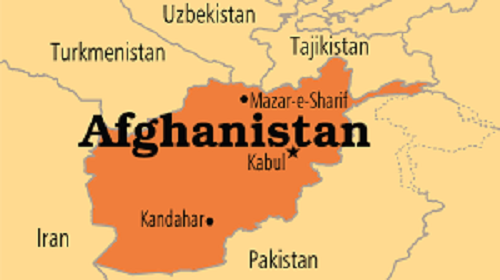
The situation in Afghanistan remains bleak. In late April 2021, US President Joe Biden announced an apparent withdrawal from the Central Asian country. However, the facts on the ground indicate that America’s longest war has merely been downsized. 16,000 military contractors and more than 1,000 US troops will stay in Afghanistan; aerial bombardments, drone strikes and Special Forces missions will continue.
Meanwhile, Taliban has been intensifying its attacks on provincial capitals, districts, bases and checkpoints across the nation. In the period of June 4-10, 2021, 263 Afghan security forces and 56 civilians were killed by the Taliban; at least 11 districts were captured by the group. The Pentagon is already considering seeking authorization to carry out airstrikes to support Afghan security forces if Kabul or another major city is in danger of falling to the Taliban.
Amid all the bloodshed and chaos, a central question arises: how did Afghans get caught between two exceedingly lethal military forces – one that uses suicide bombers and the other employing pilotless, heavily-armed drones? Responses to this issue are fraught with historical amnesia. People generally ignore the fundamental role of the American empire in giving rise to the current reality in Afghanistan.
Communist Revolt
In 1964, King Zahir Shah introduced a new constitution that opened a limited space for parliamentary politics and became associated with the period later called the “New Democracy.” Political forces subsequently crystallized around three broad currents: the People’s Democratic Party of Afghanistan (PDPA), which divided in 1967 into the Khalq and Parcham factions; Islamist organizations, including Jamiat-i-Islami, which emerged as an important force in the 1970s; and constitutional nationalists associated with Muhammad Daoud, the king’s cousin. Daoud’s 1973 coup ended the monarchy and established a republic.
The new republican order confronted Islamist opposition, while political repression pushed several opponents abroad. Some of these exiles developed relationships with Islamist networks in Pakistan and with Saudi institutions. Afghanistan’s domestic crisis deepened through political conflict, corruption and disputes over land and social reform. In April 1978, tensions culminated in a military seizure of power that brought PDPA leader Noor Mohammad Taraki to the head of government. The episode became known as the Saur Revolution and placed a communist-led administration in control of the state.
Imperialist Destabilization
The new government pursued an ambitious programme of social transformation, including secular reforms and expanded access to education. These measures encountered fierce resistance from sections of the rural elite, religious leaders and landowners. Opposition became especially intense in parts of the countryside, while the government struggled to extend its authority beyond major urban centres. The uprising at Herat in March 1979 demonstrated the scale of the emerging crisis. The United States, Pakistan and Saudi Arabia subsequently became central external supporters of forces opposing the Afghan government.
Washington had already decided to assist anti-government forces before the Soviet military intervention. In July 1979, the Carter administration authorized covert assistance to Afghan opponents of the PDPA government. The policy sought to increase pressure on an administration increasingly dependent upon Soviet support. Pakistan supplied training and logistical assistance, while Saudi Arabia contributed financial resources. The resulting external backing strengthened the insurgency and helped transform Afghanistan into a major arena of Cold War confrontation.
At the same time, the PDPA remained divided between Khalq and Parcham. Taraki and Hafizullah Amin represented the dominant Khalq leadership, while Babrak Karmal was associated with Parcham. The rivalry weakened the government as insurgent activity expanded. Parcham officials were removed from influential positions, with several sent abroad as diplomatic representatives and others subjected to imprisonment or execution.
Throughout 1979, Afghan leaders repeatedly sought greater Soviet assistance as the insurgency intensified. Moscow initially hesitated to undertake a full military intervention, partly because of the diplomatic and strategic costs it anticipated. The internal struggle between Taraki and Amin altered the situation. Amin eventually displaced Taraki and had him killed in September 1979. Soviet leaders regarded the political instability within the PDPA as a serious threat to the government’s survival and became increasingly concerned about Amin’s independent ambitions.
On December 25, 1979, Soviet forces entered Afghanistan. The intervention changed the character of the conflict. What had previously been an expanding insurgency against the Afghan government acquired a much clearer international dimension, allowing Islamist fighters to present themselves as defenders of Afghanistan against a foreign military power. Washington and its allies could subsequently frame the conflict as part of a broader struggle against Soviet expansion, while the Afghan battlefield became increasingly important to international jihadist mobilization.
Rise of Taliban
The Soviet withdrawal in 1989 removed the principal external military force sustaining the conflict, yet Afghanistan remained divided among competing armed organizations. The foreign governments that had supported the anti-Soviet resistance subsequently pursued different interests. Pakistan sought a political order in Kabul that would give Islamabad substantial influence, while Iran, Russia and other states developed relationships with rival Afghan factions. Hekmatyar’s forces failed to secure decisive control, and the resulting fragmentation produced prolonged fighting.
Pakistan’s security establishment eventually placed greater emphasis on a new force drawn largely from religious students in the Pashtun areas. These fighters became known as the Taliban. The movement emerged publicly in 1994 and rapidly expanded through southern Afghanistan. Its political project combined a highly conservative interpretation of Islam with an effort to impose centralized authority over territories exhausted by years of warfare. Pakistani intelligence agencies played a major role in facilitating its expansion.
The Taliban captured Kabul on September 26, 1996. Its victory initially appeared to some foreign governments as a possible route toward restoring order after years of civil war. The movement instead established a highly repressive political system. The following day, former president Mohammed Najibullah, who had remained in the UN compound after leaving office, was killed. Women faced severe restrictions on education and employment, while the Taliban consolidated control over much of the country.
By the end of the 1990s, the Taliban government controlled most of Afghanistan, although it received diplomatic recognition from only a small number of states. Osama bin Laden and his organization also operated from Taliban-controlled territory. The Taliban’s protection of bin Laden became a central point of confrontation with Washington. After the September 2001 attacks, the United States invaded Afghanistan and subsequently maintained a large military presence there for two decades. The intervention removed the Taliban government while leaving behind a conflict whose political and military consequences continued long after the initial invasion.
On September 26, 1996, the Taliban conquered Kabul. The Clinton administration endorsed its takeover as the best prospect for restoring “stability.” The next day Taliban killed the communist President Mohammed Najibullah, expelled 8,000 female undergraduate students from Kabul University, and fired a similar number of women schoolteachers. As the mujahedeen closed in on his palace, Najibullah told reporters: “If fundamentalism comes to Afghanistan, war will continue for many years. Afghanistan will turn into a center of world smuggling for narcotic drugs. Afghanistan will be turned into a center for terrorism.” His comments prove all too accurate today.
By 1998, the Taliban controlled roughly 90 percent of Afghanistan and had established its authority over Kabul and most major population centres. Pakistan, Saudi Arabia and the United Arab Emirates were the only states to recognize the Taliban government formally. The regime also provided sanctuary to Osama bin Laden and al-Qaeda, whose presence became increasingly contentious after a series of attacks attributed to the organization. Following the September 11, 2001 attacks, Washington demanded that the Taliban surrender bin Laden. When the Taliban refused to comply with the American demand, the United States invaded Afghanistan in October 2001, removed the Taliban government and began a military occupation that lasted for two decades.
Conclusion
The US’s partial pullover from Afghanistan forcefully foregrounds the futility of imperialist interventions. In its quest to mold Afghanistan according to its own desires, America has left a murderous legacy – the creation of a jihadist Frankenstein, the conversion of an entire country into a charnel house, the rising toll of civilian casualties and the imposition of a government of thieves, embezzlers, and neoliberal functionaries. A decisive end to these brutalities does not seem to be on the cards for Afghanistan.