

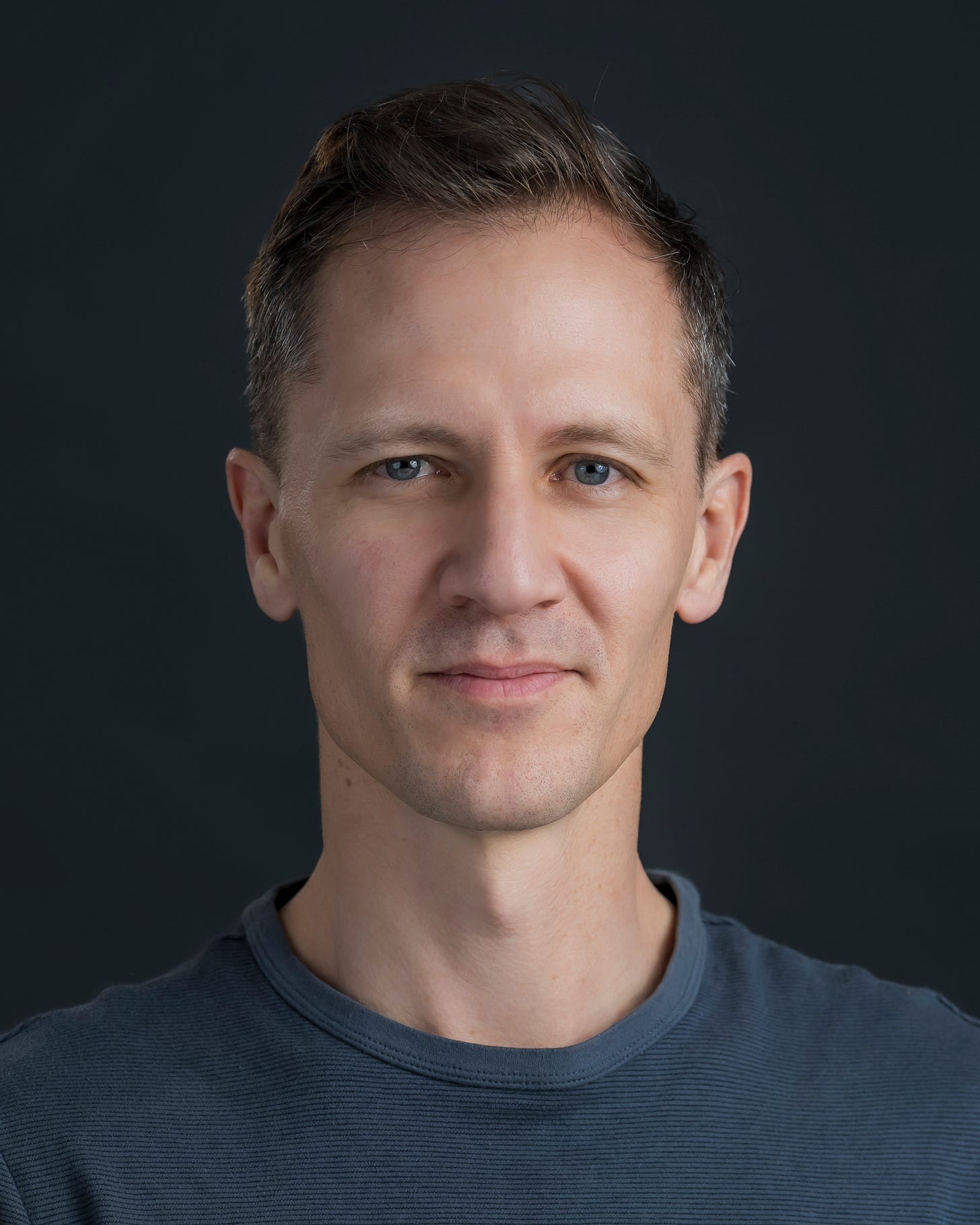
Pick your bloody connotation forked-tongue poison: Concentration Camp is what it is, no matter how much lipstick you put on the pig.
Formal and Legal Terms
- Jail: A place for short-term stays or people awaiting trial.
- Penitentiary: A large state or federal prison for serious crimes.
- Penal institution: A formal name for any correctional facility.
- Gaol: The traditional British spelling of jail.
- House of correction: A facility meant to reform minor offenders.
Informal and Slang Terms
- Slammer: A common slang word for prison.
- Jug: An older slang term for a lockup.
- Clink: Slang named after a famous old London prison.
- Cooler: Slang for a cell or holding area.
- Stir: Old-fashioned slang for being in confinement.
- Big house: Slang for a major state prison.
- Hoosegow: Slang from the Spanish word for jail (juzgado).
Military and Specialized Units
- Brig: A prison on a ship or in a naval facility.
- Stockade: A military prison camp.
- Guardhouse: A building for temporary military detention.
- Penal colony: A distant settlement used to exile and force-labor prisoners
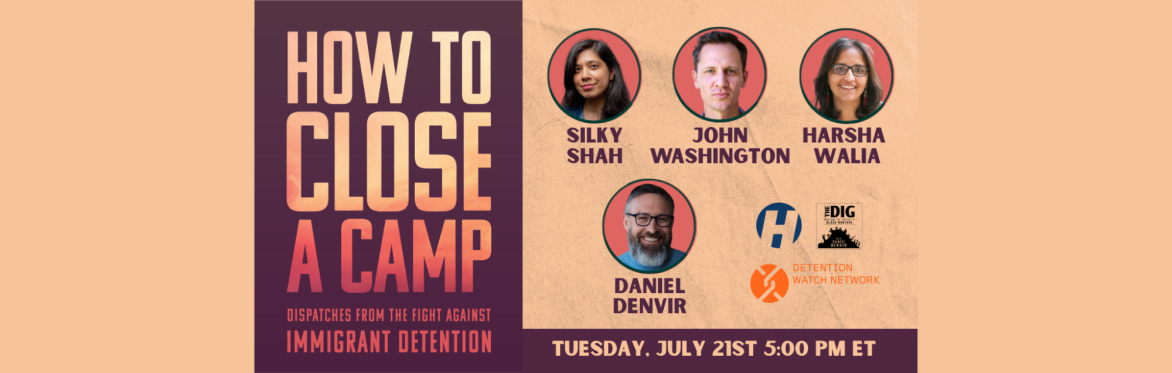

If you see these bastards as law-abiding citizens, below that is, then you have a serious mental deficit.
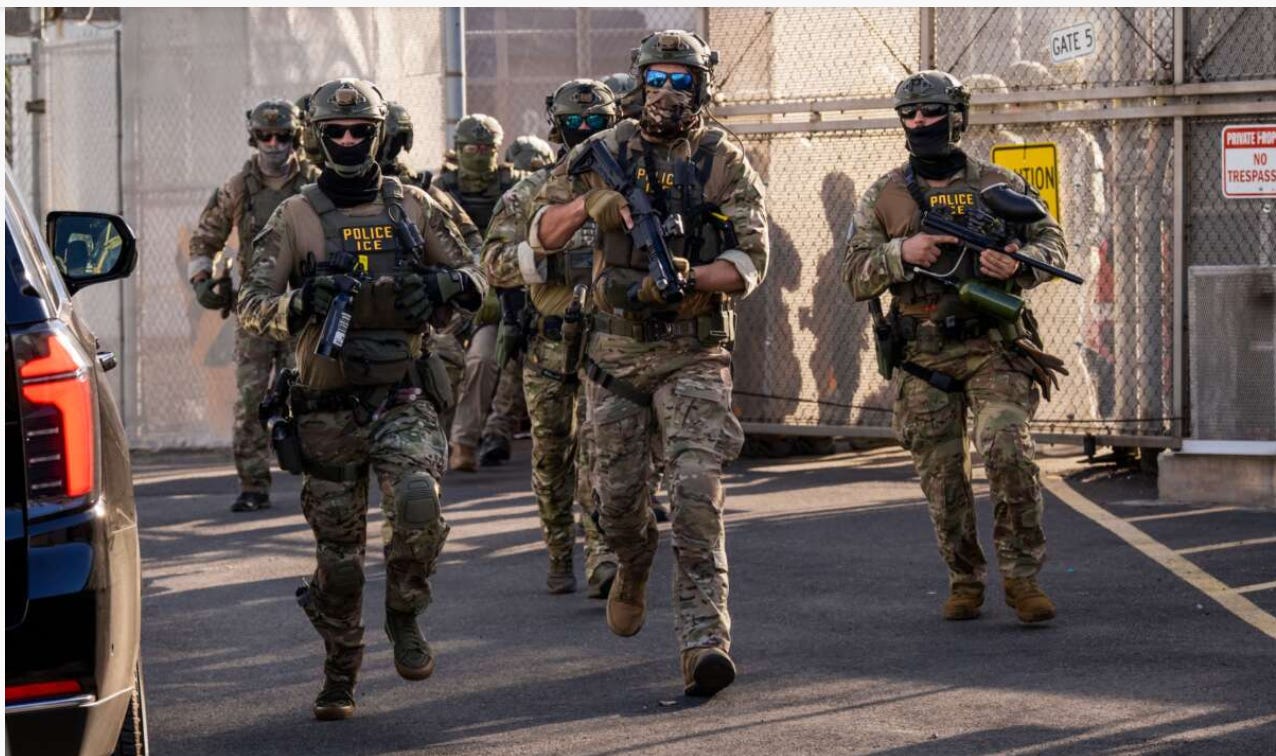
The cancer grows: People enter the California City Immigration Processing Center, the state’s newest and largest ICE prison, on March 25, 2026, in California City, California.
We talked about all of that bullshit about this country tis of thee really just another excuse for internment, reservations, land theft, open air prison, gulags, and in many cases, dungeons:
John blew his eyesight, his personal health, and his job writing this book. Not some “should you accept this assignment” Mission Impossible credo since John is both determined and smart about researching and ground-truthing.
- Good morning, Mr. Washington…”
- “Your mission, should you choose to accept it, involves opening the floodgates of what it is to be American and always dehumanizing ‘the other’ in a land of apartheid, castes and nobodies.”
- “As always, should you or any part of your psyche get caught up in supercharged empathy or even spirit killed, the world will disavow all knowledge of your actions.”
- “This message will self-destruct in five seconds. Good luck, Jonathan.”

A bit about the book’s origins…
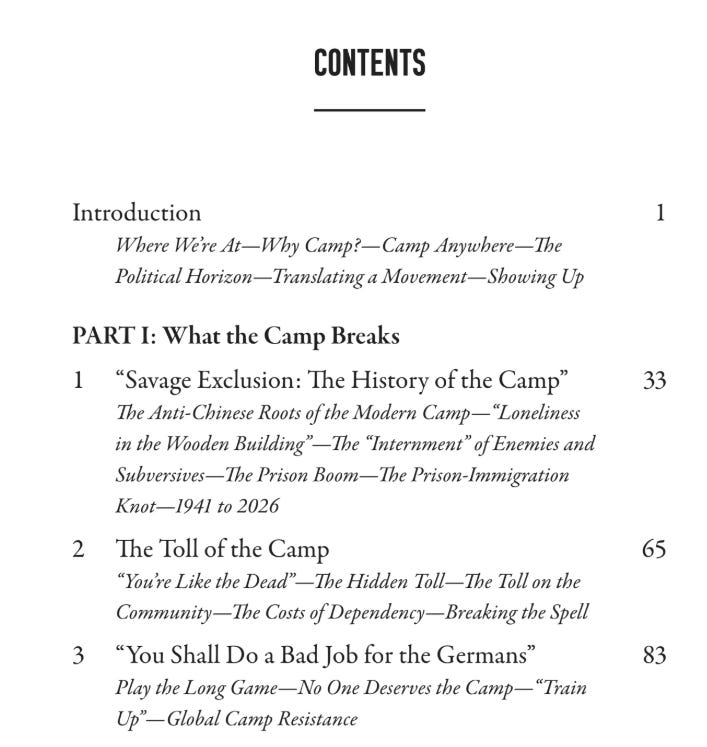
JW: My editor at Haymarket, the great Katy O’Donnell, approached me last summer and asked if I’d consider writing a “quick book” on the changing immigration landscape. We chatted a bit, I thought about it for a couple weeks, and then said yes. A few weeks after that, by late August, I got cracking: every early morning and every night for the next 130 or so days, with just a few exceptions, I steeped myself in the history and contemporaneous horrors of the immigration detention system, something in which — to mix culinary metaphors — I’d long been baking myself. I did dozens of interviews, read as many books and reports as I could cram in, and nearly calloused my fingertips clacking away at the keyboard. In the end, the book will have gone from initial concept to hitting the shelves in a little under a year. That rapidity — “crashing” the book, in the trade lingo — was only possible due to a dedicated crew of editors, copyeditors, sellers, publicists, and designers.
I also leaned into community: I worked with a handful of great researchers, sound-boarders, and preliminary editors. And, of course, the book is based on the ideas, work, and spirit of the many individuals and community groups I profile.
The work also took its toll, costing me my eyesight and my job.
Last January, about a week before I had to turn in the manuscript I woke up and couldn’t read the weather report on my phone: my vision had fuzzed. Washing out my eyeballs in the sink and a stiff coffee didn’t help. That same morning, so I wouldn’t miss a day, I went to the pharmacy and bought reading glasses — I’m wearing them (actually slightly less dorky versions of) as I write this line. And as for the job: long story, but, basically, a couple months into drafting, editors at my last gig thought the book was too “partisan” and made me decide between writing the book or writing for them. It felt like getting knee-capped mid-race. And suddenly, on top of my already overspilled days, I had to find time for job searching. I barely slept last December.
But my petty personal costs were nothing compared to the emotional havoc, physical suffering, and death wrought by the immigration enforcement regime. And those hazards, and how to respond to them in a productive way, are what this book is about.
I focus on immigration detention for a couple of reasons, one of them recently articulated by a former immigration official. Speaking to the New York Times about the flailing warehouse detention approach, the official said, “The warehouses were a quick concept to scale up mass deportation.” He continued: “Immigration detention is necessary for a successful deportation plan, and this was the easiest point for the Democrats to attack and stop that effort.”
And it may be the “easiest” point, but blocking a new camp from opening ain’t easy. Even harder is closing an already operating camp.
The immigration camp is the linchpin of the system: mass arrests and mass deportation simply can’t function without the camp. And the camp itself, both symbolically and in practice, uniquely captures the logic of immigration enforcement. As I show in the book, the camp and the wall — as well as earlier iterations of each — have been the core tools of colonialist efforts to divide, immobilize, and deport for over 500 years. This book, and my last — The Case for Open Borders — are about knocking both of them down.
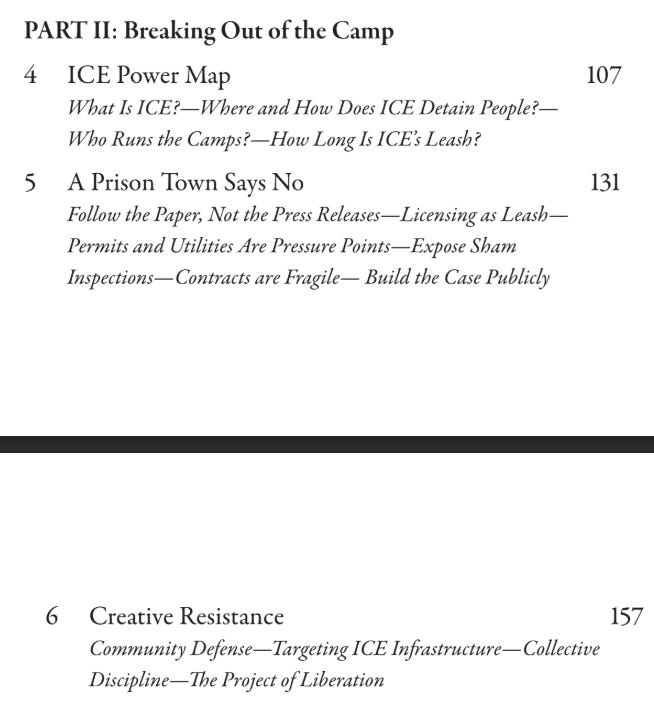
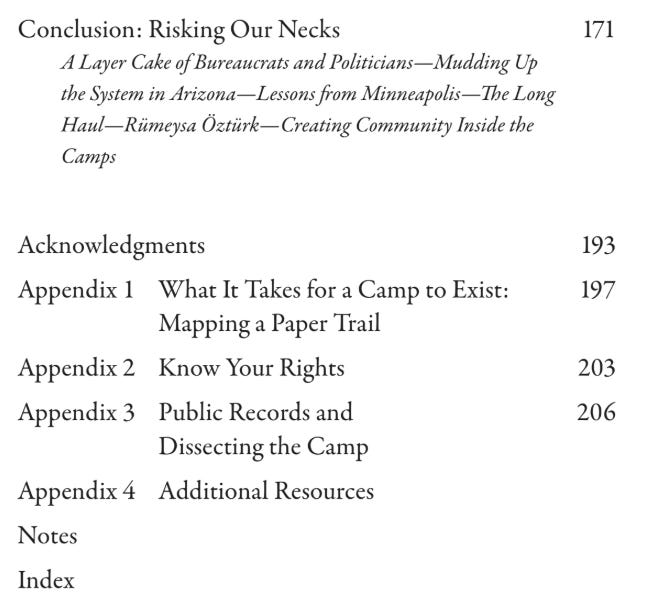
I get into all of this history and theory, focusing on what immigration activists have modeled to end the camp system, in the book. And I hope you give it a read.
Buy or borrow a book for yourself, your neighbor, your mother. Scroll down to the Resources section of the book’s page for a handy list of organizations to plug into or support, as well as know your rights info and how to dissect a camp, all of which is included in the book’s appendices.
Buying books, by the way, is what makes writing books possible. So please support your independent publisher and your independent writers.
was the sugar so sweet
you forgot the sugarcane?
—Anne Yukie Watanabe, “instructions to, 1942,” collected in The Gate of Memory: Poems by Descendants of Nikkei Wartime Incarceration
Abolitionists were original and critical
thinkers on democracy, not simply romantic
reformers who confined themselves to appeals
to the heart.
—Manisha Sinha, The Slave’s Cause
An excerpt, on efforts to close the camp, from the end of the Introduction:
Always alive has been the resistance. For as long as the camp and its attending massacres and ethnic cleansings have been wielded, they have been met with rejection. People have pushed back: walked away, cried foul—refused to be contained.
Across half a millennium, the struggle has never only been about land—who has the right to claim, control, protect, live on, or exploit it—but also about movement: the right to remain and the right to leave. After all, the first instinct of conquest is to dictate movement—forcing some to scatter, others to stay penned in. A detention cage and the threat of deportation is the most absolute form of controlling motion, the distillation of colonizing logic. The body is fixed, the horizon narrowed, and the possibility of movement foreclosed.
Yet even in the darkest hours, lines have been walked, rivers crossed, boundaries not militarized but celebrated. Historian and ethnobotanist Gary Paul Nabhan, in Against the American Grain: A Borderlands History of Resistance, writes of the Yaqui resistance to the first Spanish colonizers’ incursions into their native lands in modern-day Arizona and Sonora: to safeguard their territory, Yaqui elders and warriors took the approach of “singing the boundary” of their homelands. They stood guard, shot poisoned arrows, danced, and repelled an invading army of slavers. They pushed back and kept the Spanish away for over seventy years, and they have never ceded their territory. Against the machinery of confinement, there persists the slow, stubborn knowledge that both movement and life itself are freedom, and that to protect them—whether with sail or song—is to resist the walls closing in.
In contemporary philosopher Thomas Nail’s Theory of the Border, the border is not a line but a machine—an ever-moving apparatus that sorts, slows, and accelerates bodies according to the needs of power. The walls are not simply built and then left to stand; they churn, adapt, and extend their reach deep into the interior of a nation and far beyond the frontier. The camp is one of the wall’s purest expressions, a place where motion is not just halted but transformed into a slow attrition of life. To resist such a machine requires more than opposition at its edge; it demands a reimagining of movement itself as a collective, shared right—one that neither the state nor the border can legitimately grant or deny. In this sense, every march, caravan, legal fight, online campaign, or pot-and-pan rally is not only an act of refusal but a reclaiming of the world as a space meant to be shared and traversed.
And highlighting one particular event because I so love my home, Tucson:

What is a camp? What are these tools of containment and torture, these embodiments of fear and banners of nationalist violence? A camp—which in this book will largely refer to prisons or jails built or operated to lock up migrants—is society seeing certain groups of people as unwanted and disposable. A camp is a distraction from entrenched political failure—scapegoating “the other” for societal deterioration, underfunded public education and declining literacy, expensive and inconsistently available healthcare, and ethical anomie. A camp is a refusal to take responsibility for or reckon with the cataclysm of climate change, war, economic terrorism, and the normalization of pervasive neglect, disregard of the rule of law, and chasmic and ever-widening inequalities. A camp is a society turning its back on a basic sense of morality.
A camp is a man who never tastes fresh fruit and barely sees the sun for five years.
A camp is a 16-month-old baby losing a third of his body weight from diarrhea, and his mother, begging camp doctors for help, sent away with Pedialyte.
A camp is a man with epilepsy sent to solitary confinement as punishment for requesting his medication, then dying alone in a cell from a seizure.
A camp is a Venezuelan hairdresser kidnapped by ICE and rendered to El Salvador, where he is sent to the Terrorism Confinement Center, has his head shaved by masked men, is beaten, raped, and repeatedly told, “You’ll never leave this place alive.”
The book’s undergirding is about bearing witness and just showing up to witness and protest and even to monkeywrench.
JW: We would do well to learn the lessons that Indigenous communities in struggle—the Yaqui pushing back the Spanish slavers in the sixteenth century, the American Indian Movement patrolling the streets of Minneapolis in the 1960s—have long been offering: Survival itself is a form of sacred resistance. Such generational and inclusive inheritance is key to the resilience necessary to shut down the camps. We survive and resist together.
Hmmm. Organize, uh?
Immigration and Customs Enforcement (ICE) is buying up to $20 million worth of gloves that can allow agents to issue a painful electric shock to force people into compliance, granting the agency yet another tool as it extrajudicially abducts and kills people across the country.
According to a notice posted by the Department of Homeland Security on Monday, ICE is planning to spend between $10 million and $20 million on the gloves. The product is made by a Kentucky-based company known as Compliant Technologies LLC, and is called the “Generated Low Output Voltage Emitter,” or the G.L.O.V.E.

SO, in the end, the camps, the warehouses, those giant dirty dungeons, all part of the proving ground. Seeing what stress positions the US public at large and the activists and the ones subjugated to the hellholes can take.
ICE describes the technology as a “conductive distraction and de-escalation” device, intended to help officers gain compliance from people who are resisting arrest. The company says the gloves can disrupt muscle coordination within seconds.
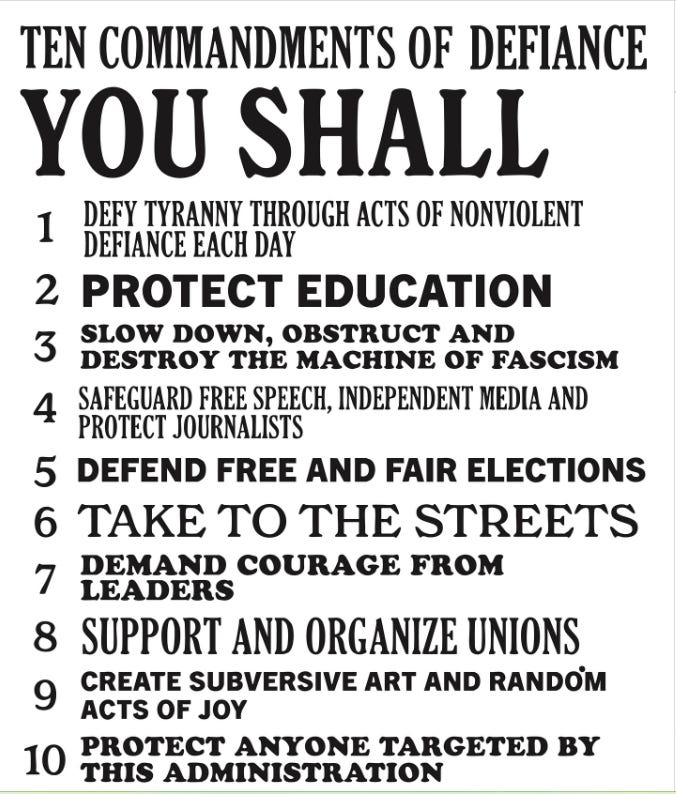
A set of non-cooperation guidelines written during World War II by 17-year-old Danish student Arne Sejr. Typed and secretly distributed as a pamphlet following the 1940 Nazi occupation, these rules became an influential blueprint for everyday civilian defiance and passive resistance.
So reads one of the Danish “Ten Commandments” of resistance. As part of the Nazis’ blitzkrieg through Europe, their army invaded Denmark in 1940, taking over the country in just a few hours. And though the invaders met no military pushback, regular Danes organized other forms of resistance, showing that even where a traditional military stand-off was unwinnable, creative sabotage had its place. Danes staged worker slowdowns and two-minute work stoppages. They marched and sang resistance songs. And they distributed a list of commandments, including the above—protect anyone chased by the Germans—and:
- You must not go to work in Germany and Norway.
- You shall do a bad job for the Germans.
- You shall work slowly for the Germans.
- You shall destroy important machines and tools.
- You shall destroy everything which may be of benefit to the Germans.
- You shall delay all transport.
- You shall boycott German and Italian films and papers.
- You must not shop at Nazis’ stores.
- You shall treat traitors for what they are worth.
- You shall protect anyone chased by the Germans.
“Join the struggle for the freedom of Denmark!”
John has written deftly about many of the struggles of those working to close camps, and those inside the fucking chambers of horror, as part of his own journey writing the book:
John —
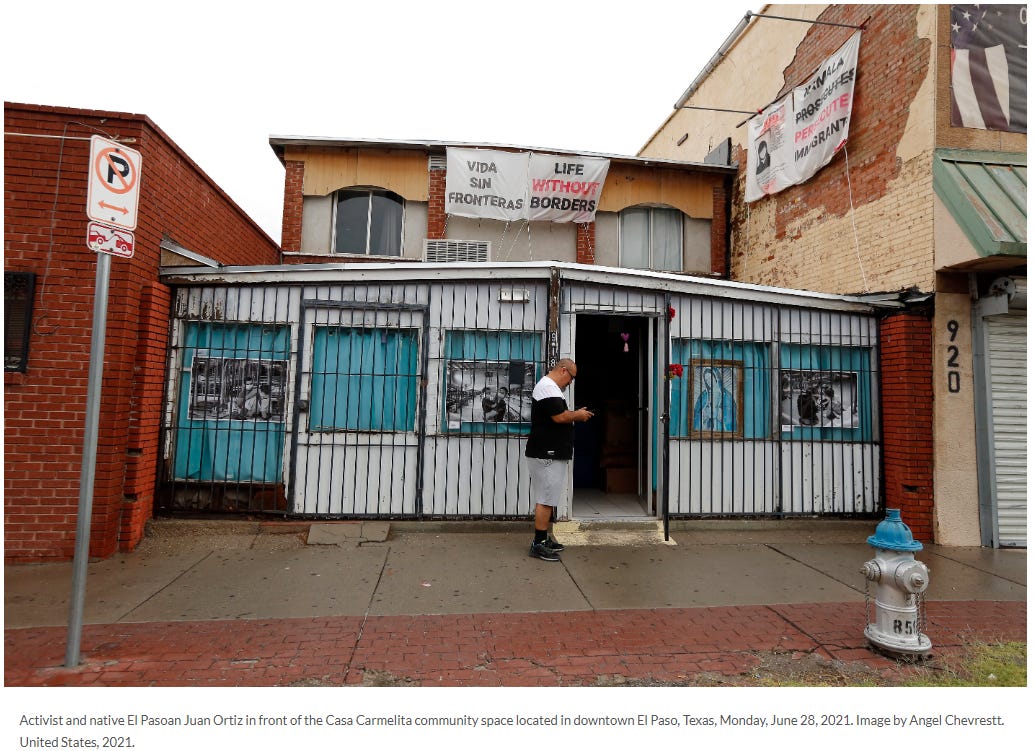
As community organizer and scholar Juan Ortiz, cofounder of El Paso’s Casa Carmelita, tells me,
“Come to assist, come to resist, but don’t come to witness.”
All are welcome, but by all, Juan means: all who are willing to be productive. In 2018 and 2019, Juan was on the front lines of community-led efforts to push back against a camp imprisoning children in Tornillo, Texas—many of whom were ripped away from their parents as part of the family-separation strategy—and has long organized to offer basic food and aid to migrants, as well as to push the abuses of ICE and Border Patrol into public consciousness. In 2019 he sounded the alarm, for example, to the plight of hundreds of migrants corralled by Border Patrol into an outdoor holding pen under a bridge in El Paso.
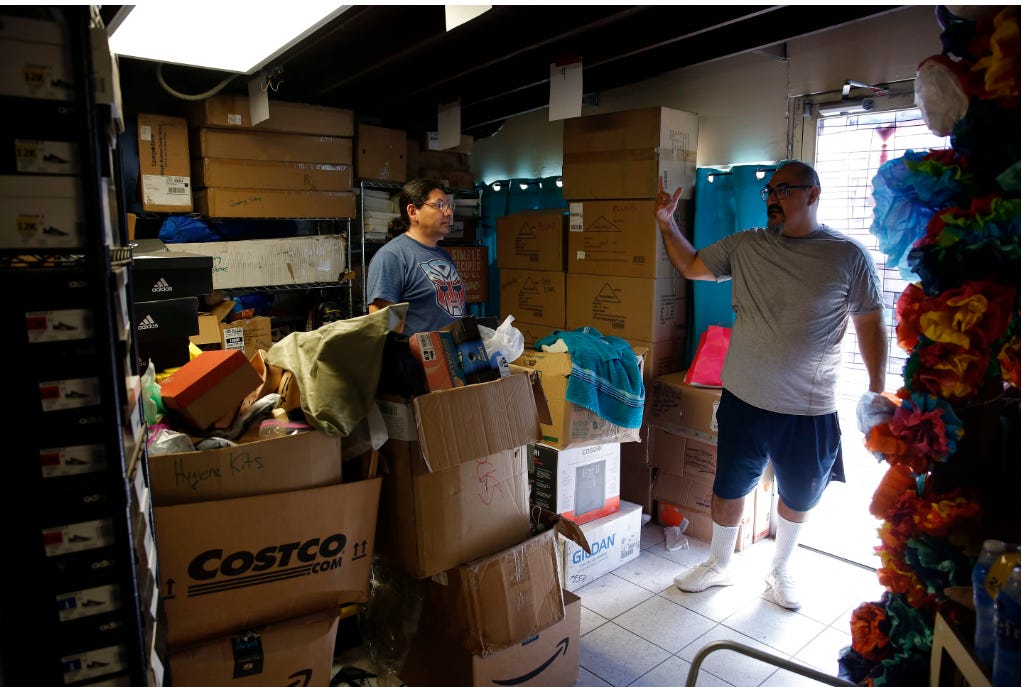
Juan grew up on the border and, from a tender age, was targeted—marginalized, scapegoated, and criminalized—along with many of his family members and neighbors.
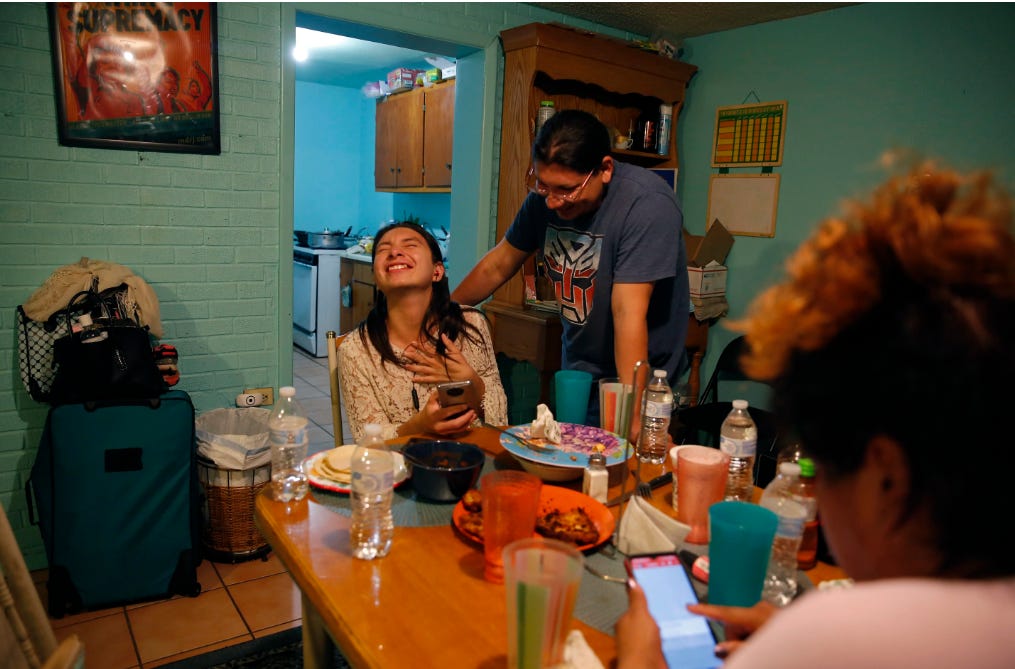
“I come from real not-fucking-around roots,” Ortiz tells me, which is partly why he pushes allies and advocates to take concrete steps. “Efficacy matters, you need a result, you need something tangible.” His focus is action, “not voyeuristic witnessing.”
“Come do some shit, don’t just stare,” Ortiz says.
“Do some shit” means fighting detention in coalition on the streets and town councils and state legislatures, as well as building towards a positive post-detention society.

[The Sister Cities/Ciudades Hermanas mural, located a block away from the Paso Del Norte border crossing in El Paso, Texas, Wednesday, July 14, 2021. The mural, created by LxsDos, the husband and wife art duo, Ramón Cárdenas and Christian Pardo Cárdenas, represents the historical and cultural bonds that El Paso and Ciudad Juárez, Mexico, share.]
Detention is a keystone in the government’s capacity to target and deport, to break up communities, he says. All of the pomp and terror in the streets during Trump’s second administration—the prowling agents in military gear, the mass arrests, the stalking of schools and courtrooms—depends on the government having somewhere to detain the people they arrest. The camp is the linchpin of immigration enforcement.
The criminalization of migrants “touches at the heart and soul of liberalism,” Ortiz says. “Once people get on board with calling other people criminals, it all becomes one amalgamation that liberals wholeheartedly agree with.” That’s how the concept of “border security” has taken priority over human security or human dignity in mainstream discourse over the last few decades. What border security looks like in 2026 is not only ICE and Border Patrol wreaking havoc on our communities, but the agencies increasingly taking on the characteristics of a secret police force.
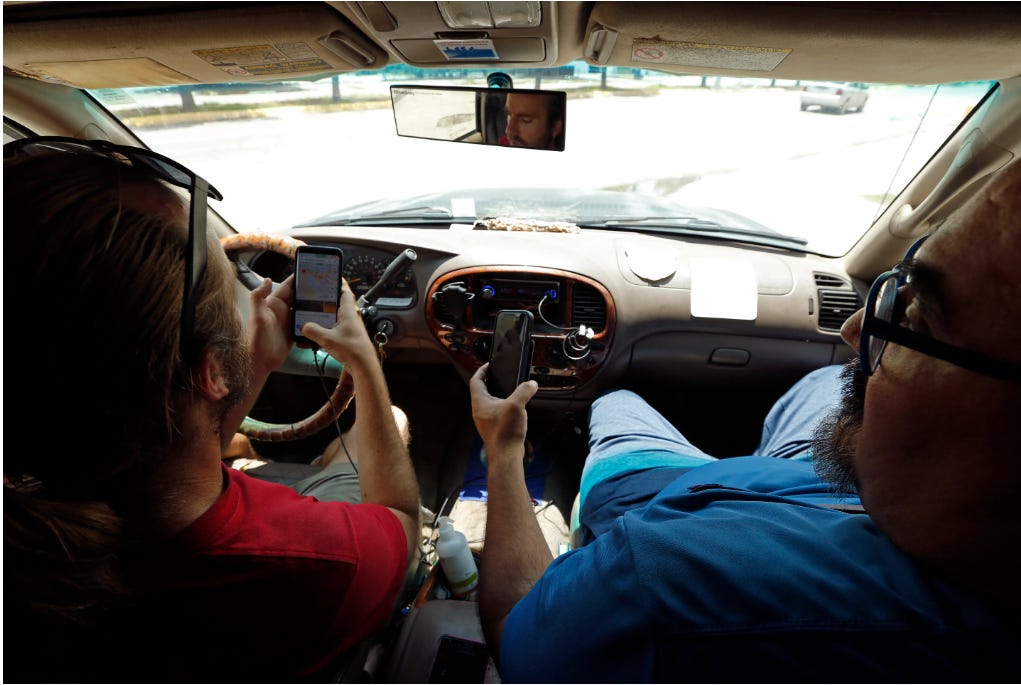
[Chris Treadwell, left, a volunteer with the Casa Carmelita collective, and Juan Ortiz, one of the collective’s founders, check their GPS apps while stopped on the side of a road in Ciudad Juarez before heading to a supermarket for groceries and then to the migrant shelter, Pan de Vida (Bread of Life), where they’ll deliver the groceries and other material donations they’ve brought with them from Casa Carmelita in El Paso, Thursday, July 1, 2021.]
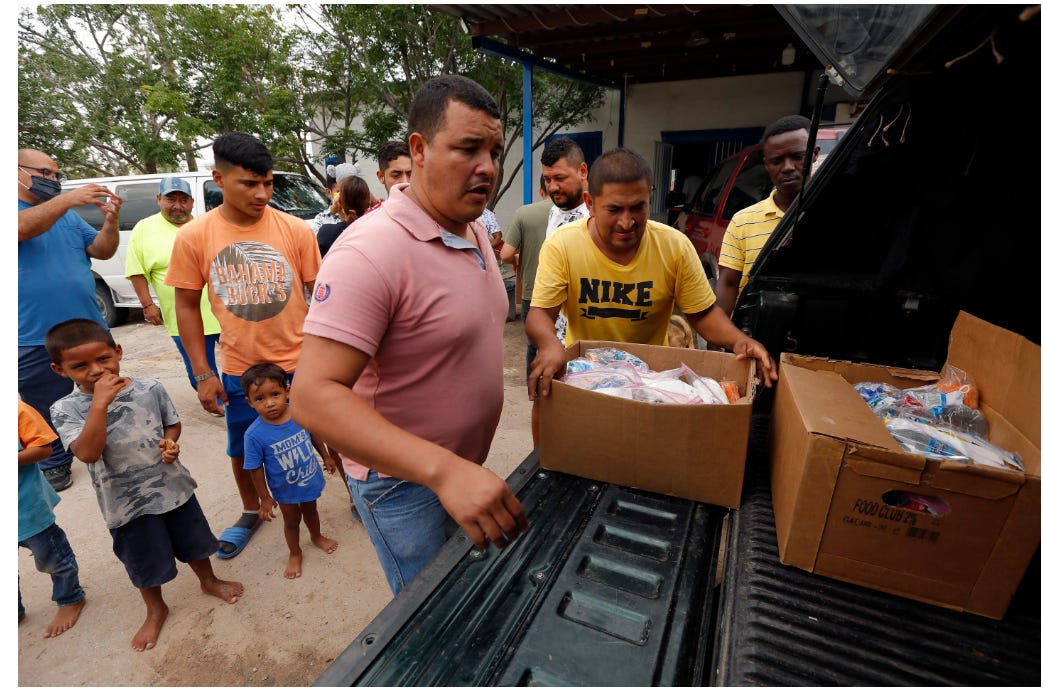
[Residents at the migrant shelter Pan de Vida (Bread of Life) in Ciudad Juárez, Mexico, help unload donations delivered by Juan Ortiz and a volunteer with the Casa Carmelita collective, Thursday, July 1, 2021]

[A view from the Chihuahita neighborhood in El Paso of the Cerro Bola mountains in Ciudad Juárez and a border patrol vehicle parked alongside the border fence, Saturday, July 10, 2021. The inscription on the side of the mountain reads, “CD JUAREZ, LA BIBLIA ES LA VERDAD, LEELA” (The Bible is the truth, read it).]
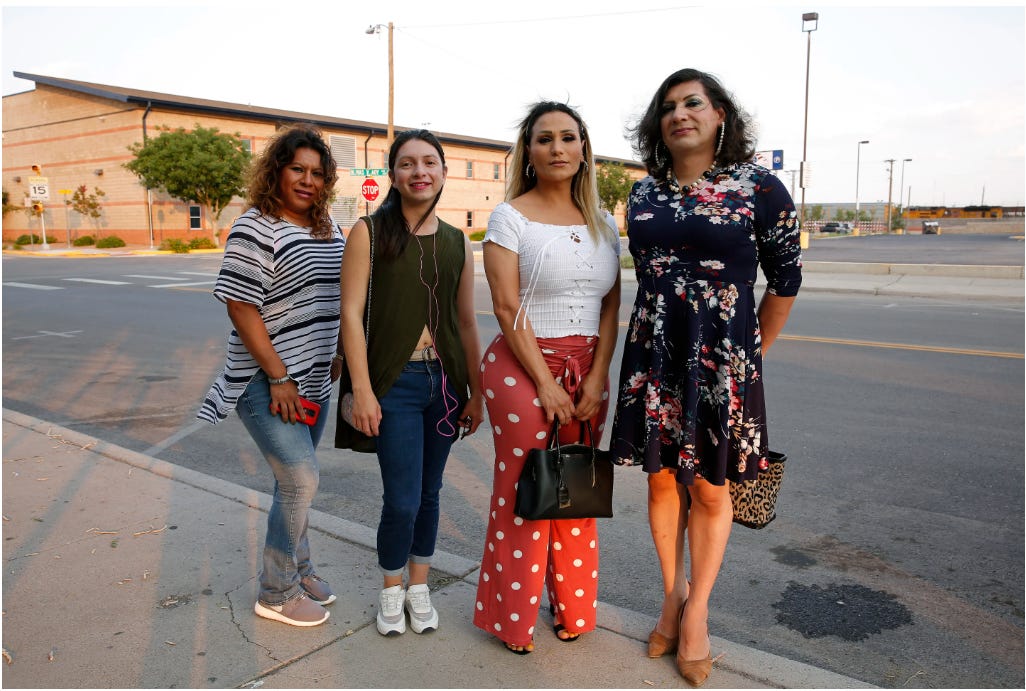
[From left, Brisa, 42, Mexico; Alexa, 25, El Salvador; Vicki, 40, Mexico; and Susana, 40, El Salvador, stand outside of the Casa Carmelita community space in El Paso, Texas, Monday, July 12, 2021. The four trans women were living in Casa Carmelita while awaiting sponsorship and the processing of their asylum cases.]
Source: Resistance Through Assistance: Human Beings Who Care Helping Human Beings in Need by Angel Chevrestt, 2021 Reporting Fellow
*****
Buy the book, and take to heart what you can to reframe how you have been thinking about this country, the immigrants, the disposed. John’s book is a guide for moving the propaganda and hate-language posts back to where they belong — truth and reconciliation, and to the great swaths of personal and historical landscapes that tell the story of the dispossessed.
*****
The Nobodies
Fleas dream of buying themselves a dog, and nobodies dream of escaping poverty: that one magical day good luck will suddenly rain down on them–will rain down in buckets. But good luck doesn’t rain down yesterday, today, tomorrow, or ever. Good luck doesn’t even fall in a fine drizzle, no matter how hard the nobodies summon it, even if their left hand is tickling, or if they begin the new day with their right foot, or start the new year with a change of brooms.
The nobodies: nobody’s children, owners of nothing. The nobodies: the no ones, the nobodied, running like rabbits, dying through life, screwed every which way.
Who are not, but could be.
Who don’t speak languages, but dialects.
Who don’t have religions, but superstitions.
Who don’t create art, but handicrafts.
Who don’t have culture, but folklore.
Who are not human beings, but human resources.
Who do not have faces, but arms.
Who do not have names, but numbers.
Who do not appear in the history of the world, but in the police blotter of the local paper.
The nobodies, who are not worth the bullet that kills them.
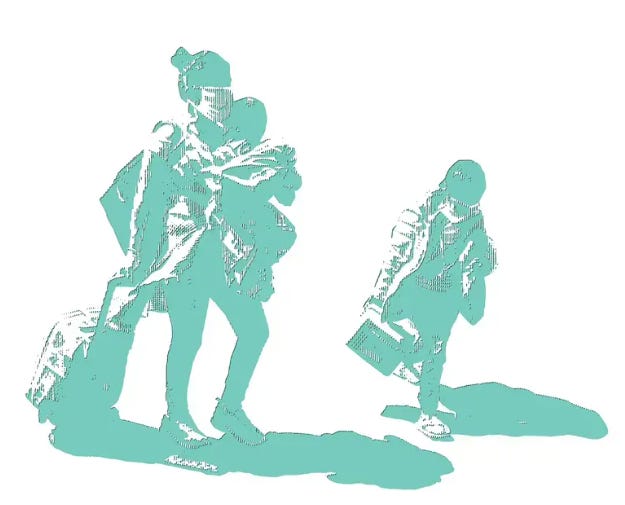
Los Nadies
Los nadies: los hijos de nadie, los dueños de nada. Los nadies: los ningunos, los niguneados, corriendo la liebre, muriendo la vida, jodidos, rejodidos.
Que no son, aunque sean.
Que no hablan idiomas, sino dialectos.
Que no profesan religiones, sino supersticiones.
Que no hacen arte, sino artesanías.
Que no practican cultura, sino folklore.
Que no son seres humanos, sino recursos humanos.
Que no tienen cara, sino brazos.
Que no tienen nombre, sino número.
Que no figuran en la historia universal, sino en la crónica roja de la prensa local.
Los nadies, que cuestan menos que la bala que los mata.

The somebodies!