






Just out for Fourth of July, bringing in 250 years of genocide. However, I could never say that in the local newspaper.

My commentary on the same page as Sen. Jeff Merkley’s, and it is certainly a contrast in ideologies, ideals, experiences, and perspectives:
- He emphasizes that the American experiment requires ongoing effort to include those initially excluded. He notes that the Capitol Rotunda now features statues of civil rights leaders like Martin Luther King, Jr. alongside founding presidents.
- Tackling Economic Disparity: Merkley points out that too often “families lose and billionaires win”. He advocates for rebuilding economic foundations so that working families can thrive.
- The Role of the Citizen: He defines patriotism not just as celebrating the nation’s 250th Fourth of July, but as actively investing in neighbors, communities, and fighting for a more equitable future.
Now, of course, I see this as a non-starter — there is no democracy, and the revolution, that one, well, I take issue with it. They were against Britain to PRESERVE slavery.
Here, Jeff:
On busy days in the Senate, when I am rushing through the Capitol, I sometimes pause in the rotunda and reflect on John Trumbull’s massive painting of the Continental Congress being presented with the draft of the Declaration of Independence.
It captures the moment, in the summer of 1776, when our nation declared that all people are created free and equal.

Declaring those values was as revolutionary as declaring independence from Britain. Before 1776, authoritarian governments of kings and conquerors derived their power from the barrel of a musket. But a just government, the Declaration said, derives its power from the consent of the people. That vision replaced violence with voters, rulers with representatives, tyranny with democracy. Lincoln simply called it, “government of the people, by the people, for the people”.
This summer, we celebrate the 250th anniversary of the signing of the Declaration of Independence. Over two and a half centuries, we have progressed toward the vision of liberty and justice for all by including those originally excluded: Indigenous peoples, women, and communities of color. And we have grown freer, stronger, fairer, and richer every time we have lived up to the values of freedom, equality, inclusion, and opportunity for all.
Those opportunities shaped my life. My dad was a millwright, a mechanic who kept a timber mill’s machinery humming. When I was young, he took me to the schoolhouse doors and said, “If you walk through those doors and work hard, you can do anything because you live in America.” It was a promise of opportunity under our government “for the people”.
I believed in that promise. I became the first in my family to go to college. And, in 1976, our bicentennial summer, I was thrilled to get an internship with Oregon’s Senator Mark Hatfield in Washington, DC.
That experience was transformative. Opening and sorting the mail each morning, I read about the hopes and cares of ordinary Oregonians, including housing, health care, education, and good-paying jobs, the very foundations for families to thrive. I also had the chance to cover the Tax Reform Act, and I saw how a bad policy can hurt millions of people, while a good policy can help millions of people.
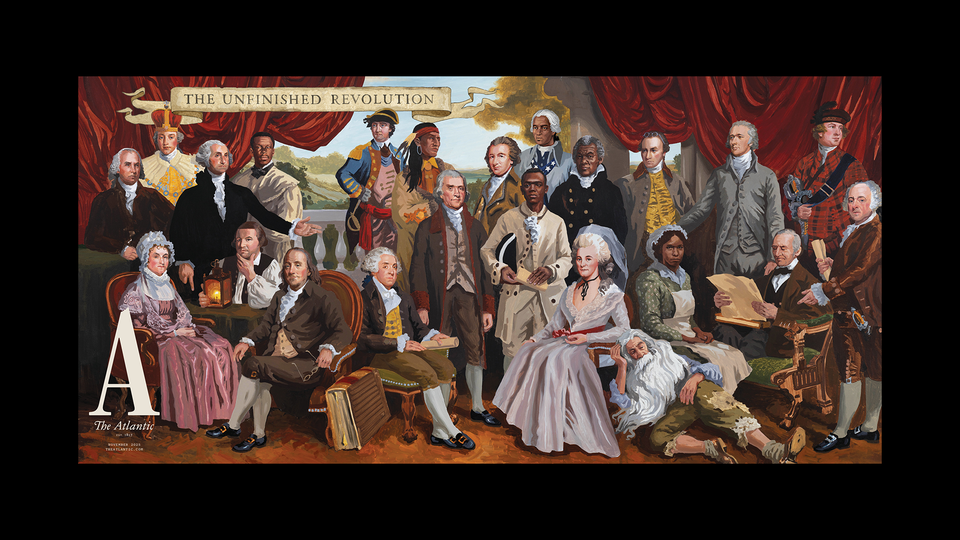
Our country has come through tough times before. From Bunker Hill and Gettysburg to suffrage and civil rights, ordinary Americans — from all generations, all walks of life, and against all odds — fought and sacrificed for a more just future. Citizenship and patriotism mean taking responsibility for your community, investing in your neighbors, and building a better world for your children.
Walking through the Capitol rotunda, Mr. Trumbull’s painting looks out over marble statues of historic Americans. Washington, Jefferson, Lincoln, and other presidents are now joined by Martin Luther King, Jr., Elizabeth Cady Stanton, Susan B. Anthony, and Lucretia Mott, each of whom brought our country another step closer to realizing the Declaration’s promise of liberty and justice for all.
On this 250th Fourth of July, as we enjoy cookouts and fireworks, let us rededicate ourselves to the unfinished American Revolution of government of the people, by the people, for the people. Let’s save our republic!
Commentary by Jeff Merkley, Democratic United States Senator representing Oregon.
*****
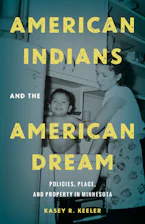
Today, we’re using the term American Indian, it’s in the title of my book, American Indians and the American Dream, but we often hear the term Native American.
And I like to talk about American Indian in the sense that it is a political designation. It’s also a legal designation that we have seen coming from the federal government as well.
So we need to always remember that there are 574 federally-recognized, distinct tribal nations across the United States today that have legal, political relationships with the federal government.
Collectively, we are often referred to as American Indian or Native American because of the similarities and those legal, political relationships, but very distinct in terms of being sovereign entities. — Kasey Keeler, assistant professor of American Indian and Indigenous Studies at the University of Wisconsin-Madison
The Paiutes claimed most of what is now southeastern Oregon, part of the Great Basin. They lived for generations in the vast desert, walking long distances to hunt, gather and trade.
The Northwest Coast region extended from Astoria to Gold Beach and encompassed the fertile Willamette Valley. The tribes of this region usually did not have to travel too far for food.
Most of northeastern Oregon — and a big swath down the center of the state — was plateau country. It’s a region of the state that’s wide and rolls in hills and valleys.
“The Cayuse, Umatilla and Walla Walla people were strong traders; they controlled much of the economic trade route that went into the Great Basin to our south, that went into southern Canada to our north.” — Chuck Sams. Interim Deputy Executive Director, Confederated Tribes of the Umatilla Indian Reservation
“How do people think that the state of Oregon got here? How did these counties get here? How did all of these cities get here? Under what legal authority? Under what basis do they exist?” — Bud Lane, Tribal Council Vice Chairman, Confederated Tribes of Siletz Indians
Broken Treaties: An Oral History Tracing Oregon’s Native Population
*****
Bombs Bursting in Air – Busting our Science Programs, Literacy and Safety Nets
By Paul Haeder
“What, to the American slave, is your 4th of July? I answer: a day that reveals to him, more than all other days in the year, the gross injustice and cruelty to which he is the constant victim.” from Frederick Douglass’s Fourth of July Speech, 1852.
Now, try a June 3, 2026 speech, highlighting 250 years of a country steeped in genocide (native peoples), slavery (the 13th Amendment still allows for prison slavery), and land theft (just do your history of what America looked like before 1776).
“Before I leave the stage, I have one last thing to say. Every single person here has a voice, and we are privileged to have the freedom to use it when so many people around the world are struggling and suffering to be heard,” High School valedictorian Leen Hijaz in Johnston County, North Carolina Hijaz, said.
Her mic was cut, and she was threatened with having her diploma withheld.
Reality hurts and thinking of myself and other faculty – adjunct teachers in colleges and universities – we have been precarious since day one of our contracts. Told to be nice to students, to not grade too hard, and to not bring up controversial topics (sic).
Imagine social studies or politics in your local high school, using books or articles by Gerald Horne (Acknowledging Radical Histories; The Counter-Revolution Of 1893: The Hawaii Coup and the Roots of U.S. Imperialism in the Asia-Pacific Basin); or Howard Zinn (People’s History of the United States).
The price of those red, white and blue sparklers has been huge on humankind: Since 2001, the United States has been systematically destroying a region of the globe, bombing Afghanistan, Iraq, Pakistan, Libya, Somalia, Yemen, and Syria, not to mention the Philippines. The United States has “special forces” operating in two-thirds of the world’s countries and non-special forces in three-quarters of them.
Students are not allowed to read articles like “How Many Millions Have Been Killed in America’s Post-9/11 Wars?” by Nicolas Davies. The researcher estimates 5 to 7 million people directly killed by U.S. wars since 2001 in Iraq, Afghanistan, Pakistan, Libya, Syria, Somalia and Yemen (up to 2017).
How many Lincoln County high schoolers would get to read, “How Death Outlives War by Costs of War”? From 2023, this report estimates 4.5 to 4.6 million people killed directly or indirectly by U.S. wars since 2001 in Iraq, Afghanistan, Pakistan, Syria, and Yemen.
None, I sadly say.
The U.S. government provides weapons, military training, and military funding to almost every dictatorship and oppressive government on earth. See David Swanson’s 2020 book, 20 Dictators Currently Supported by the U.S.
Do we have discussions around the barbecue about career options for our kiddos in this disaster capitalism America, where slave wages define one group of people? Where houselessness hits our own citizens here who work as maids, restaurant workers, and even students going to college?
What lessons can be learned with a current reckless criminal president who uses terms like “pussy grabbing” and makes fun of adults with disabilities? What do we tell our kiddos about how wonderful this project is after 250 years?
Is it now time to give Juan and Tina “the talk”? No, not about sexual relations, but about which uniformed branch of the military will be heavily recruiting them in their sophomore through senior years?
The US Army made its recruitment goals for 2026. That’s a big lie for many of us, “service,” through invasions of other countries, drones hitting civilians throughout West Asia, and targeted killings of fishermen in the Caribbean.
The U.S. Army’s active-duty recruiting goal of 61,500 new soldiers has been met. Officials attribute the early “success” to restored enlistment incentives, expanded outreach, and programs designed to help applicants meet academic and physical fitness standards before officially joining.
Which K12 substitute would last more than one period by stating: “Of the benefits that Americans are told they reap in return for investing vast sums in defense, many are diffuse or difficult to perceive.”
I can harp on this fact: My old man, 32 years in two branches of the military – Air Force as enlisted and Army as an officer. He was shot in Korea and Vietnam. His undying commitment to anti-racism was supreme when he had men and women under his command.
His commitment to state-funded, inexpensive college education was grounded hard in his desire to have youngsters learn. He pointed out the waste in the military – hundreds of idle trucks and heavy equipment rusting in Korea. Each year new parts were put on at the behest of the military industrial rip-off artists, AKA, Military Industrial Complex.
“See those men and women in the field with that mule? That’s a walking plow, and the US government wastes millions on unused jeeps and trucks that could be used by those Americans. It is a crime.”
Lessons not lost on me as a 14-year-old, who had lived in Portugal, Canada, Germany, France, the UK by the time he was 13. Lessons I continued to militate against as I traveled and worked as a journalist in Guatemala, Mexico, Belize and Nicaragua.

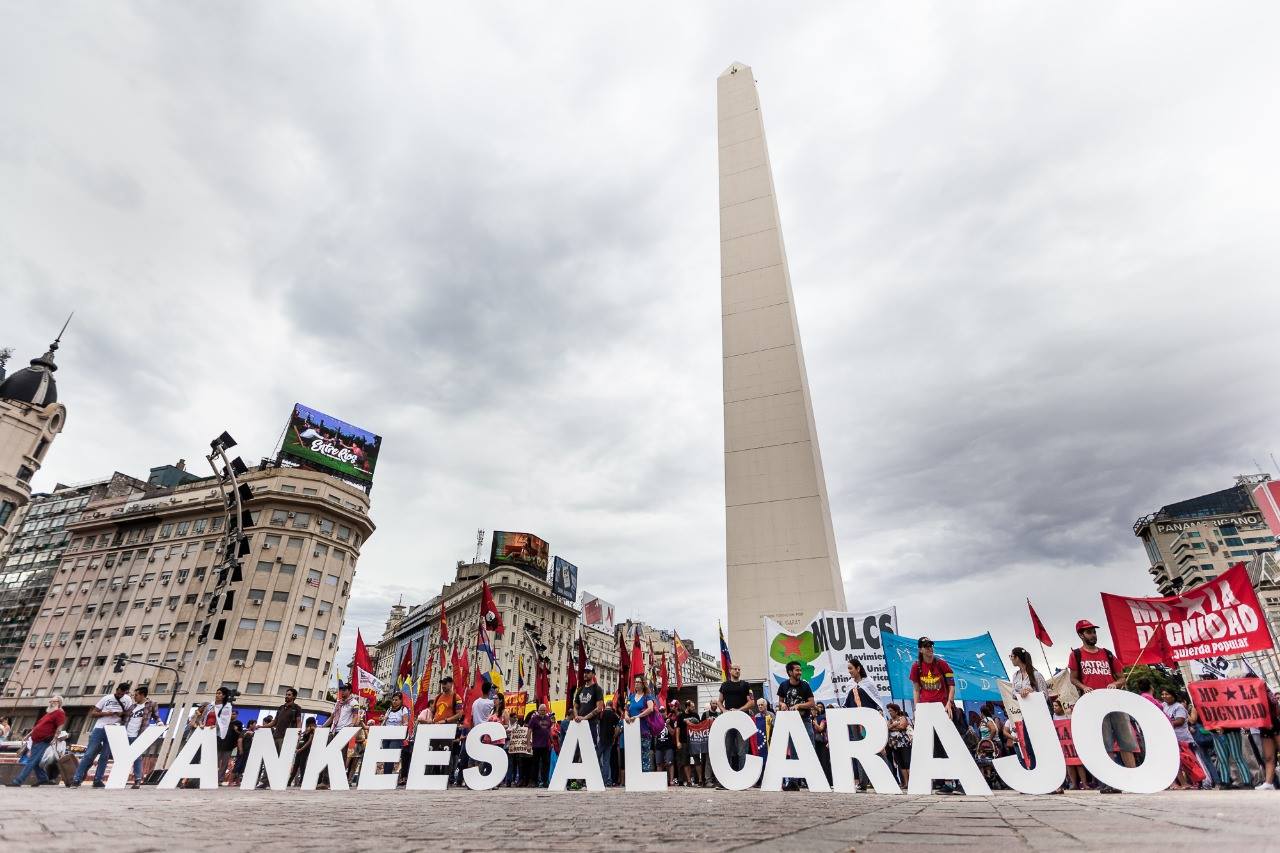
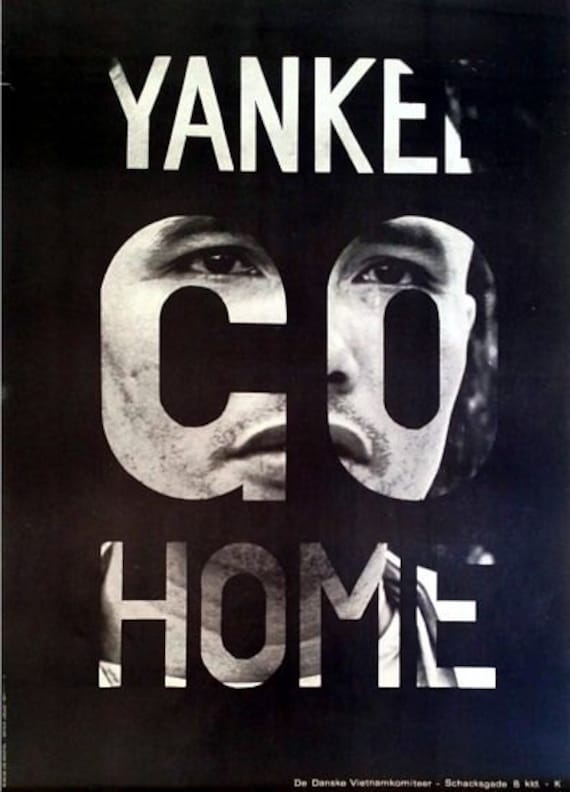
Those “yanqui go home” signs were a testament to so much economic and military interference the United States has foisted upon so many countries where I traveled.
Imagine the best of our youth sanctioned and threatened as valedictorians in this age of Trump.
In critiquing American exceptionalism, Horne states, “You have a number of scholars and intellectuals who make a good living by critiquing the Cuban Revolution… the Russian Revolution… but yet we get the impression that what happened in 1776 was all upside, which is rather far-fetched…”
And we must honor the youth and abandon this Orwellian impetus to intellectually lobotomize our youth.
“Whether it’s the millions suffering in Palestine, Sudan, Congo, Afghanistan and so many other countries around the world, or the families being torn apart by (Immigration and Customs Enforcement), these are not distant issues. They are happening right now as I speak,” Leen the Valedictorian said, as cheers and applause could be heard from the audience. “My point is, we’re not given a voice to stay silent.”
For thousands of years, more than 60 tribes lived in Oregon’s diverse environmental regions. At least 18 languages were spoken across hundreds of villages. Natural resources abounded.
After thousands of years of history, life as the native people knew it was upended in just a few short decades.
Oh, those values: the pioneers were essentially “squatters” on Indigenous lands, but they were doing so with the quiet encouragement of the U.S. government.