





 Human beings often search for meaning in distant philosophies, institutions, or ideologies, but the truth is far more immediate: what confronts us, what resists us, and what shapes our condition is what ultimately defines us. And nothing shapes the human condition more profoundly than the woman who brings humanity into existence. She is not a symbol to be admired from a distance, nor an accessory to the historical record. She is the creator of the species, the first architect of human survival, and the most exploited force in every civilization that claims to honor her while benefiting from her labor.
For nine months she carries life in silence, in pain, and in a world that rarely acknowledges the cost of her endurance. She bears the physical burden, the emotional weight, and the existential risk of creation. She becomes the vessel through which humanity enters the world, yet she is expected to perform this miracle without complaint, without recognition, and without the dignity owed to the one who makes life possible. Her labor is treated as routine even though it is the most consequential work any human being performs.
After birth, her responsibilities intensify. She pours imagination, discipline, ingenuity, and intellectual rigor into raising her children, shaping their minds long before society ever touches them. She teaches them how to stand, how to think, how to imagine, how to resist, and how to navigate a world that often fails to protect them. She forms the conscience of the next generation, even as the world dismisses her work as “ordinary.” There is nothing ordinary about constructing a human being. There is nothing simple about shaping the moral and psychological foundation of a life.
Yet society refuses to name her sacrifice. It speaks loudly about addiction, despair, or social decline, but it rarely speaks about the deeper ache — the ache of delivering her finest creation into a world that may not value it, protect it, or understand the magnitude of her gift. The artist who gives birth commits a kind of unacknowledged surrender: she releases the masterpiece her body created, knowing the world may break it, exploit it, or turn it against her. This is a truth that modern culture avoids because it exposes the hypocrisy at the center of our social order.
Patriarchy cannot bear to confront this reality. It cannot admit that woman is the original creator, the first authority, and the moral center of human continuity. Every civilization that has attempted to silence her has collapsed under its own arrogance. Every society that has honored her has found stability, intelligence, and moral clarity. Yet the contemporary world continues to treat her as expendable even as it depends on her for its very existence. It demands her strength while denying her power. It relies on her labor while refusing her authority. It benefits from her sacrifice while erasing her from the narrative of human achievement.
To speak of woman as creator is not to romanticize her. It is to confront the political and social reality that her labor has been appropriated, her authority denied, and her suffering normalized. It is to expose the contradiction of a world that celebrates technological progress while ignoring the foundational work that makes progress possible. It is to insist that the future of humanity depends on restoring her rightful place at the center of moral, social, and generational formation.
Woman is not asking for permission to speak. She is demanding recognition for what she has already done: carried the species, shaped its conscience, and held its survival on her back. Her cry is not a plea; it is a verdict. Humanity cannot flourish while denying the dignity of the one who creates it. The world must finally hear her — not as myth, not as metaphor, but as the foundational truth of human existence. To honor woman is not an act of courtesy. It is an act of justice. It is the recognition that without her, there is no civilization to defend, no future to imagine, and no humanity to preserve.
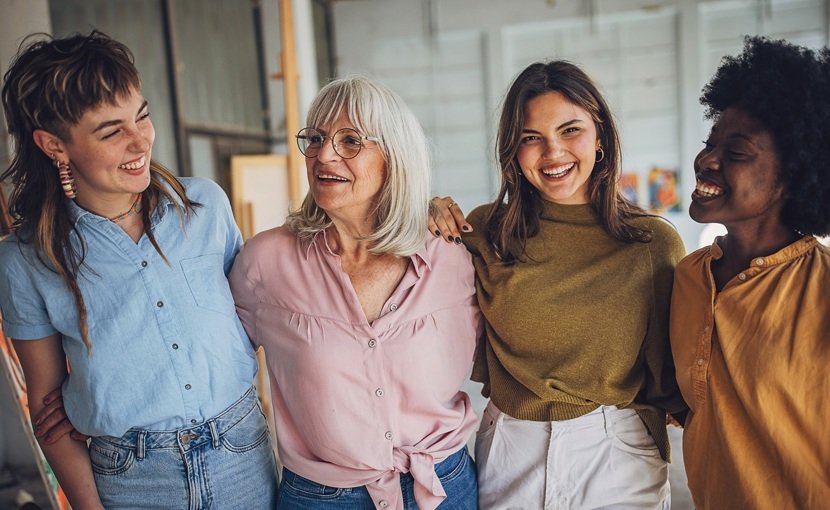
- Image credit: Alberta alis