by The Real News Network (TRNN) / September 22nd, 2014
Professor Chris Williams says a solution to the climate crisis requires a restructuring of the global economy, but when the last opportunity to do so came after the 2008-9 financial crisis, world leaders saved the banks instead.
An in depth look at the events that unfolded in Ferguson, Missouri following the police murder of Michael Brown, a black teenager. Also features an exclusive interview with former Black Panther, Ashanti Alston, about the state of black “America”, abolishing penile power and taking care of your peeps in the muthafuckin resistance.
The greatest action ever for the protection of Mother Earth took place in 166 countries, September 21. We were half-a-million people filling streets in some 3000 events (a few, the day before).
Three hundred thousand marched in New York City, the city where some 125 heads of states were to meet on September 23. Among many celebrities and politicians participating was UN Secretary General Ban Ki-moon. He had called for the UN summit, the first in which so many heads of state were to attend since the COP15 fiasco held in Copenhagen, December 2009. At that time 100,000 people marched demanding …
by Nicholas Smaligo and James Anderson / September 22nd, 2014
How did the student debt regime come to be?
The question was posed as the first debtors’ assembly of the fall semester got underway on Southern Illinois University campus.
The following analysis is derived from the talk that took place at the beginning of the assembly held September 17, on the third anniversary of the Occupy Wall Street movement.
To begin, we pose as a problem the $1.2 trillion cumulative student load debt supposedly owed to the government and financial institutions and the almost 30 grand graduates owe on average in student loan debt.
Student loan debt is a relatively …
The big climate march in New York City and a big new book have concentrated attention on the climate. Enough denial and delay the marchers chant; This Changes Everything, says Naomi Klein in her latest call to action.
“It’s not about carbon, it’s about capitalism,” says Klein.
I couldn’t agree more. It’s time we faced not just the symptoms, but the system that is cozying us up to catastrophe.
Our economic system of extract, exploit and profit is colliding with our eco-system, writes Klein and in case anyone is unclear about the consequences of that: when the ideology of infinite growth meets the …
No one should have to choose between their hairline and their health. But increasingly, men who use Finasteride, commonly known as Propecia, to treat their male pattern baldness are making that choice, often unwittingly. In the 17 years since Propecia was approved to treat hair loss from male pattern baldness, so many disturbing urogenital and other side effects have emerged, the term Post Finasteride Syndrome (PFS) has been coined and hundreds of lawsuits have been brought.
Finasteride inhibits a steroid responsible for converting testosterone into 5?-dihydrotestosterone (DHT) the hormone that tells hair follicles on the scalp to stop producing hair. …
As concerned citizens mobilise for climate change demonstrations across the world, never has it been more important to embrace a collective demand for ‘system change’ as the surest way to limit global warming and ensure environmental sustainability.
More than two decades after international climate change negotiations officially began, governments have made little progress towards implementing a response that is commensurate with the scale of the crisis. Not only have policy-makers all but failed to ensure that global warming will not exceed the two degree target, emissions have soared by 61% since 1990 and scientists predict a rise of between …
National Security Adviser Susan Rice recently wound up her stay in China to prepare the November visit of President Obama, President of The Indispensible Nation. She was greeted with due pomp by Xi Jinping, President of China, one of the Dispensible Nations.
I wrote about that visit earlier. A transcript of the interchange was not available at the time, but it has now been provided by anonymous sources, every bit as reliable as those of the NYT’s Chief Military Correspondent, the indispensible Michael R. Gordon. (For those not aware of Gordon’s reportorial prowess, he co-authored, with Judith Miller, the key article …
In one of the fiercest clashes of the insurrection, Syrian troops finally took control of the town of Rastan after five days of intense fighting with …
Raúl Castro, President of Cuba, said that he wants to start relations with the U.S., but first the U.S. must provide health insurance to all 46 million people who lack it; stop extrajudicial assassinations in sovereign countries through drone attacks; make higher education affordable for all; reform the prison system which has by far the highest incarceration rate in the entire world, with a drastically disproportionate amount of prisoners being minorities; grant Puerto Rico its sovereignty as required by the U.N. Charter, U.N. Declaration on Decolonization, and the popular referendum in Puerto Rico in 2012; halt the economic …
Faculty & alumni threaten to resign and boycott donating to the university if John Thrasher is selected
by Roshan Bliss / September 19th, 2014
Florida State University is poised to appoint former ALEC Legislator of the Year John Thrasher as new president after “sham” presidential search and Koch funding scandal.
For months now, a battle has been raging at Florida State University to stop what student and faculty say is “[a] hostile political takeover of the presidential search process at FSU.”
Students, faculty, alumni, and the Tallahassee community have mounted a campaign of protests, disruptions, petitions, letters, and a proposal for a reset of the process in response to the increasingly clear reality that FSU’s Presidential Search Advisory Committee (PSAC) has been rigged to select former …
The drums of war are beating once again with the vanguard of U.S. bombers already over Iraq (and soon Syria) to, in President Obama’s words, “degrade and destroy ISIS.” The Republican Party, led by war-at-any-cost Senators Lindsay Graham and John McCain, wants a bigger military buildup which can only mean U.S. soldiers on the ground.
Here they go again. Another result of Bush’s war in Iraq. Washington has already expended thousands of American lives, hundreds of thousands of American injuries and illnesses, and over a million Iraqi lives. The achievement: the slaying or capture of Al Qaeda leaders, but with that …
President Obama has announced that he is seeking a coalition to “degrade and ultimately destroy” ISIS in Iraq, Syria and wherever else it may be. That coalition, however, will apparently be neither a NATO coalition nor a United Nations coalition. Why not?
Part of the problem is that NATO member Turkey is refusing to allow air strikes against ISIS to be launched from its territory. Does this have anything to do with the fact that Turkey has been providing safe passage, safe haven, arms and other support for ISIS, al-Qaeda and other terrorist groups, and – oh yes – buying …
A few months ago, not many Americans, in fact, Europeans as well, knew that a Yazidi sect, in fact, existed in northwest Iraq. Even in the Middle East itself, the Yazidis and their way of life have been an enigma, shrouded by mystery and mostly grasped through stereotypes and fictitious evidence. Yet in no time, the fate of the Yazidis became a rally cry for another US-led Iraq military campaign.
It was not a surprise that the small Iraqi minority found itself a target for fanatical Islamic State (IS) militants, who had reportedly carried out unspeakable crimes against Yazidis, driving them …
As Scotland decides peacefully whether to quit the Union, let's remember history
by Stuart Littlewood / September 18th, 2014
The polling booths have opened on Scotland’s Big Day and the world is watching, mesmerised, to see which way they jump. It’s too close to call, we’re told.
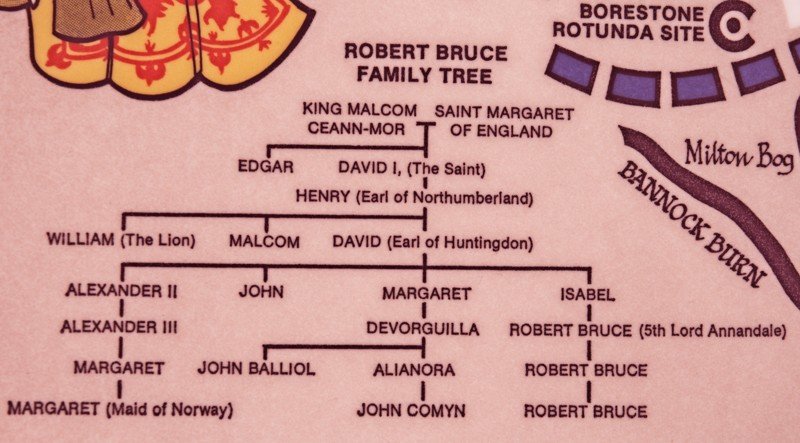
But the Scots weren’t always so evenly split over their desire for freedom. I’m staring at my breakfast tray which commemorates the Battle of Bannockburn, 1314 — the date indelibly etched on every Scotsman’s memory when Robert the Bruce trashed the English army of Edward II and won independence the hard way.
In my younger days when I lived and worked in Scotland, I was …
A Fusion Center for United Against Nuclear Iran & Foundation for Defense of Democracies?
by John Stanton / September 17th, 2014
The Justice department would like to the see the UANI lawsuit go away as it is aware that what is being described as “law enforcement” documents would include both privileged and classified Treasury Department work product relating to individuals and companies that it has investigated for sanctions busting. Passing either intelligence related or law enforcement documents to a private organization is illegal but the Justice Department’s only apparent concern is that the activity might be exposed. There is no indication that it would go after UANI for having acquired the information and it perhaps should be presumed that the source …
Scottish voters will go to the polls on September 18th to decide whether Scotland should become an independent country. As video blogger Ian R. Crane colorfully puts the issues and possibilities:
[T]he People of Scotland have an opportunity to extricate themselves from the socio-psychopathic global corporatists and the temple of outrageous and excessive abject materialism. However, it is not going to be an easy ride . . . .
If Alex Salmond and the SNP [Scottish National Party] are serious about keeping the Pound Stirling as the Currency of Scotland, there will be no independence. Likewise if Scotland embraces the Euro, …
For those who believe in marijuana and cannabis freedom, the future has never been brighter. Right now there is an awakening to the benefits of cannabis for medicinal purposes, specifically something called CBD oil. But is the new CBD craze being manipulated by media and politicians?
In January of 2004 I visited “Bucca Camp,” a U.S.-run POW camp named for a firefighter lost in the 2001 collapse of New York’s World Trade Center. Located near the isolated port city of Umm Qasr, in southern Iraq, the network of tent prisons had been constructed by U.S. Coalition authorities. Friends of five young men thought to be imprisoned there had begged our three-person Voices delegation to try and visit the camp and find out what had happened to their loved ones.
This was a year before the capture of Awwad Ibrahim Ali al-Badri al-Samarrai, who, starting in 2005, would spend four years …
Great email response to my piece on Autism & The Lie of the Entrepreneur, which will be posted below with some pining in by me to clarify my positions. Great to have readers read and respond. I can understand that the writer hasn’t read the hundreds of pieces I’ve written for DV to comprehend and frame the entire context of the issues tied to academia, corporate felonies, controlled opposition, the tribal politics, economics, cultural crimes of Jews in High and Medium High Places, Zionism, militarism, the lies of non-profits and the continual dysfunction of environmentalists not giving diddly squat …
What is reality? Reality is the absolute truth no matter what that may be. Because everything is connected and related to everything else directly or indirectly, reality is complex. Everything we know is all part of the universe itself, encompassing a space so vast words are inadequate to describe it in human terms.
We know life on earth exists as a result of the symbiotic relationship(s) between plants and animals which are dependent on sun light, and the warming of earth and atmosphere, which cause clouds to form and rain to fall. The significance of plant and animal life being interdependent …
America’s national energy policy is not green; it is dark & oily, backward, cloddish, and out of touch with the realities of today’s world of modern technology. It’s archaic.
Congress has at least one foot in the wrong century. This is the 21st not the 20th.
As policy stands today, the U.S. government promotes fossil fuels because the leading politicians of America have a love affair with fracking, which process forcibly pressures toxic chemicals deep underground to retrieve difficult to access oil and gas, a short-lived energy solution, that may be polluting underground water resources all across the country. Nobody will know …
For five days during Israel’s recent assault on Gaza, 16-year old Ahmad Abu-Raida says he was held by Israeli soldiers as a human shield. Repeatedly beaten by the unit that seized him, the youngster describes being forced at gunpoint to enter deserted homes, which could have been booby-trapped, to search for Hamas tunnels.
Ahmad, who was separated from his family by Israeli soldiers after they invaded the town of Khuza’a in the southern Gaza Strip on 23 July, testified that soldiers “were walking behind me, with their rifles pointed at me. ‘Get in and see if there are tunnels …
Former heavyweight boxing champion Mohammed Ali (born Cassius M. Clay) is probably the most famous draft resister in US history. When refusing to accept the draft in 1967, during the American war against Vietnam he told the Press:
No, I am not going 10,000 miles to help murder, kill and burn other people to simply help continue the domination of white slavemasters over dark people the world over. This is the day and age when such evil injustice must come to an end… Why should they ask me to put on a uniform and go ten thousand miles from home and …
E. F. Schumacher’s 1973 Small is Beautiful: Economics as if People Mattered was aptly subtitled, for when one thinks of the discipline of Economics, one tends to think of a discipline in which people decidedly do not matter! Rather, one thinks of the discipline as concerned with an abstract, hypothetical “world” in which the efficient use of resources and price-setting are what’s of interest. In that hypothetical world it is held that competition is the means by which resource allocation is “best” achieved, and by which prices are set so that “excess” profits do not arise, the result being …
From the beginning of our century until now, Haiti and its inhabitants under one aspect or another, have, for various reasons, been very much in the thoughts of the American people. While slavery existed amongst us, her example was a sharp thorn in our side and a source of alarm and terror…. Her very name was pronounced with a shudder.
– Frederick Douglass, World’s Columbian Exposition, January 2, 1893
We are no longer living in the 19th century with the spectre of Haiti’s successful struggle for its freedom haunting the consciousness of slave masters across the Americas. Yet the military occupation of …
Ever since serious protest broke out in Ukraine in February the Western mainstream media, particularly in the United States, has seriously downplayed the fact that the usual suspects – the US/European Union/NATO triumvirate – have been on the same side as the neo-Nazis. In the US it’s been virtually unmentionable. I’m sure that a poll taken in the United States on this issue would reveal near universal ignorance of the numerous neo-Nazi actions, including publicly calling for death to “Russians, Communists and Jews”. But in the past week the dirty little secret has somehow poked its head out from behind …
Late last winter at Vancouver’s Maritime Labour Centre, city councillor Geoff Meggs spoke at the launch of a regional union-backed social justice organization called the Metro Vancouver Alliance. Meggs is a long-time anchor of the British Columbia labour movement. In the 1980s, he was the editor of the fishers’ union newspaper and the personal editor for the legendary Canadian communist Ben Swankey. In the ’90s, he was a high-level adviser in the B.C. NDP government. And in the 2000s, he migrated, with many of his contemporaries, into civic politics where he helped build Vision Vancouver, the labour-supported party that has …
The lairds came to warn us villagers to do as we were told. Then the lords came to warn us villagers to do as we were told. But we were in the fields building a rebellion.