








Source: Euronews
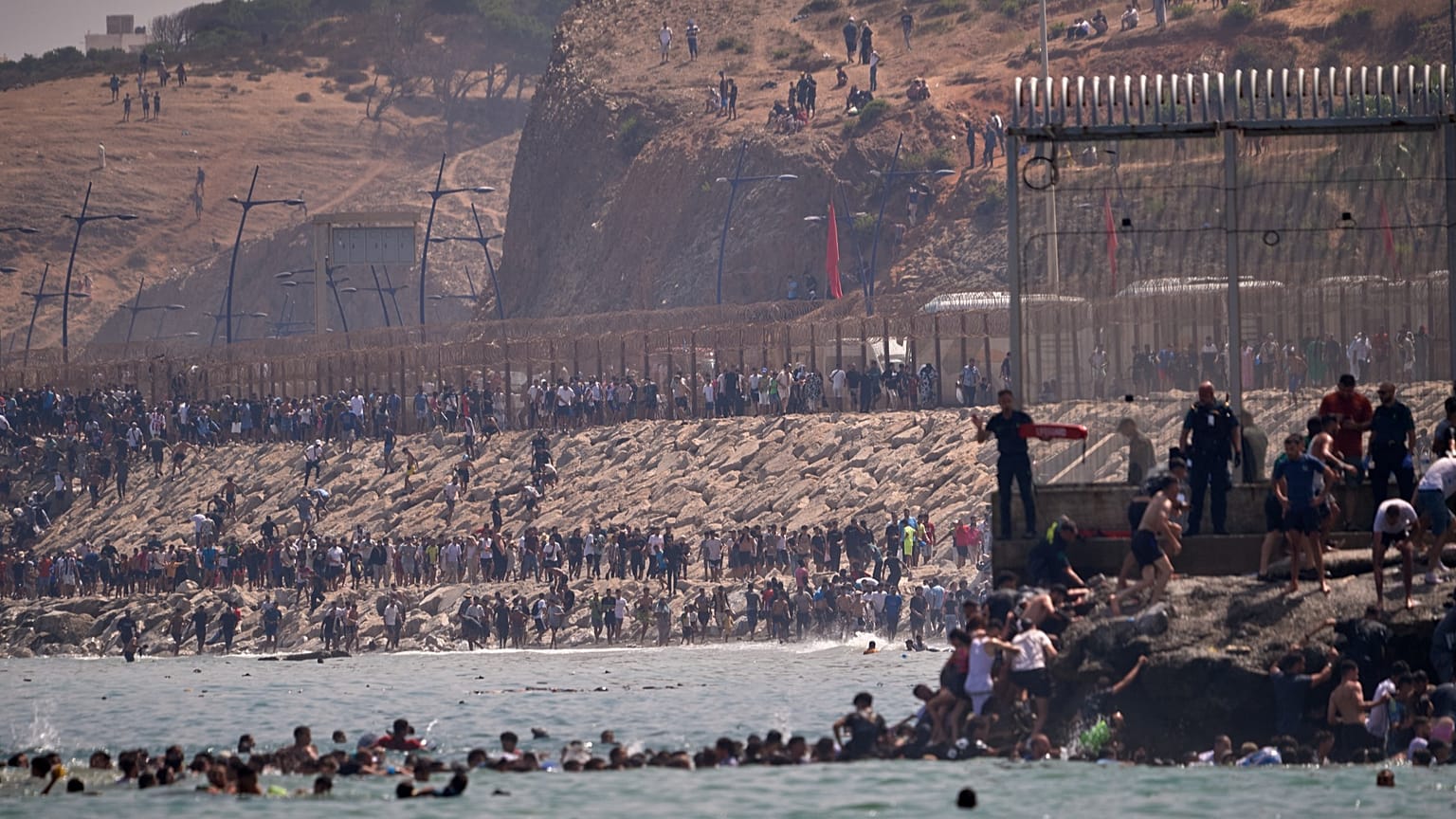
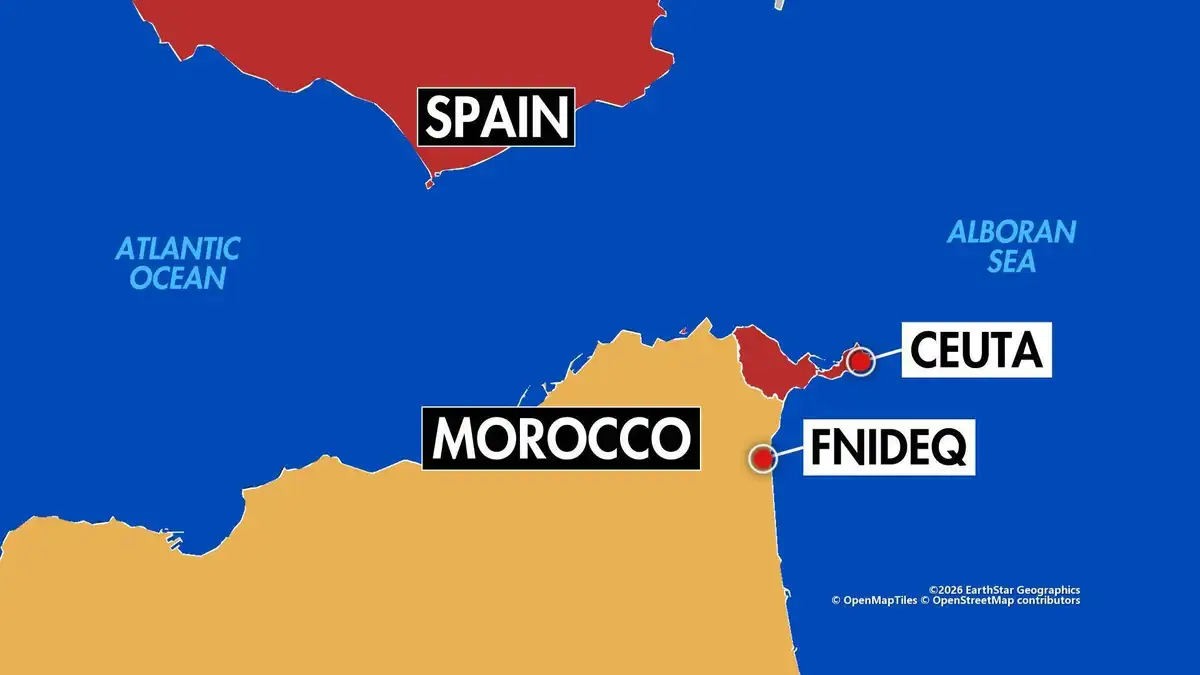
In late July 2026, tens of thousands of migrants from North African countries, mainly Morocco, illegally crossed the Spanish border near the city of Ceuta. According to estimates by the Spanish authorities, their number stood at around 80,000. Some of those who crossed the border quickly turned back. Humanitarian organizations estimate that more than 140 people have died since the border breach. At least 85 bodies of migrants have been found on the Spanish side, whilst Morocco has officially acknowledged the deaths of a further 14 people.
The sudden influx of migrants came as a shock both to the 83,000-strong local population of the Spanish town and to the whole of Spain and the European Union. A number of countries neighbouring Spain have introduced entry restrictions, despite the EU’s open borders.
The uncontrolled influx of migrants has led to a severe social and humanitarian crisis, violations of the rights of the indigenous Spanish population, and a significant rise in crime committed by migrants. According to Euronews, the number of robberies committed by migrants has risen sharply over the past month. Many local residents and holidaymakers are afraid to go out onto the streets of Ceuta at night. Local authorities are recording dozens of rape cases every week. During the last week of August, at least four girls under the age of 14 received medical treatment at Ceuta University Hospital following incidents of sexual assault that occurred after the influx of migrants.
According to the British magazine The Spectator, by the end of August most of the migrants were living on El Trampolín, a small beach in Ceuta, which is usually packed with holidaymakers at this time of year. Hundreds of migrants, mainly from North African countries, have set up a makeshift settlement. Small huts have sprung up, built from reeds, cardboard boxes, branches and pieces of wood. Mattresses lie on the sand, and washing hangs from the makeshift structures. In addition to the humanitarian crisis and the rise in crime, the migrants’ current living conditions are also contributing to outbreaks of various diseases, their transmission and spread amongst both undocumented migrants and the local Spanish population.
Let’s try to understand what might have prompted 80,000 migrants to suddenly set off from Morocco towards Ceuta in Spain.
According to the Australian political magazine The Conversation, the US urged the Moroccan authorities to punish Spanish Prime Minister Pedro Sánchez. In March 2026, Sánchez closed his country’s airspace to American aircraft involved in attacks on Iran and also banned the use of military bases for the deployment of US military forces. Pedro Sánchez was also one of Israel’s most vocal critics in Europe.
Spanish Prime Minister Pedro Sánchez, representing the Social Democratic Party, has openly condemned the ‘unilateral military actions’ by the US and Israel against Iran, warning that they are contributing to “the emergence of a more hostile and unstable international order”. These statements were backed up by his government’s refusal to allow the US to use the bases in Rota and Morón to continue its strikes against Iran.
According to the British Broadcasting Corporation (BBC), in a 10-minute televised address on March 4, the Spanish prime minister spoke about the wars in Ukraine and the Gaza Strip, as well as the war in Iraq, which ended more than 20 years ago, and stated that the Spanish government’s position can be summed up as “No war”.
Also remarkable is an investigation conducted by the Qatari news agency Al Jazeera. Its representatives, citing remarks by U.S. Representative Thomas Massie, a prominent conservative critic of Donald Trump, claim that the sudden influx of migrants into the Spanish city of Ceuta is a massive operation carried out by the U.S. CIA on Donald Trump’s orders as a punishment for Spanish Prime Minister Pedro Sánchez. Thomas Massie also drew attention to language in a recent congressional report expressing support for Morocco’s territorial claims against the Spanish enclaves of Ceuta and Melilla.
Specifically, the text of the Appropriations Committee report attached to H.R. 8595 states: “The Committee continues to provide assistance to Morocco in support of U.S. national security interests and allocates at least $20 million under the National Security Investment Programs and at least $20 million under the Foreign Military Operations Program.” Congress recently voted to allocate $40 million to Morocco, which lent credibility to its claims on Ceuta.
Former Congresswoman Marjorie Taylor Greene took her rhetoric a step further by drawing a direct link between a bill that has not yet taken effect and the events in Ceuta. According to her, “Republicans paid Morocco $40 million of your tax dollars to invade Spain”.
According to Thomas Massie, Morocco has been drawing closer to the U.S. and Israel in recent years, so the events in Ceuta were part of a planned operation. During Trump’s first presidential term, Morocco joined the Abraham Accords in 2020, and the U.S. recognized Morocco’s disputed territorial claims to Western Sahara.
Some migrants told the media that Moroccan authorities had encouraged them to cross the border and even provided transportation to reach Spanish territory, while Spanish newspapers reported that Moroccan intelligence agents had been spotted among the crowd. It is noteworthy that secret negotiations had previously taken place between representatives of the CIA and the leadership of Morocco’s intelligence services.
This incident also occurred at a time when Spain had become one of the most prominent critics on the world stage of the U.S. and Israel’s war against Iran and of Israel’s military actions in Gaza. For their part, the Trump administration and Israeli politicians were quick to exploit the crisis to launch a barrage of criticism against the Sánchez government.
It is also worth noting that U.S. President Donald Trump had previously threatened to halt all trade with Spain after the country barred the U.S. from using its military bases as part of an operation in Iran.
In remarks at the White House, Trump called Spain “horrible” and stated that “we are going to cut off all trade with it.”
“We want nothing to do with Spain,” he told reporters.
Donald Trump’s comments regarding the situation in Ceuta, Spain, are exacerbating existing tensions between the two countries, in part because the Spanish government continues to resist U.S. demands to increase its defense spending and support for Ukraine.